
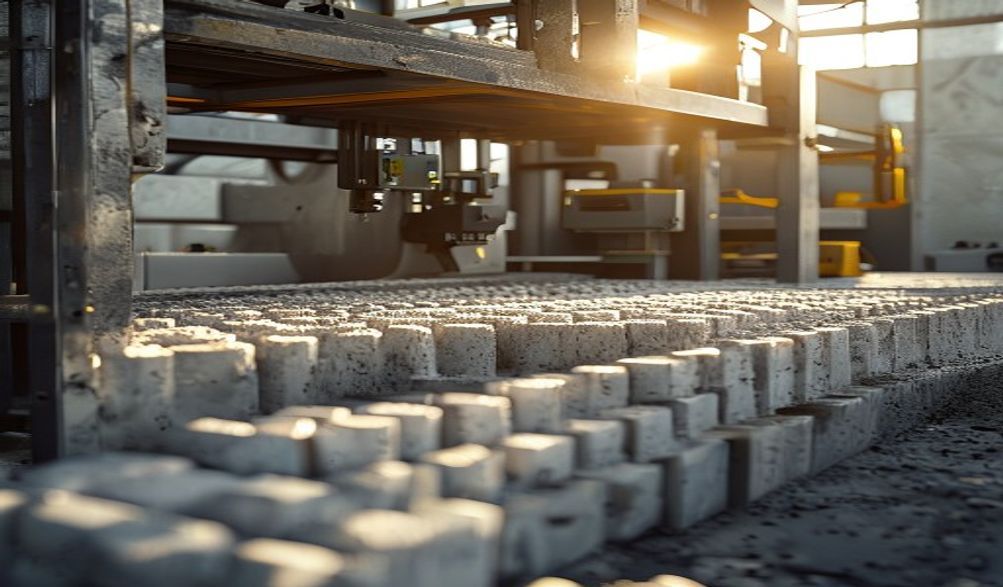
Как выбрать подходящую станок для производства блоков и кирпичей для продажи: Руководство покупателя на 2026 год
Введение
Вы решили инвестировать в станок для производства блок-кирпича. Это ключевой шаг к росту, эффективности и прибыльности. Но как только вы начинаете поиск, вас сразу же осыпают ошеломляющим количеством вариантов: ручные, автоматические, гидравлические, вибрационные, стационарные, мобильные. На вас обрушиваются технические характеристики, цены варьируются в широких пределах, и каждый поставщик обещает быть лучшим. Риск совершить дорогостоящую ошибку кажется вполне реальным.
Это руководство создано, чтобы пробиться сквозь этот шум. Основанное на многолетнем опыте в отрасли, техническом анализе и бесчисленных беседах как с успешными владельцами бизнеса, так и с теми, кто учился на своих ошибках, наша цель проста: предоставить вам надежные, практические советы. Мы хотим дать вам возможность выйти за рамки замешательства и принять уверенное, обоснованное решение, соответствующее вашим конкретным целям.
Мы проведём вас через весь процесс, начиная с основополагающего этапа понимания вашего собственного проекта, затем разберём типы машин и технические термины. Мы углубимся в часто упускаемую из виду совокупную стоимость владения и покажем, как тщательно проверять поставщиков. В итоге у вас будет чёткая дорожная карта и практический чек-лист для совершения покупки.
Понимание ваших требований к проекту: основа вашего выбора
Прежде чем просматривать хотя бы одну брошюру о машинах, загляните внутрь себя. Самая распространенная и дорогостоящая ошибка – покупка оборудования на основе его характеристик или цены, а не того, что вам действительно нужно. Этот раздел посвящен закладке вашего собственного фундамента.
Определение ваших производственных целей
Начните с конкретных цифр и планов на будущее.
- Ежедневный/еженедельный объем выпуска продукции:Это ваш ориентир. Вы снабжаете небольшой местный рынок, единую крупную строительную площадку или стремитесь к региональному распределению? Небольшой цех может производить 1 000 – 3 000 блоков в день, в то время как коммерческий завод может ставить цель в 10 000 и более.
- Типы необходимых блоков/кирпичей:Составьте список всех продуктов, которые вы планируете продавать.
- Стандартные пустотелые блоки (4”, 6”, 8”)
- Твердые бетонные кирпичи
- Мощение камнем и брусчаткой с замковым соединением
- Фасонные формы (газонные решетки, блоки подпорных стен, декоративный кирпич)
- Текущий и будущий масштаб: Be honest about your ambition. Is this a stable, small business, or do you plan to scale significantly in 3-5 years? Buying a machine that can’t grow with you is as problematic as buying one that’s vastly over-powered for your current needs.
Анализ вашего сырья
The machine is just one part of the system; your raw materials dictate its design.
- Основной материал: The machine must be engineered for your material.
- Бетон: The most common. Requires a machine with sufficient compaction force.
- Зола-унос: An eco-friendly alternative; often uses similar machines to concrete.
- Глина: Requires a completely different type of machine (extrusion or firing).
- Stabilized Earth (CSEB): For compressed earth blocks; uses high static pressure.
- Local Aggregates: The availability, quality, and cost of sand, gravel, and stone dust in your area will influence your mix design and, consequently, the pressure and vibration needed from your machine.
- The Material-Machine Link: A hydraulic press is often better for producing high-density, smooth-faced blocks from a stiff concrete mix, while a strong vibratory system might be ideal for a more fluid mix producing standard hollow blocks.
Core Types of Block Making Machines Explained
Now that you know your needs, let’s categorize the solutions. Understanding these fundamental types is key to narrowing your search.
Manual or Semi-Automatic Machines
These are the entry-point and small-scale workhorses of the industry.
- Идеально подходит для: Entrepreneurs starting out, community projects, small-scale production, and locations with unreliable or no electrical grid.
- Как они работают: The operator manually feeds the mix into a mold, then uses a lever (manual) or a small press (semi-auto) to compact it. The block is then ejected and cured.
- Плюсы:
- Lowest capital investment.
- Simple mechanics mean easier maintenance and repair.
- Minimal power requirements.
- Минусы:
- Low output (typically 300-1,000 blocks per 8-hour shift).
- Highly labor-intensive.
- Product consistency heavily relies on operator skill.
Полностью автоматические стационарные машины
This is the heart of a modern block yard. They are complete production systems.
- Идеально подходит для: Medium to large-scale commercial production where consistent quality and high output are non-negotiable.
- Как они работают: These are integrated lines. A mixer feeds material to the machine, which automatically fills molds, applies high pressure and vibration, ejects blocks onto pallets, and stacks them. The entire cycle is controlled by a programmable logic controller (PLC).
- Плюсы:
- Very high output (2,000 – 10,000+ blocks per day).
- Exceptional product uniformity and finish.
- Can be programmed to produce different block types by changing molds.
- Requires less manual labor per block produced.
- Минусы:
- Высокие первоначальные инвестиции.
- Requires a stable, high-capacity power supply (often 3-phase).
- Needs a solid concrete foundation and more space.
- More complex, requiring better-trained operators and maintenance.
Мобильные станки для производства блоков
Think of these as production factories on wheels, designed to bring the plant to the project.
- Идеально подходит для: Large construction companies producing blocks directly on the job site for use in that same project.
- Как они работают: Mounted on a trailer, these machines can be towed to a location. They produce blocks directly onto the ground or onto pallets on-site.
- Плюсы:
- Eliminates the high cost of transporting finished blocks from a yard to a distant site.
- Reduces block breakage during transit.
- Offers location flexibility.
- Минусы:
- Output is generally lower than large stationary plants.
- Requires a prepared, level site at each location.
- Can be more exposed to the elements and wear-and-tear.
Key Technical Specifications to Scrutinize
When comparing machines, these are the numbers and features that truly matter. Look beyond marketing claims.
Производственная мощность и время цикла
Don’t just look at the “blocks per hour” in the brochure. Understand what it means.
- Theoretical vs. Real-World Output: A brochure may state “2,000 blocks/hour.” This is often a theoretical maximum under perfect conditions with one specific block type. Ask for a realistic, sustained 8-hour production rate for the block you want to make.
- Mold Configuration: Capacity is a function of the mold.
- Размер формы: A machine that makes a 6” block will have a different output than one making a 4” block.
- Number of Cavities: A “4-block mold” produces four blocks per cycle. A “10-block mold” for pavers produces more. Ensure the machine can handle the mold size and weight you need.
Система давления: гидравлическая против вибрационной
This is the core of how your block is formed and determines its final quality.
- Гидравлические системы:
- Use fluid pressure to apply a slow, immense, and controlled force.
- Преимущества: Produces blocks with very high compressive strength and density. Excellent for complex shapes and smooth, architectural finishes. Better at handling stiffer concrete mixes.
- Системы вибрации:
- Use high-frequency vibration to consolidate the concrete mix in the mold.
- Преимущества: Generally faster cycle times. Often more cost-effective for standard hollow and solid blocks. Can be very effective with the right mix design.
- The Verdict: For premium, high-strength, or specialty blocks, prioritize hydraulic or combined hydraulic-vibration systems. For high-volume production of standard blocks, a robust vibratory system may be perfectly sufficient and more economical.
Power Requirements & Operational Costs
The purchase price is just the beginning. Understand your running costs.
- Источник питания: What’s available at your site?
- Электричество: Is it reliable single-phase or industrial 3-phase power? Check the machine’s voltage and amperage requirements.
- Дизель: Common for mobile units or locations without grid power. Factor in fuel consumption and noise.
- Estimating Costs: A fully automatic line with a large mixer and conveyor will consume significantly more power than a semi-automatic machine. Request estimated energy consumption data from the supplier.
Mold Customization & Flexibility
Your ability to adapt to market demands hinges on your molds.
- Interchangeability: The best investment is in a machine with a quick-change mold system. This allows you to switch from producing paving stones to hollow blocks in a matter of hours, not days.
- Индивидуальные формы: Need a unique block design? Discuss this early. Reputable manufacturers have in-house mold shops. Ask about the lead time, cost for a custom mold, and the material used (hardened steel is best for longevity).
Beyond the Machine: The Total Investment & Ecosystem
A trustworthy supplier doesn’t just sell you a machine; they ensure your success. This is where due diligence separates partners from vendors.
The True Total Cost of Ownership (TCO)
Create a budget that includes every single cost.
- Initial Machine Price: The quoted cost.
- Shipping, Insurance, and Customs: These can add 15-30% to the cost for international purchases. Get a firm CIF (Cost, Insurance, Freight)илиDDP (Delivered Duty Paid) quote.
- Installation & Foundation: Do you need to pour a special concrete foundation? Does the price include an engineer to supervise installation?
- Вспомогательное оборудование: You cannot run a plant with just the block machine. Budget for:
- Concrete pan mixer or batching plant
- Belt conveyors or forklifts
- Block curing racks or shelves
- Pallet stacker/destacker
- Long-Term Costs: Regular maintenance, spare parts (wear parts like mold liners, hydraulic seals), and ongoing energy consumption.
Vetting the Manufacturer or Supplier
Use the E-E-A-T framework to evaluate them.
- Опыт: How long have they been building these specific machines? Request a list of past clients in your region and actually contact them. Ask for photos or videos of their installed and working machines.
- Экспертиза: Do they offer comprehensive training for your operators and maintenance staff? Is technical support available in your time zone and language? Will they provide detailed electrical and hydraulic diagrams?
- Авторитетность: Are they a recognized brand with a track record? Do they hold relevant international certifications (e.g., CE marking for Europe, ISO quality management standards)? These indicate a commitment to standardized manufacturing processes.
- Доверие: This is the most critical. What is their after-sales service policy in writing?
- Каков гарантийный срок и что он покрывает?
- Is there a guaranteed spare parts availability period (e.g., 10 years)?
- How do you get support—email, phone, WhatsApp?
- Can you find independent reviews or testimonials?
The Final Decision-Making Checklist
Before you sign any contract or transfer any money, run through this list.
- [ ] Project Needs: My daily output target and product list are finalized.
- [ ] Сырье: I have confirmed the machine is compatible with my local aggregate mix.
- [ ] Тип машины: I have chosen between Manual/Semi-Automatic, Fully Automatic Stationary, or Mobile based on my scale and site.
- [ ] Ключевые характеристики: The machine’s pressure system, cycle time, mold options, and power requirements meet my quality and operational needs.
- [ ] Общий бюджет: I have a detailed budget that includes the machine, shipping, duties, installation, auxiliary equipment, and estimated first-year running costs.
- [ ] Проверка поставщиков: I have contacted the supplier’s references, verified their experience, and reviewed their after-sales service and warranty terms in detail.
- [ ] Final Verification: I have a clear installation plan, have arranged necessary site preparations (power, foundation), and understand the training being provided.
Frequently Asked Questions (FAQ)
Q: What is the average price range for a block making machine?
А: There is no “average.” Prices range from around 3000 – 8000 долларов for a manual/semi-automatic machine, to $25,000 – $60,000 for a mid-range stationary automatic, and can exceed $150,000 for a large, fully automated production line with auxiliary equipment. The price reflects output, automation level, and build quality.
Q: Can one machine produce different types of blocks and bricks?
A: Yes, absolutely. This is one of the key advantages of block machines. By purchasing different interchangeable molds, a single machine can produce hollow blocks, solid bricks, paving stones, and more. The ease of changeover varies by machine design.
Q: How important is after-sales service, and what should it include?
A: It is critically important—often more so than a slight price difference. Comprehensive service should include: detailed installation manuals, remote or on-site installation guidance, thorough operator and maintenance training, a complete parts catalog, and a reliable, responsive channel for technical troubleshooting and ordering genuine spare parts.
Q: What are the most common mistakes first-time buyers make?
А: The top pitfalls are:
1. Underestimating Output: Buying a machine that can’t meet demand, stifling growth.
2. Ignoring the Full System: Forgetting to budget for the mixer, conveyor, and forklift needed to run efficiently.
3. Price-Only Focus: Choosing the cheapest machine, which often leads to higher downtime, poor quality blocks, and negligible supplier support.
4. Poor Site Planning: Not ensuring the site has the necessary space, foundation, and power supply for the chosen equipment.
Заключение
Choosing the right block brick making machine is a significant but manageable investment. The correct path isn’t about finding the “best” machine in a vacuum; it’s about finding the best machine for you. This requires a careful balance of your specific project requirements, a clear understanding of technical specifications, a realistic view of the total cost of ownership, and, ultimately, a partnership with a reliable and experienced supplier.
Take the time to do your homework. Use the checklist in this guide to prepare a detailed Request for Quotation (RFQ). Ask pointed questions, demand customer references, and if possible, request a live video demonstration of the machine you’re considering. Your diligence now will pay dividends for years to come in the form of reliable production, consistent quality, and a strong return on your investment.
<