
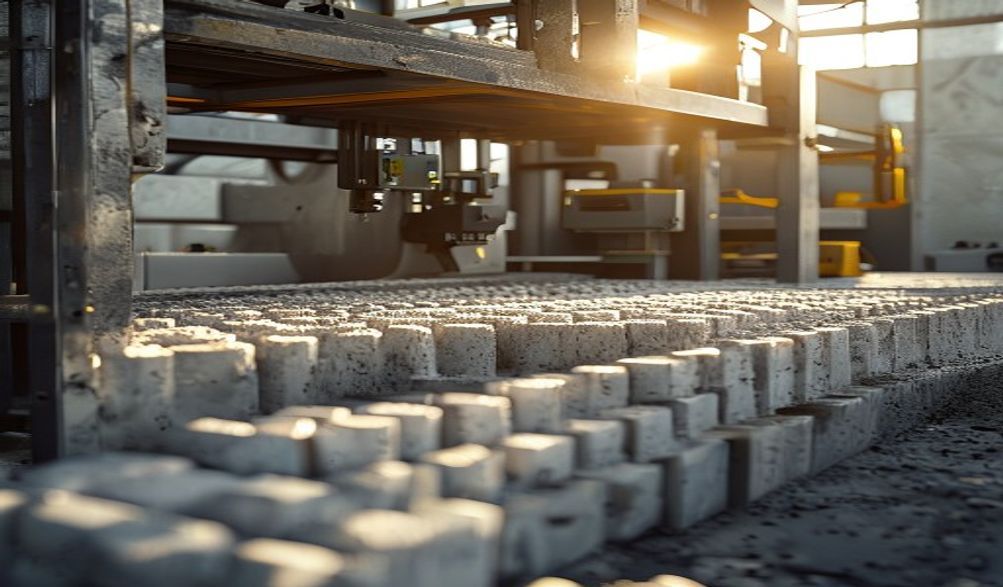
Як вибрати правильний верстат для виробництва блоків та цегли для продажу: Посібник покупця на 2026 рік
Вступ
Ви вирішили інвестувати в машину для виробництва блоків. Це ключовий крок до зростання, ефективності та прибутковості. Але коли ви починаєте пошук, одразу стикаєтеся з безліччю варіантів: ручні, автоматичні, гідравлічні, вібраційні, стаціонарні, мобільні. Технічні характеристики сипляться на вас, ціни дуже різняться, і кожен постачальник обіцяє бути найкращим. Ризик зробити дорогу помилку здається надто реальним.
Цей посібник створений, щоб пробитися крізь цей шум. Заснований на роках галузевого досвіду, технічному аналізі та незліченних розмовах як з успішними власниками бізнесу, так і з тими, хто навчився на власних помилках, наша мета проста: надати вам надійні, практичні поради. Ми хочемо допомогти вам подолати плутанину та прийняти впевнене, обґрунтоване рішення, яке відповідає вашим конкретним цілям.
Ми проведемо вас через увесь процес, починаючи з основного кроку — розуміння вашого власного проєкту, а потім розберемо типи машин і технічний жаргон. Ми заглибимося в часто ігноровану загальну вартість володіння та покажемо, як ретельно перевіряти постачальників. Наприкінці ви матимете чіткий план дій і практичний контрольний список для здійснення покупки.
Розуміння вимог вашого проекту: основа вашого вибору
Перш ніж переглянути хоча б один брошуру з обладнанням, потрібно заглянути всередину себе. Найпоширеніша і найдорожча помилка — купувати машину на основі її характеристик або ціни, а не того, що вам насправді потрібно. Цей розділ присвячено закладанню власної основи.
Визначення ваших виробничих цілей
Почніть з конкретизації цифр і майбутніх планів.
- Щоденний/Тижневий обсяг випуску:Це ваш орієнтир. Чи обслуговуєте ви невеликий місцевий ринок, один великий будівельний майданчик, чи прагнете регіональної дистрибуції? Невеликий завод може потребувати 1 000 – 3 000 блоків на день, тоді як комерційне підприємство може орієнтуватися на 10 000+.
- Типи необхідних блоків/цегли:Перерахуйте всі товари, які ви плануєте продавати.
- Стандартні пустотілі блоки (4", 6", 8")
- Тверді бетонні цеглини
- Бруківка та тротуарна плитка з замковим з'єднанням
- Спеціалізовані форми (газонні решітки, блоки для підпірних стін, декоративна цегла)
- Поточний та майбутній масштаб:Будьте чесними щодо своїх амбіцій. Чи це стабільний, невеликий бізнес, чи ви плануєте значно масштабуватися за 3–5 років? Придбання машини, яка не зможе зростати разом із вами, так само проблематичне, як і купівля тієї, що значно перевищує ваші поточні потреби.
Analyzing Your Raw Materials
The machine is just one part of the system; your raw materials dictate its design.
- Primary Material: The machine must be engineered for your material.
- Бетон: The most common. Requires a machine with sufficient compaction force.
- Зольний пил: An eco-friendly alternative; often uses similar machines to concrete.
- Глина: Requires a completely different type of machine (extrusion or firing).
- Stabilized Earth (CSEB): For compressed earth blocks; uses high static pressure.
- Local Aggregates: The availability, quality, and cost of sand, gravel, and stone dust in your area will influence your mix design and, consequently, the pressure and vibration needed from your machine.
- The Material-Machine Link: A hydraulic press is often better for producing high-density, smooth-faced blocks from a stiff concrete mix, while a strong vibratory system might be ideal for a more fluid mix producing standard hollow blocks.
Core Types of Block Making Machines Explained
Now that you know your needs, let’s categorize the solutions. Understanding these fundamental types is key to narrowing your search.
Manual or Semi-Automatic Machines
These are the entry-point and small-scale workhorses of the industry.
- Ідеально підходить для: Entrepreneurs starting out, community projects, small-scale production, and locations with unreliable or no electrical grid.
- Як вони працюють: The operator manually feeds the mix into a mold, then uses a lever (manual) or a small press (semi-auto) to compact it. The block is then ejected and cured.
- Переваги:
- Lowest capital investment.
- Simple mechanics mean easier maintenance and repair.
- Minimal power requirements.
- Недоліки:
- Low output (typically 300-1,000 blocks per 8-hour shift).
- Highly labor-intensive.
- Product consistency heavily relies on operator skill.
Повністю автоматичні стаціонарні машини
This is the heart of a modern block yard. They are complete production systems.
- Ідеально підходить для: Medium to large-scale commercial production where consistent quality and high output are non-negotiable.
- Як вони працюють: These are integrated lines. A mixer feeds material to the machine, which automatically fills molds, applies high pressure and vibration, ejects blocks onto pallets, and stacks them. The entire cycle is controlled by a programmable logic controller (PLC).
- Переваги:
- Very high output (2,000 – 10,000+ blocks per day).
- Exceptional product uniformity and finish.
- Can be programmed to produce different block types by changing molds.
- Requires less manual labor per block produced.
- Недоліки:
- Висока початкова інвестиція.
- Requires a stable, high-capacity power supply (often 3-phase).
- Needs a solid concrete foundation and more space.
- More complex, requiring better-trained operators and maintenance.
Мобільні машини для виробництва блоків
Think of these as production factories on wheels, designed to bring the plant to the project.
- Ідеально підходить для: Large construction companies producing blocks directly on the job site for use in that same project.
- Як вони працюють: Mounted on a trailer, these machines can be towed to a location. They produce blocks directly onto the ground or onto pallets on-site.
- Переваги:
- Eliminates the high cost of transporting finished blocks from a yard to a distant site.
- Reduces block breakage during transit.
- Offers location flexibility.
- Недоліки:
- Output is generally lower than large stationary plants.
- Requires a prepared, level site at each location.
- Can be more exposed to the elements and wear-and-tear.
Key Technical Specifications to Scrutinize
When comparing machines, these are the numbers and features that truly matter. Look beyond marketing claims.
Production Capacity & Cycle Time
Don’t just look at the “blocks per hour” in the brochure. Understand what it means.
- Theoretical vs. Real-World Output: A brochure may state “2,000 blocks/hour.” This is often a theoretical maximum under perfect conditions with one specific block type. Ask for a realistic, sustained 8-hour production rate for the block you want to make.
- Mold Configuration: Capacity is a function of the mold.
- Розмір форми: A machine that makes a 6” block will have a different output than one making a 4” block.
- Number of Cavities: A “4-block mold” produces four blocks per cycle. A “10-block mold” for pavers produces more. Ensure the machine can handle the mold size and weight you need.
Система тиску: Гідравлічна проти Вібраційної
This is the core of how your block is formed and determines its final quality.
- Гідравлічні системи:
- Use fluid pressure to apply a slow, immense, and controlled force.
- Переваги: Produces blocks with very high compressive strength and density. Excellent for complex shapes and smooth, architectural finishes. Better at handling stiffer concrete mixes.
- Вібраційні системи:
- Use high-frequency vibration to consolidate the concrete mix in the mold.
- Переваги: Generally faster cycle times. Often more cost-effective for standard hollow and solid blocks. Can be very effective with the right mix design.
- The Verdict: For premium, high-strength, or specialty blocks, prioritize hydraulic or combined hydraulic-vibration systems. For high-volume production of standard blocks, a robust vibratory system may be perfectly sufficient and more economical.
Power Requirements & Operational Costs
The purchase price is just the beginning. Understand your running costs.
- Джерело живлення: What’s available at your site?
- Electrical: Is it reliable single-phase or industrial 3-phase power? Check the machine’s voltage and amperage requirements.
- Дизель: Common for mobile units or locations without grid power. Factor in fuel consumption and noise.
- Estimating Costs: A fully automatic line with a large mixer and conveyor will consume significantly more power than a semi-automatic machine. Request estimated energy consumption data from the supplier.
Mold Customization & Flexibility
Your ability to adapt to market demands hinges on your molds.
- Interchangeability: The best investment is in a machine with a quick-change mold system. This allows you to switch from producing paving stones to hollow blocks in a matter of hours, not days.
- Індивідуальні форми: Need a unique block design? Discuss this early. Reputable manufacturers have in-house mold shops. Ask about the lead time, cost for a custom mold, and the material used (hardened steel is best for longevity).
Beyond the Machine: The Total Investment & Ecosystem
A trustworthy supplier doesn’t just sell you a machine; they ensure your success. This is where due diligence separates partners from vendors.
The True Total Cost of Ownership (TCO)
Create a budget that includes every single cost.
- Initial Machine Price: The quoted cost.
- Shipping, Insurance, and Customs: These can add 15-30% to the cost for international purchases. Get a firm CIF (Cost, Insurance, Freight)абоDDP (Delivered Duty Paid) quote.
- Installation & Foundation: Do you need to pour a special concrete foundation? Does the price include an engineer to supervise installation?
- Допоміжне обладнання: You cannot run a plant with just the block machine. Budget for:
- Concrete pan mixer or batching plant
- Belt conveyors or forklifts
- Block curing racks or shelves
- Pallet stacker/destacker
- Довгострокові витрати: Regular maintenance, spare parts (wear parts like mold liners, hydraulic seals), and ongoing energy consumption.
Vetting the Manufacturer or Supplier
Use the E-E-A-T framework to evaluate them.
- Досвід: How long have they been building these specific machines? Request a list of past clients in your region and actually contact them. Ask for photos or videos of their installed and working machines.
- Експертиза: Do they offer comprehensive training for your operators and maintenance staff? Is technical support available in your time zone and language? Will they provide detailed electrical and hydraulic diagrams?
- Авторитетність: Are they a recognized brand with a track record? Do they hold relevant international certifications (e.g., CE marking for Europe, ISO quality management standards)? These indicate a commitment to standardized manufacturing processes.
- Надійність: This is the most critical. What is their after-sales service policy in writing?
- Який термін гарантії та що вона покриває?
- Is there a guaranteed spare parts availability period (e.g., 10 years)?
- How do you get support—email, phone, WhatsApp?
- Can you find independent reviews or testimonials?
The Final Decision-Making Checklist
Before you sign any contract or transfer any money, run through this list.
- [ ] Project Needs: My daily output target and product list are finalized.
- [ ] Сировина: I have confirmed the machine is compatible with my local aggregate mix.
- [ ] Тип машини: I have chosen between Manual/Semi-Automatic, Fully Automatic Stationary, or Mobile based on my scale and site.
- [ ] Key Specs: The machine’s pressure system, cycle time, mold options, and power requirements meet my quality and operational needs.
- [ ] Total Budget: I have a detailed budget that includes the machine, shipping, duties, installation, auxiliary equipment, and estimated first-year running costs.
- [ ] Supplier Vetting: I have contacted the supplier’s references, verified their experience, and reviewed their after-sales service and warranty terms in detail.
- [ ] Final Verification: I have a clear installation plan, have arranged necessary site preparations (power, foundation), and understand the training being provided.
Часті питання (FAQ)
Q: What is the average price range for a block making machine?
А: There is no “average.” Prices range from around $3,000 – $8,000 for a manual/semi-automatic machine, to $25,000 – $60,000 for a mid-range stationary automatic, and can exceed $150,000 for a large, fully automated production line with auxiliary equipment. The price reflects output, automation level, and build quality.
Q: Can one machine produce different types of blocks and bricks?
A: Yes, absolutely. This is one of the key advantages of block machines. By purchasing different interchangeable molds, a single machine can produce hollow blocks, solid bricks, paving stones, and more. The ease of changeover varies by machine design.
Q: How important is after-sales service, and what should it include?
A: It is critically important—often more so than a slight price difference. Comprehensive service should include: detailed installation manuals, remote or on-site installation guidance, thorough operator and maintenance training, a complete parts catalog, and a reliable, responsive channel for technical troubleshooting and ordering genuine spare parts.
Q: What are the most common mistakes first-time buyers make?
А: The top pitfalls are:
1. Underestimating Output: Buying a machine that can’t meet demand, stifling growth.
2. Ignoring the Full System: Forgetting to budget for the mixer, conveyor, and forklift needed to run efficiently.
3. Price-Only Focus: Choosing the cheapest machine, which often leads to higher downtime, poor quality blocks, and negligible supplier support.
4. Poor Site Planning: Not ensuring the site has the necessary space, foundation, and power supply for the chosen equipment.
Висновок
Choosing the right block brick making machine is a significant but manageable investment. The correct path isn’t about finding the “best” machine in a vacuum; it’s about finding the best machine for you. This requires a careful balance of your specific project requirements, a clear understanding of technical specifications, a realistic view of the total cost of ownership, and, ultimately, a partnership with a reliable and experienced supplier.
Take the time to do your homework. Use the checklist in this guide to prepare a detailed Request for Quotation (RFQ). Ask pointed questions, demand customer references, and if possible, request a live video demonstration of the machine you’re considering. Your diligence now will pay dividends for years to come in the form of reliable production, consistent quality, and a strong return on your investment.
<