
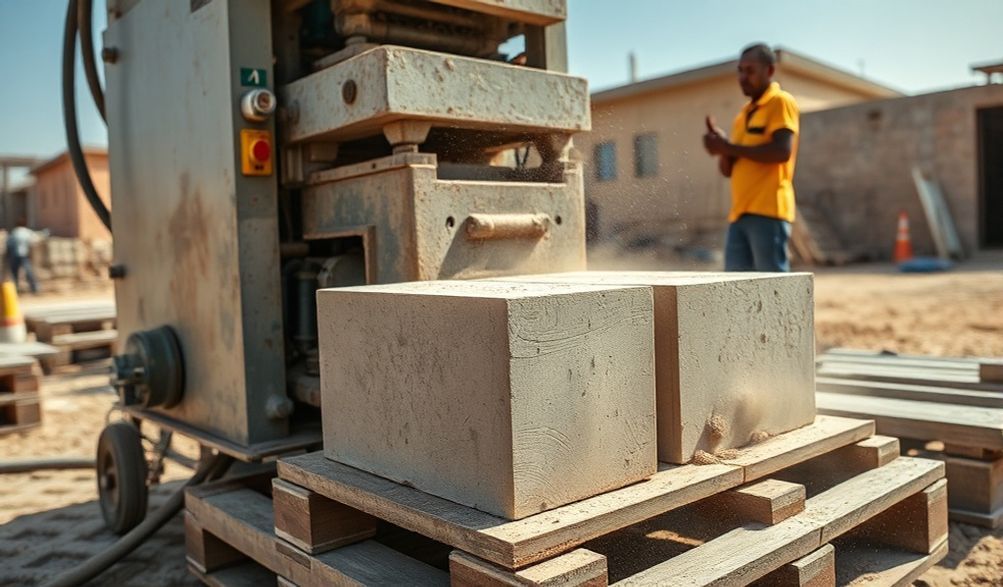
Ваше полное руководство по машинам для производства блоков в Эфиопии: типы, цены и поставщики
Введение
Эфиопия строит свое будущее, причем в буквальном смысле. От амбициозных инфраструктурных проектов в Аддис-Абебе до растущего спроса на доступное жилье в регионах — строительный сектор страны переживает беспрецедентный рост. В самой основе этого бума — опять же в прямом смысле — лежит скромный бетонный блок. Качество, доступность и стоимость этих блоков напрямую влияют на прочность, скорость и жизнеспособность каждого строительного проекта. Именно здесь стратегические инвестиции вМашина для производства блоков в Эфиопиипревращается из простой покупки оборудования в ключевое бизнес-решение.
Это всеобъемлющее руководство создано как ваш основной источник информации. Наша цель — отделить зерна от плевел и предоставить подрядчикам, строителям и начинающим предпринимателям непредвзятую, детальную информацию, необходимую для ориентации на рынке. Наш анализ основан на текущих рыночных тенденциях, технических характеристиках и, что наиболее важно, практических рекомендациях, адаптированных к уникальным возможностям и вызовам эфиопского контекста. Мы стремимся предоставлять фактические и актуальные знания, чтобы вы могли сделать уверенные и обоснованные инвестиции. В следующих разделах мы подробно рассмотримтипы машин для производства блоковдоступно, развенчать мифы озатраты и структуры ценообразованияоценивайте поставщиков и применяйте операционные знания, чтобы ваш проект — будь то личная инициатива или коммерческое предприятие — был построен на прочном фундаменте.
Почему стоит инвестировать в машину для производства блоков в Эфиопии?
Понимание «почему» имеет решающее значение, прежде чем исследовать «как». Инвестиции в оборудование для производства блоков в Эфиопии — это не просто покупка инструмента; это вложение в национальную необходимость и обеспечение конкурентного преимущества.
Строительный бум: инфраструктура и спрос на жилье в Эфиопии
The numbers speak for themselves. Ethiopia has consistently ranked among Africa’s fastest-growing economies, with massive public and private investments in roads, railways, industrial parks, and urban development. The government’s housing initiatives aim to address a significant deficit, driving relentless demand for building materials. This creates a dual opportunity: ensuring a steady, quality supply for your own construction projects or establishing a profitable business supplying this booming market.
Economic Advantages: Cost Savings, Profitability, and Business Opportunities
For contractors, in-house block production slashes material costs by 30-50% compared to purchasing from third parties. It eliminates supply chain delays, giving you complete control over your project timeline. For entrepreneurs, it opens a clear path to profitability. The demand far outstrips organized supply in many areas, making a block yard a viable and resilient small-to-medium enterprise. You’re not just selling blocks; you’re providing a critical solution for your community’s growth.
Quality Control: Producing Durable, Standardized Blocks for Your Projects
Relying on inconsistent external suppliers can compromise your building’s integrity. With your own machine, you control the mix design, vibration, and curing process. This means producing blocks that meet or exceed ES (Ethiopian Standard) specifications for compressive strength and dimensional accuracy. Stronger, uniform blocks lead to safer buildings, less mortar usage, and a superior final product—enhancing your reputation for quality.
Types of Block Making Machines Available in Ethiopia
The market offers a spectrum of technology, from simple hand-operated units to fully automated plants. Your choice depends on your budget, required output, and labor model.
Manual Block Making Machines: Operation, Output, and Ideal Use Cases
- Как они работают: Operated entirely by human labor. The operator fills the mold, compresses the mix using a lever, and then manually ejects the block.
- Вывод: Typically 200-500 blocks per 8-hour day.
- Идеально подходит для: Small-scale personal projects (building a home, compound wall), very low-budget startups, or remote areas with no electricity. They are the most affordable entry point but are labor-intensive and produce lower volumes.
Semi-Automatic Machines: Balancing Affordability and Productivity
- Как они работают: These machines use a mechanical or hydraulic system (often powered by electricity or diesel) to provide the compression and vibration. Operators still feed the raw mix and may handle block removal, but the core forming process is powered.
- Вывод: Can range from 800 to 2,500 blocks per 8-hour shift, depending on model and crew size.
- Идеально подходит для: Most small to medium-sized block production businesses and mid-sized construction firms. They offer the best balance, providing a significant productivity boost over manual machines without the complexity and cost of full automation.
Fully Automatic Block Making Plants: For Large-Scale Production
- Как они работают: These are complete systems with automated material feeding, mixing, molding, curing, and stacking. They require minimal human intervention, primarily for supervision and maintenance.
- Вывод: Can produce 5,000 to 20,000+ blocks per day.
- Идеально подходит для: Large block manufacturing plants supplying major cities, contractors, and government projects. They represent a major capital investment but offer the lowest cost per block at very high volumes.
Mobile vs. Stationary Block Machines: Which is Right for Your Site?
- Мобильные блок-машины: Mounted on a trailer, these can be towed directly to a construction site. This eliminates block transportation costs and is perfect for large, remote projects like dams, road construction camps, or large farm developments.
- Стационарные блок-машины: Set up in a fixed location (a block yard). They are generally more robust, can be part of a larger system (like a conveyor), and are the standard choice for a dedicated production business.
Key Features to Consider Before Buying
Look beyond the basic type. These features determine how well the machine will perform in your specific situation.
Production Capacity (Blocks Per Hour): Matching Output to Your Needs
Don’t just buy the biggest machine you can afford. Calculate your current and projected demand. An underutilized automatic plant is a money-loser. Key questions:
* What is the cycle time (time to produce one batch of blocks)?
* Is the stated output based on a single mold or with multiple mold cavities?
* Does the output account for loading, curing, and stacking time?
Block Types and Molds: Hollow, Solid, Interlocking, Pavers, etc.
Versatility adds value. Ensure the machine can produce the block types in demand in your target market:
* Пустотелые блоки: Standard for walls, offering good strength with less material.
* Сплошные блоки: For foundations, columns, and high-load areas.
* Взаимосцепляющиеся блоки: Gaining popularity for their mortar-less construction speed.
* Pavers and Kerbstones: For landscaping and road projects.
Check the cost and availability of different mold sets from the supplier.
Power Source: Electric, Diesel, or Hybrid Models for Ethiopian Utilities
- Электрический: Cleaner, quieter, and cheaper to run, but vulnerable to Ethiopia’s frequent power fluctuations. A generator backup is often essential.
- Дизель: Fully independent of the grid, ideal for areas with unreliable power. Higher fuel costs and more noise.
- Гибрид: Can run on either electricity or a diesel engine, offering maximum flexibility and business continuity.
Durability and After-Sales Service: Critical Factors for Long-Term Operation
The machine’s build quality is paramount. Look for:
* Прочная стальная рама: To withstand constant vibration.
* Quality Hydraulic System: The heart of the machine; reputable components matter.
* Vibration Motor Quality: Ensures proper block compaction.
In Ethiopia, after-sales service is arguably more important than the initial price. A cheap machine with no local technical support or spare parts will become a costly scrap metal.
Understanding the Cost: Block Making Machine Prices in Ethiopia
Prices vary wildly based on type, brand, and origin. Be prepared for additional costs beyond the machine’s sticker price.
Price Range Breakdown (Manual, Semi-Auto, Fully Auto)
- Ручные станки для производства блоков: ETB 15,000 – ETB 80,000.
- Полуавтоматические станки: ETB 200,000 – ETB 1,500,000+. The wide range depends on capacity, brand, and automation level.
- Полностью автоматизированные заводы: ETB 2,500,000 and can go up to ETB 10,000,000+ for large, imported systems.
Factors Influencing Cost: Brand, Automation, Capacity, and Import Duties
- Brand: Well-known international brands (e.g., Zenith, Hess, Prensoland) command a premium over generic or Chinese-made machines.
- Уровень автоматизации: Each step of automation (auto-feeding, auto-stacking) adds cost.
- Вместимость: Higher output = higher price.
- Import Duties: Machines imported directly or by distributors are subject to Ethiopian customs duties, which significantly affect the final landed cost.
Total Cost of Ownership: Beyond the Purchase Price (Maintenance, Spares, Training)
Your real investment includes:
1. Shipping and Installation.
2. Foundation and shed for the machine.
3. Initial stock of spare parts (wear parts like mold liners, springs).
4. Operator training.
5. Routine maintenance costs (hydraulic oil, grease, filter changes).
6. Raw material inventory (cement, aggregate).
Finding Reliable Suppliers and Brands in Ethiopia
Navigating the supplier landscape is critical to your long-term success.
Local Ethiopian Distributors and Dealers: Pros and Cons
- Плюсы: Easier communication, potential for faster service calls, may offer training in local languages, might have showrooms for demonstration.
- Минусы: Prices may be marked up, may have limited model options, dependent on their own supply chain for spares.
International Manufacturers: How to Navigate Direct Imports
- Плюсы: Potentially lower factory prices, widest selection of models.
- Минусы: Logistical complexity (shipping, customs clearance), high minimum order quantities, difficult to arrange after-sales service, language barriers. Recommended only for very large, well-capitalized buyers.
Vetting Suppliers: Checklist for Warranty, Service Support, and Spare Parts Availability
Before signing a contract, ask:
* What is the warranty period and what does it cover?
* Do you have a service engineer based in Ethiopia? What is the typical response time?
* Do you stock critical spare parts locally? Can you provide a list of parts with prices?
* Can you provide references from other customers in Ethiopia?
* Do you offer installation and on-site training?
Popular & Reliable Brands in the Ethiopian Market
While you must conduct your own due diligence, brands that have established a presence include:
* International: German-engineered brands (like Zenith) are known for high quality. Various Turkish and Chinese manufacturers (like QGM, Hongfa) offer a range of options.
* Local Assembly: Some suppliers assemble machines locally using imported components, which can offer a good cost-service balance.
Operational Guide and Best Practices
Owning the machine is step one. Operating it efficiently is where the profit is made.
Raw Material Preparation: Ideal Mix for Cement, Sand, and Aggregate in Ethiopia
Quality blocks start with a consistent mix. A common standard mix ratio is 1 part cement to 6 parts aggregate (a blend of sand and crushed stone). The sand should be coarse and clean. The aggregate size should be between 5-10mm for smooth block faces. Always test your local materials and adjust the mix and water content for optimal strength and workability.
Step-by-Step Operation and Safety Procedures
- Подготовка: Ensure the machine is on a level, solid foundation. Check oil and fuel levels.
- Смешивание: Combine raw materials in a pan mixer until uniform.
- Кормление: Fill the machine’s hopper with the mixed concrete.
- Формование: Activate the machine cycle (vibration and compression happen here).
- Курение: Gently transfer fresh blocks to a curing area. Keep them moist and covered for at least 7 days for proper strength development. SAFETY: Always wear gloves, safety glasses, and sturdy boots. Never place hands in the mold area during operation. Lock out power before any maintenance.
Maintenance Tips to Maximize Your Machine’s Lifespan
- Ежедневно: Clean the machine thoroughly after use. Check for loose bolts.
- Weekly: Grease all moving joints and bearings.
- Monthly: Check hydraulic oil level and condition. Inspect mold liners for wear.
- Ежегодно: Consider a full service by a qualified technician.
Troubleshooting Common Issues with Block Making Machines
- Blocks Breaking When Ejected: The mix is too dry, or vibration time is insufficient.
- Poor Surface Finish: The mix is too wet, or the mold liners are worn out.
- Machine Losing Pressure: Check for hydraulic oil leaks, a dirty filter, or pump issues.
- Uneven Block Height: The mold is not properly balanced or the feeding is inconsistent.
Frequently Asked Questions (FAQ)
Q: What is the cheapest type of block making machine available in Ethiopia?
A: Manual block making machines are the most affordable, with prices starting around ETB 15,000. They are suitable for very small-scale or personal use.
Q: How many blocks can a standard semi-automatic machine produce per day?
A: A typical single-horsepower semi-automatic machine with a 4-block mold can produce between 1,200 to 2,000 blocks in an 8-hour shift with a skilled crew, depending on the block type and workflow.
Q: Can I get training on how to operate the machine from local suppliers?
A: Reputable local suppliers almost always provide basic on-site installation and operational training. This is a key question to ask before purchasing.
Q: What are the main challenges of running a block making business in Ethiopia?
A: Key challenges include securing consistent, affordable cement supply; managing costs amid inflation; dealing with power interruptions (requiring a generator); and navigating local logistics and market competition.
Q: Are there any government regulations or standards for block production?
A: Yes. The Ethiopian Standards Agency (ESA) sets standards for concrete hollow blocks (e.g., ES 1171). Blocks should meet specified compressive strength levels. Adhering to these standards is crucial for quality and credibility.
Q: How do I calculate the return on investment (ROI) for a block machine?
A: Calculate: 1) Your total investment (machine + setup + operating capital). 2) Your estimated monthly production volume. 3) Your selling price per block minus your cost per block (materials, labor, utilities, rent). The time it takes for your net profit to equal your total investment is your payback period.
Заключение
Choosing the right Машина для производства блоков в Эфиопии is a strategic decision that hinges on carefully balancing your project scale, budget, and the crucial need for reliable after-sales support. This guide has walked you through the market landscape—from the driving forces behind the investment to the technical specifics of operation.
Our final, critical recommendation is to prioritize total value over the lowest sticker price. A slightly more expensive machine backed by a supplier with a strong service network and local spare parts will save you immense cost and stress in the long run, ensuring your productivity and profitability.
Use this guide as your reference point. Contact multiple reputable suppliers, ask them the detailed questions outlined here, and request site visits to see their machines in operation if possible. By making an informed decision, you are not just acquiring a piece of equipment; you are investing in a tool that will build your business and contribute to the very fabric of Ethiopia’s growing cities and communities. Make that foundation a strong one.
<