
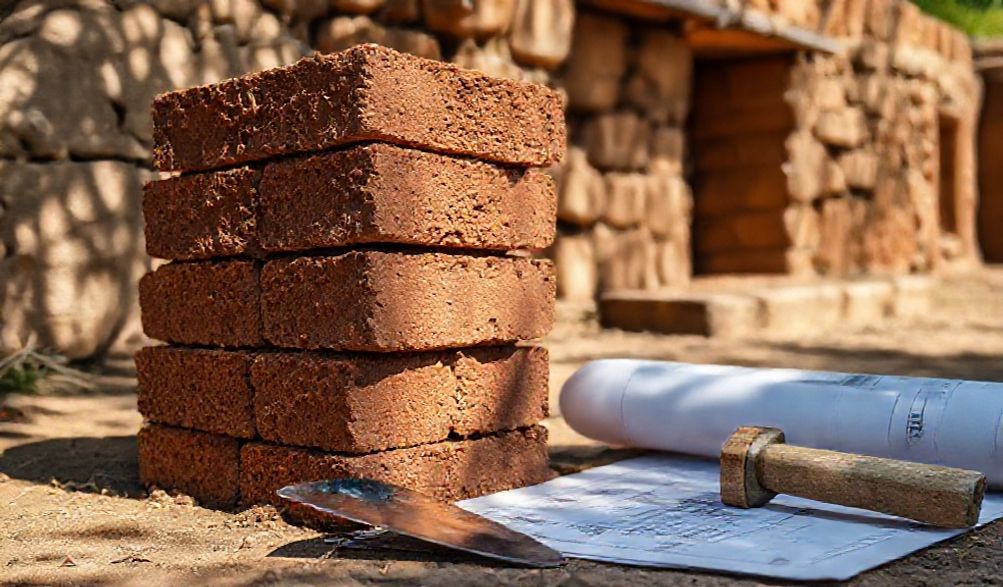
Земляные блоки: Полное руководство по строительству из древнейшего материала природы
В эпоху, отмеченную климатической срочностью и глобальным жилищным кризисом, строительная отрасль оказалась на распутье. Нам отчаянно нужны строительные решения, которые были бы устойчивыми, доступными и здоровыми — без ущерба для долговечности или комфорта. Ответ, как оказалось, может лежать не в высокотехнологичной лаборатории, а прямо у нас под ногами. Знакомьтесь: земляной блок — современное воплощение древнейшего строительного материала человечества, предлагающее глубокий и практичный путь вперёд.
Это руководство — ваш исчерпывающий ресурс по спрессованным земляным блокам (СЗБ). Основываясь на многолетнем совместном опыте в области устойчивой архитектуры, структурного проектирования и практического натурального строительства, мы раскроем суть этого древне-современного материала. Вы узнаете, что такое земляные блоки, их неоспоримые преимущества, реальные сложности и пошаговый процесс строительства с их использованием. К концу вы сможете оценить, станет ли этот вневременной, устойчивый материал правильной основой для вашего строительного проекта.
Что такое земляные блоки? Основы понимания
На первый взгляд, земляной блок может напоминать грубый глиняный кирпич. Но именно в процессе его создания и возможностях кроются увлекательные детали — и значительные преимущества.
Определение: Нечто большее, чем просто глинобитные кирпичи
Земляной блок, а именноспрессованный земляной блок (СЗБ), представляет собой точно сконструированный строительный элемент. Он изготавливается из влажной почвенной смеси, обычно содержащей глину, ил и песок, которая сжимается под высоким механическим давлением в блочном прессе. Такое сжатие создает плотный, стабильный блок, достаточно прочный для несущих стен.
关键是要将CEBs与其他土建技术区分开来。
* Adobe:Использует аналогичную почвенную смесь, но высушивается на солнце, а не механически прессуется, что приводит к более мягкому блоку.
* Утрамбованная земля:Предполагает уплотнение влажной почвы непосредственно в опалубку для создания сплошных монолитных стен, а не отдельных блоков.
Механическое прессование блоков из земли (CEB) позволяет получить более однородный, прочный и часто более точный по размерам продукт по сравнению с его древними предшественниками.
Краткая история: древняя мудрость в современном применении
Строительство из земли старо как сама цивилизация. От грандиозных просторов Великой Китайской стены до непреходящей красоты небоскребов Йемена и укреплений Альгамбры — земляная архитектура доказала свою долговечность на протяжении тысячелетий.
Ключевым нововведением для современных земляных блоков стало изобретение механических прессов в XIX и XX веках. Эти машины, от простых ручных рычажных прессов до крупных гидравлических установок, превратили земляное строительство из чисто народного ремесла в повторяемую, инженерно обоснованную строительную систему. Этот союз древней мудрости обращения с материалом и современных технологий лежит в основе нынешнего возрождения земляных блоков.
The Core Composition: What’s in an Earth Block?
The “recipe” for a high-quality earth block is both simple and scientific. The ideal mix consists of:
- Глина: Acts as the natural binder, holding the block together. Too much clay can cause excessive shrinkage and cracking.
- Ил: A fine particle that fills voids but offers little structural strength.
- Песок The aggregate that provides compressive strength and reduces shrinkage.
- Stabilizer (Optional): A small percentage (often 3-10%) of cement or lime is sometimes added to increase weather resistance, durability, and strength, particularly in wetter climates. Truly “unstabilized” blocks rely solely on the clay’s natural binding properties.
The single most important step before production is soil testing. A simple “jar test” can give a basic idea of soil composition, but for structural walls, a professional geotechnical analysis is highly recommended to determine the optimal mix design.
The Compelling Advantages of Building with Earth Blocks
Why choose earth blocks over conventional materials like concrete or wood framing? The benefits are multifaceted, impacting the environment, your wallet, and your well-being.
Unmatched Sustainability and Low Environmental Impact
In a world concerned with воплощенная энергияиcarbon footprint, earth blocks excel.
* Local & Low-Energy: The primary material is often sourced directly from the build site or locally, eliminating the carbon-intensive transport of manufactured goods. Production requires minimal energy—often just the force of the press and the power to mix materials.
* Non-Toxic & Recyclable: They contain no volatile organic compounds (VOCs) or synthetic chemicals. At the end of a building’s life, the blocks can simply return to the earth or be crushed and reused.
* High Thermal Mass: This is a key property. Earth blocks absorb, store, and slowly release heat, acting as a thermal battery that moderates indoor temperatures.
Superior Comfort and Energy Efficiency
Thethermal mass of earth walls translates directly into occupant comfort and lower utility bills.
* Natural Climate Control: In summer, the thick walls absorb daytime heat, keeping interiors cool. At night, they release that heat. This cycle flips in winter, stabilizing temperatures.
* Passive Solar Design: When paired with strategic window placement, earth block walls become the core of a highly efficient passive solar home, drastically reducing reliance on mechanical heating and cooling.
* Humidity Regulation: The porous nature of earth allows it to passively absorb and release moisture from the air, helping to maintain ideal indoor humidity levels (between 40-60%), which improves air quality and comfort.
Долговечность и структурная целостность
Modern earth blocks are engineered for strength.
* When properly compacted and protected, CEBs can meet or exceed building code requirements for compressive strength in low-rise residential construction.
* Historical examples around the world stand as testament to the material’s potential for centuries-long durability.
* They offer excellent fire resistance (earthing doesn’t burn) and, when detailed correctly, strong resistance to pests.
Health, Safety, and Affordability
- Healthy Living: The use of natural, breathable materials creates a hypoallergenic indoor environment free from off-gassing.
- Экономически эффективный: While not always the cheapest upfront cost due to specialized labor, significant savings come from low material costs (your soil), reduced lifetime energy expenses, and minimal maintenance.
Potential Challenges and Considerations
A balanced view is essential. Earth block construction is not a universal panacea and comes with specific considerations.
Understanding the Limitations
- Water is the Enemy: Unprotected earth will erode. The design must prioritize water management through large roof overhangs, moisture-resistant foundations, and durable plasters.
- Climate Suitability: While excellent in arid and temperate climates, building in consistently cold, wet regions requires expert design (excellent insulation strategies, often on the exterior) to avoid moisture and heat loss issues.
- Building Codes & Permits: In some regions, obtaining permits for alternative building methods can be a hurdle. Early engagement with local building officials, armed with engineering data and code references like the ICC’s “International Building Code Appendix S” for earthen construction, is critical.
Labor and Expertise Requirements
- While the process is accessible to dedicated owner-builders, it is knowledge-intensive and physically demanding.
- Specialized skills in soil mix design, block laying, and earthen plastering are valuable. The construction pace is generally slower than conventional wood framing, impacting labor costs.
The Earth Block Construction Process: Step-by-Step
Building with earth blocks is a deliberate, phased process that rewards careful planning.
Phase 1: Soil Assessment and Block Production
- Test: Conduct a professional soil analysis to determine clay/sand/silt ratios and optimal stabilizer percentage.
- Микс: Combine soil, stabilizer (if used), and water to achieve a uniform, damp (not wet) mix. A mechanical mixer is essential for volume.
- Пресса: Feed the mix into a block press. The machine compresses it with tremendous force (often 500+ PSI) into a dense block.
- Лечение: Stack the blocks and allow them to cure for several weeks. Stabilized blocks require keeping them damp during early curing to ensure strength gain.
Phase 2: Wall Assembly and Mortar
- Миномёт: Walls can be laid with a slurry of the same soil mix (earthen mortar) or a thin-set lime/cement-based mortar. The choice affects wall strength and breathability.
- Укладка: Similar to bricklaying, courses are laid in a running bond. Careful leveling and plumbing are essential. Lintels are installed over doors and windows.
Phase 3: Essential Protections: Roof, Plaster, and Foundation
- Foundation: A raised, impermeable stem wall (concrete or stone) is mandatory to prevent ground moisture from wicking into the earthen walls.
- Roof: A wide overhang (often 24+ inches) is non-negotiable. It acts as an umbrella, shielding the walls from driving rain.
- Plaster: The final, crucial shield. A well-applied earthen or lime plaster allows the walls to breathe while shedding water. It must be maintained periodically.
Are Earth Blocks Right For Your Project?
Ask yourself these key questions to find out:
Evaluate Your Site & Goals:
* Почва: Do you have access to suitable soil? A simple test is the first step.
* Климат: What is your local climate? Is there a long rainy season or extreme cold?
* Масштаб проекта: Is this a DIY garden wall or a full-scale home? Your approach will differ.
* Values: How high are sustainability, energy efficiency, and healthy materials on your priority list?
Navigating Regulations and Finding Professionals:
* Start conversations with your local building department early. Bring resources and precedents.
* To find expertise, search for:
* “Sustainable architect” or “natural building architect”
* “Compressed earth block contractor”
* Regional “natural building associations” or “cob/straw bale building” groups—these networks often include earth block practitioners.
Frequently Asked Questions (FAQ) About Earth Blocks
Q: Are earth blocks as strong as concrete blocks?
А: They have different strength profiles. High-grade concrete blocks have higher compressive strength. However, properly engineered and compressed earth blocks provide more than adequate strength for one to three-story homes and offer superior thermal, environmental, and hygric (moisture-buffering) benefits.
Q: Can I make earth blocks myself?
А: Absolutely. Many owner-builders use manual or motorized presses for their projects. Success depends entirely on thorough research, proper soil testing, and meticulous technique. For load-bearing structural walls, consulting with or hiring an experienced professional for the design and key stages is strongly advised.
Q: Do earth block homes require special insurance or financing?
А: They can. It’s a crucial step to engage with insurers and lenders early in the process. Success hinges on providing thorough documentation: engineered architectural plans, soil and block test reports, and evidence of code compliance. Some “alternative” or “green” building lenders are more familiar with these materials.
Q: How do you run utilities (wiring, plumbing) in an earth block wall?
А: It requires forethought. During the design phase, vertical chases (channels) and horizontal conduit paths are planned. Blocks can be notched, or conduits can be embedded in mortar joints. While more work than framing, where wires are simply run through cavities, it is a perfectly manageable part of the process.
Q: What is the typical cost per square foot for an earth block home?
А: This varies dramatically. If you have suitable soil and provide your own labor, material costs can be extremely low. However, if hiring specialized contractors, costs often align with mid-to-high-range conventional construction. The true “cost savings” of an earth block home are realized over decades through drastically reduced energy bills and minimal maintenance.
Заключение
Earth blocks represent a powerful convergence of ancient wisdom and modern engineering. They offer a viable, sustainable, and profoundly sensible path for constructing homes and buildings that are not only durable and energy-efficient but also actively contribute to the health of their inhabitants and the planet. Their success, however, is not automatic. It rests on a foundation of respect for the material’s nature: combining proven traditional knowledge with contemporary scientific understanding and unwavering commitment to quality craftsmanship.
If you are drawn to the idea of a home that is truly of its place—cool in summer, warm in winter, silent, and solid—consider exploring earth blocks further. Your next step could be a simple soil jar test on your land, reaching out to a natural building workshop, or scheduling a consultation with a sustainable architect. The material is waiting. The future of building can be found in the ground beneath us.
<