Наука о застывании: больше, чем просто высыхание
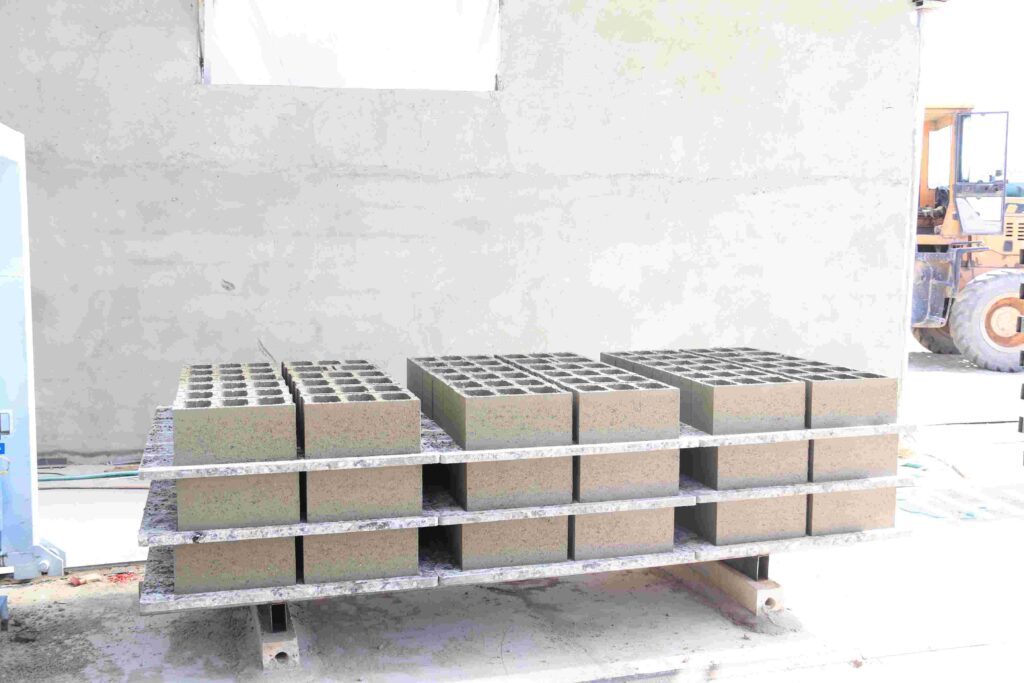
Крайне важно различать «схватывание» и полное «твердение». Начальный период схватывания означает время, необходимое блоку для набора достаточной прочности и устойчивости, чтобы его можно было перемещать без повреждений — в частности, укладывать на поддоны, упаковывать и транспортировать в пределах завода или на склад. Это главным образом зависит от потери свободной воды и начальных реакций гидратации вяжущего вещества (например, цемента).
- 1.1. Ключевые химические и физические процессы
При производстве блоки содержат значительное количество воды затворения. В первые часы начинается процесс гидратации, при котором вода вступает в реакцию с цементирующими материалами, образуя кристаллические структуры, связывающие заполнитель. Одновременно вода начинает испаряться с поверхности. Блок переходит из пластичного, податливого состояния в твёрдое. Это первоначальное приобретение «сырой прочности» обеспечивает возможность безопасного обращения. - 1.2. Различие между фиксацией и отверждением
Процесс схватывания — это лишь начало. Полное твердение — длительный процесс, продолжающийся неделями и даже месяцами, в ходе которого блоки постепенно достигают своей проектной прочности. Блок может достаточно затвердеть для отгрузки через 24–48 часов, но при соблюдении правильных условий он будет значительно набирать прочность в течение следующих 28 дней. Для цепочки поставок время схватывания определяет...обработка и отправка在施工现场或存储期间,固化过程仍在继续,而时间表则同时进行。
2. Основные факторы, влияющие на начальное время схватывания
Хронология не является универсальной; она варьируется в зависимости от нескольких производственных и экологических факторов.
- 2.1. Состав материалов и подбор смеси
- Тип связующего:所使用的胶凝材料的化学性质至关重要。旨在快速强度发展的配方会凝结得更快。
- Водоцементное отношение:Смесь с оптимальным содержанием воды затвердеет и наберет прочность более эффективно, чем слишком влажная или слишком сухая смесь.
- Admixtures: The use of specific additives can accelerate or retard the setting time. Some products may include accelerators to speed up early strength gain for faster turnover.
- 2.2. Production Method and Block Density
- Manufacturing Process: High-pressure compaction methods, common in many block types, expel air and water, creating a denser matrix that can gain handling strength more quickly compared to some lower-pressure methods.
- Density Classification: Denser units typically develop handling strength faster than lighter, more porous units, as the matrix is more consolidated.
- 2.3. Environmental Conditions in the Plant and Yard
- Temperature: This is the most influential external factor. Warm conditions (ideally 70°F/21°C and above) significantly accelerate hydration and evaporation, leading to faster set. Cold temperatures (below 50°F/10°C) can slow reactions dramatically, potentially doubling or tripling the required setting time before handling.
- Humidity: High ambient humidity slows the evaporation of surface water, prolonging the time needed before blocks can be safely moved.
- Air Circulation: Good airflow in the curing area aids in uniform moisture migration and strength development.
3. Practical Implications for the Supply Chain
Understanding these variables translates directly to operational efficiency and risk management.
- 3.1. Inventory and Storage Logistics
Production schedules must account for the necessary setting period before blocks can be moved to a storage yard. Rushing this process leads to damage—chipped corners, cracks, or broken webs—resulting in financial loss and compromised product integrity. Storage yard planning must consider how long pallets need to remain in a specific area before they can be safely relocated or loaded onto trucks. - 3.2. Scheduling and Order Fulfillment
Lead times provided to customers must incorporate the production and minimum setting time. A savvy procurement agent understands that an order placed today may not be physically shippable for 24-48 hours, depending on plant conditions. In colder seasons, this buffer may need to be extended. - 3.3. Quality Assurance and Handling
Distributors receiving fresh blocks should have protocols to assess their readiness for further handling, especially if they need to be re-palletized or transferred. Visual inspection for surface dryness and firmness, along with communication with the manufacturer about the production time, is essential.
Заключение
For stakeholders in construction supply, the setting time after production is a critical component of the product’s journey from raw material to jobsite. It is a complex interplay of chemistry, manufacturing parameters, and environmental conditions. Recognizing that blocks require this essential period to develop sufficient handling strength is key to minimizing waste, ensuring product quality, and maintaining reliable logistics. By factoring this knowledge into inventory planning, delivery scheduling, and handling procedures, dealers and distributors can optimize their operations, reduce costly damage, and build a reputation for delivering specification-grade products in optimal condition.
FAQ
Q1: What is a typical range for initial set time before blocks can be palletized and moved?
А: Under standard conditions (moderate temperature and humidity), most blocks gain enough “green strength” for careful handling within 18 to 48 hours after production. However, this can vary widely based on the specific factors outlined above.
Q2: How does cold weather affect the timeline, and what should we plan for?
А: Cold weather (near or below freezing) can slow chemical reactions drastically. Setting times can extend to 3-5 days or more. During winter months, it is essential to build additional lead time into order schedules and confirm with manufacturers about their cold-weather protocols and estimated readiness times.
Q3: Can blocks be shipped immediately after they are set enough to handle?
А: Yes, for transport purposes. Once blocks are stable on a pallet and can withstand the vibrations of transport without damage, they can be shipped. However, it is vital to communicate to end-users that the blocks are not yet fully cured and should be protected from extreme weather and rough handling on-site. Full design strength develops over 28 days.
Q4: Are there any visual or simple tests to check if blocks are ready for handling?
А: While non-destructive strength tests require equipment, simple indicators include: a firm surface that doesn’t indent easily, a consistent lighter color on the surface indicating moisture loss, and clean edges that do not crumble when gently touched. The most reliable method is to follow the manufacturer’s recommended timeline for their specific product under the prevailing conditions.
Q5: Does the required setting time impact pricing or minimum order quantities?
А: Not directly. However, the need for dedicated space and time in the curing area is a factor in a manufacturer’s overall capacity and production scheduling. During peak demand or in challenging climates, it may influence availability and delivery schedules, which can indirectly affect planning and logistics costs for buyers.