
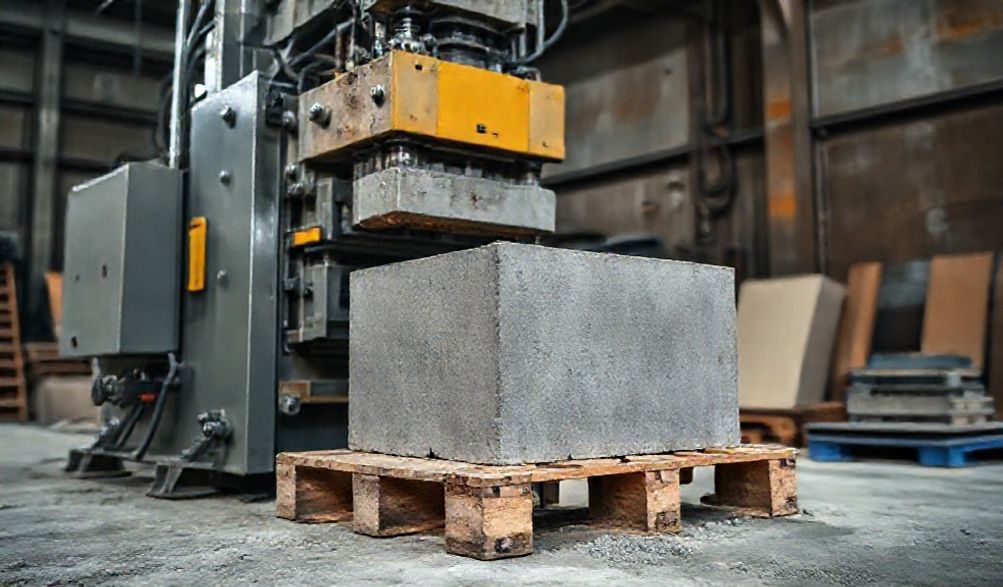
Полное руководство по станкам для формовки кирпича: типы, преимущества и как выбрать
Введение
Мировая строительная индустрия ежегодно производит более 1,5 триллиона кирпичей. На протяжении столетий эта основополагающая задача зависела от изнурительного ручного труда, что приводило к медленному производству, высоким затратам и нестабильному качеству. Сегодня, будь вы мелким застройщиком, растущим подрядчиком или предпринимателем, присматривающимся к строительному сектору, ограничения традиционного кирпичного производства могут сдерживать рост и прибыльность.
Вот современный станок для формовки кирпича: мощное инженерное решение, которое автоматизирует и революционизирует производство кирпича. Это руководство отделяет важное от второстепенного. Составленное на основе детальных отраслевых спецификаций, прямых данных от производителей и практического опыта, оно задумано как ваш исчерпывающий ресурс. Вы узнаете о различных типах машин, их конкретных преимуществах, ключевых факторах выбора подходящей модели, а также получите важные советы по эксплуатации и обслуживанию. Давайте заложим фундамент ваших знаний.
Что такое станок для формовки кирпича? Основная функция и эволюция
По своей сути, машина для формования кирпича — это устройство, которое автоматизирует процесс превращения сырья, такого как глина, бетон или зола-унос, в точные и однородные кирпичи или блоки. Она заменяет изменчивый человеческий фактор механической или гидравлической силой, гарантируя, что каждая единица продукции соответствует точным спецификациям.
Путь от ручной укладки глины до современных автоматизированных гигантов — это история индустриализации. Он прошёл путь от простых деревянных форм до механических рычажных прессов и, наконец, до сложных компьютерных производственных линий, которые мы видим сегодня. Эта эволюция была движима неустанным стремлением к эффективности, единообразию и масштабированию.
Основной принцип работы элегантно прост для большинства машин и включает три ключевых этапа:
1. Кормление:Подготовленная смесь сырья загружается в бункер машины.
2. Уплотнение/Формовка:Материал переносится в полость формы, где огромное давление (гидравлическое или механическое) уплотняет его. Для удаления воздушных карманов и обеспечения плотности часто используется вибрация.
3. Выброс:Новый, еще зеленый кирпич выталкивается из формы на поддон или конвейер для отверждения и сушки.
Виды машин для формовки кирпича: как выбрать подходящую
Не все машины для производства кирпича одинаковы. Ваш выбор в основном зависит от ваших производственных целей, бюджета и доступных ресурсов. Вот разбивка по основным категориям.
Ручные машины для формования кирпича
- Описание:Это самые простые и доступные варианты для начала работы. Управление полностью осуществляется вручную с помощью рычажного механизма, который сжимает материал в одной форме.
- Лучше всего подходит для:Крайне маломасштабные проекты (например, личное подсобное хозяйство), неправительственные организации, работающие в удалённых сельских районах без доступа к электросетям, или стартапы, тестирующие почву с минимальными капиталовложениями.
- Плюсы и минусы:
- Плюсы:Очень низкая стоимость, не требует электричества, портативный, прост в понимании и обслуживании.
- Минусы:Очень низкая производительность (100-500 кирпичей в день), высокая трудоемкость, нестабильное качество, зависящее от силы и техники оператора.
Полуавтоматические машины для формования кирпича
- Описание:Эта категория предлагает оптимальный баланс для многих предприятий. Обычно они предполагают ручную подачу материала, но автоматизируют ключевые циклы прессования и выталкивания с помощью электрического или дизельного двигателя. Многие модели оснащены простой гидравлической системой и могут перемещаться на колёсах.
- Лучше всего подходит для: Small-to-medium construction firms, brick-making entrepreneurs, and medium-scale production for local supply. They are the workhorse of the small-business brick industry.
- Плюсы и минусы:
- Плюсы: Good production capacity, consistent quality due to mechanized pressure, relatively affordable, more energy-efficient than full automation.
- Минусы: Still requires manual labor for feeding and brick handling, output is limited by operator speed.
Fully Automatic Brick Moulding Machines
- Описание: These are complete production lines. They integrate automated material handling, mixing, precise moulding, curing, and even robotic stacking. Controlled via PLC (Programmable Logic Controller) panels, they represent the pinnacle of output and consistency.
- Лучше всего подходит для: Large-scale brick manufacturing plants, industrial production for major city developments, and government infrastructure projects requiring millions of uniform blocks.
- Плюсы и минусы:
- Плюсы: Extremely high, predictable output with minimal labor, unparalleled consistency and quality control, ability to integrate with curing and packaging systems.
- Минусы: Very high initial investment, significant space and power requirements, complex maintenance needing specialized technicians.
Classification by Brick Type and Output
Machines are also specialized by the product they create. Interchangeable moulds are key here.
- Машины для производства пустотелых блоков: Produce lightweight, insulating blocks with cavities. Essential for modern construction. A semi-automatic machine can produce 800-2,000 hollow blocks per day.
- Машины для производства сплошного кирпича: Used for traditional solid bricks or high-density blocks. Output is higher as the cycle can be faster. A similar machine might produce 1,500-3,000 solid bricks/day.
- Paver/Interlocking Block Making Machines: Designed for high-pressure compaction to create durable paving stones or interlocking blocks that don’t require mortar. Output varies widely based on thickness and complexity.
Key Benefits of Investing in a Brick Moulding Machine
Moving from manual or outsourced brick procurement to in-house machine production delivers transformative advantages.
Непревзойденная эффективность и производительность
A single semi-automatic machine operated by a small team can outperform 15-20 skilled manual laborers. What takes weeks manually can be accomplished in days. This accelerated timeline means faster project completion for builders and the ability to fulfill large orders for suppliers, directly translating to higher revenue potential.
Высокое и стабильное качество кирпича
This is arguably the most critical technical benefit. Machines apply calibrated, repeatable pressure (measured in tons or MPa). This ensures:
* Uniform density and compressive strength (meeting standards like IS 1077 or ASTM C90).
* Exact dimensional accuracy (length, width, height), leading to straighter walls, less mortar use, and faster bricklaying.
* Consistent finish and texture across every single unit.
This quality reduces on-site waste from breakage and rejects, and enhances the structural integrity of the final building.
Значительное снижение затрат в долгосрочной перспективе
While there’s an upfront cost, the Return on Investment (ROI) is compelling:
* Экономия на затратах на рабочую силу: Drastically reduces the number of workers needed for brick production.
* Material Waste Reduction: Precise mixing and compaction minimize raw material spillage and product rejection.
* Project Speed: Faster brick availability accelerates overall construction, reducing overhead costs.
* Revenue Stream: For entrepreneurs, it creates a product to sell. Excess production can be sold to other builders, turning a cost center into a profit center.
Versatility and Customization
Modern machines are not one-trick ponies. With interchangeable moulds, you can pivot production based on market demand:
* Switch between solid, hollow, or decorative bricks.
* Produce interlocking blocks for landscaping or pavers for driveways.
* Adapt to different raw material mixes, including eco-friendly options like fly ash (a byproduct of coal plants) or crushed construction waste.
Critical Factors for Choosing Your Brick Moulding Machine
Selecting the wrong machine is a costly mistake. Use this framework to guide your decision.
Assess Your Production Needs
Start by asking the hard questions:
* What is my average daily or monthly brick requirement? (Be realistic about current needs and near-future growth).
* What is the primary scale of my work? (Personal use, small business, industrial plant)?
* What types of bricks are in highest demand in my market? (Hollow blocks for housing, pavers for developments, solid bricks for fences)?
Understand Raw Material Requirements
The machine must be compatible with your locally available materials.
* Clay-Based Machines: Require properly tempered clay with specific plasticity.
* Машины для производства бетонных блоков: Use a mix of cement, sand, and aggregates (like crushed stone). The mix design (e.g., 1:3:5 ratio) is critical for strength.
* Fly Ash Machines: Designed to utilize fly ash, lime, and gypsum. This is often a more eco-conscious and cost-effective choice near thermal power plants.
Always consult the machine specifications for acceptable moisture content and particle size.
Источник питания и эксплуатационные расходы
Consider your operational environment:
* Электрические модели: Clean, quiet, and efficient, but require a stable and powerful grid connection.
* Дизельные модели: Offer independence from the grid and high torque, but have higher fuel costs, noise, and emissions.
* Гибридные модели: Offer flexibility to switch between power sources, ideal for areas with intermittent electricity.
Calculate the long-term fuel/electricity consumption as part of your TCO (Total Cost of Ownership).
Machine Durability and After-Sales Support
This is where brand reputation matters immensely. Do not compromise.
* Строительство: Look for high-quality, hardened steel in the mould, frame, and vibration table. A heavier machine often indicates better stability and longevity.
* Support Network: Prioritize suppliers who offer a clear warranty, readily available spare parts, and—crucially—local technical support or training. A machine that sits idle for weeks waiting for a specialist is a financial drain. Research and choose a partner known for надёжность and service.
Operation, Maintenance, and Safety Best Practices
A machine is a long-term investment. Protect it with proper care.
Essential Pre-Operation Checks
Before starting each shift:
* Check hydraulic oil levels and for any leaks.
* Inspect all bolts and nuts for tightness.
* Ensure the mould and feeder are clean and free of hardened material residue.
* Verify that safety guards are in place.
Routine Maintenance Schedule
- Ежедневно: Clean the machine thoroughly after use. Lubricate all moving parts as per the manual.
- Weekly: Check wear parts like mould liners, feeder scrapers, and vibration springs.
- Monthly: Inspect the hydraulic system filters and change the oil as recommended. Check electrical connections.
Non-Negotiable Safety Protocols
Ignoring safety risks severe injury. These protocols come from hard-won опыт:
* Обучение: Never allow an untrained person to operate the machine.
* PPE (Personal Protective Equipment): Operators must wear safety glasses, gloves, steel-toe boots, and hearing protection near loud machines.
* Lockout/Tagout: Always disconnect power before performing any cleaning, maintenance, or mould changes.
* Clear Area: Keep the work area organized and free of trip hazards.
Frequently Asked Questions (FAQ)
Q1: What is the average production capacity of a standard brick moulding machine?
A: Capacity varies dramatically. A manual press may produce 500 bricks/day. A semi-automatic machine typically outputs 1,000 to 5,000 bricks or blocks per 8-hour shift, depending on block size and operator efficiency. Fully automatic lines can produce 10,000 to 50,000+ units daily.
Q2: Can one machine produce different types and sizes of bricks?
A: Yes, through interchangeable moulds. Most manufacturers offer a range of moulds for their machines. However, changing moulds takes time (30 mins to a few hours), and the process is simpler on semi-automatic than on fully integrated automatic lines.
Q3: What is the typical price range for a brick moulding machine?
A: Prices span a wide spectrum: from $1,000 – $3,000 for a basic manual press, $5,000 – $25,000 for a robust semi-automatic machine, and $50,000 to over $250,000 for a fully automatic production line. Automation level, brand, and output capacity are the primary cost drivers.
Q4: How much space and what kind of foundation is required to install one?
A: A semi-automatic machine needs a level, solid concrete floor (at least 6 inches thick) and about 200-500 sq. ft. for operation, raw material storage, and brick drying. A full plant requires a large industrial shed (several thousand sq. ft.) with a heavy-duty foundation.
Q5: Are there profitable business opportunities with a brick moulding machine?
A: Yes, but success isn’t automatic. It requires careful analysis of local demand, competition, reliable access to affordable raw materials, and a solid business plan. It’s a competitive field, but for those who manage costs and quality effectively, it can be a very profitable venture. This realistic assessment is key to building надёжность with potential entrepreneurs.
Заключение
The brick moulding machine stands as a cornerstone of modern, efficient construction. It transforms a traditionally slow, variable process into a streamlined engine for productivity, quality, and profit. From empowering the small builder to supplying entire cities, its impact is foundational.
Your final choice must be a deliberate match for your specific needs in scale, budget, and material. Remember, this is not just a purchase; it’s a long-term capital investment in your construction capability or business future.
Take the insights from this guide as your blueprint. Your next steps should involve contacting multiple reputable suppliers with your detailed requirements, requesting live demonstrations or customer references, and asking the detailed technical questions that now, you are expertly prepared to ask. The right machine is out there, ready to build your next project—and your success.
<