
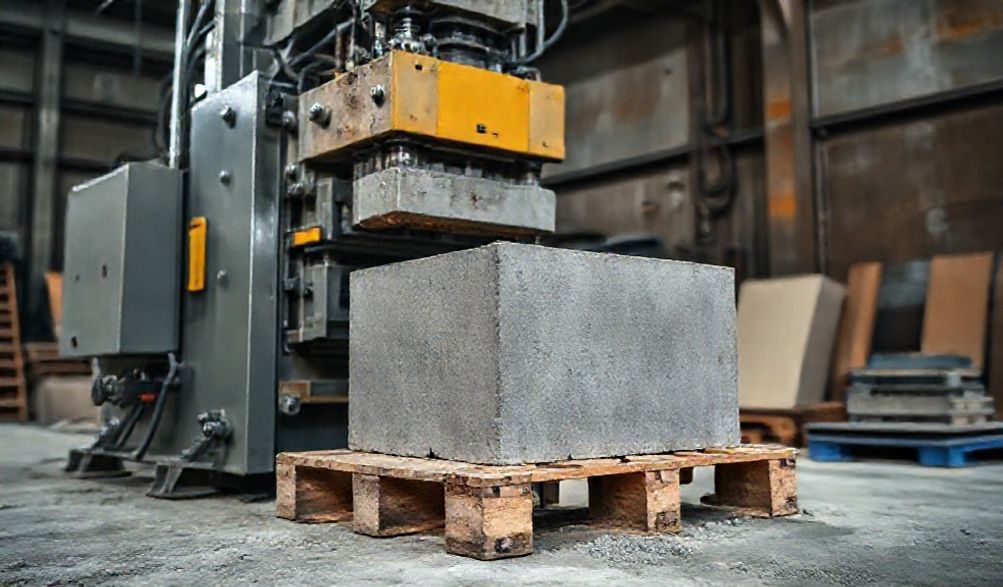
الدليل الشامل لآلات تشكيل الطوب: الأنواع، المزايا، وكيفية الاختيار
مقدمة
تضع صناعة البناء العالمية أكثر من 1.5 تريليون طوبة كل عام. لقرون، اعتمدت هذه المهمة الأساسية على العمل اليدوي المجهد، مما أدى إلى إنتاج بطيء وتكاليف عالية وجودة غير متسقة. اليوم، سواء كنتَ بناءً صغير النطاق، أو مقاولًا ناشئًا، أو رائد أعمال يتطلع إلى قطاع البناء، فإن قيود صناعة الطوب التقليدية يمكن أن تخنق النمو والربحية.
أدخل إلى العصر الحديث مع ماكينة قولبة الطوب: قطعة هندسية قوية تؤتمت وتحدث ثورة في إنتاج الطوب. يخترق هذا الدليل ضجيج المعلومات. مُجمَّع من مواصفات صناعية مفصلة، وبيانات مباشرة من المصنعين، ورؤى عملية ميدانية، صُمم ليكون مصدرك الموثوق. ستتعرف على أنواع الماكينات المختلفة، وفوائدها الملموسة، والعوامل الحاسمة لاختيار المناسبة، ونصائح أساسية للتشغيل والصيانة. لنبني معرفتك من الأساس.
ما هي آلة تشكيل الطوب؟ الوظيفة الأساسية والتطور
في صميمه، آلة قولبة الطوب هي جهاز يُمكّن عملية تشكيل المواد الخام - مثل الطين أو الخرسانة أو الرماد المتطاير - إلى طوب أو كتل دقيقة ومتجانسة. فهي تستبدل العنصر البشري المتغير بالقوة الميكانيكية أو الهيدروليكية، مما يضمن مطابقة كل وحدة للمواصفات الدقيقة.
الرحلة من الطين المعبأ يدوياً إلى العمالقة الآلية اليوم هي قصة التصنيع. فقد تطورت من أُطر خشبية بسيطة إلى مكابس ذراع ميكانيكية، وأخيراً إلى خطوط الإنتاج المتطورة المتحكم بها بالحاسوب التي نراها اليوم. وقد دفع هذا التطور سعياً لا هوادة فيه نحو الكفاءة والاتساق والنطاق الواسع.
المبدأ الأساسي للعمل بسيط بشكل أنيق عبر معظم الآلات ويتضمن ثلاث مراحل رئيسية:
1. التغذية:يتم تحميل خليط المواد الخام المُعد في قادوس الماكينة.
2. الضغط/التشكيل:يتم نقل المادة إلى تجويف القالب حيث يضغط عليها ضغط هائل (هيدروليكي أو ميكانيكي). غالباً ما يستخدم الاهتزاز لإزالة جيوب الهواء وضمان الكثافة.
3. طرد:يتم دفع الطوب الأخضر حديث التشكيل خارج القالب على منصة نقالة أو حزام ناقل للتصلب والتجفيف.
أنواع آلات تشكيل الطوب: إيجاد الأنسب
ليست كل آلات الطوب متساوية. يعتمد اختيارك بشكل أساسي على أهدافك الإنتاجية وميزانيتك والموارد المتاحة لديك. إليك تفصيل الفئات الرئيسية.
آلات تشكيل الطوب اليدوية
- الوصف:هذه هي نقاط الدخول الأبسط والأكثر تكلفة. التشغيل يعتمد بالكامل على القوة البشرية، باستخدام آلية رافعة لضغط المواد في قالب واحد.
- الأفضل لـ:المشاريع متناهية الصغر (مثل المزرعة الشخصية)، والمنظمات غير الحكومية العاملة في المناطق الريفية غير المتصلة بالشبكة، أو الشركات الناشئة التي تختبر المياه باستثمار رأسمالي ضئيل.
- إيجابيات وسلبيات:
- مزايا: Very low cost, no electricity required, portable, easy to understand and maintain.
- سلبيات: Very low output (100-500 bricks/day), highly labor-intensive, inconsistent quality dependent on operator strength and technique.
Semi-Automatic Brick Moulding Machines
- الوصف: This category strikes the optimal balance for many businesses. They typically involve manual feeding of material but automate the critical pressing and ejection cycles using an electric or diesel engine. Many feature a simple hydraulic system and can be moved on wheels.
- الأفضل لـ: Small-to-medium construction firms, brick-making entrepreneurs, and medium-scale production for local supply. They are the workhorse of the small-business brick industry.
- إيجابيات وسلبيات:
- مزايا: Good production capacity, consistent quality due to mechanized pressure, relatively affordable, more energy-efficient than full automation.
- سلبيات: Still requires manual labor for feeding and brick handling, output is limited by operator speed.
Fully Automatic Brick Moulding Machines
- الوصف: These are complete production lines. They integrate automated material handling, mixing, precise moulding, curing, and even robotic stacking. Controlled via PLC (Programmable Logic Controller) panels, they represent the pinnacle of output and consistency.
- الأفضل لـ: Large-scale brick manufacturing plants, industrial production for major city developments, and government infrastructure projects requiring millions of uniform blocks.
- إيجابيات وسلبيات:
- مزايا: Extremely high, predictable output with minimal labor, unparalleled consistency and quality control, ability to integrate with curing and packaging systems.
- سلبيات: Very high initial investment, significant space and power requirements, complex maintenance needing specialized technicians.
Classification by Brick Type and Output
Machines are also specialized by the product they create. Interchangeable moulds are key here.
- آلات صناعة البلوك المجوف: Produce lightweight, insulating blocks with cavities. Essential for modern construction. A semi-automatic machine can produce 800-2,000 hollow blocks per day.
- آلات صناعة الطوب الصلب: Used for traditional solid bricks or high-density blocks. Output is higher as the cycle can be faster. A similar machine might produce 1,500-3,000 solid bricks/day.
- Paver/Interlocking Block Making Machines: Designed for high-pressure compaction to create durable paving stones or interlocking blocks that don’t require mortar. Output varies widely based on thickness and complexity.
Key Benefits of Investing in a Brick Moulding Machine
Moving from manual or outsourced brick procurement to in-house machine production delivers transformative advantages.
كفاءة وإنتاجية لا مثيل لها
A single semi-automatic machine operated by a small team can outperform 15-20 skilled manual laborers. What takes weeks manually can be accomplished in days. This accelerated timeline means faster project completion for builders and the ability to fulfill large orders for suppliers, directly translating to higher revenue potential.
جودة الطوب المتفوقة والمتسقة
This is arguably the most critical technical benefit. Machines apply calibrated, repeatable pressure (measured in tons or MPa). This ensures:
* Uniform density and compressive strength (meeting standards like IS 1077 or ASTM C90).
* Exact dimensional accuracy (length, width, height), leading to straighter walls, less mortar use, and faster bricklaying.
* Consistent finish and texture across every single unit.
This quality reduces on-site waste from breakage and rejects, and enhances the structural integrity of the final building.
تخفيض كبير في التكاليف على المدى الطويل
While there’s an upfront cost, the Return on Investment (ROI) is compelling:
* توفير تكاليف العمالة: Drastically reduces the number of workers needed for brick production.
* Material Waste Reduction: Precise mixing and compaction minimize raw material spillage and product rejection.
* Project Speed: Faster brick availability accelerates overall construction, reducing overhead costs.
* Revenue Stream: For entrepreneurs, it creates a product to sell. Excess production can be sold to other builders, turning a cost center into a profit center.
Versatility and Customization
Modern machines are not one-trick ponies. With interchangeable moulds, you can pivot production based on market demand:
* Switch between solid, hollow, or decorative bricks.
* Produce interlocking blocks for landscaping or pavers for driveways.
* Adapt to different raw material mixes, including eco-friendly options like fly ash (a byproduct of coal plants) or crushed construction waste.
Critical Factors for Choosing Your Brick Moulding Machine
Selecting the wrong machine is a costly mistake. Use this framework to guide your decision.
Assess Your Production Needs
Start by asking the hard questions:
* What is my average daily or monthly brick requirement? (Be realistic about current needs and near-future growth).
* ما هوprimary scale of my work? (Personal use, small business, industrial plant)?
* ماذاtypes of bricks are in highest demand in my market? (Hollow blocks for housing, pavers for developments, solid bricks for fences)?
Understand Raw Material Requirements
The machine must be compatible with your locally available materials.
* Clay-Based Machines: Require properly tempered clay with specific plasticity.
* آلات صناعة الطوب الخرساني: Use a mix of cement, sand, and aggregates (like crushed stone). The mix design (e.g., 1:3:5 ratio) is critical for strength.
* Fly Ash Machines: Designed to utilize fly ash, lime, and gypsum. This is often a more eco-conscious and cost-effective choice near thermal power plants.
Always consult the machine specifications for acceptable moisture content and particle size.
Power Source and Operational Costs
Consider your operational environment:
* النماذج الكهربائية: Clean, quiet, and efficient, but require a stable and powerful grid connection.
* موديلات الديزل: Offer independence from the grid and high torque, but have higher fuel costs, noise, and emissions.
* النماذج الهجينة: Offer flexibility to switch between power sources, ideal for areas with intermittent electricity.
Calculate the long-term fuel/electricity consumption as part of your TCO (Total Cost of Ownership).
Machine Durability and After-Sales Support
This is where brand reputation matters immensely. Do not compromise.
* البناء: Look for high-quality, hardened steel in the mould, frame, and vibration table. A heavier machine often indicates better stability and longevity.
* Support Network: Prioritize suppliers who offer a clear warranty, readily available spare parts, and—crucially—local technical support or training. A machine that sits idle for weeks waiting for a specialist is a financial drain. Research and choose a partner known for الثقة and service.
Operation, Maintenance, and Safety Best Practices
A machine is a long-term investment. Protect it with proper care.
Essential Pre-Operation Checks
Before starting each shift:
* Check hydraulic oil levels and for any leaks.
* Inspect all bolts and nuts for tightness.
* Ensure the mould and feeder are clean and free of hardened material residue.
* Verify that safety guards are in place.
Routine Maintenance Schedule
- Daily: Clean the machine thoroughly after use. Lubricate all moving parts as per the manual.
- Weekly: Check wear parts like mould liners, feeder scrapers, and vibration springs.
- Monthly: Inspect the hydraulic system filters and change the oil as recommended. Check electrical connections.
Non-Negotiable Safety Protocols
Ignoring safety risks severe injury. These protocols come from hard-won خبرة:
* تدريب Never allow an untrained person to operate the machine.
* PPE (Personal Protective Equipment): Operators must wear safety glasses, gloves, steel-toe boots, and hearing protection near loud machines.
* Lockout/Tagout: Always disconnect power before performing any cleaning, maintenance, or mould changes.
* Clear Area: Keep the work area organized and free of trip hazards.
الأسئلة الشائعة (FAQ)
Q1: What is the average production capacity of a standard brick moulding machine?
A: Capacity varies dramatically. A manual press may produce 500 bricks/day. A semi-automatic machine typically outputs 1,000 to 5,000 bricks or blocks per 8-hour shift, depending on block size and operator efficiency. Fully automatic lines can produce 10,000 to 50,000+ units daily.
Q2: Can one machine produce different types and sizes of bricks?
A: Yes, through interchangeable moulds. Most manufacturers offer a range of moulds for their machines. However, changing moulds takes time (30 mins to a few hours), and the process is simpler on semi-automatic than on fully integrated automatic lines.
Q3: What is the typical price range for a brick moulding machine?
A: Prices span a wide spectrum: from $1,000 – $3,000 for a basic manual press, 5,000 دولار – 25,000 دولار for a robust semi-automatic machine, and $50,000 to over $250,000 for a fully automatic production line. Automation level, brand, and output capacity are the primary cost drivers.
Q4: How much space and what kind of foundation is required to install one?
A: A semi-automatic machine needs a level, solid concrete floor (at least 6 inches thick) and about 200-500 sq. ft. for operation, raw material storage, and brick drying. A full plant requires a large industrial shed (several thousand sq. ft.) with a heavy-duty foundation.
Q5: Are there profitable business opportunities with a brick moulding machine?
A: Yes, but success isn’t automatic. It requires careful analysis of local demand, competition, reliable access to affordable raw materials, and a solid business plan. It’s a competitive field, but for those who manage costs and quality effectively, it can be a very profitable venture. This realistic assessment is key to building الثقة with potential entrepreneurs.
خاتمة
The brick moulding machine stands as a cornerstone of modern, efficient construction. It transforms a traditionally slow, variable process into a streamlined engine for productivity, quality, and profit. From empowering the small builder to supplying entire cities, its impact is foundational.
Your final choice must be a deliberate match for your specific needs in scale, budget, and material. Remember, this is not just a purchase; it’s a long-term capital investment in your construction capability or business future.
Take the insights from this guide as your blueprint. Your next steps should involve contacting multiple reputable suppliers with your detailed requirements, requesting live demonstrations or customer references, and asking the detailed technical questions that now, you are expertly prepared to ask. The right machine is out there, ready to build your next project—and your success.
<