
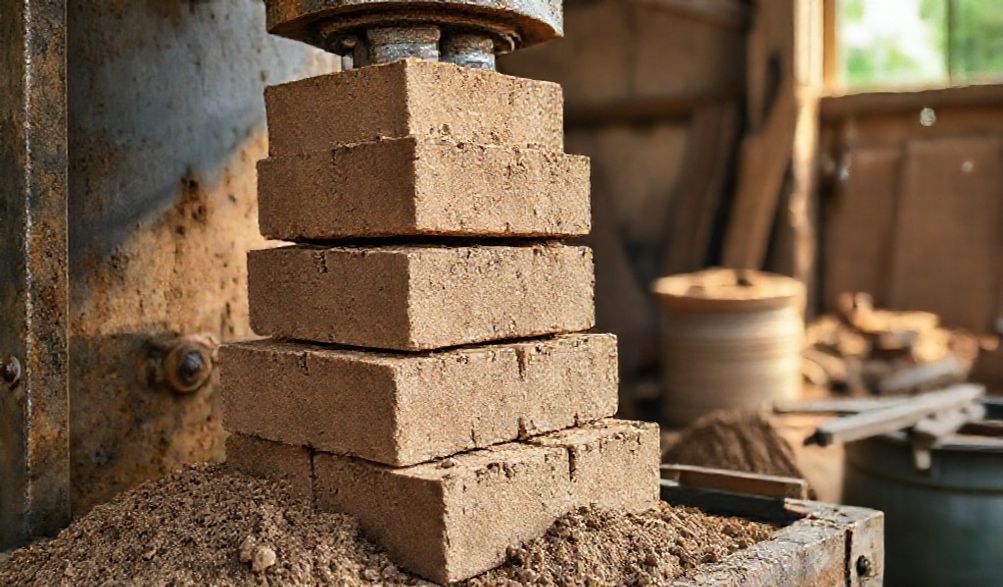
Полное руководство по машинам для производства грунтоблоков: Стройте экологично и экономьте средства
Представьте себе строительство прочных, экологичных зданий из самой земли под ногами. Это не возврат к примитивным методам, а шаг в более разумное и ответственное будущее. На протяжении тысячелетий цивилизации — от римлян до жителей долины Инда — возводили долговечные сооружения из грунта. Сегодня современные...Машины для производства кирпича из грунтапреобразовать эту древнюю мудрость в масштабируемое, доступное и эффективное решение для современных строителей, разработчиков, фермеров и эко-предпринимателей.
Независимо от того, стремитесь ли вы сократить расходы на строительные материалы до 50%, реализовать по-настоящему экологичный строительный проект или запустить жизнеспособное малое производство, освоение этой технологии — важнейший первый шаг. Это руководство станет вашим всеобъемлющим ресурсом. Мы объединили десятилетия инженерных принципов, практический опыт работы с различным оборудованием и проверенные отраслевые стандарты, чтобы предложить достоверную и применимую на практике информацию. Мы выйдем за рамки рекламных лозунгов и маркетинговых обещаний, чтобы дать вам ясное и уверенное понимание.
Вот что мы рассмотрим: как работают эти инновационные машины, их убедительные преимущества, различные доступные типы, соответствующие вашему масштабу, ключевые факторы для выбора подходящей модели и реалистичный пошаговый обзор всего рабочего процесса — от грунта до готовой стены.
Что такое машина для производства грунтовых кирпичей и как она работает?
В своей основе машина для производства грунтовых кирпичей — это инструмент для расширения возможностей. Она позволяет превратить доступный на местности ресурс — почву — в стандартизированный, высококачественный строительный материал.
Основное определение
Машина для производства грунтовых кирпичей — это устройство, предназначенное для прессования определённой смеси грунта (обычно подпочвенного слоя), небольшого процента стабилизатора, такого как цемент или известь, и воды в высокоплотные, однородные кирпичи или блоки. Ключевое отличие от традиционного производства кирпичей заключается в том, что эти кирпичи приобретают прочность за счёт уплотнения и химической стабилизации.непутем обжига в энергоемкой печи. Полученные изделия известны как стабилизированные грунтовые блоки (СГБ) или стабилизированные земляные блоки.
Наука о стабилизации
Зачем добавлять цемент или известь? В этом заключается инженерная суть за кажущейся простотой. Сама по себе почва при уплотнении обладает сцеплением, но может размываться водой и терять прочность. Стабилизатор (обычно 5-10% портландцемента или 5-15% извести) выступает в роли связующего вещества.
- Он химически связывает частицы почвы между собой.
- Это значительно снижает подверженность кирпича повреждениям от воды.
- Оно обеспечивает стабильную, надежную прочность на сжатие, которая соответствует или превосходит многие традиционные строительные материалы.
Этот процесс стабилизации делает кирпичи достаточно прочными для использования в постоянных несущих конструкциях в различных климатических условиях.
Механический процесс – шаг за шагом
Операция, независимо от типа машины, следует логической последовательности из четырех этапов.
-
Подготовка материалов:Основа хорошего кирпича. Сначала почву просеивают, чтобы удалить камни, корни и органические вещества. Затем её смешивают с точным процентом стабилизатора и достаточным количеством воды для достижения оптимальной влажности — обычно влажной, но не мокрой. Однородность смеси критически важна.
-
Уплотнение:Вот где машина творит чудеса. Подготовленная смесь подается в стальную камеру формы. Затем плунжер или поршень создает огромное давление — часто измеряемое в тоннах — чтобы сжать смесь. Эта высокоэффективная прессовка устраняет воздушные карманы и упорядочивает частицы, формируя плотную и прочную структуру.
-
Выброс: Once compressed, the newly formed brick is ejected from the mold onto a pallet or the ground. With manual machines, this involves lifting a lever; with automatic machines, it’s a seamless part of the cycle.
-
Курение: The most patient yet vital phase. The bricks are carefully stacked, kept moist (often by covering with plastic sheeting), and left to cure for a period, typically 28 days for cement stabilization. During curing, the stabilizer fully hydrates and bonds, allowing the brick to reach its designed strength.
Key Benefits of Using a Soil Brick Machine
Adopting soil brick technology isn’t just about making bricks; it’s about embracing a system with multifaceted advantages.
Exceptional Cost-Efficiency
The economic argument is powerful. Your primary raw material—soil—is often available on-site or locally at minimal cost. When compared to fired clay bricks or concrete blocks, you eliminate the massive energy costs of kiln firing and reduce the need for transported materials.
- Material Cost Reduction: Up to 50-60% savings on walling materials are common.
- Low Operational Cost: Machines, especially manual ones, have minimal energy requirements.
- High-Profit Potential: For entrepreneurs, the low input cost versus the market value of finished bricks creates an attractive business model.
Champion of Sustainability
This is where soil bricks truly shine, offering one of the lowest carbon footprints of any building material.
- Local & Natural: Utilizes locally sourced soil, drastically reducing transportation emissions.
- Низкая воплощенная энергия: No high-temperature firing required.
- Minimal Waste: Production waste is near zero, and bricks are often biodegradable or reusable.
- Building Performance: Soil bricks have excellent thermal mass, naturally regulating indoor temperature by absorbing heat during the day and releasing it at night, reducing heating and cooling energy needs.
Durability and Performance
Don’t mistake “earth” for “weak.” Properly made CSEBs are robust construction materials.
- Высокая прочность на сжатие: Ranging from 5 to 10+ MPa, they are more than adequate for multi-story, load-bearing walls.
- Отличная огнестойкость: They are inherently non-combustible, offering superior fire safety.
- Moisture Buffering: They naturally absorb and release ambient humidity, contributing to healthier indoor air quality.
- Dimensional Stability: Precision machines produce uniform blocks that simplify and speed up construction.
Empowerment and Accessibility
The technology democratizes construction. It enables decentralized production, reducing dependency on large, centralized factories and long supply chains.
- Общественные проекты: Ideal for NGO-led housing, school, or clinic constructions.
- Local Entrepreneurship: Empowers individuals to start small manufacturing businesses.
- Self-Reliance: Allows landowners to build their own homes using resources from their own land.
Types of Soil Brick Making Machines: Choosing Your Workhorse
Selecting the right machine is pivotal. Your choice should be dictated by your project scale, budget, and labor availability.
Manual Press Machines (e.g., Cinva Ram style)
The entry point into the world of soil brick making.
- Лучше всего подходит для: Individual homeowners, small-scale DIY projects, NGOs with community labor, training workshops, and ultra-low-budget startups.
- Плюсы:
- Очень низкие первоначальные инвестиции.
- No electricity required—fully human-powered.
- Highly portable and simple to maintain.
- Rugged and long-lasting with minimal moving parts.
- Минусы:
- Labor-intensive; output depends heavily on operator stamina.
- Low production rate (typically 100-300 bricks per day).
- Brick quality can vary slightly with operator consistency.
Semi-Automatic / Electric Machines
The sweet spot for small to medium enterprises and dedicated construction projects.
- Лучше всего подходит для: Small brick-making businesses, medium-sized housing developments, farm building projects, and higher-volume production needs.
- Плюсы:
- Excellent balance between output, cost, and automation.
- Significantly reduces physical labor compared to manual presses.
- Produces highly consistent, quality bricks due to mechanical compression.
- Higher output (can range from 500 to 2,000+ bricks per day).
- Минусы:
- Requires a reliable electricity connection or generator.
- Higher upfront cost than manual presses.
- More complex components require basic technical maintenance.
Fully Automatic Hydraulic Machines
The industrial-grade solution for maximum output.
- Лучше всего подходит для: Large-scale commercial brick production yards, industrial operations, and municipal projects requiring very high volumes.
- Плюсы:
- Very high, consistent output (thousands of bricks per day).
- Superior brick density and uniformity.
- Minimal manual labor required—often just feeding material and stacking bricks.
- Can integrate with automated mixers and conveyors.
- Минусы:
- Высокие капиталовложения.
- Requires robust, three-phase power supply.
- Complex machinery necessitates more sophisticated maintenance and technical support.
Mobile vs. Stationary Units
An additional consideration is mobility. Trailer-mounted machines are fantastic for on-site production, eliminating brick transportation costs entirely for large builds. Stationary units are for fixed factory or yard setups, optimized for continuous production in one location.
Ключевые факторы, которые следует учесть перед покупкой
Avoid costly mistakes by carefully evaluating these key areas before purchasing.
Soil Suitability Analysis
This is the non-negotiable first step. Not all soil is suitable. The ideal soil is a “loam” with a balanced mix of clay (15-30%), silt, and sand.
- Simple Field Test (The Jar Test): Fill a clear jar 1/3 with soil, add water, shake vigorously, and let it settle for 24 hours. The layers will show the approximate proportions of sand, silt, and clay.
- Professional Testing: For large projects, a lab test for particle size distribution and stabilizer compatibility is a wise investment.
Производственные мощности и выпуск продукции
Be realistic. Match the machine’s practical, sustained output (not the peak theoretical number) to your daily brick requirements. Consider curing space and stacking labor, which can become bottlenecks faster than the machine’s speed.
Brick Size and Design Flexibility
- Стандартные размеры: Most machines offer molds for common sizes (e.g., 230x110x75 mm).
- Переплетающиеся узоры: Many machines produce specially shaped bricks that lock together without mortar, speeding up construction and saving material.
- Индивидуальные формы: Check if the supplier can provide custom molds for unique architectural features.
Build Quality and After-Sales Support
The machine is a long-term asset. Inspect:
* Каркасное строительство: Heavy-duty steel is essential for withstanding constant pressure.
* Качество пресс-формы: Hardened steel molds resist wear and ensure dimensional accuracy.
* Support: Does the supplier offer installation guidance, manuals, training videos, and—critically—access to spare parts?
Общая стоимость владения
Look beyond the machine’s price tag. Your full startup budget should include:
* Soil screening and mixing equipment.
* Pallets or boards for curing.
* Space for drying and storage.
* Labor costs.
* A contingency fund for maintenance and spare parts.
The Operational Workflow: From Soil to Finished Wall
Understanding the end-to-end process ensures smooth operations.
Phase 1: Site and Material Preparation
Success is built here. Source soil from beneath the topsoil layer. Conduct your soil test, then establish the correct stabilizer ratio through small test batches. Use a mechanical mixer (pan, rotary, or concrete mixer) to achieve a perfectly uniform blend. Consistency in the mix is consistency in the brick.
Phase 2: Brick Production & Quality Control
During production, maintain a steady workflow. Operate the machine according to its manual—consistent fill volume and pressure are key. Implement simple quality control:
* Periodically weigh a brick.
* Measure its dimensions.
* Perform a simple drop test (a well-made brick shouldn’t break when dropped from waist height onto a hard surface).
* Stack bricks neatly on pallets for easy moving to the curing area.
Phase 3: Curing and Construction
Curing is not drying. Bricks must be kept moist for the stabilizer to react fully. Spray them with water and cover with plastic for 14-28 days. When building:
* Use a strong, damp-proof course or plinth.
* Use a mortar compatible with the bricks (often a soil-cement slurry).
* Protect finished walls with a good overhanging roof and, if desired, a breathable plaster.
Frequently Asked Questions (FAQ)
Q: What is the typical compressive strength of a soil-cement brick?
А: With suitable soil and 5-10% cement content, compressive strengths of 5 to 10 MPa (approximately 700 to 1500 psi) are standard. This exceeds the strength of many traditional fired clay bricks and is perfectly suitable for constructing 2-3 story load-bearing buildings.
Q: Can I use pure soil without any stabilizer?
А: For durable, weather-resistant structural bricks in most climates, a stabilizer is essential. Unstabilized earth bricks (like adobe) are possible but require very arid climates and thick, protective plasters to survive rain. Stabilization is the key to modern, reliable earth construction.
Q: How does the cost compare to traditional clay bricks or concrete blocks?
А: Material costs are typically 30-50% lower. The total project savings depend on labor, scale, and local prices for conventional materials. The return on investment for the machine itself can be very quick for a production business, often within a few projects.
Q: Are buildings made with these bricks safe and legal?
А: Absolutely. Stabilized Soil Blocks are recognized in the building codes of many countries, including India, Kenya, and others. For any structural project, it is imperative to check your local building regulations and have plans approved by a qualified structural engineer familiar with earth construction.
Q: What is the maintenance like for the machine?
А: Maintenance is generally straightforward. It involves regular cleaning to prevent material buildup, lubrication of all moving parts, and periodic inspection of wear items like mold liners, piston seals, and, for hydraulic machines, fluid levels and hoses. Manual presses require almost no maintenance beyond keeping them clean and rust-free.
Заключение
Soil brick making machines represent more than just a piece of equipment; they represent a paradigm shift towards economical, sustainable, and resilient construction. They empower you to transform the abundant resource underfoot into high-quality, durable building blocks.
Your path to success is clear: begin by understanding your soil, precisely define the scale and needs of your project, and then carefully match those needs to the appropriate type of machine. Let your requirements drive the decision, not just the initial price tag.
Embracing this technology is a step toward creating buildings that are not only cost-effective but also have a low environmental impact and promote local self-reliance. Ready to explore further? Your next step is to conduct a simple soil test on your site and begin researching reputable machine suppliers with strong testimonials and support. The foundation for your next project could literally come from the ground you stand on.
<