
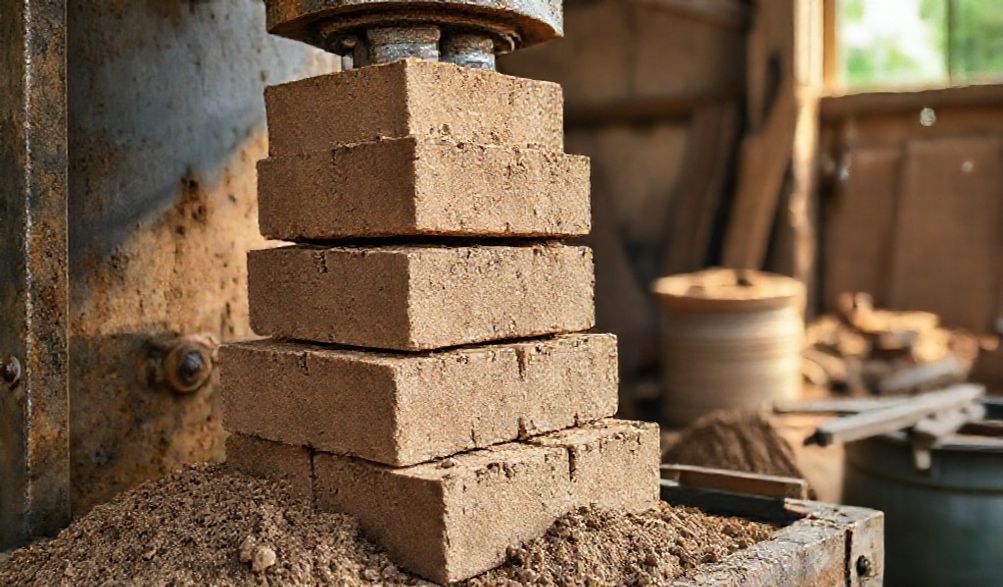
토양 벽돌 제작 기계 최종 가이드: 지속 가능하게 건설하고 비용 절감하기
당신 발밑의 흙으로 내구성 있고 친환경적인 건물을 짓는다고 상상해 보세요. 이는 원시적인 방법으로의 회귀가 아니라, 더 스마트하고 책임감 있는 미래로의 도약입니다. 로마인부터 인더스 문명에 이르기까지 수천 년 동안 문명들은 흙으로 오래가는 구조물을 지어왔습니다. 오늘날 현대의흙 벽돌 제조 기계이 고대 지혜를 현대의 건축업자, 개발자, 농부, 생태 기업가들을 위해 확장 가능하고, 경제적이며, 효율적인 솔루션으로 전환하세요.
건축 자재 비용을 최대 50%까지 절감하거나, 진정으로 지속 가능한 건축 프로젝트를 시작하거나, 실현 가능한 소규모 제조 사업을 시작하는 것이 목표이든, 이 기술을 숙달하는 것이 중요한 첫걸음입니다. 이 가이드는 포괄적인 참고 자료가 되도록 설계되었습니다. 우리는 수십 년간의 공학 원리, 다양한 기계를 활용한 현장 경험, 검증된 업계 모범 사례를 종합하여 신뢰할 수 있고 실행 가능한 정보를 제공합니다. 과대 광고와 마케팅 주장을 넘어서 여러분에게 명확하고 자신 있는 이해를 드리겠습니다.
우리는 이 혁신적인 장비의 작동 원리, 매력적인 이점, 규모에 맞는 다양한 유형, 적합한 모델을 선택하기 위한 핵심 요소, 그리고 흙에서 완성된 벽까지의 전체 운영 과정을 현실적으로 살펴볼 것입니다.
토양 벽돌 제작 기계란 무엇이며 어떻게 작동하나요?
토양 벽돌 제조 기계는 본질적으로 역량 강화를 위한 도구입니다. 이 기계는 지역에서 쉽게 구할 수 있는 자원인 흙을 표준화된 고품질 건축 자재로 변환할 수 있게 해줍니다.
핵심 정의
흙벽돌 제작 기계는 흙(일반적으로 심토), 시멘트나 석회와 같은 안정제 소량, 그리고 물을 특정 비율로 혼합한 후 고밀도와 균일한 형태의 벽돌이나 블록으로 압축하는 장치입니다. 전통적인 벽돌 제조와의 주요 차이점은 이러한 벽돌이 압축과 화학적 안정화 과정을 통해 강도를 얻는다는 점입니다.아니요에너지 집약적인 가마에서 소성 과정을 거쳐 생산된 결과물은 압축 안정화 토관(CSEB) 또는 안정화 토관으로 알려져 있습니다.
안정화의 과학
시멘트나 석회를 왜 첨가할까요? 이는 단순함 뒤에 숨은 공학적 원리입니다. 흙만으로 다져진 경우, 점착력은 있지만 물에 의해 침식되거나 강도를 잃을 수 있습니다. 안정제(보통 포틀랜드 시멘트 5-10% 또는 석회 5-15%)는 결합제 역할을 합니다.
- 토양 입자들을 화학적으로 결합시킵니다.
- 이것은 벽돌의 수분 손상에 대한 취약성을 극적으로 감소시킵니다.
- 일관적이고 신뢰할 수 있는 압축 강도를 제공하여 많은 기존 건축 자재의 성능을 충족하거나 능가합니다.
이 안정화 과정은 벽돌이 다양한 기후 조건에서도 영구적이고 하중을 지탱하는 구조물에 충분히 내구성을 갖추도록 만듭니다.
기계적 과정 - 단계별로
작업은 기계 유형에 관계없이 논리적인 네 단계 순서를 따릅니다.
-
자재 준비좋은 벽돌의 기초. 흙은 먼저 돌, 뿌리, 유기물을 제거하기 위해 체질됩니다. 그런 다음 정확한 비율의 안정제와 적절한 수분 함량(보통 축축하지만 질퍽하지 않은 상태)을 얻기 위해 충분한 물과 혼합됩니다. 균일성이 중요합니다.
-
압축:여기가 바로 기계가 마법을 부리는 곳입니다. 준비된 혼합물이 강철 금형 챔버로 공급됩니다. 그런 다음 램 또는 피스톤이 종종 톤 단위로 측정되는 엄청난 압력을 가해 혼합물을 압축합니다. 이 고압 성형 과정은 공기 주머니를 제거하고 입자들을 정렬시켜, 밀도 높고 강력한 매트릭스를 형성합니다.
-
이젝션 Once compressed, the newly formed brick is ejected from the mold onto a pallet or the ground. With manual machines, this involves lifting a lever; with automatic machines, it’s a seamless part of the cycle.
-
치유: The most patient yet vital phase. The bricks are carefully stacked, kept moist (often by covering with plastic sheeting), and left to cure for a period, typically 28 days for cement stabilization. During curing, the stabilizer fully hydrates and bonds, allowing the brick to reach its designed strength.
Key Benefits of Using a Soil Brick Machine
Adopting soil brick technology isn’t just about making bricks; it’s about embracing a system with multifaceted advantages.
Exceptional Cost-Efficiency
The economic argument is powerful. Your primary raw material—soil—is often available on-site or locally at minimal cost. When compared to fired clay bricks or concrete blocks, you eliminate the massive energy costs of kiln firing and reduce the need for transported materials.
- Material Cost Reduction: Up to 50-60% savings on walling materials are common.
- 낮은 운영 비용: Machines, especially manual ones, have minimal energy requirements.
- High-Profit Potential: For entrepreneurs, the low input cost versus the market value of finished bricks creates an attractive business model.
Champion of Sustainability
This is where soil bricks truly shine, offering one of the lowest carbon footprints of any building material.
- Local & Natural: Utilizes locally sourced soil, drastically reducing transportation emissions.
- 낮은 체화 에너지 No high-temperature firing required.
- Minimal Waste: Production waste is near zero, and bricks are often biodegradable or reusable.
- Building Performance: Soil bricks have excellent thermal mass, naturally regulating indoor temperature by absorbing heat during the day and releasing it at night, reducing heating and cooling energy needs.
Durability and Performance
Don’t mistake “earth” for “weak.” Properly made CSEBs are robust construction materials.
- 높은 압축 강도: Ranging from 5 to 10+ MPa, they are more than adequate for multi-story, load-bearing walls.
- 뛰어난 내화성 They are inherently non-combustible, offering superior fire safety.
- Moisture Buffering: They naturally absorb and release ambient humidity, contributing to healthier indoor air quality.
- Dimensional Stability: Precision machines produce uniform blocks that simplify and speed up construction.
Empowerment and Accessibility
The technology democratizes construction. It enables decentralized production, reducing dependency on large, centralized factories and long supply chains.
- 커뮤니티 프로젝트: Ideal for NGO-led housing, school, or clinic constructions.
- Local Entrepreneurship: Empowers individuals to start small manufacturing businesses.
- Self-Reliance: Allows landowners to build their own homes using resources from their own land.
Types of Soil Brick Making Machines: Choosing Your Workhorse
Selecting the right machine is pivotal. Your choice should be dictated by your project scale, budget, and labor availability.
Manual Press Machines (e.g., Cinva Ram style)
The entry point into the world of soil brick making.
- 최적 대상: Individual homeowners, small-scale DIY projects, NGOs with community labor, training workshops, and ultra-low-budget startups.
- 장점:
- 매우 낮은 초기 투자 비용.
- No electricity required—fully human-powered.
- Highly portable and simple to maintain.
- Rugged and long-lasting with minimal moving parts.
- 단점:
- Labor-intensive; output depends heavily on operator stamina.
- Low production rate (typically 100-300 bricks per day).
- Brick quality can vary slightly with operator consistency.
Semi-Automatic / Electric Machines
The sweet spot for small to medium enterprises and dedicated construction projects.
- 최적 대상: Small brick-making businesses, medium-sized housing developments, farm building projects, and higher-volume production needs.
- 장점:
- Excellent balance between output, cost, and automation.
- Significantly reduces physical labor compared to manual presses.
- Produces highly consistent, quality bricks due to mechanical compression.
- Higher output (can range from 500 to 2,000+ bricks per day).
- 단점:
- Requires a reliable electricity connection or generator.
- Higher upfront cost than manual presses.
- More complex components require basic technical maintenance.
Fully Automatic Hydraulic Machines
The industrial-grade solution for maximum output.
- 최적 대상: Large-scale commercial brick production yards, industrial operations, and municipal projects requiring very high volumes.
- 장점:
- Very high, consistent output (thousands of bricks per day).
- Superior brick density and uniformity.
- Minimal manual labor required—often just feeding material and stacking bricks.
- Can integrate with automated mixers and conveyors.
- 단점:
- 높은 자본 투자.
- Requires robust, three-phase power supply.
- Complex machinery necessitates more sophisticated maintenance and technical support.
Mobile vs. Stationary Units
An additional consideration is mobility. Trailer-mounted machines are fantastic for on-site production, eliminating brick transportation costs entirely for large builds. Stationary units are for fixed factory or yard setups, optimized for continuous production in one location.
구매하기 전에 고려해야 할 핵심 요소들
Avoid costly mistakes by carefully evaluating these key areas before purchasing.
Soil Suitability Analysis
This is the non-negotiable first step. Not all soil is suitable. The ideal soil is a “loam” with a balanced mix of clay (15-30%), silt, and sand.
- Simple Field Test (The Jar Test): Fill a clear jar 1/3 with soil, add water, shake vigorously, and let it settle for 24 hours. The layers will show the approximate proportions of sand, silt, and clay.
- Professional Testing: For large projects, a lab test for particle size distribution and stabilizer compatibility is a wise investment.
생산 능력 및 생산량
Be realistic. Match the machine’s practical, sustained output (not the peak theoretical number) to your daily brick requirements. Consider curing space and stacking labor, which can become bottlenecks faster than the machine’s speed.
Brick Size and Design Flexibility
- 표준 사이즈: Most machines offer molds for common sizes (e.g., 230x110x75 mm).
- 인터록 디자인: Many machines produce specially shaped bricks that lock together without mortar, speeding up construction and saving material.
- 커스텀 몰드: Check if the supplier can provide custom molds for unique architectural features.
Build Quality and After-Sales Support
The machine is a long-term asset. Inspect:
* 프레임 구성 Heavy-duty steel is essential for withstanding constant pressure.
* 금형 품질 Hardened steel molds resist wear and ensure dimensional accuracy.
* Support: Does the supplier offer installation guidance, manuals, training videos, and—critically—access to spare parts?
총 소유 비용
Look beyond the machine’s price tag. Your full startup budget should include:
* Soil screening and mixing equipment.
* Pallets or boards for curing.
* Space for drying and storage.
* Labor costs.
* A contingency fund for maintenance and spare parts.
The Operational Workflow: From Soil to Finished Wall
Understanding the end-to-end process ensures smooth operations.
Phase 1: Site and Material Preparation
Success is built here. Source soil from beneath the topsoil layer. Conduct your soil test, then establish the correct stabilizer ratio through small test batches. Use a mechanical mixer (pan, rotary, or concrete mixer) to achieve a perfectly uniform blend. Consistency in the mix is consistency in the brick.
Phase 2: Brick Production & Quality Control
During production, maintain a steady workflow. Operate the machine according to its manual—consistent fill volume and pressure are key. Implement simple quality control:
* Periodically weigh a brick.
* Measure its dimensions.
* Perform a simple drop test (a well-made brick shouldn’t break when dropped from waist height onto a hard surface).
* Stack bricks neatly on pallets for easy moving to the curing area.
Phase 3: Curing and Construction
Curing is not drying. Bricks must be kept moist for the stabilizer to react fully. Spray them with water and cover with plastic for 14-28 days. When building:
* Use a strong, damp-proof course or plinth.
* Use a mortar compatible with the bricks (often a soil-cement slurry).
* Protect finished walls with a good overhanging roof and, if desired, a breathable plaster.
자주 묻는 질문 (FAQ)
Q: What is the typical compressive strength of a soil-cement brick?
A: With suitable soil and 5-10% cement content, compressive strengths of 5 to 10 MPa (approximately 700 to 1500 psi) are standard. This exceeds the strength of many traditional fired clay bricks and is perfectly suitable for constructing 2-3 story load-bearing buildings.
Q: Can I use pure soil without any stabilizer?
A: For durable, weather-resistant structural bricks in most climates, a stabilizer is essential. Unstabilized earth bricks (like adobe) are possible but require very arid climates and thick, protective plasters to survive rain. Stabilization is the key to modern, reliable earth construction.
Q: How does the cost compare to traditional clay bricks or concrete blocks?
A: Material costs are typically 30-50% lower. The total project savings depend on labor, scale, and local prices for conventional materials. The return on investment for the machine itself can be very quick for a production business, often within a few projects.
Q: Are buildings made with these bricks safe and legal?
A: Absolutely. Stabilized Soil Blocks are recognized in the building codes of many countries, including India, Kenya, and others. For any structural project, it is imperative to check your local building regulations and have plans approved by a qualified structural engineer familiar with earth construction.
Q: What is the maintenance like for the machine?
A: Maintenance is generally straightforward. It involves regular cleaning to prevent material buildup, lubrication of all moving parts, and periodic inspection of wear items like mold liners, piston seals, and, for hydraulic machines, fluid levels and hoses. Manual presses require almost no maintenance beyond keeping them clean and rust-free.
결론
Soil brick making machines represent more than just a piece of equipment; they represent a paradigm shift towards economical, sustainable, and resilient construction. They empower you to transform the abundant resource underfoot into high-quality, durable building blocks.
Your path to success is clear: begin by understanding your soil, precisely define the scale and needs of your project, and then carefully match those needs to the appropriate type of machine. Let your requirements drive the decision, not just the initial price tag.
Embracing this technology is a step toward creating buildings that are not only cost-effective but also have a low environmental impact and promote local self-reliance. Ready to explore further? Your next step is to conduct a simple soil test on your site and begin researching reputable machine suppliers with strong testimonials and support. The foundation for your next project could literally come from the ground you stand on.
<