
Inzira Yuzuye yo Gukora Imashini z'Ububiko bwa Brike: Mu Nzu y'Ububiko bwa Brike ya FUDA
Intangamarara
Mu bihe by’ibinyagihumbi, amatafari y’ibumba yariyanditsemo ishingiro ry’umuco w’abantu mu buryo bw’imitwe no mu buryo bwo mu gaciro, kuva mu mazu y’ikivuguto y’ikinyejana cya kera kugeza mu mazu minini y’iki gihe. Agaciro kayo gakomeje guhora gisanzwe gashingiwe ku ngufu zagikoraho, ubushobozi bwo gukumira ubushyuhe, no kwinezeza amaso bitewe n’imiterere yagikoraho. Ariko inyuma y’amatafari yose ahora bitewe n’inganzo z’ubuhanga n’imikorere ya none y’ikoranabuhanga n’ubukorikori burambuye. Uyu munsi, ubuhanga bwo gukora amatafari bwarahindutse ubumenyi burambuye, bushya, bukoresha ikoranabuhanga rya none.imashini zikora amatafari y'ibumbazibanzira gukomeza ubunyangamugayo, ubwiza, no gukora neza mu gihe bigenda bikura.
Iyi ingamba yuzuye isobanura neza ku isi y’ubwubatsi bw’amatafari bwa roboti. Tuzasuzuma ibikoresho byahinduwe mu gutunganya ubutaka kugira bibe amatafari y’ubwubatsi burambye, bikoresheje uburyo bw’icyamamare bwaUru ruganda rwubaka rwa FUDANk’ingero nyayo y’ubushakashatsi bw’ikora ku buryo bwiza. Ibyo wamenye hano birishingiye ku bumenyi bw’ubucuruzi, ibisobanuro by’ikoranabuhanga, n’imikorere isanzwe ikorerwa mu bubiko, bigutanga amakuru yizewe kandi ushobora gukoresha.
Niba uri umunyamategeko mu buvanganzo, umushinzwe kwihangira imirimo, cyangwa ushishikajwe n'inganda, uzamenya ibijyanye n'ingamba nyamukuru yo gukora ibikorwa remezo, ubwoko bw'imashini zikoreshwa, n'ibintu by'ingenzi bigaragaza ibikoresho byizewe. Turangiza dukomeje kureba neza uko uruganda rwihariye rwiyunga ibi bintu, rutanga inzira y'ubwiza n'ikwirakwizwa ry'ibikorwa byiza bishobora kugufasha mu gufata ibyemezo byawe.
Gusobanukirwa Ubwubatsi bwa Brike z'ibumba: Kuva mu By'ingenzi Kugeza ku Bikozwe
Urugendo ruteruka mu gishanga cy'ibumba kugera ku nkwi y'amatofari arangije ni urugendo rwiza rw'ubumenyi bw'isi, ikimenyetso cy'ibinyabuzima, n'ubuhanga mu bikorwa remezo. Gusobanukirwa ubu buryo ni ngombwa kugira ngo umuntu ashimire uruhare n'ibisabwa by'ibikoresho bikoreshwa muri ubu buryo.
Ibikoresho ngenderwaho: Gutoranya no Gutegura Ibumba
Si byose ibumba bishobora gukoreshwa mu gukora amatafari. Ubwiza bw’amatafari nyuma y’ubukorikori buhuzwa n’ubwiza bw’ibikoresho by’ibanze.
- Ubwoko bw'ibumba bukwiye:Inkoko zisanzwe zikoreshwa ni earthenware (inkoko zo hejuru) na fireclay (amabuye y’ubutaka n’inkoko zo mu miterere y’ubutaka). Inkoko y’ibumba y’amatafari y’ingenzi igizwe n’umuvange w’alumina (kugirango ibashe guhindurwa mu miterere), silica (kugirango itatanyagurika), n’ibinyabutabire nk’umuringa w’ubutare (utanga ibara ry’umutuku rya kijyambere mu gihe cyo gutwika).
- Itegura ni Ngirakamaro:Ibumba ry'umwimerere ntirigomba kuba ryiteguye kugirango ryubakwe. Ubukorikori buhamya ko gutegura neza bitera amasomo menshi:
- Guhindura ibikorwa remezo:Guhumeka ibumba mu mwuka kugira ngo byumbe bikavaho no kongera ubushobozi bwo kuvangavanga.
- Kumenya no Gutumura:Imashini zigabanya ibimota binini by'ibumba kugira ngo bigirire ubunini bwiza kandi bumwe.
- Gushyushya:Amazi yongerwa mu ifumbire y’ibumba mu kivanira kugira ngo haboneke imiterere ihuye, ifite plastike, kandi ikorwa neza. Iyi ntambwe ni ngombwa cyane mu kureba ko ibumba rirasohoka neza kandi rikora amatafari nta nenge.
Ibyiciro by'Ingenzi mu Nzira yo Gukora Amatafari
Ihindurwa ry'ibumba ryateguwe mu itafari rikomeye rikurikiza intambwe enye zisanzwe, buri imwe isaba imashini zihariye.
- Iteguriro:Nk'uko byasobanuwe, ibi bikubiyemo kugabanya ubunini no kuvanga.
- Gukora ibikoreshoIbumba rya pulastiki rikorwa mu buryo runaka (urugero, rikomeye, rikaba afite umwanya, cyangwa rikaba afite utuyoma) hakoreshejwe gusohora cyangwa gukandagira.
- Gukangisha:Amatafari "y'icyatsi" agomba kumutswa buhoro kandi mu buryo buringaniye kugira ngo agabanye ubushyuhe bugera kuri 5%, akirinda imikorere n'imirasire mu itanura.
- Firing/Curing: This is the vitrification stage, where bricks are heated to temperatures between 900°C and 1200°C in a kiln. This process irreversibly hardens them, developing their final strength, color, and durability.
Types of Clay Bricks Making Machines: An Overview
The level of automation defines the scale, output, and labor intensity of a brick-making operation. Choosing the right type is the first major decision for any manufacturer.
Imashini z'Abantu, z'Igikoresho cya Kabiri, na z'Igikoresho cyuzuye
- Imashini z'ibikorwa by'amaboko: These are simple, hand-operated or single-power-unit machines like table molds or small extruders. They have a very low output (a few hundred bricks per day) and high labor intensity. They are suitable for small-scale, artisanal, or community-based projects with minimal capital.
- Imitungo Imigendeshwa n'ikiremwamuntu: This category bridges the gap, automating the core molding and cutting processes but requiring manual handling for drying and setting the kiln. They offer a significant boost in output (2,000-10,000 bricks per day) with a moderate investment and are a common choice for small to medium enterprises (SMEs).
- Imashini Zikora Byikoresho Zishobora Kwikorera Ubwabyo. These represent the industrial standard, as seen in large factories. The entire process—from material feeding to molding, cutting, stacking, and sometimes even loading into the kiln—is automated via programmable logic controllers (PLCs). They offer the highest output (20,000+ bricks per day), consistent quality, and reduced labor costs, but require a substantial initial investment and technical know-how.
Key Machine Types in a Production Line
A modern production line is a symphony of specialized equipment.
- Clay Crusher and Mixer: The line starts here. A crusher (like a roller crusher or jaw crusher) breaks down hard clay. The mixer, often a double-shaft mixer or pug mill, then blends clay with water and additives to create a perfectly tempered body.
- Brick Molding Machine: The heart of shaping. For clay bricks, extrusion molding is predominant. A vacuum extruder removes air from the clay, compresses it, and forces it through a die to create a continuous column of clay in the desired profile (solid or hollow).
- Brick Cutter: This forms the individual brick. An automatic wire cutter or multi-wire cutter slices the extruded clay column into precise “green brick” lengths with clean edges. More advanced systems integrate robotic handling.
- Dryer and Kiln/Firing System: The hardening duo. Automated dryer chambers use controlled heat and humidity to dry bricks. The kiln, such as a highly efficient tunnel kiln or a traditional Hoffman kiln, then fires them. Modern tunnel kilns feature precise temperature zone control and heat recovery systems for maximum energy efficiency.
Inside the FUDA Brick Making Factory: A Model of Efficiency
Examining an established operation like the FUDA brick making factory provides invaluable, real-world insights into how theory translates into practice. Their success hinges on a philosophy that prioritizes systematic efficiency and uncompromising quality control.
FUDA’s Production Philosophy and Quality Standards
FUDA’s approach is built on predictability. Every brick must meet stringent internal and external standards (such as ASTM C62 or equivalent for building brick).
- Consistency & Dimensional Accuracy: Through precise machine calibration and process control, they ensure batch-to-batch uniformity in size, color, and texture. This is critical for builders, as consistent dimensions speed up construction and reduce mortar use.
- Strength as a Benchmark: Compressive strength is a non-negotiable metric. Their process is fine-tuned to reliably produce bricks that exceed required strength grades, a direct result of optimal clay preparation, extrusion density, and firing curve control.
- Integrated Quality Control: Quality is not just checked at the end. In operational environments like FUDA’s, checks occur at multiple stages: raw material testing, monitoring of the green brick extrusion, moisture checks post-drying, and final inspection of fired bricks for cracks, ringing sound, and color.
A Walkthrough of the FUDA Automated Production Line
A walk through their facility demonstrates a seamless material flow:
- Raw Material Intake & Primary Crushing: Tested clay is fed into a primary crushing system.
- Automated Tempering Line: The clay moves via conveyor to a series of secondary crushers and then into a high-capacity double-shaft mixer for precise water addition.
- Vacuum Extrusion & Cutting: The tempered clay enters a high-pressure vacuum extruder. The de-aired, dense clay column is extruded and cleanly cut by a synchronized automatic wire cutter.
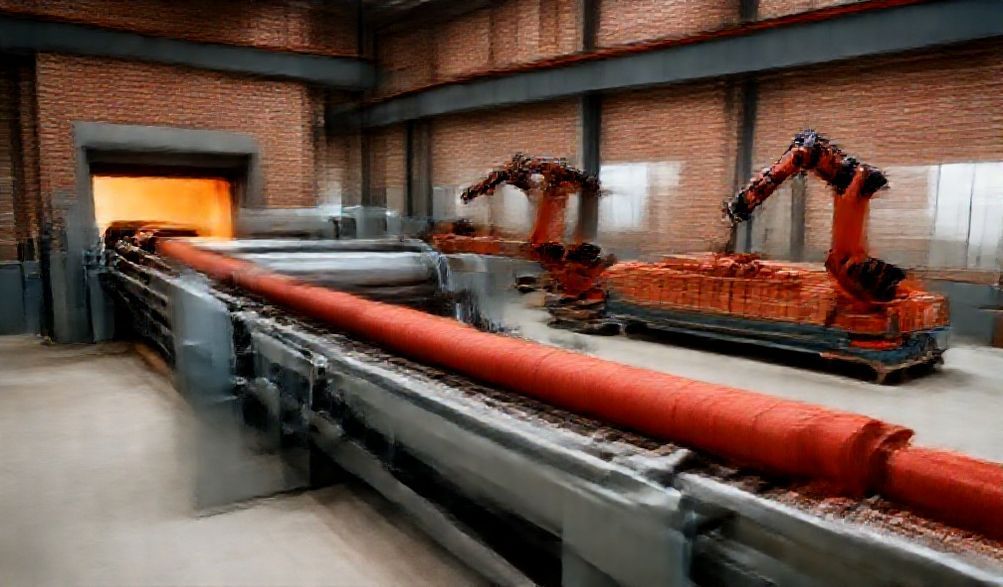
- Robotic Handling & Setting: Robotic brick setters or automated setting machines carefully place green bricks onto dryer cars, maximizing space and minimizing damage.
- Automated Drying & Firing: Bricks pass through a computer-controlled dryer and then into a modern tunnel kiln. Energy-efficient firing technology with recuperators preheats combustion air using waste heat from the cooling zone.
- Sorting & Palletizing: After cooling, bricks are automatically unloaded, sorted, and palletized by robotic arms for shipment.
This integration of automated material handlingnaprocess control systems minimizes human error, maximizes throughput, and ensures a superior final product.
Key Features to Look for in a Modern Clay Brick Machine
When evaluating equipment, whether for a startup or an expansion, focus on these critical aspects that separate reliable workhorses from problematic machinery.
Productivity and Output Specifications
- Capacity: Clearly defined output (e.g., bricks per hour for an 8-hour shift). Match this to your business plan.
- Ibikenewe by'ingufu: Understand the total connected load (in kW) to ensure your facility’s electrical infrastructure can support it.
- Umutekano wo Gukoresha Imashini Assess the PLC control system. A user-friendly human-machine interface (HMI) for parameter adjustment and fault diagnosis is a sign of a modern machine.
Durability, Maintenance, and After-Sales Support
This is where long-term value is determined. As demonstrated in production facilities like FUDA, durability is paramount.
- Ubwubatsi Bwihuse: Look for heavy-duty frames, wear-resistant liners in mixers and extruders (e.g., alloy steel), and high-quality gears and bearings.
- Ease of Maintenance: Designs that allow for easy access to wear parts for inspection and replacement drastically reduce downtime.
- After-Sales Ecosystem: A reputable supplier offers comprehensive technical support, readily available spare partsnaon-site or virtual training. This support network is a key reason factories succeed and is a non-negotiable in your supplier vetting process.
Choosing the Right Machine for Your Needs: A Buyer’s Checklist
Selecting machinery is a strategic decision. Use this framework to align your investment with your goals.
Assessing Your Project Scale and Budget
- Startup/Small Scale: A semi-automatic line with a basic extruder, cutter, and a small periodic kiln (like a shuttle kiln) may be ideal. Focus on simplicity and lower capital outlay.
- Medium-Scale Expansion: A more integrated semi-automatic or entry-level automatic line with a tunnel dryer and a small tunnel kiln offers a balance of output and automation.
- Inganda Nini z'Umushinga A fully automatic plant with robotic handling, high-capacity extruders, and a long tunnel kiln is necessary. The budget must account for the machinery, installation, and a significant civil works foundation.
Questions to Ask Manufacturers and Suppliers
Arm yourself with these questions to cut through sales pitches:
Technical Questions:
* “What is the expected wear life of the extruder auger and liner, and what is the cost and lead time for these spare parts?”
* “Can you provide the detailed firing curve recommended for our local clay with your kiln?”
* “What is the power consumption (kWh) per 1,000 bricks produced on this specific line configuration?”
* “Does the control system provide data logging for process parameters?”
Commercial & Support Questions:
* “What is included in the delivery (FOB, CIF)? Does installation and commissioning require separate fees?”
* “Can you provide references from clients in a similar climate or using similar clay?”
* “What is the structure of your after-sales service? Do you have local technicians or partners?”
* “Do you offer training on operation and maintenance, and is it on-site or at your factory?”
Frequently Asked Questions (FAQ) About Clay Brick Machines
Q1: What is the average cost of setting up a clay brick making plant with machines like those at FUDA?
Costs vary dramatically with scale and automation. A small semi-automatic plant can start from $50,000 – $150,000. A medium-scale automatic line may range from $200,000 to $500,000. A full-scale, high-capacity automated factory like FUDA’s can represent a multi-million dollar investment, encompassing machinery, the kiln structure, land, and buildings.
Q2: What is the difference between fly ash brick machines and traditional clay brick machines?
The core difference is the raw material and curing process. Fly ash bricks use fly ash (a coal combustion byproduct), lime, and gypsum, and are cured by steam pressure (autoclaving). Clay brick machines process natural clay and shale, and the bricks are hardened by high-temperature firing in a kiln. The machinery for mixing and molding differs to handle these distinct material properties.
Q3: How energy-efficient are modern brick firing kilns used in factories?
Modern tunnel kilns are highly efficient. They employ heat recovery systems that capture waste heat from the cooling bricks to preheat combustion air and even pre-dry green bricks. This energy-efficient firing technology can reduce fuel consumption by 30-50% compared to older kiln designs, making the firing process more sustainable and cost-effective.
Q4: Can clay brick making machines produce different sizes and types of bricks (e.g., perforated, hollow)?
Yes, absolutely. This is determined by the extrusion die (mold) installed on the machine. By changing the die, the same extruder can produce solid, hollow, perforated, or even specially shaped bricks. The cutter is then adjusted to match the new brick length.
Q5: What kind of after-sales service and training should I expect from a reputable machine supplier?
You should expect a clear service agreement. This typically includes detailed machine manuals, initial installation supervision and commissioning, comprehensive on-site training for your operators and maintenance staff, a warranty period (e.g., 12 months), and a reliable supply chain for genuine spare parts. Many top suppliers also offer remote diagnostic support.
Ibyo byose
Guhitamo ibyizaimashini zikora amatafari y'ibumba is a critical investment that forms the foundation of your entire operation. It requires a clear understanding of the production process, the spectrum of available machinery, and the features that ensure long-term productivity and reliability. This decision hinges not just on specifications, but on the proven expertise and support behind the equipment.
As we have seen through this guide, studying established and authoritative operations like the Uru ruganda rwubaka rwa FUDA provides an invaluable benchmark. Their integration of automated production lines, rigorous quality control, and energy-efficient practices illustrates the pinnacle of modern brick manufacturing. Let their model of efficiency guide your standards.
Final Call-to-Action: Before making a commitment, conduct thorough research. Prioritize suppliers who encourage factory visits or live demonstrations of their equipment. Ask the detailed questions outlined here and request client references. By choosing a partner with transparent processes and proven expertise, you ensure that your brick making venture is built on the most solid foundation possible.
<