
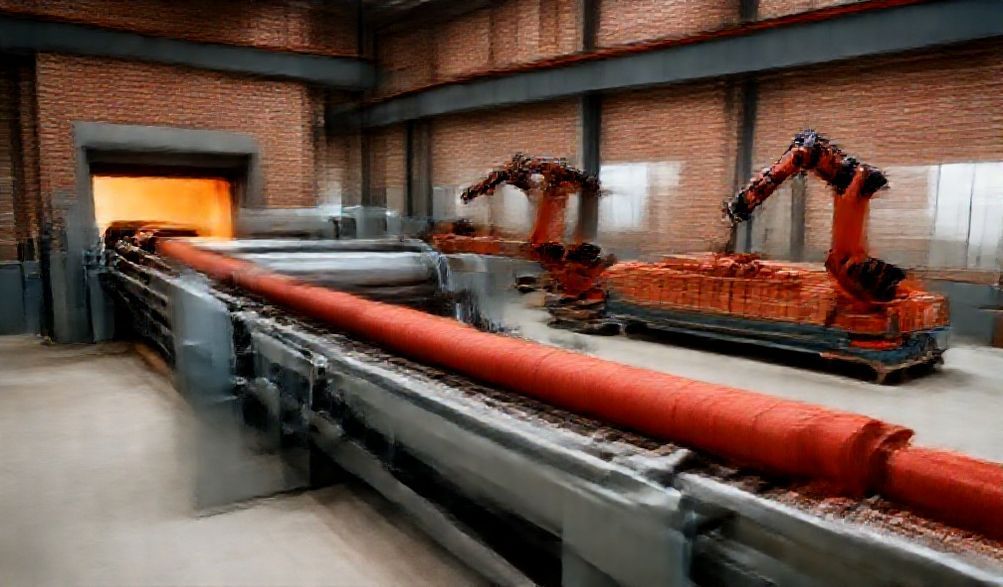
Hagaha Buuxa ee Makiinadaha Sameynta Lebi Dhagax: Gudaha Warshadda Sameynta Lebi ee FUDA
Hordhac
Ilbaxnimadii qarniyo, doobada dhoobo ayaa ahaa aasaaska jir iyo mid maanadeed ee horumarka bulshada, laga bilaabo zigguratooyinkii hore ilaa dhismooyinka cirka ka sarreeya ee casriga ah. Qiimaha ay sii wadaan waxaa ka mid ah xooggooda, kaydka kulka, iyo quruxdooda aan waqtiga lahayn. Laakiin gadaal kasta oo doobo adag, waxaa jira sheeko ku saabsan injineernimada casriga ah iyo warshadeynta saxda ah. Maanta, fanka samaynta doobada waa u baxay cilmi dheeri ah, oo loo wado injineernimo horumarsan iyomakiinad loo sameeyo lebbiska dhoobokuwa hubinaya isku xirnaanta, tayada, iyo waxsoosaarka heerka weyn.
Halkan waa hagitaan dhammaystiran oo si qoto dheer uga hadlaya adeegsiga awoodda otomaatiga ee soo saarista lebiska. Waxaan ku baadhi doonnaa makiinadaha ka shaqeeya bedka dabiiciga ah si ay ugu beddelaan dhagaxyo qoto dheer oo dhismo, iyadoo la adeegsanayoWarshada Qorista Lebiska FUDAwaa tusaale dhab ah oo ku saabsan waxqabadka tayo sare. Fikradaha halkan waxaa ku salaysan khibradaha warshadaha, qeexitaannada farsamada, iyo hababka warshadaha la arki karo, iyadoo siinayo macluumaad lagu kalsoonaan karo oo la fulin karo.
Haddii aad tahay xirfadle dhismo, ganacsi doon ah, ama xiisaynayo warshadeynta, waxaad baran doontaa habka soo saarka ee aasaasiga ah, noocyada mashiinnada ay ku shaqeeyaan, iyo sifooyinka muhiimka ah ee qalabka aamin ah ka dhigaya. Waxaan ku dhammaynaynaa si faahfaahsan sida warshad hore ugu midaysato arrimahan, iyadoo barnaamij u bixisay hab wanaagsan iyo tayo wax ka qabashada go'aannadaada gaarka ah.
Fahamka Soo Saarida Lebi Dhagax: Laga Bilaabo Qalabka Raawisinta ilaa Alaabta La Dhameeyay
Safarka laga bilaabo godka dhoobada ilaa baaldhigga dhagaxa la dhammeeyay waa isdhexgalka cajiibka ah ee joomatari, kiimikada, iyo injineernimada makiinadaha. Fahamka habkani waa muhiim si loo qiimeeyo doorka iyo shuruudaha makiinadaha la isticmaalo.
Qalabka Muhiimka ah ee Raawiyada: Xulashada iyo Diyaarinta Dhagaxa Dhoobada
Dhammaan dhoobo isku mid ma aha. Tayoorka dhuxusha ugu dambaysa waxay si dhab ah ugu xirantahay qalabka la isticmaalayo.
- Noocyada Dhoobo Ku Habboon:Dhoobooyinka ugu muhiimsan ee la isticmaalo waa dhoobo dhulka (dhoobooyinka dusha sare) iyo dhoobo dabka (shale iyo kaydka qoto dheer). Dhoobka ideal ah ee labada leh wuxuu ka kooban yahay isku dheellitirnaan aljumina (loogu talagalay dhoobka), silica (si looga hortago jeexashada), iyo waxyaabo kale oo kale sida bir-oxide (kaas oo bixiya midabka cas ee caadiga ah inta lagu jiro dabka).
- Diyaarinta waa Fure:Dhoobo qaawan ayaa inta badan aan diyaar u ahayn qaabeynta. Caadooyinka warshaduhu waxay muujinayaan in diyaarinta saxda ah ay ka kooban tahay talaabooyin dhowr ah:
- Dabeecadda Cimilada:Soo bandhigida dhoobada hawaha si loo jajabiyo burooyinka lana wanaajiyo dabacsanaanta.
- Jajabin & NidinMashiinadu waxay yareeyaan dhulkuuryo waaweyn oo dhoobo ah oo ay ka dhigaan qaybo yaryar oo siman oo isku mid ah.
- Qaboojin:Biyo ayaa lagu daraa dhoobada budada ah ee mishiinka isku dhafka si loo gaaro isku-dheellitirnaan siman, balaastiig ah, oo la shaqayn karo. Tallaabadani waa mid muhiim u ah hubinta in jidhka dhoobadu si fiican u soo baxo oo uu sameeyo lebenyo aan cillad lahayn.
Wejiyada Muhiimka ah ee Habka Samaynta Lebega
U beddelidda dhoobada diyaarsan oo loo rogo leben adag waxay raacdaa afar marxalad oo caalami ah, mid kastana wuxuu u baahan yahay mashiin gaar ah.
- Diyaarinta:Sida loo sharaxay, tani waxay ku lug leedahay yaraynta cabbirka iyo isku darka.
- Qaab-dhismeedka:Dhoobada caagga ah waxaa loo qaabeeyaa qaabka la doonayo (tusaale, adag, godan, daloollo) iyada oo loo marayo nabarida ama cadaadinta.
- Qalajinta:"Bulukeeti" cagaaran waa in si tartiib ah oo siman loo qalajiyaa si loo yareeyo qoyaanka ilaa 5% ka hooseeya, iyadoo laga hortagayo dildilaaca iyo qaraxa foornada.
- Rididdiin/DaaweynTani waa marxaladda vitrification, halkaas oo jajabka lagu kululeeyo heerkul u dhexeeya 900°C iyo 1200°C gudaha foornada. Nidaamkani wuxuu si aan laga noqon karin u adkeeyaa, isagoo soo saaraya xooggooda, midabkooda, iyo cimrigooda ugu dambeeya.
Noocyada Mashiinada Sameynta Lebegyada Dhoobada: Dulmar Guud
Heerka otomaatiga ahi wuxuu qeexaa miisaanka, soo-saarka, iyo xoogga shaqada ee hawlgasha samaynta lebenka. Doorashada nooca saxda ahi waa go'aankii ugu horreeyay ee weyn ee soo-saare kasta.
Qalabka Gacanta, Qayb ahaaneed iyo Si Buuxda Ugaashaysan
- Makiinada Gacanta:Kuwani waa mashiinno fudud, oo gacanta lagu shideeyo ama hal-wadne oo keliya leh, sida qaababka miiska ama tuujiyahayaga yaryar. Waxay leeyihiin wax soo saar aad u hooseeya (dhawr boqol oo live ah maalintii) iyo shaqo culeys weyn leh. Waxay ku habboon yihiin mashruucyo yaryar, farsamo-gacmeed, ama kuwa bulshada ku salaysan oo raasamaal yar leh.
- Makiinnada Yar-otoomaatig ah:Qaybtani waxay xiraan farqiga, iyagoo otomaatig ka dhigaya hababka muhiimka ah ee qaabaynta iyo goynta laakiin u baahan gacanta gacanta ee qalajinta iyo dhista foornada. Waxay bixiyaan korodh weyn oo wax soo saar ah (2,000-10,000 birikis oo maalintii) iyadoo maalgashash dhexdhexaad ah ah una badan yihiin xulashada guud ee shirkadaha yaryar iyo kuwa dhexe (SMEs).
- Makiinadaha Tooska ah ee Si Fudud:Kuwani waxay ka dhigan yihiin heerka warshadaynta, sida lagu arko warshadaha waaweyn. Habka oo dhammi—laga bilaabo quudinta maaddada ilaa qaabaynta, jarista, rarista, iyo mararka qaarkood xitaa ku shubista foornada—waa otomaatig iyadoo la adeegsanayo kontorooliyeyaasha barnaamijka loo yaqaan (PLCs). Waxay bixiyaan wax soo saarka ugu sareeya (20,000+ leben maalintii), tayo joogto ah, iyo kharash shaqo oo hooseeya, laakiin waxay u baahan yihiin maalgelin horudhac ah oo weyn iyo aqoon farsamo.
Key Machine Types in a Production Line
A modern production line is a symphony of specialized equipment.
- Clay Crusher and Mixer: The line starts here. A crusher (like a roller crusher or jaw crusher) breaks down hard clay. The mixer, often a double-shaft mixer or pug mill, then blends clay with water and additives to create a perfectly tempered body.
- Brick Molding Machine: The heart of shaping. For clay bricks, extrusion molding is predominant. A vacuum extruder removes air from the clay, compresses it, and forces it through a die to create a continuous column of clay in the desired profile (solid or hollow).
- Brick Cutter: This forms the individual brick. An automatic wire cutter or multi-wire cutter slices the extruded clay column into precise “green brick” lengths with clean edges. More advanced systems integrate robotic handling.
- Dryer and Kiln/Firing System: The hardening duo. Automated dryer chambers use controlled heat and humidity to dry bricks. The kiln, such as a highly efficient tunnel kiln or a traditional Hoffman kiln, then fires them. Modern tunnel kilns feature precise temperature zone control and heat recovery systems for maximum energy efficiency.
Inside the FUDA Brick Making Factory: A Model of Efficiency
Examining an established operation like the FUDA brick making factory provides invaluable, real-world insights into how theory translates into practice. Their success hinges on a philosophy that prioritizes systematic efficiency and uncompromising quality control.
FUDA’s Production Philosophy and Quality Standards
FUDA’s approach is built on predictability. Every brick must meet stringent internal and external standards (such as ASTM C62 or equivalent for building brick).
- Consistency & Dimensional Accuracy: Through precise machine calibration and process control, they ensure batch-to-batch uniformity in size, color, and texture. This is critical for builders, as consistent dimensions speed up construction and reduce mortar use.
- Strength as a Benchmark: Compressive strength is a non-negotiable metric. Their process is fine-tuned to reliably produce bricks that exceed required strength grades, a direct result of optimal clay preparation, extrusion density, and firing curve control.
- Integrated Quality Control: Quality is not just checked at the end. In operational environments like FUDA’s, checks occur at multiple stages: raw material testing, monitoring of the green brick extrusion, moisture checks post-drying, and final inspection of fired bricks for cracks, ringing sound, and color.
A Walkthrough of the FUDA Automated Production Line
A walk through their facility demonstrates a seamless material flow:
- Raw Material Intake & Primary Crushing: Tested clay is fed into a primary crushing system.
- Automated Tempering Line: The clay moves via conveyor to a series of secondary crushers and then into a high-capacity double-shaft mixer for precise water addition.
- Vacuum Extrusion & Cutting: The tempered clay enters a high-pressure vacuum extruder. The de-aired, dense clay column is extruded and cleanly cut by a synchronized automatic wire cutter.
- Robotic Handling & Setting: Robotic brick setters or automated setting machines carefully place green bricks onto dryer cars, maximizing space and minimizing damage.
- Automated Drying & Firing: Bricks pass through a computer-controlled dryer and then into a modern tunnel kiln. Energy-efficient firing technology with recuperators preheats combustion air using waste heat from the cooling zone.
- Sorting & Palletizing: After cooling, bricks are automatically unloaded, sorted, and palletized by robotic arms for shipment.
This integration of automated material handlingiyoprocess control systems minimizes human error, maximizes throughput, and ensures a superior final product.
Key Features to Look for in a Modern Clay Brick Machine
When evaluating equipment, whether for a startup or an expansion, focus on these critical aspects that separate reliable workhorses from problematic machinery.
Productivity and Output Specifications
- Capacity: Clearly defined output (e.g., bricks per hour for an 8-hour shift). Match this to your business plan.
- Shuruudaha Korontada: Understand the total connected load (in kW) to ensure your facility’s electrical infrastructure can support it.
- Heerka Automationka: Assess the PLC control system. A user-friendly human-machine interface (HMI) for parameter adjustment and fault diagnosis is a sign of a modern machine.
Durability, Maintenance, and After-Sales Support
This is where long-term value is determined. As demonstrated in production facilities like FUDA, durability is paramount.
- Dhismeedka Adag: Look for heavy-duty frames, wear-resistant liners in mixers and extruders (e.g., alloy steel), and high-quality gears and bearings.
- La Fududeynta Dayactirka: Designs that allow for easy access to wear parts for inspection and replacement drastically reduce downtime.
- After-Sales Ecosystem: A reputable supplier offers comprehensive taageero farsamo, readily available qaybaha gargaarkaiyoon-site or virtual training. This support network is a key reason factories succeed and is a non-negotiable in your supplier vetting process.
Choosing the Right Machine for Your Needs: A Buyer’s Checklist
Selecting machinery is a strategic decision. Use this framework to align your investment with your goals.
Assessing Your Project Scale and Budget
- Startup/Small Scale: A semi-automatic line with a basic extruder, cutter, and a small periodic kiln (like a shuttle kiln) may be ideal. Focus on simplicity and lower capital outlay.
- Medium-Scale Expansion: A more integrated semi-automatic or entry-level automatic line with a tunnel dryer and a small tunnel kiln offers a balance of output and automation.
- Wax soo saar warshadeed oo weyn A fully automatic plant with robotic handling, high-capacity extruders, and a long tunnel kiln is necessary. The budget must account for the machinery, installation, and a significant civil works foundation.
Questions to Ask Manufacturers and Suppliers
Arm yourself with these questions to cut through sales pitches:
Technical Questions:
* “What is the expected wear life of the extruder auger and liner, and what is the cost and lead time for these spare parts?”
* “Can you provide the detailed firing curve recommended for our local clay with your kiln?”
* “What is the power consumption (kWh) per 1,000 bricks produced on this specific line configuration?”
* “Does the control system provide data logging for process parameters?”
Commercial & Support Questions:
* “What is included in the delivery (FOB, CIF)? Does installation and commissioning require separate fees?”
* “Can you provide references from clients in a similar climate or using similar clay?”
* “What is the structure of your after-sales service? Do you have local technicians or partners?”
* “Do you offer training on operation and maintenance, and is it on-site or at your factory?”
Frequently Asked Questions (FAQ) About Clay Brick Machines
Q1: What is the average cost of setting up a clay brick making plant with machines like those at FUDA?
Costs vary dramatically with scale and automation. A small semi-automatic plant can start from $50,000 – $150,000. A medium-scale automatic line may range from $200,000 to $500,000. A full-scale, high-capacity automated factory like FUDA’s can represent a multi-million dollar investment, encompassing machinery, the kiln structure, land, and buildings.
Q2: What is the difference between fly ash brick machines and traditional clay brick machines?
The core difference is the raw material and curing process. Fly ash bricks use fly ash (a coal combustion byproduct), lime, and gypsum, and are cured by steam pressure (autoclaving). Clay brick machines process natural clay and shale, and the bricks are hardened by high-temperature firing in a kiln. The machinery for mixing and molding differs to handle these distinct material properties.
Q3: How energy-efficient are modern brick firing kilns used in factories?
Modern tunnel kilns are highly efficient. They employ heat recovery systems that capture waste heat from the cooling bricks to preheat combustion air and even pre-dry green bricks. This energy-efficient firing technology can reduce fuel consumption by 30-50% compared to older kiln designs, making the firing process more sustainable and cost-effective.
Q4: Can clay brick making machines produce different sizes and types of bricks (e.g., perforated, hollow)?
Yes, absolutely. This is determined by the extrusion die (mold) installed on the machine. By changing the die, the same extruder can produce solid, hollow, perforated, or even specially shaped bricks. The cutter is then adjusted to match the new brick length.
Q5: What kind of after-sales service and training should I expect from a reputable machine supplier?
You should expect a clear service agreement. This typically includes detailed machine manuals, initial installation supervision and commissioning, comprehensive on-site training for your operators and maintenance staff, a warranty period (e.g., 12 months), and a reliable supply chain for genuine spare parts. Many top suppliers also offer remote diagnostic support.
Gabagabo
Choosing the right makiinad loo sameeyo lebbiska dhoobo is a critical investment that forms the foundation of your entire operation. It requires a clear understanding of the production process, the spectrum of available machinery, and the features that ensure long-term productivity and reliability. This decision hinges not just on specifications, but on the proven expertise and support behind the equipment.
As we have seen through this guide, studying established and authoritative operations like the Warshada Qorista Lebiska FUDA provides an invaluable benchmark. Their integration of automated production lines, rigorous quality control, and energy-efficient practices illustrates the pinnacle of modern brick manufacturing. Let their model of efficiency guide your standards.
Final Call-to-Action: Before making a commitment, conduct thorough research. Prioritize suppliers who encourage factory visits or live demonstrations of their equipment. Ask the detailed questions outlined here and request client references. By choosing a partner with transparent processes and proven expertise, you ensure that your brick making venture is built on the most solid foundation possible.
<