
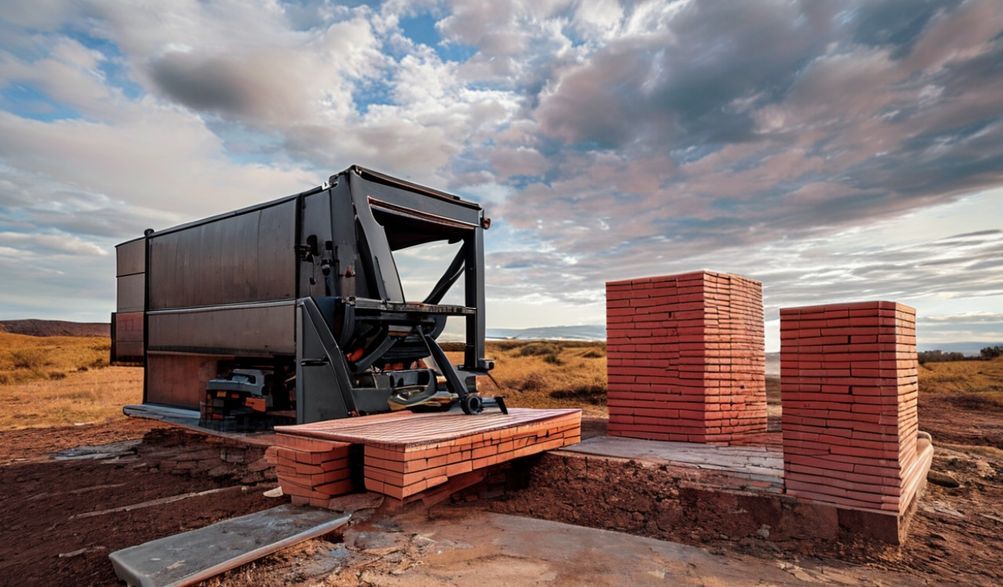
Hagardaada Buuxda ee Iibsashada Mashiinka Sameynta Lebiska ee Namibia (2026)
Hordhac
Ma dooneysaa inaad dhisto aasaas ganacsi horumar leh oo ku taal dhinaca dhismaha ee Namibia? Haddii aad tahay ganacsade u danaynaya inuu bilowdo mashruuc wax soo saarka lebi, ama hawlwadeen jira oo raadinaya inuu kordhiyo, maalgelinta ugu muhiimsan ee aad samayn doonto waa mashiinkaada sameynta lebi. Tani ma ahan oo keliya iibka qalabka; waa doorashada shurakada saxda ah ee loogu talagalay wax soo saar, faa'iido, iyo adkaysi suuq gaar ah.
Dhulka Namibia waxay soo bandhigta fursado iyo caqabado gaar ah—laga bilaabo isku-dhafka dhulka iyo adkeysiga tamarta gobolada ilaa habaynta shabakadaha iibiyeyaasha iyo la midowga himmilooyinka horumarinta qaranka. Doorasho qaldan ayaa keeni kartaa joogitaan qiimo jaban, alaabo aan habboonayn, iyo riyooyin la joojiyay.
Halkan waa hagahaaga ugu dambeeya. Waxaan ku wada qabanaynaa xirfadaha qoto dheer ee warshadaha iyo aqoonta ku salaysan dhab ahaan dalka Namibia si aan kaa caawinno inaad ka fogaato waxyaabaha aan macno lahayn. Waxaan kuu wadi doonnaa wax kasta: laga bilaabo fahamka alaabta iyo baahida suuqa ee maxalliga ah, ilaa isbarbar dhigga noocyada mashiinnada, xisaabinta kharashyada runta ah, baaritaanka alaab-qeybiyeyaasha, iyo fulinta howlgal faa'iido leh. U qaado tani inay tahay khariidadada kuu horseedaysa maalgelin faahfaahsan, kalsooni leh, oo faa'iido leh oo ku saabsan mustaqbalka Namibia.
Fahamka Soosaarida Lebiga ee Ku Saabsan Namibia
Guushaada warshadda lebbiska ma ahan waxay ku xidhan tahay makiinada oo keliya; waxay ku xidhan tahay sida ugu wanaagsan ee hawshaada oo dhan ugu habboon xaaladaha deegaanka. Aynu ku salayn qorshaha ganacsigaaga xaqiiqada Namibiya.
Qalabka iyo Dhulka Ku Habboon In Loo Sameeyo Lebi
Qalabkaaga asalka ah waa xarigga dhabta ah ee ganacsigaaga. Juqraafiyadda kala duwan ee Namibia waxay ka dhigan tahay in ku habboonaanta carada ay si weyn u kala duwan tahay gobolba gobol.
-
Noocyada Dhulka ee Caadiga ah & Isbeddellada La Qabsaday:
- Kavango & Zambezi Regions: Often have more clay-rich soils, which can be suitable for traditional clay brick firing. However, cement stabilization is frequently recommended for higher strength and durability.
- Khomas, Hardap, & Erongo: Soils are often sandy or gravelly. These are excellent for cement-stabilized soil blocks (CSSB) or concrete bricks, requiring a good mix of sand, aggregate, and cement.
- Coastal Areas (Erongo, Karas): Salinity can be an issue. Soil testing is non-negotiable here to avoid future brick deterioration.
-
The Non-Negotiable: Soil Testing. Before any machine purchase, invest in a professional soil test from a local engineering firm or the University of Namibia’s Department of Agriculture. This analysis will tell you:
- Soil composition (clay, silt, sand content).
- Suitability for cement stabilization (optimal cement percentage).
- Presence of harmful salts or organic matter.
Talo Sare: Many successful Namibian producers use a mix of local quarry sand and crushed stone (often readily available from mines) as their primary aggregate, reducing dependence on unpredictable soil quality.
Market Demand: Housing, Infrastructure, and Commercial Projects
Your machine’s output should be shaped by what the market needs. Namibia’s demand is driven by clear, ongoing projects.
- National Housing Program: A primary driver. There’s consistent demand for affordable, durable building blocks for low-cost and middle-income housing projects. Maxi bricks (often 290x140x90mm) are extremely popular for their speed of laying and material efficiency.
- Urban Expansion (Windhoek, Walvis Bay, Swakopmund): Drives demand for both structural blocks and aesthetic products like paving stones for driveways, walkways, and commercial landscapes.
- Mining & Industrial Sector: Requires durable bricks and blocks for on-site infrastructure, worker housing, and perimeter walls. Baloogyo madhan are often sought for their lighter weight and insulation properties.
- Dhisidda Ganacsiga: Shopping complexes, office parks, and hotels create demand for a variety of products, including face bricks and specialized pavers.
Actionable Insight: Visit active construction sites and speak with builders and contractors. Ask them what brick types and sizes they prefer and why. This direct market research is invaluable.
Types of Brick Making Machines Available in Namibia
Your choice of technology will define your production capacity, labor needs, and initial investment. Here’s a breakdown of the primary options available in the market.
Manual & Semi-Automatic Machines: For Startups and Small Scale
Ideal for entrepreneurs starting small, community projects, or supplementing existing production.
- Makiinada Gacanta: Operated entirely by hand lever. Very low cost and no power needed. Output is low (e.g., 300-500 blocks per day with a crew).
- Makiinnada Yar-otoomaatig ah: Use a single-phase electric motor to power vibration and compaction. The operator feeds mix and removes blocks. A significant step up in speed and consistency.
- Wanaagsan: Startups, small-scale builders producing for specific projects, areas with unreliable grid power.
- Faaiidooyinka: Low capital investment, simple operation and maintenance, low power consumption.
- Laba. Higher labor intensity, lower and less consistent output, product quality heavily dependent on operator skill.
- Awood Manual or standard 220V single-phase electricity.
Fully Automatic Stationary Machines: For Medium-Scale Production
These are the workhorses for serious commercial operations. They automate the feeding, compaction, and block ejection process.
- Hawlgalka: Often feature a conveyor-fed mixer, an automatic mold-filling system, and high-pressure hydraulic or vibratory compaction.
- Soo saar Can range from 5,000 to over 20,000 blocks per 8-hour shift, depending on model and block size.
- Heerka Maalgashiga Significant. This is a major business commitment.
- Space & Power: Require a substantial shed or factory space and a reliable three-phase electrical connection, standard in Namibian industrial zones.
Mobile Block Making Machines: On-Site Production Advantages
A specialized solution gaining traction for large-scale projects.
- Concept: The machine is mounted on a trailer and can be driven directly to a large construction site (e.g., a new housing estate, mine camp, or factory).
- Faaiido Muhiim ah: Drastically reduces the cost and logistics of transporting finished bricks. You produce bricks exactly where they are needed, using on-site or locally sourced materials.
- Tixgelin: Requires a significant project volume to justify the mobilization and setup.
Key Distinction: Hydraulic vs. Vibratory Press Machines
This technical choice impacts brick quality and maintenance.
- Vibratory Press Machines: Use high-frequency vibration to compact the concrete mix. Excellent for standard hollow and solid blocks. They are generally less expensive but can be noisier and more affected by mix consistency.
- Makiinada Tijaabinta Hydraulic: Use immense hydraulic pressure to compress the mix. They produce extremely dense, high-strength, and dimensionally precise bricks (ideal for paving stones and high-quality face bricks). Better suited for harsh, dusty conditions as they have fewer exposed moving parts but require hydraulic system maintenance.
- For Namibia: The dust prevalent in many regions can be hard on vibratory motors. Hydraulic systems, while requiring skilled maintenance, often handle dust better. Your choice depends on your target product quality and available technical support.
Fikradaha Muhiimka ah ee Loo Baahan Yahay Ka Hor Intaadan Iibsan
Look beyond the glossy brochure. These factors will determine your long-term success or failure.
Budget & Total Investment Cost (Beyond the Machine Price)
The machine’s price tag is just the beginning. A realistic budget must include:
- Core Equipment: The brick machine itself.
- Essential Ancillaries: A pan or planetary mixer, block pallets (hundreds), curing racks or stillages, and a forklift or trolley.
- Qorraxda: Each brick type/size requires a specific mold. Molds are wear items and need eventual replacement.
- Infrastructure: Land lease/purchase, a solid concrete floor, a shed for production and curing, water storage, and security.
- Operational Capital: Funds for initial raw material stock, labor, utilities, and marketing.
- Realistic Price Ranges (NAD):
- Manual machines: NAD 25,000 – 80,000
- Semi-automatic machines: NAD 100,000 – 350,000
- Fully automatic stationary plants: NAD 500,000 – 2,500,000+
- Prices vary wildly based on brand, automation, and capacity.
Production Capacity & Your Business Goals
Don’t buy a machine that’s too big or too small. Match it to a realistic business plan.
- Define Your Sales Projections: How many bricks/blocks can you sell per month? Get commitments if possible.
- Calculate Required Output: Factor in curing time (typically 7-14 days before sale). If you need 50,000 saleable blocks per month, your daily production must account for the blocks curing in the yard.
- Match the Machine: A machine rated at 2,000 blocks per hour doesn’t produce 16,000 per day. Account for loading, mixing, breaks, and maintenance. Use “realistic shifts,” not theoretical maximums.
After-Sales Support: The Most Critical Factor in Namibia
This cannot be overstated. A machine without support is a paperweight.
- Local Agent Presence: Is there a trained technician in Windhoek, Walvis Bay, or Ondangwa? How quickly can they respond?
- Spare Parts Inventory: Does the supplier stock common wear parts (mold liners, vibration motors, hydraulic seals) in-country? Airfreighting parts from abroad means weeks of downtime.
- Questions to Ask Suppliers:
- “What is included in the warranty and for how long?”
- “Can you provide a list of local clients I can speak to?”
- “What is your guaranteed response time for a breakdown?”
- “Do you offer operator and maintenance training, and is it included?”
Power Source: Grid Electricity, Generator, or Manual?
Your location dictates your power strategy.
- Urban/Industrial Areas (Windhoek, Walvis Bay): Three-phase grid power is the most reliable and cost-effective for automatic machines.
- Semi-Urban or Rural Areas: If three-phase is unavailable or unreliable, you have two options:
- Generator: A high-capacity diesel generator is a major capital and operational cost (fuel, maintenance). Ensure the machine is compatible with generator power.
- Machine Choice: Opt for a robust semi-automatic machine designed to run on a smaller generator or single-phase power, or even a manual machine to start.
- Had iyo goor have an electrician verify your power supply before installation.
Navigating the Namibian Supplier Landscape
Choosing your supplier is as important as choosing your machine.
Local Agents vs. Direct International Import
- Local Authorized Agent/Distributor:
- Faaiidooyinka: Local showroom/workshop, in-country spare parts, trained technicians, understanding of local conditions, handles customs and logistics.
- Laba. Higher upfront price due to their markup, which covers their support infrastructure.
- Direct Import from International Manufacturer:
- Faaiidooyinka: Potentially lower initial purchase price.
- Laba. High risk. You are responsible for shipping, customs clearance (at Walvis Bay or Lüderitz), import duties, and VAT. No local support. Any technical issue requires expensive international calls and long waits for parts. Warranty claims are a logistical nightmare.
Verdict: For all but the largest corporations with in-house engineering teams, the security of a local agent is worth the premium.
Reputable International Brands with Local Presence
Look for brands that have invested in a Namibian presence. While distributors change, brands known in the region include:
* BESS: Offers a range from manual to fully automatic plants, with a known presence in Southern Africa.
* Prensoland & Zenith: Recognized for high-quality stationary and mobile plants.
* Other Chinese & Indian Brands: Many brands like QGM, Hongfa, and others are available. The key is not just the brand name, but the strength and reputation of their local distributor.
Always verify the current local distributor directly with the international brand’s head office.
Due Diligence Checklist for Suppliers
Protect your investment by being thorough:
* Visit Their Workshop: See their operation. Is it organized? Do they have machines assembled?
* Request Client References: Get 2-3 names of recent buyers in Namibia. Call them. Ask about machine performance, support, and downtime.
* Verify Spare Parts: Ask to see their physical spare parts inventory.
* Get a Detailed Contract: The contract must specify machine model, output guarantees, warranty terms, training details, delivery date, and payment schedule. Do not rely on promises.
Maximizing Profitability with Your Brick Making Machine
Owning the machine is step one. Running it profitably is the ongoing challenge.
Optimizing Raw Material Costs: Cement, Sand, and Crushed Stone
Material cost is your largest ongoing expense.
* Simento: Build relationships with major suppliers (Ohorongo Cement, Whale Rock Cement) for potential bulk discounts. Store cement properly to prevent spoilage.
* Wadarta: Source sand and crushed stone from reliable local quarries. Test different mixes—sometimes a slightly higher cement percentage with a cheaper aggregate yields a stronger, more marketable brick at a similar cost.
* Horumarin Explore the potential of using industrial by-products like fly ash (if locally available) as a partial cement replacement, subject to technical testing.
Efficient Production Workflow Layout
A poorly laid-out yard kills efficiency. Follow a linear flow:
[Raw Material Stockpile] -> [Mixing Station] -> [Machine] -> [Fresh Block Pallet] -> [Curing Area (Covered & Humid)] -> [Drying Yard] -> [Finished Product Storage] -> [Loading Bay]
* Key: Minimize the distance blocks are moved. The curing area (first 7 days) must be protected from sun and wind to ensure proper strength development.
Basic Maintenance for Harsh Namibian Conditions
Dust, heat, and vibration are your machine’s enemies.
* Daily: Clean the machine thoroughly, especially around molds and vibration tables. Check for loose bolts and nuts. Lubricate all points as per manual.
* Weekly: Inspect hydraulic hoses for leaks. Check electrical connections for dust ingress. Clean the mixer blades and drum.
* Seasonal: In dusty seasons, increase the frequency of cleaning. Ensure the machine’s cooling fans (if any) are unobstructed.
FAQ Section
Q: What is the average price of a brick making machine in Namibia?
A: There’s no single “average.” Manual machines can start from around NAD 30,000, semi-automatic units range from NAD 100,000 to NAD 350,000, and fully automatic production plants typically begin around NAD 500,000 and can exceed NAD 2 million. The final price depends on brand, automation level, output capacity, and the supplier’s support package.
Q: Can I get financing or a government grant for a brick machine in Namibia?
A: Possibilities exist but require active investigation. Check with the Ministry of Industrialisation and Trade for any active SME support schemes. The Development Bank of Namibia (DBN) and commercial banks like Bank WindhoekamaFNB offer business asset financing, for which you will need a solid business plan. Always verify the latest programs directly with the institutions.
Q: How much profit can I make per brick?
A: This is highly variable. A simplified example: If a standard maxi brick costs ~NAD 2.50 in materials (cement, sand, labor, utilities) and sells for NAD 4.50, your gross profit is NAD 2.00 per brick. Your net profit depends on overheads (rent, machine finance, marketing). Volume is key to profitability.
Q: Is training provided when I buy a machine?
A: A reputable supplier must provide comprehensive hands-on training for both machine operation and basic maintenance. This should be clearly stated in your purchase contract. Never accept a supplier who says you can “figure it out” or offers only a manual.
Q: What is the lead time for receiving a machine after ordering?
A: For a machine in the supplier’s local stock, delivery can be within weeks. For a made-to-order import, lead time is typically 3-6 months. This includes manufacturing, sea freight to Walvis Bay (the main port), customs clearance, and road transport to your site. Always get a written estimated timeline.
Gabagabo
Choosing the right brick making machine in Namibia is a strategic decision that blends technical understanding with sharp business acumen. Your success hinges on aligning robust equipment with the realities of local materials, clear market demand, and—above all—unshakeable after-sales support.
This guide has provided the framework. Your journey now moves to action. Start by crystallizing your business plan with realistic production and sales goals. Then, use the factors outlined here—from total cost analysis to the due diligence checklist—as your evaluation toolkit when engaging suppliers.
Your next step is to contact several reputable suppliers with your specific requirements. Ask the detailed, sometimes tough questions about support, spares, and client references. Invest time in this due diligence phase. The right machine is not an expense; it’s the profitable asset that will build your business and contribute to Namibia’s growth for years to come.
<