
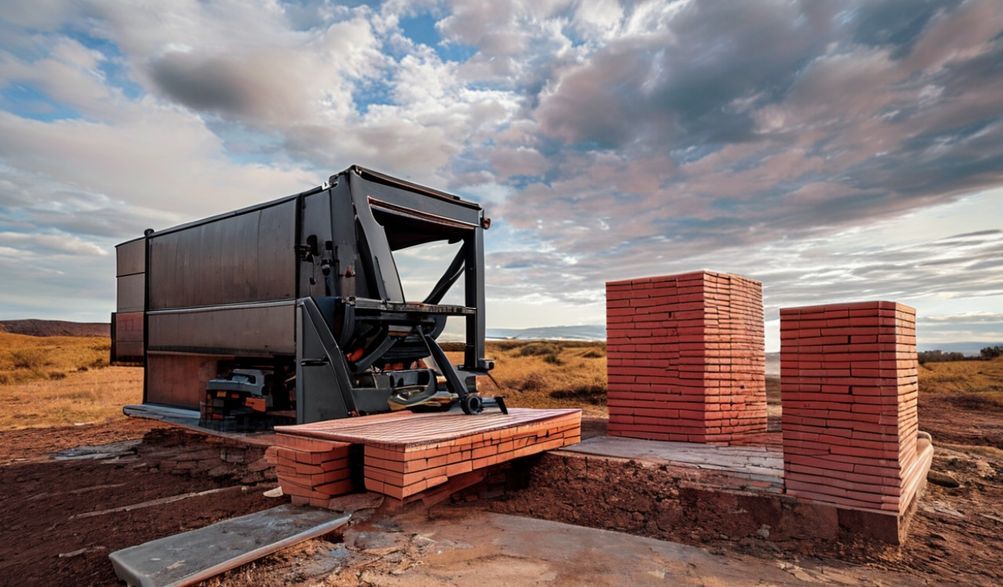
Намибияда керамика ишлаб чиқариш машинаси сотиб олиш учун тўлиқ қўлланма (2026 йил)
Kirish
Namibiya qurilish sohasida muvaffaqiyatli biznes uchun asos yaratmoqchimisiz? G‘isht ishlab chiqarish korxonasini boshlashni maqsad qilgan tadbirkor bo‘ling yoki faoliyatini kengaytirishni istagan tajribali mutaxassis bo‘ling, siz qiladigan eng muhim sarmoya g‘isht yasash mashinasiga qaratiladi. Bu shunchaki uskuna sotib olish haqida emas; balki o‘ziga xos bozorda samaradorlik, rentabellik va bardoshlik uchun to‘g‘ri hamkorni tanlash haqidadir.
Namibiya landshafti o'ziga xos imkoniyatlar va qiyinchiliklarni taqdim etadi—turli xil tuproq tarkibidan tortib, mintaqaviy elektr ta'minotining ishonchliligigacha, shuningdek, yetkazib beruvchilar tarmoqlarini boshqarish va milliy rivojlanish maqsadlari bilan muvofiqlashtirishgacha bo'lgan masalalar mavjud. Noto'g'ri tanlov qimmatbaho ish vaqtining yo'qolishi, mos kelmaydigan mahsulotlar va orzu qilingan maqsadlarga erishishning to'xtab qolishiga olib kelishi mumkin.
Ushbu qo‘llanma sizning ishonchli manbayingiz bo‘lish uchun mo‘ljallangan. Biz sanoatning chuqur bilimi bilan Namibiyaning amaliy, daladagi tajribasini birlashtirib, sizga shov-shuvlardan xoli, aniq yo‘l ko‘rsatamiz. Biz sizni hamma narsadan o‘tkazamiz: mahalliy materiallar va bozor talabini tushunishdan tortib, mashina turlarini solishtirish, haqiqiy xarajatlarni hisoblash, yetkazib beruvchilarni tekshirish va foydali operatsiyani amalga oshirishgacha. Buni Namibiyaning kelajagiga asoslangan, ishonchli va foydali sarmoya kiritish yo‘lingiz deb hisoblang.
ნამიბიის კონტექსტში აგურის წარმოების გაგება
G‘isht ishlab chiqarishda muvaffaqiyat faqat mashinaga bog‘liq emas, balki butun operatsiyangizning mahalliy sharoitlarga qanchalik moslashishiga bog‘liq. Keling, biznes-rejangizni Namibiya haqiqatlariga asoslaylik.
Mahalliy Materiallar va G'isht Tayyorlash uchun Tuproqning Mosligi
Sizning xom ashyongiz biznesingizning asosiy poydevoridir. Namibiyaning xilma-xil geologiyasi tuproqning mos kelish darajasi mintaqalar bo'yicha sezilarli darajada farq qilishini anglatadi.
-
Umumiy Tuproq Turlari va Moslashuvlar:
- Каванго ва Замбези ҳудудлари:Ko'pincha loyqa tuproqlar ko'proq bo'ladi, ular an'anaviy loy g'isht pishirish uchun mos keladi. Biroq, yuqori mustahkamlik va chidamlilik uchun sement bilan mustahkamlash tez-tez tavsiya etiladi.
- Xomas, Hardap va Erongo:Tuproqlar ko'pincha qumli yoki shag'alli bo'ladi. Bu esa ularnisement bilan mustahkamlangan tuproq bloklari (CSSB)beton g'ishtlar uchun qum, agregat va sementning yaxshi aralashmasi talab qilinadi.
- Sahil hududlari (Erongo, Karas):Tuzlilik muammo bo'lishi mumkin. Kelajakda g'ishtning yemirilishining oldini olish uchun bu erda tuproqni sinovdan o'tkazish muhimdir.
-
Majburiy qadam: Tuproqni tekshirish.Har qanday mashina sotib olishdan oldin, mahalliy muhandislik firmasi yoki Namibiya Universitetining Qishloq xo‘jaligi bo‘limidan professional tuproq tahlilini amalga oshiring. Bu tahlil sizga quyidagilarni aytib beradi:
- Tuproq tarkibi (gil, loy, qum miqdori).
- Sement bilan mustahkamlash uchun mosligi (optimal sement foizi).
- Zararli tuzlar yoki organik moddalarning mavjudligi.
Professional Maslahat:Ko'plab muvaffaqiyatli Namibiya ishlab chiqaruvchilari asosiy agregat sifatida mahalliy karer qumi va maydalangan toshni (ko'pincha konlardan osonlik bilan olinadigan) aralashtirishni qo'llashadi, bu esa oldindan aytib bo'lmaydigan tuproq sifatiga bog'liqlikni kamaytiradi.
Bozor Talabi: Uy-joy, Infratuzilma va Savdo Loyihalari
Sizning mashinangizning mahsuloti bozorning ehtiyojlariga mos ravishda shakllantirilishi kerak. Namibiyaning talabi aniq va davom etayotgan loyihalar tomonidan belgilanadi.
- Milliy uy-joy dasturi:Asosiy omil. Arzon va mustahkam qurilish materiallariga past va o‘rta daromadli uy-joy loyihalari uchun doimiy talab mavjud.Макси кирпичлар(odatda 290x140x90mm) qo'yish tezligi va material samaradorligi tufayli juda mashhurdir.
- Shahar kengayishi (Vindxuk, Valvis ko'rfazi, Svakopmund): Drives demand for both structural blocks and aesthetic products like paving stones for driveways, walkways, and commercial landscapes.
- Mining & Industrial Sector: Requires durable bricks and blocks for on-site infrastructure, worker housing, and perimeter walls. G'ovak bloklar are often sought for their lighter weight and insulation properties.
- Tijorat qurilish: Shopping complexes, office parks, and hotels create demand for a variety of products, including face bricks and specialized pavers.
Actionable Insight: Visit active construction sites and speak with builders and contractors. Ask them what brick types and sizes they prefer and why. This direct market research is invaluable.
Types of Brick Making Machines Available in Namibia
Your choice of technology will define your production capacity, labor needs, and initial investment. Here’s a breakdown of the primary options available in the market.
Manual & Semi-Automatic Machines: For Startups and Small Scale
Ideal for entrepreneurs starting small, community projects, or supplementing existing production.
- Qo'lda Boshqariladigan Mashinalar: Operated entirely by hand lever. Very low cost and no power needed. Output is low (e.g., 300-500 blocks per day with a crew).
- Yarim avtomat mashinalar: Use a single-phase electric motor to power vibration and compaction. The operator feeds mix and removes blocks. A significant step up in speed and consistency.
- Mukammal mos keladi: Startups, small-scale builders producing for specific projects, areas with unreliable grid power.
- Afzalliklari: Low capital investment, simple operation and maintenance, low power consumption.
- Kamchiliklari: Higher labor intensity, lower and less consistent output, product quality heavily dependent on operator skill.
- Kuch: Manual or standard 220V single-phase electricity.
Fully Automatic Stationary Machines: For Medium-Scale Production
These are the workhorses for serious commercial operations. They automate the feeding, compaction, and block ejection process.
- Operatsiya: Often feature a conveyor-fed mixer, an automatic mold-filling system, and high-pressure hydraulic or vibratory compaction.
- Chiqish: Can range from 5,000 to over 20,000 blocks per 8-hour shift, depending on model and block size.
- Investitsiya Darajasi: Significant. This is a major business commitment.
- Space & Power: Require a substantial shed or factory space and a reliable three-phase electrical connection, standard in Namibian industrial zones.
Mobile Block Making Machines: On-Site Production Advantages
A specialized solution gaining traction for large-scale projects.
- Concept: The machine is mounted on a trailer and can be driven directly to a large construction site (e.g., a new housing estate, mine camp, or factory).
- Key Benefit: Drastically reduces the cost and logistics of transporting finished bricks. You produce bricks exactly where they are needed, using on-site or locally sourced materials.
- E'tibor: Requires a significant project volume to justify the mobilization and setup.
Key Distinction: Hydraulic vs. Vibratory Press Machines
This technical choice impacts brick quality and maintenance.
- Vibratory Press Machines: Use high-frequency vibration to compact the concrete mix. Excellent for standard hollow and solid blocks. They are generally less expensive but can be noisier and more affected by mix consistency.
- Hydraulic Press Machines: Use immense hydraulic pressure to compress the mix. They produce extremely dense, high-strength, and dimensionally precise bricks (ideal for paving stones and high-quality face bricks). Better suited for harsh, dusty conditions as they have fewer exposed moving parts but require hydraulic system maintenance.
- For Namibia: The dust prevalent in many regions can be hard on vibratory motors. Hydraulic systems, while requiring skilled maintenance, often handle dust better. Your choice depends on your target product quality and available technical support.
Sotib olishdan oldin hisobga olish kerak bo'lgan asosiy omillar
Look beyond the glossy brochure. These factors will determine your long-term success or failure.
Budget & Total Investment Cost (Beyond the Machine Price)
The machine’s price tag is just the beginning. A realistic budget must include:
- Core Equipment: The brick machine itself.
- Essential Ancillaries: A pan or planetary mixer, block pallets (hundreds), curing racks or stillages, and a forklift or trolley.
- Moldlar: Each brick type/size requires a specific mold. Molds are wear items and need eventual replacement.
- Infrastructure: Land lease/purchase, a solid concrete floor, a shed for production and curing, water storage, and security.
- Operational Capital: Funds for initial raw material stock, labor, utilities, and marketing.
- Realistic Price Ranges (NAD):
- Manual machines: NAD 25,000 – 80,000
- Semi-automatic machines: NAD 100,000 – 350,000
- Fully automatic stationary plants: NAD 500,000 – 2,500,000+
- Prices vary wildly based on brand, automation, and capacity.
Production Capacity & Your Business Goals
Don’t buy a machine that’s too big or too small. Match it to a realistic business plan.
- Define Your Sales Projections: How many bricks/blocks can you sell per month? Get commitments if possible.
- Calculate Required Output: Factor in curing time (typically 7-14 days before sale). If you need 50,000 saleable blocks per month, your daily production must account for the blocks curing in the yard.
- Match the Machine: A machine rated at 2,000 blocks per hour doesn’t produce 16,000 per day. Account for loading, mixing, breaks, and maintenance. Use “realistic shifts,” not theoretical maximums.
After-Sales Support: The Most Critical Factor in Namibia
This cannot be overstated. A machine without support is a paperweight.
- Local Agent Presence: Is there a trained technician in Windhoek, Walvis Bay, or Ondangwa? How quickly can they respond?
- Spare Parts Inventory: Does the supplier stock common wear parts (mold liners, vibration motors, hydraulic seals) in-country? Airfreighting parts from abroad means weeks of downtime.
- Questions to Ask Suppliers:
- “What is included in the warranty and for how long?”
- “Can you provide a list of local clients I can speak to?”
- “What is your guaranteed response time for a breakdown?”
- “Do you offer operator and maintenance training, and is it included?”
Power Source: Grid Electricity, Generator, or Manual?
Your location dictates your power strategy.
- Urban/Industrial Areas (Windhoek, Walvis Bay): Three-phase grid power is the most reliable and cost-effective for automatic machines.
- Semi-Urban or Rural Areas: If three-phase is unavailable or unreliable, you have two options:
- Generator: A high-capacity diesel generator is a major capital and operational cost (fuel, maintenance). Ensure the machine is compatible with generator power.
- Machine Choice: Opt for a robust semi-automatic machine designed to run on a smaller generator or single-phase power, or even a manual machine to start.
- Doim have an electrician verify your power supply before installation.
Navigating the Namibian Supplier Landscape
Choosing your supplier is as important as choosing your machine.
Local Agents vs. Direct International Import
- Local Authorized Agent/Distributor:
- Afzalliklari: Local showroom/workshop, in-country spare parts, trained technicians, understanding of local conditions, handles customs and logistics.
- Kamchiliklari: Higher upfront price due to their markup, which covers their support infrastructure.
- Direct Import from International Manufacturer:
- Afzalliklari: Potentially lower initial purchase price.
- Kamchiliklari: High risk. You are responsible for shipping, customs clearance (at Walvis Bay or Lüderitz), import duties, and VAT. No local support. Any technical issue requires expensive international calls and long waits for parts. Warranty claims are a logistical nightmare.
Verdict: For all but the largest corporations with in-house engineering teams, the security of a local agent is worth the premium.
Reputable International Brands with Local Presence
Look for brands that have invested in a Namibian presence. While distributors change, brands known in the region include:
* BESS: Offers a range from manual to fully automatic plants, with a known presence in Southern Africa.
* Prensoland & Zenith: Recognized for high-quality stationary and mobile plants.
* Other Chinese & Indian Brands: Many brands like QGM, Hongfa, and others are available. The key is not just the brand name, but the strength and reputation of their local distributor.
Always verify the current local distributor directly with the international brand’s head office.
Due Diligence Checklist for Suppliers
Protect your investment by being thorough:
* Visit Their Workshop: See their operation. Is it organized? Do they have machines assembled?
* Request Client References: Get 2-3 names of recent buyers in Namibia. Call them. Ask about machine performance, support, and downtime.
* Verify Spare Parts: Ask to see their physical spare parts inventory.
* Get a Detailed Contract: The contract must specify machine model, output guarantees, warranty terms, training details, delivery date, and payment schedule. Do not rely on promises.
Maximizing Profitability with Your Brick Making Machine
Owning the machine is step one. Running it profitably is the ongoing challenge.
Optimizing Raw Material Costs: Cement, Sand, and Crushed Stone
Material cost is your largest ongoing expense.
* Sement: Build relationships with major suppliers (Ohorongo Cement, Whale Rock Cement) for potential bulk discounts. Store cement properly to prevent spoilage.
* Agregatlar: Source sand and crushed stone from reliable local quarries. Test different mixes—sometimes a slightly higher cement percentage with a cheaper aggregate yields a stronger, more marketable brick at a similar cost.
* Innovatsiya: Explore the potential of using industrial by-products like fly ash (if locally available) as a partial cement replacement, subject to technical testing.
Efficient Production Workflow Layout
A poorly laid-out yard kills efficiency. Follow a linear flow:
[Raw Material Stockpile] -> [Mixing Station] -> [Machine] -> [Fresh Block Pallet] -> [Curing Area (Covered & Humid)] -> [Drying Yard] -> [Finished Product Storage] -> [Loading Bay]
* Key: Minimize the distance blocks are moved. The curing area (first 7 days) must be protected from sun and wind to ensure proper strength development.
Basic Maintenance for Harsh Namibian Conditions
Dust, heat, and vibration are your machine’s enemies.
* Daily: Clean the machine thoroughly, especially around molds and vibration tables. Check for loose bolts and nuts. Lubricate all points as per manual.
* Weekly: Inspect hydraulic hoses for leaks. Check electrical connections for dust ingress. Clean the mixer blades and drum.
* Seasonal: In dusty seasons, increase the frequency of cleaning. Ensure the machine’s cooling fans (if any) are unobstructed.
Ko'p so'raladigan savollar bo'limi
Q: What is the average price of a brick making machine in Namibia?
A: There’s no single “average.” Manual machines can start from around NAD 30,000, semi-automatic units range from NAD 100,000 to NAD 350,000, and fully automatic production plants typically begin around NAD 500,000 and can exceed NAD 2 million. The final price depends on brand, automation level, output capacity, and the supplier’s support package.
Q: Can I get financing or a government grant for a brick machine in Namibia?
A: Possibilities exist but require active investigation. Check with the Ministry of Industrialisation and Trade for any active SME support schemes. The Development Bank of Namibia (DBN) and commercial banks like Bank WindhoekyokiFNB offer business asset financing, for which you will need a solid business plan. Always verify the latest programs directly with the institutions.
Q: How much profit can I make per brick?
A: This is highly variable. A simplified example: If a standard maxi brick costs ~NAD 2.50 in materials (cement, sand, labor, utilities) and sells for NAD 4.50, your gross profit is NAD 2.00 per brick. Your net profit depends on overheads (rent, machine finance, marketing). Volume is key to profitability.
Q: Is training provided when I buy a machine?
A: A reputable supplier must provide comprehensive hands-on training for both machine operation and basic maintenance. This should be clearly stated in your purchase contract. Never accept a supplier who says you can “figure it out” or offers only a manual.
Q: What is the lead time for receiving a machine after ordering?
A: For a machine in the supplier’s local stock, delivery can be within weeks. For a made-to-order import, lead time is typically 3-6 months. This includes manufacturing, sea freight to Walvis Bay (the main port), customs clearance, and road transport to your site. Always get a written estimated timeline.
Xulosa
Choosing the right brick making machine in Namibia is a strategic decision that blends technical understanding with sharp business acumen. Your success hinges on aligning robust equipment with the realities of local materials, clear market demand, and—above all—unshakeable after-sales support.
This guide has provided the framework. Your journey now moves to action. Start by crystallizing your business plan with realistic production and sales goals. Then, use the factors outlined here—from total cost analysis to the due diligence checklist—as your evaluation toolkit when engaging suppliers.
Your next step is to contact several reputable suppliers with your specific requirements. Ask the detailed, sometimes tough questions about support, spares, and client references. Invest time in this due diligence phase. The right machine is not an expense; it’s the profitable asset that will build your business and contribute to Namibia’s growth for years to come.
<