
Sida Loo Doorto Mashiinka Sameynta Lebiga Gacanta laga Xiro: Hagaha Iibsiga Wax-ku-oolka ah
Hordhac
Qiyaas inaad ciidda cagahaaga hoostooda u rogto dhagaxyo dhismo oo adkaha, qaali ah, oo loogu talagalay gurigaaga, ganacsigaaga, ama mashaariicda bulshadaada. Mashiinnada gacanta lagu sameeyo ee dhagaxa isku-xidha ayaa suurtogal ka dhigaya tan, iyagoo awood siinaya ganacsato, kuwa guryaha iska dhista, iyo horumariye-yar-yar si ay u soo saaraan qalab dhismo deegaanka u fiican oo leh maalgashiga bilowga ah oo aad u hooseeya. Si kastaba ha ahaatee, noocyo kala duwan iyo sheegashooyin xooggan oo suuqa ah, doorashada mashiinka saxda ah waxay dareen ka qaadi kartaa culus.
Habkaan dhammaystiran wuxuu ku dhisan yahay qeexitaanno farsamo, hababka ugu fiican ee warshadaha, iyo aqoonta hawlgalka ee dhabta ah. Waxaan ka gudbaynaa hadalada iibinta si aan ugu siinno qaab cad oo wax ku ool ah oo qiimaynta ah. Haddii hadafkaagu yahay inaad bilowdo ganacsi yar oo dhagax-tuur ah ama siiso agabka dhismaha shakhsi ahaaneed, maqaalkani wuxuu kugu hagayaa arrin kasta oo muhiim ah—laga bilaabo fahamka noocyada mashiinnada iyo awoodda wax-soosaarka ilaa falanqaynta ku habboonaanta ciidda iyo kharashka guud—si aad u samaysato go'aan iibsi oo kalsooni iyo macluumaad leh.
Fahaminta Mashiinada Bricks-ka Isku Xidhan ee Gacanta
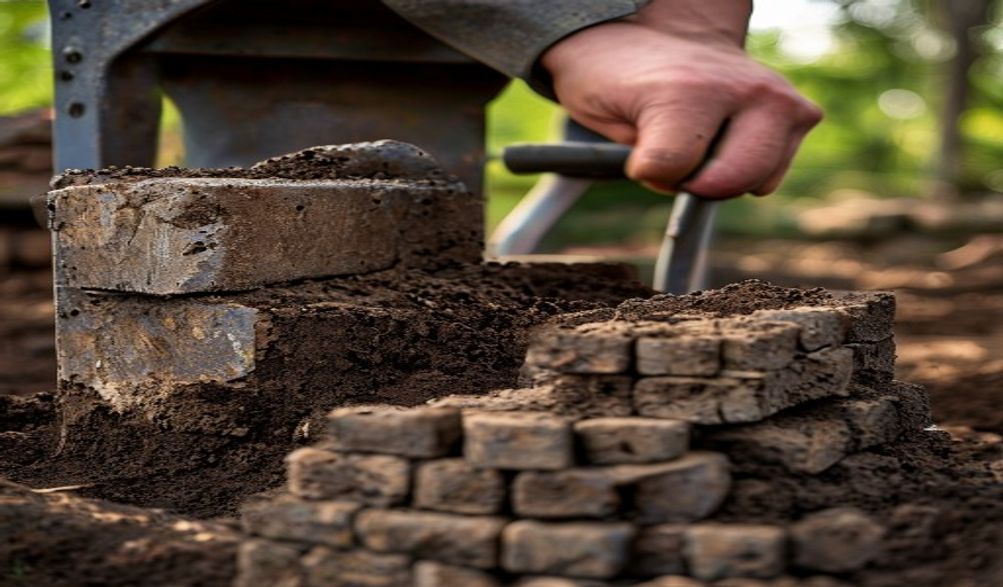
Mashiinka birta ah ee gacanta lagu xiro, oo inta badan loo yaqaan 'manual soil block press' ama 'compressed earth block (CEB) machine', waa qalab makaanik ah oo isku buuraya qayb carro ah (iyo inta badan yar oo xasiloon sida sibidh) si ay u sameeyaan baloogyo cufan oo tayo sare leh. Si ka duwan baloogyada dhoobada ee dhaqameed, baloogyadani waxay xoogga ka helaan isku-buufinta iyo daaweynta, ma aha in lagu gubto foornada. Qofka shaqeeya wuxuu isticmaalaa nidaam lever si uu u soo saaro xoog makaanik ah oo weyn, isagoo isku buufinaya isku dhafka carrada gudaha qaab mold ah oo sameeya baloog leh jeebado iyo carrabo isku xira oo ku yaal dushiisa iyo dhinacyadiisa.
Faa'iidooyinka Muhiimka ah iyo Codsiyada
- Maalgashiga Yar & Kharashka HawlgalkaFaa'iidada koowaad. Mashiinadaan waxay leeyihiin kharash gudasho oo aad u yar marka la barbardhigo nidaamyada otomaatiga ah, mana u baahna koronto ama shidaal si ay u shaqeeyaan, taasoo kharashka hawlgalka ka dhigaysa mid aan la soo koobi karin.
- Deegaanka & Joogtaynta: They utilize locally available subsoil, reducing the need for transported materials and the high carbon footprint associated with fired clay bricks or cement production. This supports sustainable, vernacular building practices.
- Ideal for Diverse Projects: Perfect for small-to-medium scale applications such as:
- Entrepreneurial ventures producing bricks for sale.
- Self-build housing and home extensions.
- Community-led housing projects.
- Building garden walls, sheds, and landscape features.
- Constructing cost-effective school rooms, clinics, or agricultural buildings.
Limitations to Consider
- Lower Production Output: Output is limited by human effort. A single operator might produce 300-800 bricks in a full day, far less than motorized machines.
- Physical Labor Required: Operation is labor-intensive. Consistency and output depend directly on the operator’s strength and endurance.
- Dependence on Soil Composition: The machine is only part of the equation. Success hinges on having suitable soil and preparing the correct mix. Not all local soils will work without adjustment.
Core Selection Criteria: 7 Factors to Evaluate
Choosing the right machine isn’t about finding the “best” one overall, but the best one for your specific situation. Evaluate every option against these seven core factors.
1. Production Capacity & Output
Don’t be swayed by theoretical maximums. The brick production rate is a practical metric of bricks per productive hour, considering time for mixing, loading, pressing, and block removal.
- Ask:Waa maxaydhab ahaan output for a trained operator (e.g., 40-100 bricks per hour)?
- Relate to Scale: Match this to your project’s total brick count and timeline. Needing 10,000 bricks? A machine producing 500/day means 20 full working days of pressing, excluding mixing and curing time.
2. Brick Size, Shape, and Interlocking Design
The mold defines your final product. Standard interlocking brick sizes are often around 225mm x 110mm x 75mm (length x width x height), but variations exist.
- Mold Availability: Can the supplier offer different molds for different interlocking brick design patterns (e.g., straight interlock, offset interlock)?
- Design Importance: A good interlock provides vertical and horizontal mechanical keying, enabling stable, mortar-less (or minimal mortar) construction. Inspect the precision of the mold’s interlocking features.
3. Machine Build Quality and Durability
This is where cost-cutting hurts the most. A sturdy machine is a long-term asset; a flimsy one is a immediate liability.
- Qalabka: Look for frames and critical components made from high-grade, reinforced steel.
- Dhisidda: Check for clean, robust welding at all stress points. Moving parts should pivot smoothly on solid bushings or bearings, not just metal-on-metal.
- Finish: A coat of anti-corrosion paint is a good sign of care in manufacturing.
4. Pressure and Compression Force
The machine’s leverage system determines the compression force applied to the soil. Higher, more consistent pressure creates denser, stronger bricks with lower water absorption.
- Mekanismo: Most use a long lever and a fulcrum to multiply the operator’s force. A longer lever typically provides better mechanical advantage.
- Su'aasha Muhiimka ah: “What is the calculated compression force (often measured in PSI or MPa) this machine can apply?” A reputable supplier should know this.
5. Ease of Operation and Maintenance
A machine that is difficult to use or maintain will slow production and frustrate operators.
- Hawlgalka: Consider its weight and portability. Is it easy to set up on a level site? Is the lever action smooth, and is the block ejection mechanism simple and reliable?
- Dayactirka It should require only basic, infrequent lubrication. Ask about the availability and process for replacing wear items like the compression plate or mold liners.
6. Soil Suitability and Mix Preparation
This is the most overlooked yet critical factor. The machine compresses what you feed it. Soil stabilization for bricks is often necessary.
- Soil Testing is Essential: Ideal soil has a mix of clay (15-30% as a binder), sand (for bulk), and silt. Pure sand or heavy clay will fail.
- Mix Preparation: You will likely need to add a stabilizer (commonly 5-10% cement or lime) and water to achieve the correct earth block mix ratio. The machine must be designed to work effectively with this stabilized mix.
7. Cost Analysis: Machine Price vs. Long-Term Value
The cheapest machine is often the most expensive in the long run.
- Upfront Cost: Manual machines can range from a few hundred to over a thousand dollars, depending on quality and features.
- Value Calculation: Factor in durability (will it last for 50,000 bricks or 5,000?), maintenance costs, and the supplier’s support. A slightly more expensive, robust machine from a reputable source offers a far better return on investment.
Step-by-Step Buying Guide
Step 1: Assess Your Project Needs
Be specific. Write down:
* Total number of bricks required.
* Desired timeline for brick production.
* Number of available operators.
* Your local soil type (get a preliminary test done).
Step 2: Research and Shortlist Reputable Suppliers
This is crucial for establishing trust (E-E-A-T). Prioritize suppliers who:
* Have a verifiable physical address and contact details.
* Provide detailed technical information and clear photos/videos.
* Showcase genuine customer testimonials or case studies.
* Avoid anonymous online storefronts with no company history or support information.
Step 3: Request Specifications and Demos
Contact your shortlisted suppliers. Ask for:
* A detailed technical specification sheet.
* A video demonstration of the machine in operation, showing the full cycle from filling to ejection.
* Contact details of previous buyers in a similar region (if possible).
Step 4: Compare Warranty, Support, and Spare Parts Availability
A supplier’s after-sales policy is a direct reflection of their confidence in the product.
* Warranty: What is covered and for how long?
* Support: Do they offer technical assistance via phone or email?
* Qaybaha Geynta: Can you easily purchase replacement molds, wear plates, or levers? This ensures your machine’s lifespan isn’t cut short by a single broken part.
Common Mistakes to Avoid When Choosing
- Chasing the Lowest Price: Sacrificing build quality leads to breakdowns, low output, and poor brick quality, nullifying any initial savings.
- Ignoring Soil Compatibility: Buying a machine before confirming your soil is suitable is a recipe for failure. Test first.
- Overestimating Production Capacity: Be realistic about daily manual labor output. Planning a large project? Factor in multiple machines or operators.
- Overlooking Technical Support: Choosing a supplier who disappears after the sale leaves you stranded with operational issues.
- Forgetting Auxiliary Tools & Space: Remember you’ll need a area for soil screening, mixing, brick pressing, and covered space for proper curing.
Su'aalaha Inta Badan La Is Weydiiyo (FAQ)
Q: What is the average daily output of a manual machine?
A: A realistic range for a skilled, consistent operator is 300 to 800 bricks in an 8-hour day. This depends heavily on the machine’s design, the preparation workflow, and operator stamina.
Q: Can I use any type of soil?
A: No. Soil needs adequate clay content (typically 15-30%) to act as a natural binder. Pure sandy soil will crumble, while soil with too much clay can shrink and crack. A simple jar test or professional soil analysis is highly recommended.
Q: Do the bricks require curing?
A: Yes, absolutely. Proper curing is vital for strength development, especially for cement-stabilized blocks. Freshly pressed bricks should be kept moist and covered with plastic sheeting for 7 to 14 days to allow for gradual hydration and hardening.
Q: Is a manual machine profitable for a small business?
A: It can be, given the right conditions. The business case rests on low startup costs and consistent local demand for affordable building materials. Profitability depends on your material costs (soil, stabilizer), labor efficiency, local brick prices, and your marketing reach.
Q: Where can I get training on using the machine?
A: Reputable suppliers should provide a clear operation manual. Some may offer basic on-site or video training. For in-depth knowledge, seek out workshops run by sustainable building organizations, watch tutorials from established practitioners, or connect with existing users in your region.
Gabagabo
Choosing the right manual interlocking brick making machine is a strategic decision that balances your project’s scale, your local soil conditions, the machine’s inherent quality, and the reliability of the supplier. It’s an investment in a tool that can build not just structures, but also opportunity and sustainability.
Take the time to research thoroughly. Use the criteria in this guide as a checklist. Where possible, seek out and speak with experienced users—their practical insights are invaluable. Ultimately, prioritize partnering with a supplier who demonstrates genuine expertise, stands behind their product with clear warranties, and offers the support you’ll need to succeed.
Ready to take the next step? Consider your project’s specific needs against the factors we’ve discussed. If you have questions about your soil or a particular machine model, share them in the comments below. For a handy reference, download our printable selection checklist to guide your purchasing journey.
<