
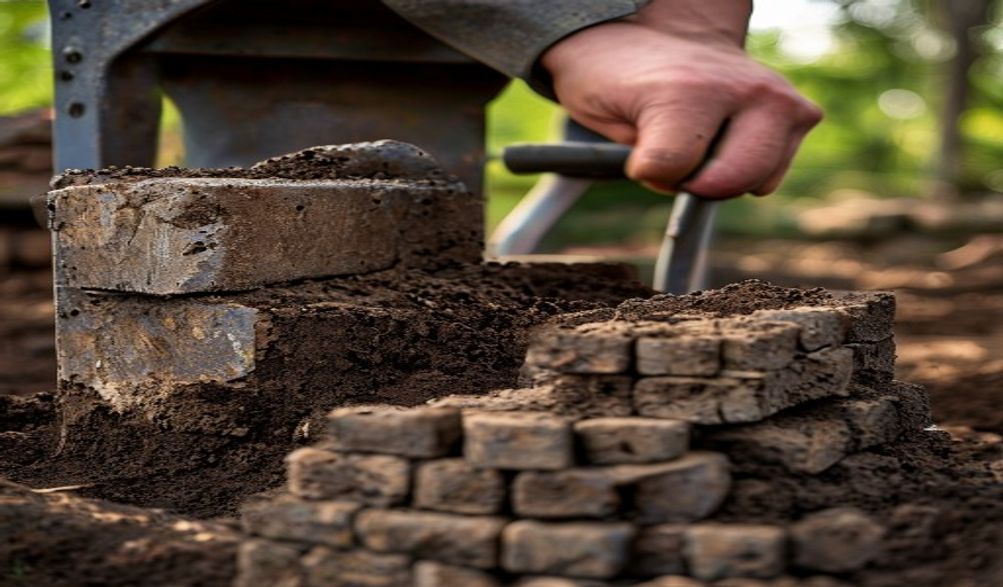
Qo'lda ishlaydigan interlocking g'isht yasash mashinasini qanday tanlash mumkin: amaliy xaridor uchun qo'llanma
Kirish
Оё сиз оёғингиз остидаги ерни уйингиз, бизнесингиз ёки жамоат лойиҳангиз учун мустаҳкам ва арзон қурилиш блокларига айлантиришни тасаввур қила оласизми? Қўлда ишлайдиган блоклаштирувчи қолиплаш машиналари бу имкониятни яратиб, тадбиркорлар, DIY қурувчилар ва кичик миқёсдаги ривожлантирувчиларга жуда кам бошланғич сармоя билан экологик тоза қурилиш материаллари ишлаб чиқариш имконини беради. Бироқ, бозорда турли хил моделлар ва дадил даъволар мавжудлиги сабабли, тўғри машинани танлаш қийин туюлиши мумкин.
Ushbu keng qamrovli qo‘llanma texnik xususiyatlar, soha bo‘yicha ilg‘or tajribalar va real ishlab chiqarish bilimlariga asoslangan. Biz savdo takliflaridan tashqariga chiqib, sizga baholash uchun aniq va amaliy asos beramiz. Maqsadingiz kichik g‘isht ishlab chiqarish korxonasini boshlash yoki shaxsiy qurilish uchun materiallar yetkazib berish bo‘lishidan qat’i nazar, ushbu maqola sizni har bir muhim omil – mashina turlari va ishlab chiqarish quvvatini tushunishdan tortib, tuproq mosligi va umumiy xarajatlarni tahlil qilishgacha – bosqichma-bosqich o‘tkazadi, shunda siz ishonchli va ongli xarid qarorini qabul qilishingiz mumkin.
Qo‘lda ishlaydigan blokirovka qiluvchi g‘isht mashinalarini tushunish
Qo‘lda boshqariladigan o‘zaro bog‘lovchi g‘isht mashinasi, ko‘pincha qo‘lda ishlaydigan tuproq blok pressi yoki siqilgan tuproq blok (STB) mashinasi deb ataladi, bu tayyorlangan tuproq aralashmasini (va ko‘pincha oz miqdordagi stabilizator, masalan, sement) yuqori zichlikdagi bloklarga siqadigan mexanik qurilmadir. An’anaviy pishirilgan g‘ishtlardan farqli o‘laroq, bu bloklar kuchni siqish va qotirish orqali oladi, pechda pishirish orqali emas. Operator qo‘l dastagi tizimidan foydalanib, sezilarli mexanik kuch hosil qiladi, tuproq aralashmasini qolipga siqib, uning tepa va yon tomonlarida o‘zaro bog‘lovchi oluk va tillar bo‘lgan blok hosil qiladi.
Asosiy afzalliklar va qo‘llanish sohalari
- Kam Investitsiya va Operatsion Xarajatlar:Asosiy ustunlik. Ushbu mashinalar avtomatlashtirilgan tizimlarga nisbatan minimal dastlabki xarajatlarga ega va ishlash uchun elektr energiyasi yoki yoqilg‘i talab qilmaydi, bu esa joriy xarajatlarni ahamiyatsiz darajada ushlab turadi.
- Eko-dostona va Barqaror:Ular mahalliy mavjud boʻlgan yer osti qatlamidan foydalanadi va bu transport materiallariga boʻlgan ehtiyojni hamda pishirilgan gʻisht yoki sement ishlab chiqarish bilan bogʻliq yuqori uglerod izini kamaytiradi. Bu barqaror, mahalliy qurilish amaliyotlarini qoʻllab-quvvatlaydi.
- Turli loyihalar uchun ideal.Kichik va o'rta hajmdagi ilovalar uchun juda mos keladi:
- Foyda uchun g'isht ishlab chiqaruvchi tadbirkorlik korxonalari.
- O'z-o'zidan uy qurish va uy kengaytmalari.
- Jamoatchilik tomonidan boshqariladigan uy-joy loyihalari.
- Building garden walls, sheds, and landscape features.
- Constructing cost-effective school rooms, clinics, or agricultural buildings.
Limitations to Consider
- Lower Production Output: Output is limited by human effort. A single operator might produce 300-800 bricks in a full day, far less than motorized machines.
- Physical Labor Required: Operation is labor-intensive. Consistency and output depend directly on the operator’s strength and endurance.
- Dependence on Soil Composition: The machine is only part of the equation. Success hinges on having suitable soil and preparing the correct mix. Not all local soils will work without adjustment.
Core Selection Criteria: 7 Factors to Evaluate
Choosing the right machine isn’t about finding the “best” one overall, but the best one for your specific situation. Evaluate every option against these seven core factors.
1. Production Capacity & Output
Don’t be swayed by theoretical maximums. The brick production rate is a practical metric of bricks per productive hour, considering time for mixing, loading, pressing, and block removal.
- Ask:Nima degani?realistik output for a trained operator (e.g., 40-100 bricks per hour)?
- Relate to Scale: Match this to your project’s total brick count and timeline. Needing 10,000 bricks? A machine producing 500/day means 20 full working days of pressing, excluding mixing and curing time.
2. Brick Size, Shape, and Interlocking Design
The mold defines your final product. Standard interlocking brick sizes are often around 225mm x 110mm x 75mm (length x width x height), but variations exist.
- Mold Availability: Can the supplier offer different molds for different interlocking brick design patterns (e.g., straight interlock, offset interlock)?
- Design Importance: A good interlock provides vertical and horizontal mechanical keying, enabling stable, mortar-less (or minimal mortar) construction. Inspect the precision of the mold’s interlocking features.
3. Machine Build Quality and Durability
This is where cost-cutting hurts the most. A sturdy machine is a long-term asset; a flimsy one is a immediate liability.
- Materiallar: Look for frames and critical components made from high-grade, reinforced steel.
- Qurilish: Check for clean, robust welding at all stress points. Moving parts should pivot smoothly on solid bushings or bearings, not just metal-on-metal.
- Finish: A coat of anti-corrosion paint is a good sign of care in manufacturing.
4. Pressure and Compression Force
The machine’s leverage system determines the compression force applied to the soil. Higher, more consistent pressure creates denser, stronger bricks with lower water absorption.
- Mexanizm: Most use a long lever and a fulcrum to multiply the operator’s force. A longer lever typically provides better mechanical advantage.
- Asosiy Savol: “What is the calculated compression force (often measured in PSI or MPa) this machine can apply?” A reputable supplier should know this.
5. Ease of Operation and Maintenance
A machine that is difficult to use or maintain will slow production and frustrate operators.
- Operatsiya: Consider its weight and portability. Is it easy to set up on a level site? Is the lever action smooth, and is the block ejection mechanism simple and reliable?
- Maintenance: It should require only basic, infrequent lubrication. Ask about the availability and process for replacing wear items like the compression plate or mold liners.
6. Soil Suitability and Mix Preparation
This is the most overlooked yet critical factor. The machine compresses what you feed it. Soil stabilization for bricks is often necessary.
- Soil Testing is Essential: Ideal soil has a mix of clay (15-30% as a binder), sand (for bulk), and silt. Pure sand or heavy clay will fail.
- Aralashmani Tayyorlash: You will likely need to add a stabilizer (commonly 5-10% cement or lime) and water to achieve the correct earth block mix ratio. The machine must be designed to work effectively with this stabilized mix.
7. Cost Analysis: Machine Price vs. Long-Term Value
The cheapest machine is often the most expensive in the long run.
- Upfront Cost: Manual machines can range from a few hundred to over a thousand dollars, depending on quality and features.
- Value Calculation: Factor in durability (will it last for 50,000 bricks or 5,000?), maintenance costs, and the supplier’s support. A slightly more expensive, robust machine from a reputable source offers a far better return on investment.
Step-by-Step Buying Guide
Step 1: Assess Your Project Needs
Be specific. Write down:
* Total number of bricks required.
* Desired timeline for brick production.
* Number of available operators.
* Your local soil type (get a preliminary test done).
Step 2: Research and Shortlist Reputable Suppliers
This is crucial for establishing trust (E-E-A-T). Prioritize suppliers who:
* Have a verifiable physical address and contact details.
* Provide detailed technical information and clear photos/videos.
* Showcase genuine customer testimonials or case studies.
* Avoid anonymous online storefronts with no company history or support information.
Step 3: Request Specifications and Demos
Contact your shortlisted suppliers. Ask for:
* A detailed technical specification sheet.
* A video demonstration of the machine in operation, showing the full cycle from filling to ejection.
* Contact details of previous buyers in a similar region (if possible).
Step 4: Compare Warranty, Support, and Spare Parts Availability
A supplier’s after-sales policy is a direct reflection of their confidence in the product.
* Kafolat: What is covered and for how long?
* Support: Do they offer technical assistance via phone or email?
* Ehtiyot qismlar: Can you easily purchase replacement molds, wear plates, or levers? This ensures your machine’s lifespan isn’t cut short by a single broken part.
Common Mistakes to Avoid When Choosing
- Chasing the Lowest Price: Sacrificing build quality leads to breakdowns, low output, and poor brick quality, nullifying any initial savings.
- Ignoring Soil Compatibility: Buying a machine before confirming your soil is suitable is a recipe for failure. Test first.
- Overestimating Production Capacity: Be realistic about daily manual labor output. Planning a large project? Factor in multiple machines or operators.
- Overlooking Technical Support: Choosing a supplier who disappears after the sale leaves you stranded with operational issues.
- Forgetting Auxiliary Tools & Space: Remember you’ll need a area for soil screening, mixing, brick pressing, and covered space for proper curing.
Tez-tez so'raladigan savollar (FAQ)
Q: What is the average daily output of a manual machine?
A: A realistic range for a skilled, consistent operator is 300 to 800 bricks in an 8-hour day. This depends heavily on the machine’s design, the preparation workflow, and operator stamina.
Q: Can I use any type of soil?
A: No. Soil needs adequate clay content (typically 15-30%) to act as a natural binder. Pure sandy soil will crumble, while soil with too much clay can shrink and crack. A simple jar test or professional soil analysis is highly recommended.
Q: Do the bricks require curing?
A: Yes, absolutely. Proper curing is vital for strength development, especially for cement-stabilized blocks. Freshly pressed bricks should be kept moist and covered with plastic sheeting for 7 to 14 days to allow for gradual hydration and hardening.
Q: Is a manual machine profitable for a small business?
A: It can be, given the right conditions. The business case rests on low startup costs and consistent local demand for affordable building materials. Profitability depends on your material costs (soil, stabilizer), labor efficiency, local brick prices, and your marketing reach.
Q: Where can I get training on using the machine?
A: Reputable suppliers should provide a clear operation manual. Some may offer basic on-site or video training. For in-depth knowledge, seek out workshops run by sustainable building organizations, watch tutorials from established practitioners, or connect with existing users in your region.
Xulosa
Choosing the right manual interlocking brick making machine is a strategic decision that balances your project’s scale, your local soil conditions, the machine’s inherent quality, and the reliability of the supplier. It’s an investment in a tool that can build not just structures, but also opportunity and sustainability.
Take the time to research thoroughly. Use the criteria in this guide as a checklist. Where possible, seek out and speak with experienced users—their practical insights are invaluable. Ultimately, prioritize partnering with a supplier who demonstrates genuine expertise, stands behind their product with clear warranties, and offers the support you’ll need to succeed.
Ready to take the next step? Consider your project’s specific needs against the factors we’ve discussed. If you have questions about your soil or a particular machine model, share them in the comments below. For a handy reference, download our printable selection checklist to guide your purchasing journey.
<