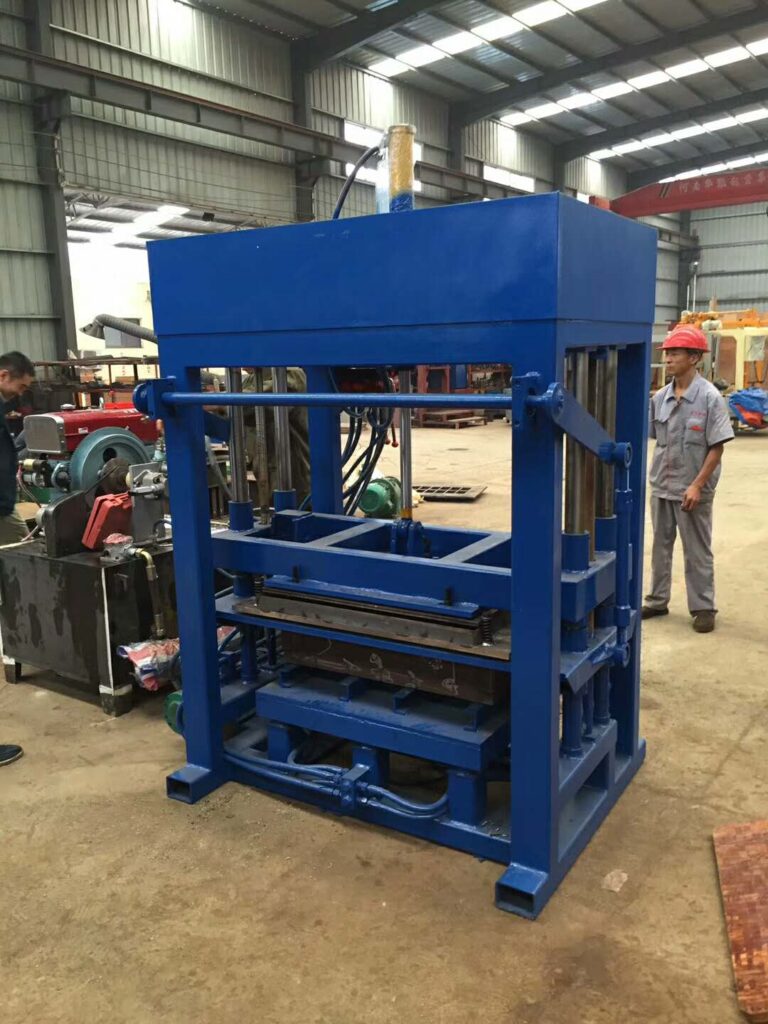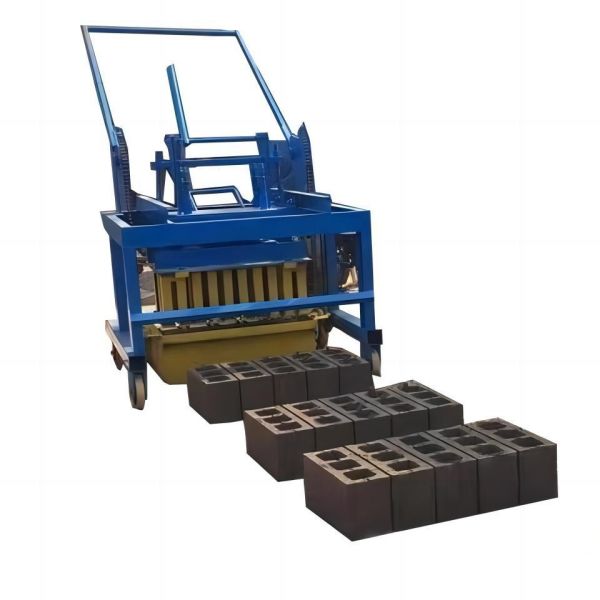
Таҳлили комил аз мошинаҳои сохтмонии хишти бо сӯзишвории дизелӣ
I. Принсипҳои асосии амалиётӣ ва танзимоти техникӣ
Мошинаҳои блоки дизелӣ моторҳои барқии вобаста ба шабакаро бо муҳаррики дарунсӯзи дизелӣ, ки манбаи асосии қувва мебошад, иваз мекунанд. Ин тағйири асосӣ як маҷмӯи хоси хусусиятҳои муҳандисиро таъйин мекунад.
А. Блоки Ҳавоии Дизелӣ: Дили Система
- Интегратсияи муҳаррик ва интиқоли қувват:Як муҳаррики сӯзишвории дизелӣ, мустаҳкам ва дараҷаи саноатӣ, ба системаи гидравликии мошин бевосита пайваст шудааст. Истеҳсоли механикии муҳаррик насоси гидравликиро ба кор медарорад, ки фишори моеъро барои ҳамаи вазифаҳо таъмин мекунад: фишурдани омехтаи бетон, бардоштани қолиб ва хориҷ кардани блоки омода. Ин системаи идоракунии бевосита барои моменти баланд ва эътимоднокиаш маълум аст.
- Истиқлоли энергетикӣ:Мошина дорои тавлиди худкори худ дар бор мебошад. Ин аз тарафдории қатъи барқ, тағйироти шиддати барқ ("камшавӣ") ё набудани комил инфраструктураи шабака ҷилавгирӣ мекунад, ки сикли истеҳсоли бефосиларо таъмин менамояд.
Б. Дизайни Систем ва Компонентҳои Калидӣ
- Ҳокимияти Системаи Гидравликӣ:Ин дастгоҳҳо дар амалиёт бештар гидравликӣ мебошанд. Муҳаррики дизелӣ насоси гидравликии баланди имкониятро таъмин мекунад, ки ба шабакаи силиндрҳо ва клапанҳои идоракунӣ манбаъ мерасонад. Ин боиси фишори баланди фуроварии истисноӣ мегардад, ки аксар вақт аз бисёр дастгоҳҳои стандартии ларзишии барқӣ бартарӣ дорад, ва блокҳои бо сахтӣ ва зичии ибтидоӣ баланд истеҳсол мекунад.
- Механизми ларзиш (агар мувофиқ бошад):Дар моделҳое, ки барои блокҳои ҷофӣ тарҳрезӣ шудаанд, системаи ларзиш зарур аст. Дар мошинҳои дизелӣ, ин одатан бо истифода аз мотори гидравликӣ барои равона кардани вазнҳои эксцентрикӣ дар мизи ларзиш, ба ҷои мотор-вибратори барқӣ, даст меёбад. Ин боварӣ медиҳад, ки вазифаи ларзиш низ аз шабакаи барқ мустақил бошад.
- Ҳаракатпазирӣ ва Тарроҳии ШассиХусусияти муайянкунандаи бисёр мошинҳои дизелӣ ҳаракатпазирии интегратсияшуда мебошад. Онҳо аксар вақт дар шассии трилери вазнин бо қуттии кашидан ё дар чорчӯбаи пӯлоди сахт бо ҷайбҳои чархбол насб карда мешаванд. Ин як заводро ба моликияти мобилӣ табдил медиҳад, ки метавонад дар ҳамон ҷое, ки лозим аст, истифода шавад.
II. Compelling Value Propositions and Target Market Applications
The advantages of diesel power are not merely about alternative energy; they translate into direct, tangible benefits for end-users, opening specific, high-demand market segments.
A. Primary Operational Advantages
- Unparalleled Site Independence and Mobility: The ability to produce high-quality blocks directly at a construction site, quarry, or in a remote area is the single most powerful advantage. It drastically reduces or eliminates the costs and logistical complexities of transporting finished blocks over long distances.
- Guaranteed Production Uptime: In regions with unreliable electricity, diesel power ensures that production schedules are dictated by material and labor availability, not by utility providers. This reliability is a critical selling point for contractors with tight deadlines.
- High Compaction Force and Versatile Output: The hydraulic pressure generated by diesel engines is substantial, allowing for the production of a wide range of products—from standard hollow blocks and solid bricks to heavy-duty kerbstones and interlocking pavers—from the same machine with simple mold changes.
- Lower Initial Infrastructure Cost: There is no need for investment in high-capacity electrical transformers, substations, or extensive cabling to the production location. The machine only requires a flat, stable surface and access to raw materials and diesel fuel.
B. Strategic Market Applications for Distributors
- Remote and Rural Construction Projects: Housing developments, infrastructure projects (roads, dams), and mining camps in areas beyond the reliable grid.
- Disaster Recovery and Humanitarian Construction: Rapid deployment for rebuilding after natural disasters where infrastructure is destroyed.
- Large-Scale Landscaping and Civil Works: On-site production of pavers, retaining wall blocks, and drainage channels for parkways, commercial landscapes, and road projects.
- Contractor and “Block Yard” Businesses: Entrepreneurs can establish temporary production yards close to material sources or clustered construction sites, minimizing transport radius and maximizing profit margins.
- Military and Government Engineering Corps: For tactical construction needs requiring rapid, self-sufficient deployment.
III. Critical Considerations for Machine Selection and Partnership
For a distributor, selecting the right diesel machine model and the right manufacturer requires a focused evaluation beyond basic specifications.
A. Key Technical Evaluation Criteria
- Engine Brand, Power Rating, and Serviceability: The reputation and global service network of the diesel engine manufacturer (e.g., Cummins, Deutz, Weichai, etc.) are crucial. A power rating (in horsepower or kilowatts) must be adequate for the machine’s size and intended output. Ease of local servicing and parts availability for the engine is paramount.
- Hydraulic System Quality and Capacity: The durability of the hydraulic pump, valves, and cylinders determines machine longevity and maintenance intervals. Systems with filtration and cooling are superior.
- Production Capacity and Cycle Time: Assess the bricks-per-hour output for the specific block type your target market demands. A faster cycle time powered by an efficient hydraulic circuit increases productivity.
- Build Quality and Structural Integrity: The machine must withstand the constant vibration and high forces of operation. A reinforced steel frame and a robust vibration table (if present) are non-negotiable.
- Хусусиятҳои Ҳаракат: Evaluate the trailer’s axle rating, braking system, lighting, and overall roadworthiness if mobility is a key selling point.
B. Business and Commercial Analysis for Distributors
- Total Cost of Operation (TCO) Analysis: While the machine saves on electrical infrastructure, operational costs shift to diesel fuel and engine maintenance. Calculate estimated fuel consumption per 1,000 blocks and factor in routine engine service costs. Present this TCO comparison against electric models to clients transparently.
- After-Sales Support Dualism: Your supplier must provide expertise on both the block machine mechanics ва the diesel engine. Comprehensive manuals, training on basic engine maintenance, and a clear spare parts supply chain for engine-specific components are essential.
- Demonstration and Proof of Concept: The most effective sales tool is an on-site demonstration. Showing the machine operating autonomously, producing dense blocks from local materials, is a powerful closer. Consider maintaining a demonstration unit.
- Regulatory and Environmental Compliance: Be aware of local regulations regarding emissions from diesel engines and noise levels. Some markets may have restrictions that affect where these machines can operate.
Conclusion
The diesel-powered brick and block making machine is a specialized tool for specific, challenging, and highly profitable market conditions. It is not a one-size-fits-all solution but represents the pinnacle of operational independence in block production. For the strategic distributor, this machinery opens doors to client segments and project types that are inaccessible to standard electric equipment. Success hinges on partnering with a manufacturer that demonstrates proven engineering in integrating diesel power with robust block-making mechanics, and on building your own expertise to support both systems. By positioning these machines as a guarantee of productivity—wherever and whenever it is needed—distributors can build a formidable reputation as providers of resilient, problem-solving construction solutions.
FAQ (Frequently Asked Questions)
Q1: What is the typical fuel consumption of a diesel block machine, and how does it impact operating cost?
Fuel consumption varies significantly based on engine size, machine output, and production cycle. A mid-range machine might consume 3-5 liters of diesel per hour under continuous operation. To calculate cost, factor local diesel prices. While this is an operational cost, it must be weighed against the eliminated costs of block transport (often the largest saving), electrical installation, and the value of guaranteed uptime. A detailed site-specific cost-benefit analysis is recommended for clients.
Q2: How does the maintenance schedule for a diesel machine differ from an electric one?
Maintenance is more intensive and requires dual expertise. Beyond standard machine lubrication and wear part replacement (like molds), the diesel engine requires regular servicing: oil and filter changes, air filter cleaning/replacement, fuel system maintenance, and coolant checks as per the engine manufacturer’s schedule (e.g., every 250-500 hours). Distributors should provide clear maintenance protocols and training.
Q3: Are the blocks produced by a hydraulic diesel machine comparable in quality to those from electric vibratory machines?
Yes, and often they are superior in terms of initial wet strength and density due to the high static compaction pressure of hydraulic systems. The blocks achieve the required compressive strength after proper curing. The key difference is the method of compaction (primarily pressure vs. primarily vibration), not the final product quality, which meets all relevant construction standards.
Q4: Can these machines be fitted with an electric motor option for dual-power flexibility?
Many manufacturers offer “dual-power” or “hybrid” configurations where the machine’s hydraulic system can be driven either by a removable diesel engine or by a standard electric motor coupled to a power take-off (PTO). This offers maximum flexibility, allowing a client to use electric power in a stable yard and diesel for on-site projects, though it increases the initial purchase price.
Q5: What are the primary safety and operational considerations for a diesel machine?
Key considerations include:
- Ventilation: Must be operated in a well-ventilated area to avoid fume buildup.
- Fire Safety: Proper fuel storage and handling procedures are critical. No smoking near the machine.
- Noise: Diesel engines are louder than electric motors; hearing protection for operators may be necessary.
- Hot Surfaces: Operators must be trained to avoid contact with the engine exhaust and other hot components during and immediately after operation.