
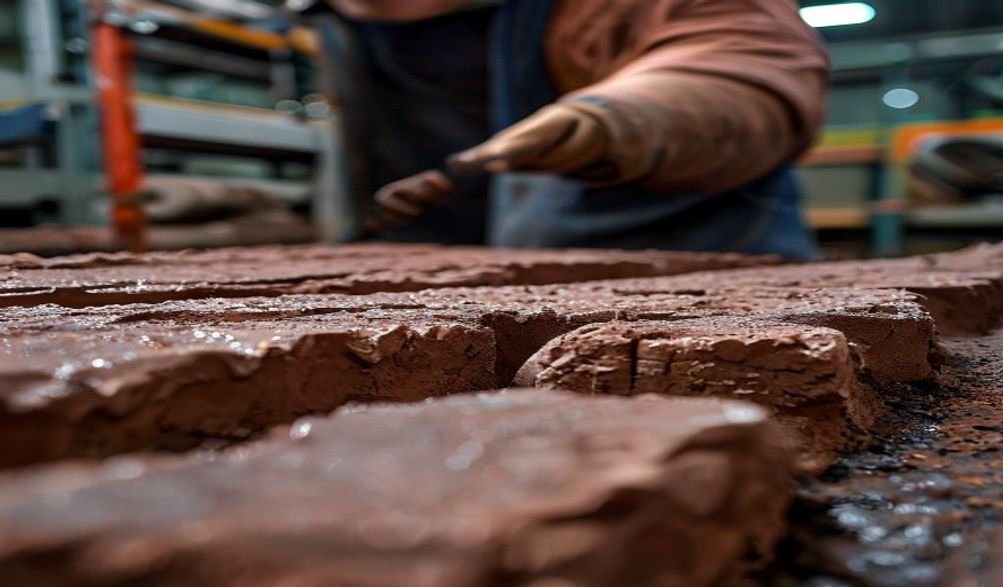
Роҳнамои харидори ҳамаҷониба барои интихоби дастгоҳи хишти гили
Муқаддима
Асоси муваффақияти тиҷорати истеҳсоли хишт на танҳо гили зери пойҳои шумо, балки мошинест, ки шумо барои табдил додани он интихоб мекунед. Интихоби мошини дурусти хиштсозӣ эҳтимолан муҳимтарин қарори сармоягузорӣ аст, ки шумо хоҳед кард. Он бевосита сифати маҳсулот, истеҳсоли рӯзона, хароҷоти амалиётӣ ва дар ниҳоят даромаднокӣ ва бозгардонии сармоя (ROI)-и шуморо муайян мекунад. Интихоби нодуруст метавонад боиси таваққуфоти доимӣ, хиштҳои пастсифат ва фишори молиявӣ шавад, дар ҳоле ки таҷҳизоти дуруст муҳаррики рушди шумо хоҳад шуд.
Ин роҳнамо барои бартараф кардани мураккабӣ тарҳрезӣ шудааст. Аз таҷрибаҳои беҳтарини соҳа, таҳлили техникӣ ва бинишҳои амалиётӣ ҷамъоварӣ шуда, он ҳамчун харитаи роҳи стратегӣ хидмат мекунад. Новобаста аз он ки шумо соҳибкори наве ҳастед, ки ба бахши масолеҳи сохтмон қадам мегузоред, мудири корхонае, ки ба навсозӣ ниёз дорад, ё ширкати сохтмоне, ки барои ҳамгироии амудӣ бо истеҳсоли дохилӣ ҳадаф дорад, ин паём ба ниёзи асосии шумо: маслиҳати равшан ва амалӣ, ҷавоб мегӯяд.
То охири ин дастури ҳамаҷонибаи харидор, шумо рӯйхати муфассал хоҳед дошт, то ҳар дастгоҳро бо эътимод дар асоси ашьёи хоми мушаххас, ҳадафҳои истеҳсолот ва буҷаи худ арзёбӣ кунед. Биёед донишеро, ки барои қабули қарори огоҳона лозим аст, ба даст орем.
Фаҳмидани ниёзҳои истеҳсолӣ ва маводи аввалияи шумо
Пеш аз он ки ба ягон брошураи мошин нигоҳ кунед, бояд ба даруни худ нигаред. Ҳолатҳои мушаххаси шумо нақшаи интихоби таҷҳизоти комил мебошанд. Ин қадами асосӣ таҷрибаи воқеиро нишон медиҳад ва ба саволҳои амалие тамаркуз мекунад, ки фаъолияти муваффақро муайян менамоянд.
Арзёбии миқёси лоиҳа ва ҳадафҳои ҳосили ҳаррӯзаи шумо
Мақсадҳои истеҳсолии шумо омили асосии намуди мошин ва хароҷоти капиталӣ мебошанд.
- Амалиётҳои хурдсоз / оғозӣАгар ҳадафи шумо истеҳсоли чандсад то 2000 хишт дар як рӯз бошад, мошинҳои дастӣ ё ним-автоматӣ оғози маъмулӣ мебошанд. Онҳо сармоягузории аввалияи камтарро талаб мекунанд, аммо машғулияти бештари коргариро дар бар мегиранд.
- Истеҳсоли миёна ва калонБарои истеҳсоли аз 3000 то 20 000+ хишт дар як рӯз, мошинҳои комилан автоматӣ зарур мегарданд. Ин системаҳо сармоягузории назаррасро талаб мекунанд, аммо самаранокӣ, мунтазамӣ ва арзиши пасти меҳнат барои як воҳидро таъмин менамоянд.
- Саволҳои асосӣ:Талаботи воқеии кунунии шумо чист ва афзоиши пешбинишудаи шумо дар 3-5 соли оянда чӣ гуна аст? Мошинеро интихоб кунед, ки метавонад бо шумо афзоиш ёбад, шояд бо оғоз аз модели ним-автоматӣ, ки имконияти навсозӣ дорад.
Таҳлили хосиятҳои хоки гилии шумо
Ин ғайримуносиб аст. Сифат ва рафтори гили шумо аз ҳама хусусиятҳои мошин муҳимтар аст. Беэътиноӣ ба ин муҳимтарин роҳи шикаст аст.
- Хусусиятҳои муҳимШумо бояд гили худро барои чандирӣ (қобилияти қолаб гирифтан), суръати фишурдагӣ (ҳангоми хушк шудан), миқдори намӣ ва мавҷудияти наҷосат ба монанди санг ё рег санҷед.
- Мусобиқаи Мошин-Гил Different machines are engineered for different clays. A high-pressure hydraulic press might be ideal for certain clays, while an extruder handles others better. Some machines are forgiving, while others require a very consistent feed material.
- Action Step: Invest in a laboratory soil test. The results will tell you what type of machine technology (extrusion vs. pressing) is suitable and whether you need auxiliary equipment like a crusher or mixer to prepare your raw material.
Defining Your Final Brick Product Specifications
You’re not just making “bricks”; you’re making a product for a specific market. Your machine must be capable of producing it.
- Навъи Хишт Are you making solid, hollow (for insulation and lighter weight), perforated, or interlocking paving bricks? Each type requires different mold designs and sometimes different machine pressures.
- Size and Shape: Standard sizes vary by region. Ensure the machine can accommodate the molds for your target dimensions.
- Мустаҳкамии фишорӣ: This is a key quality metric for construction standards. The machine’s pressing force (measured in tons or psi) is a major factor in achieving the required strength. Know the local building code requirements.
Намудҳои асосии мошинҳои истеҳсоли хишти хишти
Understanding the broad categories of machines available is your first step in technical evaluation. Each type represents a different balance of cost, automation, and output.
Manual Molding Machines
- Тавсиф: These are the simplest, most traditional tools. They consist of steel molds into which prepared clay is manually packed and leveled. The brick is then ejected by hand to dry.
- Истифодаи Идеалӣ: Artisanal production, very low-budget startups, or making specialty decorative bricks in very low volumes.
- Муҳоҷизот: Extremely low cost, minimal maintenance, no power required.
- Манфӣҳо Very low output, highly labor-intensive, inconsistent product quality, physically demanding work.
Машинаҳои ним-автоматӣ
- Тавсиф: These machines mechanize the critical pressing or extrusion process but require manual intervention for feeding raw material and removing finished bricks. They often use a mechanical lever or a small hydraulic system.
- Истифодаи Идеалӣ: Small to medium-scale businesses looking to improve quality and output over manual methods without the capital for a full automatic line. Output can range from 500 to 2,500 bricks per hour.
- Муҳоҷизот: Good balance of cost and efficiency, better quality control than manual, more flexible than full automatics.
- Манфӣҳо Still reliant on a steady labor crew, output is limited by human speed.
Мошинҳои комилан автоматӣ
- Тавсиф: These are complete production lines. They integrate a feeder, mixer, extruder or press, cutter, and stacker into one synchronized system controlled by a central panel. Human involvement is primarily for monitoring and maintenance.
- Истифодаи Идеалӣ: Large-scale industrial production where high, consistent output and minimal labor costs are paramount.
- Муҳоҷизот: Maximum output (5,000+ bricks per hour), exceptional consistency, lowest labor requirement per brick.
- Манфӣҳо Very high initial investment, complex setup, requires reliable utilities and skilled technicians, less flexible for quick product changes.
Key Distinction: Extrusion vs. Hydraulic Pressing
This is the fundamental technological fork in the road.
- Extrusion Machines: Clay is forced through a die (a shaped opening) under high pressure to form a continuous column, which is then wire-cut into individual bricks. Think of a pasta maker.
- Беҳтарин барои: Softer, more plastic clays. Excellent for producing hollow and perforated bricks. Generally offers higher production speeds.
- Машинаҳои пресси гидравликӣ: Clay is placed in a mold, and a hydraulic ram applies immense pressure (often hundreds of tons) to compact it into a dense brick.
- Беҳтарин барои: A wider variety of clay types, including drier mixes. Produces very dense, high-strength bricks (like engineering bricks) with sharp edges. Often preferred for solid and paving bricks.
Critical Technical Specifications to Evaluate
Now, dive into the details. When comparing machines, these specs separate marketing claims from operational reality.
Production Capacity and Cycle Time
- Don’t just look at the “max bricks per hour” in the brochure. Ask about the вақти даврӣ—how many seconds for one complete press/extrusion cycle.
- Factor in real-world efficiency: No machine runs at 100% for 8 hours straight. Account for mold changes, cleaning, breaks, and minor stoppages. A machine rated for 1,200 bricks per hour might reliably produce 900-1,000 in practice.
Power Requirements and Operating Pressure
- Electrical (kW): Ensure your factory’s electrical supply can handle the machine’s motor, plus all auxiliary equipment. A voltage mismatch or insufficient power is a costly mistake.
- Hydraulic Pressure (psi/bar or Tons): This is a key indicator of the machine’s capability, especially for presses. Higher pressure typically yields denser, stronger bricks. Compare operating pressures when evaluating similar machines.
Mold Customization and Changeover Flexibility
- Your ability to diversify your product line depends on molds. Check if the manufacturer offers custom mold fabrication.
- Evaluate the changeover process: How long does it take to switch molds? Is it a simple, tool-free operation, or does it require technical disassembly? Time is money.
Automation Level and Control Systems
- From basic lever-operated valves to touch-screen PLC (Programmable Logic Controller) panels, the control system dictates ease of use and precision.
- PLC systems allow for storing recipes for different brick types, monitoring production data, and diagnosing faults. They reduce operator error but require more skilled maintenance.
Beyond the Machine: Auxiliary Equipment and Plant Setup
A brick making machine doesn’t work in isolation. Demonstrating this holistic view is a mark of true experience.
Essential Supporting Machinery
The main press or extruder is just one piece of the puzzle. A complete plant may include:
* Clay Crusher & Grinder: To break down raw clay lumps.
* Mixer/Pugmill: To blend clay with water (and additives) to achieve the perfect consistency.
* Feeder/Conveyor: To supply the main machine consistently.
* Brick Cutter (for extruders): To slice the clay column into bricks.
* Pallet Stacker/Unstacker: To handle bricks after molding for drying.
Space, Foundation, and Utility Requirements
- Фазо: You need room for the machine, raw material storage, brick drying (which requires significant area), and finished goods storage.
- Foundation: Heavy automatic machines, especially hydraulic presses, require a strong, level concrete foundation to absorb vibration. Specifications should be provided by the manufacturer.
- Utilities: Confirm requirements for 3-phase power, reliable water supply, and compressed air if needed.
The Importance of After-Sales Support
This is where your investment is protected or jeopardized.
Availability of Spare Parts
- Insist on a list of common wear parts (molds, augers, seals, hydraulic hoses) and confirm their availability and lead time. Local or fast shipping availability is a huge advantage.
Technical Training and On-Site Installation
- Professional installation is crucial for machine longevity and performance. Never opt for “self-install” on complex equipment. Ensure comprehensive operator and maintenance training is included.
Warranty and Service Network
- Understand the warranty period and what it covers (parts, labor). Does the supplier have service technicians, or must you rely on local mechanics? A strong service network is invaluable.
Financial Considerations and Supplier Selection
Transparent, balanced advice here builds immense trustworthiness. Look beyond the sticker price.
Total Cost of Ownership Analysis
Calculate the ҳақиқӣ cost over 5 years:
1. Нархи Харидорӣ: The machine cost.
2. Shipping, Insurance, and Customs: Can be substantial for international orders.
3. Installation & Foundation Work.
4. Initial Spare Parts Inventory.
5. Истифодаи энергия: Calculate daily power costs based on kW rating and your local electricity rates.
6. Annual Maintenance & Part Replacement Costs.
7. Хароҷоти меҳнатӣ: Higher for manual/semi-auto, lower but more skilled for automatic.
How to Vet and Compare Machine Suppliers
Requesting and Checking References
- Ask for at least 3 references from clients in your region or with similar clay. Actually call them. Ask about machine performance, reliability, and the supplier’s support responsiveness.
Evaluating Manufacturer Reputation and History
- How long have they been in business? Look for established companies with a track record. Search for their company name online along with keywords like “review” or “complaint.”
The Value of a Live Demo or Video Test
- The single best due diligence step is to see the machine run. If a visit isn’t possible, request a live video call where they run the machine with clay. Even better, send a sample of your clay and ask them to produce test bricks.
Key Questions to Ask Before You Buy
Go to suppliers with this script:
* “Can you provide a complete plant layout recommendation for my target output?”
* “What is the lead time for the most common wear parts for this model?”
* “Is technical training included, and where does it take place?”
* “Can you provide a certified test report for the compressive strength of bricks produced by this machine?”
* “What is NOT covered under the warranty?”
* “Can you share contact details for 2-3 of your customers who bought this model in the last two years?”
Frequently Asked Questions (FAQ)
Q1: What is the approximate price range for a clay brick making machine?
A: Prices vary dramatically. A simple manual machine can cost a few thousand dollars. A robust semi-automatic machine may range from $15,000 to $50,000. A complete fully automatic production line can start from $70,000 and exceed $300,000, depending on capacity and configuration. Your specific needs dictate the cost.
Q2: Can one machine produce different types and sizes of bricks?
A: Yes, through mold changeovers. Semi-automatic machines allow relatively quick changes, enabling product diversity. Fully automatic lines can also change molds, but the process may be more involved. Always confirm mold compatibility and changeover time with the supplier.
Q3: How much manpower is required to operate a semi-automatic vs. fully automatic machine?
A: A semi-automatic machine typically requires 3-5 people for feeding, operating, and removing bricks. A fully automatic line may only need 1-2 skilled operators to monitor the control panel and handle pallets, but it requires a dedicated maintenance technician.
Q4: What are the most common maintenance issues with these machines?
A: Wear and tear on molds, the extruder auger (in extrusion machines), and hydraulic seals/pumps (in press machines) are common. Regular lubrication, cleaning of clay residue, and using the correct clay consistency are the best preventative measures.
Q5: How do I ensure the bricks meet local quality and construction standards?
A: First, get your clay tested. Second, request that the machine supplier provide a sample production run or certification. Finally, once your machine is installed, produce bricks and have them tested at a certified local construction materials laboratory for compressive strength, water absorption, and dimensional accuracy.
Conclusion
Choosing the right clay brick making machine is a systematic journey that flows from the ground up: understand your unique clay, define the product your market demands, and then match it with the appropriate technology and scale. It’s a significant capital decision that should be driven by data—from soil tests to total cost calculations—not just by the lowest upfront price.
The most successful investments are made by those who do their homework. Use this guide as your checklist. Conduct thorough supplier due diligence, insist on seeing machines in action, and always plan for the total cost of ownership, including robust after-sales support.
Your next step is to turn this knowledge into action. Start contacting suppliers armed with your production data, your clay analysis, and the informed, precise questions outlined here. With this approach, you’re not just buying a machine; you’re investing in the reliable, profitable foundation of your business for years to come.
<