
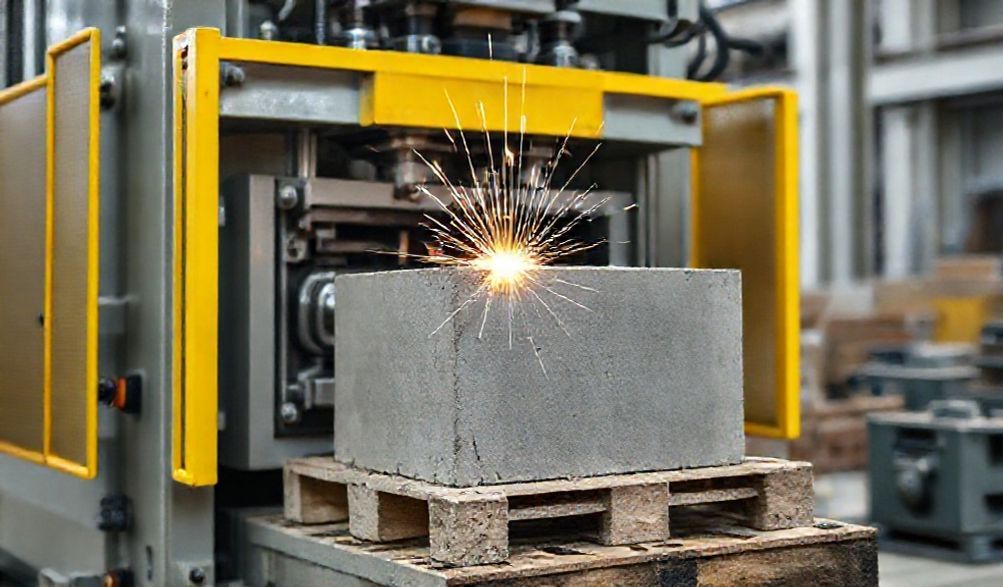
Your Ultimate Guide to Buying a Block Making Machine for Sale in 2024
บทนำ
The global construction boom shows no signs of slowing down. From urban housing projects to critical infrastructure, the demand for high-quality, affordable building materials is insatiable. At the heart of this demand are concrete blocks—the versatile, durable backbone of modern construction. For astute entrepreneurs, contractors, and business owners, this presents a significant opportunity: owning the means of production. A block making machine isn’t just a piece of equipment; it’s a potential gateway to business growth, supply chain control, and a steady revenue stream.
อย่างไรก็ตาม การเดินทางในตลาดสำหรับblock making machine for sale can be a daunting task. The sheer variety of models, the significant investment, and the technical jargon can quickly overwhelm even the most determined buyer. How do you choose between a manual, semi-automatic, or fully automatic system? What production capacity do you จริงๆ need? More importantly, how can you ensure you’re investing in a reliable machine from a trustworthy supplier and not just buying a future headache?
This guide is designed to be your definitive resource. Built on industry research, technical specifications, and practical buyer considerations, our goal is to arm you with expert knowledge. We’ll demystify the technology, break down the critical selection factors, and provide a clear roadmap for making a confident, informed purchase. By the end, you’ll know exactly how to find the right block making machine for sale for your specific project and business goals.
ทำความเข้าใจเครื่องจักรผลิตบล็อก: ประเภทและการใช้งาน
Before diving into specifications and suppliers, it’s crucial to build a solid foundation of knowledge. Understanding the different types of machines and what they can produce is the first step in aligning your investment with your vision.
เครื่องทำบล็อกคืออะไร
At its core, a block making machine is a device that compacts raw material—typically a mixture of cement, sand, gravel, and water—into a mold to form a dense, solid block of a specific shape and size. The process relies on a combination of high-pressure compaction and, in most modern machines, vibration to remove air pockets and ensure structural integrity.
The evolution has been significant. From simple hand-operated presses, technology has advanced to include sophisticated, computer-controlled systems that automate everything from batching and mixing to curing and stacking. This automation translates to remarkable gains in consistency, output, and labor efficiency.
Key Types of Block Making Machines for Sale
Your choice here will fundamentally shape your operation’s scale, labor needs, and profitability.
-
เครื่องทำบล็อกคอนกรีตแบบใช้มือ
- โปรไฟล์ Operated entirely by hand levers. Low output (typically 300-500 blocks per day).
- เหมาะที่สุดสำหรับ: Very small-scale projects, startups with minimal capital, remote locations with no power, or producing specialty blocks in low volume.
- ข้อควรพิจารณา Highly labor-intensive and physically demanding. Lowest upfront cost.
-
เครื่องจักรทำบล็อกกึ่งอัตโนมัติ:
- โปรไฟล์ A balanced hybrid. Key processes like compaction and vibration are powered (electrically/hydraulically), but mold filling and block removal are often manual.
- เหมาะที่สุดสำหรับ: Small to medium-sized businesses, growing block yards, and contractors. Offers a great balance between output (1,000 – 4,000 blocks per day) and investment.
- ข้อควรพิจารณา Requires some operational labor but is far more efficient than manual machines. The most popular choice for entry-to-mid-level commercial production.
-
เครื่องทำบล็อกอัตโนมัติเต็มรูปแบบ:
- โปรไฟล์ The pinnacle of production. These are complete systems with automated material feeding, molding, curing, and pallet handling. Often controlled by Programmable Logic Controllers (PLCs).
- เหมาะที่สุดสำหรับ: Large-scale block manufacturing plants, industrial operations, and businesses targeting high-volume supply contracts.
- ข้อควรพิจารณา Highest capital cost but lowest cost-per-block due to minimal labor and maximum output (10,000+ blocks per day). Requires significant space and stable utility supply.
-
เครื่องทำบล็อกแบบเคลื่อนที่:
- โปรไฟล์ Mounted on a trailer or truck bed for easy transportation.
- เหมาะที่สุดสำหรับ: On-site production for large construction projects (e.g., housing developments, road projects). Eliminates transport costs for finished blocks.
- ข้อควรพิจารณา Output is usually in the semi-automatic range. The primary benefit is logistical, not necessarily productive.
What Can You Produce? Beyond Standard Blocks
Modern machines are incredibly versatile. With interchangeable molds, a single machine can be your production hub for multiple profitable products:
- บล็อกคอนกรีตมวลเบา: The standard for load-bearing walls in construction.
- บล็อกแข็ง For foundations, pavements, and heavy-duty applications.
- แผ่นปูพื้นและบล็อกประสาน:สำหรับทางรถยนต์ ทางเดิน และลานบ้าน
- Curb Stones & Kerbs: For road construction and landscaping.
- Decorative and Specialty Blocks: For aesthetic walls, garden edges, and custom designs.
เคล็ดลับมือโปร: When evaluating a block making machine for sale, always inquire about mold compatibility and cost. A machine that can easily switch between producing hollow blocks and popular paving stones offers much greater market flexibility.
ปัจจัยสำคัญที่ต้องพิจารณาก่อนตัดสินใจซื้อ
This is where your due diligence pays off. Moving beyond basic types, you must scrutinize the details that separate a suitable machine from the perfect one for your operation.
Assessing Your Production Needs & Business Goals
Start by asking the hard questions:
* What is my target daily or weekly output? Be realistic about current demand and growth projections.
* What is the scale of my projects or target market? Supplying a single construction site differs from supplying a regional retail network.
* What is my available labor force and skill level? A fully automatic machine needs a skilled technician, not just operators.
* What is my budget, including ancillary costs? (More on this in the Investment section).
Your answers will naturally point you toward a machine type. A goal of 2,000 blocks per day for local contractors strongly suggests a robust semi-automatic system.
Technical Specifications Deep Dive
These are the non-negotiable numbers on the spec sheet. Understand them.
- Cycle Time & Output Capacity: Don’t just look at the “blocks per hour” (BPH) claim. Understand the เวลารอบ—the time to produce one block cycle. A faster cycle means higher output. Remember, theoretical BPH often assumes perfect conditions; factor in realistic downtime for mold changes and maintenance.
- ขนาดบล็อกและความหลากหลายของแม่พิมพ์ Check the machine’s maximum mold dimensions (length, width, height). Can it produce the block sizes your market demands? How quickly and easily can molds be changed? A quick-change mold system boosts productivity when switching products.
- ข้อกำหนดด้านพลังงาน: This is critical for installation. Does the machine require a standard 220V/380V three-phase connection? What is the power consumption (kW)? For hydraulic machines, note the required hydraulic pressure and pump capacity. Ensure your facility’s utilities can support it.
- ระดับการทำงานอัตโนมัติและระบบควบคุม A semi-automatic machine with a simple relay system is easier and cheaper to repair than one with a proprietary PLC. However, a PLC on a fully automatic machine offers precision, diagnostics, and consistency. Choose the complexity that matches your technical support capability.
Quality & Durability Checkpoints
A machine is a long-term asset. Inspect its build quality.
- โครงสร้างเฟรม The frame should be made of high-grade, reinforced steel. Thicker steel and robust welding at stress points prevent warping and ensure longevity under constant vibration.
- องค์ประกอบหลัก Brand names matter. Reputable hydraulic pumps (e.g., Bosch Rexroth), cylinders, and electrical components (Siemens, Schneider) are signs of quality. They may cost more upfront but fail less often.
- ระบบสั่นสะเทือน This is the heart of block density. Look for systems with multiple high-frequency vibrators (under the mold table and on the mold head). Adjustable vibration frequency and amplitude allow you to optimize compaction for different raw material mixes.
Navigating the Market: How to Find Reliable Sellers
Finding a machine is easy. Finding a reliable machine from a trustworthy partner is the challenge. Your supplier relationship is as important as the machine itself.
Where to Find Block Making Machines for Sale
- Direct Manufacturers: Buying from the source often gets you the best price and direct technical knowledge. Research manufacturers in your country and key exporting nations (e.g., Germany, Italy, Turkey, China, India).
- Authorized Distributors & Dealers: Local or regional dealers provide valuable after-sales support, spare parts, and often, installation services. They act as your local point of contact.
- Reputable Industrial Marketplaces: Platforms like Alibaba (for global suppliers), Thomasnet, or industry-specific B2B sites are excellent for discovering and comparing multiple suppliers.
- Caution: Be wary of deals that seem too good to be true on general classifieds sites. The risk of receiving obsolete, poorly built, or misrepresented equipment is high.
Vetting Suppliers: A Buyer’s Checklist
Before requesting a quote, vet the company:
* History & Reputation: How long have they been in business? Search for their company name + “reviews” or “complaints.” Ask for a client portfolio.
* Request References: A confident supplier will provide contact information for past clients, preferably in your region. Call them. Ask about machine performance, reliability, and support.
* การรับรอง: Look for quality management certifications like ISO 9001. For electrical safety, CE marking is crucial for the European market and indicates adherence to standards.
* After-Sales Package: This is critical. What does the warranty cover (parts, labor, duration)? Is installation and operator training included? How are spare parts shipped, and what are typical lead times?
The Importance of After-Sales Support
The sale is just the beginning. A machine breakdown without support can halt your entire business.
* การติดตั้งและการทดสอบระบบ Professional installation ensures the machine is calibrated and running correctly from day one.
* Operator Training: Proper training prevents misuse, reduces wear-and-tear, and ensures safety.
* ฝ่ายสนับสนุนทางเทคนิค Is support available via phone, email, or video call? What are the response time guarantees?
* Spare Parts Logistics: Confirm that wear-and-tear parts (seals, vibrator motors, mold liners) are readily available and not prohibitively expensive.
Investment Analysis: Cost, ROI, and Financing
Let’s talk numbers. A clear financial picture turns a purchase from an expense into a strategic investment.
Understanding the Total Cost of Ownership
The machine’s price tag is only part of the story. Your total investment includes:
* Machine Price: The base cost.
* Shipping & Logistics: Can be substantial for international orders. Clarify Incoterms (FOB, CIF, etc.).
* Customs Duties & Taxes: Consult with a customs broker in your country.
* Installation & Foundation: Concrete foundation work, electrical hookup, and possibly a shelter.
* Ancillary Equipment: A concrete mixer, conveyor, pallets, and a curing rack system.
* Raw Material Inventory: Initial stockpile of cement, aggregates.
* Labor & Operating Costs: Wages, electricity, water, maintenance.
Calculating Your Potential Return on Investment (ROI)
A simplified framework:
1. Estimate Daily Output: e.g., 2,000 blocks (from your semi-automatic machine).
2. Determine Local Selling Price: e.g., $0.50 per standard hollow block.
3. Calculate Gross Daily Revenue: 2,000 x $0.50 = $1,000.
4. Estimate Daily Operating Costs: Raw materials ($300) + labor ($100) + utilities/maintenance ($50) = $450.
5. Calculate Daily Net Profit: $1,000 – $450 = $550.
6. Factor in Initial Investment: If your total setup cost (machine + everything else) was $55,000, your simple payback period would be roughly 100 days ($55,000 / $550/day).
This is a basic model. Your actual numbers will vary, but it illustrates the powerful economics of block production.
Financing and Payment Options
- Outright Purchase: Best if you have capital; avoids interest.
- Manufacturer Financing: Some large manufacturers offer in-house financing plans.
- Equipment Leasing: Preserves cash flow; payments may be tax-deductible.
- Bank Loan: A traditional route for business equipment acquisition.
FAQ: Your Questions About Buying a Block Making Machine Answered
Q1: What is the average price range for a block making machine for sale?
Prices vary wildly. Manual machines start from a few thousand dollars. Semi-automatic machines range from $15,000 to $50,000+. Fully automatic production lines can cost from $80,000 to several hundred thousand dollars, depending on capacity and automation.
Q2: Can one machine produce different types and sizes of blocks?
Yes, absolutely. This is achieved by changing the mold. Ensure the machine you buy supports easy mold changes and that the desired molds are available from the supplier.
Q3: How much space is required to install and operate a block making plant?
For a semi-automatic operation, you need space for the machine, a mixing area, a curing area (where blocks gain strength), and storage for raw/finished materials. A minimum of 5,000 – 10,000 sq. ft. is a good starting point for a small commercial yard.
Q4: What raw materials are needed, and how do I ensure their quality?
The primary materials are cement, sand (fine aggregate), and gravel (coarse aggregate). The quality and gradation of these materials directly affect block strength. Use clean, well-graded aggregates and fresh Portland cement. Test your mix design regularly.
Q5: What is the typical lead time from order to delivery and installation?
For standard models from stock, 4-8 weeks is common, including shipping. For custom configurations or complex lines, it can take 3-6 months. Always get a written delivery timeline.
Q6: Are there any essential safety features I should look for?
Yes. Look for emergency stop buttons, safety guards on moving parts (vibrators, hydraulic arms), and electrical overload protection. Proper operator training is the most critical safety feature of all.
Q7: How do I maintain my block making machine for optimal lifespan?
Follow the manufacturer’s manual diligently. Key tasks include daily cleaning, weekly checking of bolt tightness, regular lubrication of moving parts, and monitoring hydraulic fluid levels and cleanliness. Preventive maintenance is far cheaper than major repairs.
Conclusion: Making an Informed Investment
Purchasing a block making machine is a significant step that requires careful navigation. We’ve walked through the essential journey: from understanding your own production needs and the different machine types, to diving deep into technical specs and build quality. We’ve emphasized the paramount importance of vetting suppliers for their reliability and after-sales support, and we’ve broken down the financials to view this as a calculable investment.
Remember, the cheapest machine can become the most expensive if it leads to downtime, poor quality blocks, and a lack of support. Your goal is to build a partnership with a reputable supplier who sees your success as their own. The right block making machine for sale is more than a piece of equipment—it’s a strategic business asset that can build the foundation of your profitability for years to come.
Ready to discuss your specific project needs? Contact our team of experts for a personalized consultation and quote.
Download our free comprehensive buyer’s checklist to take with you as you evaluate suppliers and machines.
Explore our detailed reviews and comparisons of top block making machine models to further refine your search.
<