
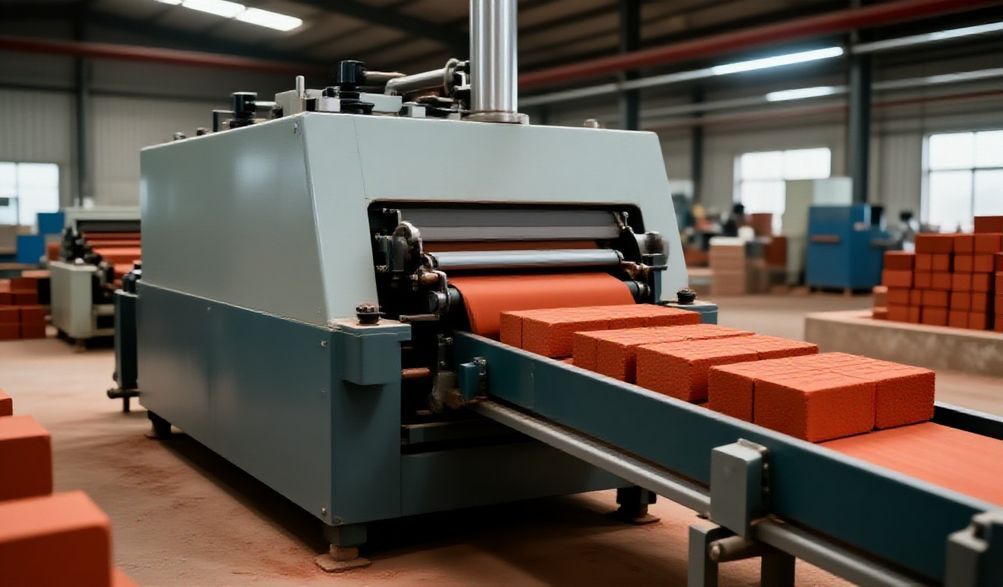
คู่มือฉบับสมบูรณ์ของคุณสำหรับเครื่องทำอิฐดินเผาในปัญจาบ | เน้นที่โรงงานฟูด้า
บทนำ
เส้นขอบฟ้าของรัฐปัญจาบเป็นเครื่องพิสูจน์ถึงความเจริญเติบโต ตั้งแต่ศูนย์กลางเมืองที่คึกคักในลูเธียนาและอัมริตสาร์ ไปจนถึงชุมชนเมืองที่ขยายตัว อุตสาหกรรมการก่อสร้างกำลังเฟื่องฟู และที่รากฐานของความก้าวหน้านี้เอง มีองค์ประกอบเรียบง่ายแต่สำคัญซ่อนอยู่ นั่นคือ อิฐดินเผา ตลอดหลายชั่วอายุ ความแข็งแกร่งและความน่าเชื่อถือของโครงสร้างในปัญจาบล้วนสร้างขึ้นจากอิฐที่ผลิตในท้องถิ่น อย่างไรก็ตาม อุตสาหกรรมนี้กำลังอยู่ในทางแพร่ง วิธีการแบบดั้งเดิมที่ใช้แรงงานเข้มข้นและต้องพึ่งพาเงื่อนไขของเตาเผาที่ไม่แน่นอน กำลังดิ้นรนเพื่อตอบสนองความต้องการในด้านขนาด ความสม่ำเสมอ และมาตรฐานคุณภาพสมัยใหม่
ช่องว่างดังกล่าวได้สร้างความท้าทายที่ชัดเจนให้กับผู้ผลิตและผู้ประกอบการ: จะผลิตอิฐดินเผาคุณภาพสูงได้อย่างมีประสิทธิภาพ คุ้มค่า และรวดเร็วทันการแข่งขันได้อย่างไร? คำตอบที่กำลังปฏิวัติภูมิทัศน์นี้คือ เครื่องทำอิฐดินเผาอัตโนมัติ คู่มือนี้จะเจาะลึกโซลูชันสมัยใหม่ดังกล่าว โดยมุ่งเน้นเป็นพิเศษที่ผู้นำจากในประเทศ:โรงงานผลิตอิฐฟูดา.
เราจะสำรวจว่า FUDA เชื่อมโยงมรดกการผลิตอิฐดินเผาอันเก่าแก่ของปัญจาบเข้ากับเทคโนโลยีการผลิตที่ล้ำสมัยได้อย่างไร คู่มือนี้ซึ่งสร้างขึ้นจากความเชี่ยวชาญในอุตสาหกรรมและความเข้าใจลึกซึ้งในตลาดท้องถิ่น เป็นแหล่งข้อมูลที่น่าเชื่อถือสำหรับผู้ที่ต้องการลงทุนในเครื่องทำอิฐดินเหนียวในปัญจาบมาสร้างอนาคตที่แข็งแกร่งและมีประสิทธิภาพมากขึ้นทีละก้าว
ทำความเข้าใจเครื่องทำอิฐดินเผา: ประเภทและเทคโนโลยี
การเปลี่ยนจากการผลิตด้วยมือไปสู่ระบบอัตโนมัติไม่ใช่แค่การอัปเกรด แต่เป็นการเปลี่ยนแปลงครั้งใหญ่ มันคือการแทนที่ความไม่สม่ำเสมอด้วยความแม่นยำ และเพิ่มขีดความสามารถด้วยเทคโนโลยีที่เชื่อถือได้
เครื่องจักรอัตโนมัติปฏิวัติเตาเผาอิฐแบบดั้งเดิมในปัญจาบอย่างไร
เตาเผาอิฐแบบดั้งเดิม แม้จะเป็นสัญลักษณ์ที่คุ้นตา แต่ก็เต็มไปด้วยความท้าทายมากมาย:
* ใช้แรงงานเข้มข้นต้องพึ่งพากำลังคนที่มีทักษะจำนวนมากในการขึ้นรูป การขนย้าย และการจัดเรียง
* คุณภาพไม่คงที่การขึ้นรูปด้วยมือนำไปสู่ความแตกต่างของขนาด ความหนาแน่น และความแข็งแรงของอิฐ การเผาในเตาแบบคล็องป์หรือเตาแบบบูลส์เทรนช์ (BTKs) มักส่งผลให้ความร้อนไม่สม่ำเสมอ
* การผลิตช้ากระบวนการนี้เป็นวัฏจักรและขึ้นอยู่กับสภาพอากาศ โดยเฉพาะอย่างยิ่งในขั้นตอนการทำให้แห้ง
* ของเสียที่สูงขึ้นอัตราการแตกหักสูงขึ้นอย่างมีนัยสำคัญเนื่องจากการจัดการด้วยมือและการเผาที่ไม่สม่ำเสมอ
เครื่องจักรอัตโนมัติจัดการกับปัญหาเหล่านี้ได้อย่างตรงจุด โดยรับประกันการผสมที่สม่ำเสมอ การอัดแน่นด้วยความดันสูงที่แม่นยำ และผลผลิตที่คงที่ตลอด 24 ชั่วโมงทุกวัน โดยไม่ขึ้นกับปัญหาการขาดแคลนแรงงานตามฤดูกาล ผลลัพธ์ที่ได้คือผลิตภัณฑ์ที่ตรงตามรหัสการก่อสร้างสมัยใหม่ทั้งในด้านความแข็งแรงรับแรงอัดและความแม่นยำของขนาด
ประเภทหลักของเครื่องทำอิฐ
ไม่ใช่ทุกเครื่องจักรที่ถูกสร้างมาเท่าเทียมกัน การเลือกที่เหมาะสมขึ้นอยู่กับขนาด การลงทุน และเป้าหมายด้านระบบอัตโนมัติของคุณ
- เครื่องทำอิฐเถ้าลอย:ในขณะที่เราเน้นที่ดินเหนียว สิ่งสำคัญคือต้องแยกแยะให้ชัดเจน เครื่องจักรเหล่านี้ใช้เถ้าลอย (ผลพลอยได้จากโรงไฟฟ้าพลังความร้อน) ปูนซีเมนต์ และทราย ซึ่งยอดเยี่ยมสำหรับการก่อสร้างที่เป็นมิตรต่อสิ่งแวดล้อม แต่ทำงานบนหลักการวัตถุดิบที่แตกต่างจากเครื่องจักรที่ใช้ดินเหนียวบริสุทธิ์
- โรงงานอิฐดินเผาอัตโนมัติเต็มรูปแบบ:จุดสูงสุดของประสิทธิภาพ นี่คือสายการผลิตแบบครบวงจรที่มีระบบการป้อนวัสดุ การผสม การลำเลียง การอัด และการซ้อนกองอัตโนมัติ เหมาะสำหรับผู้ผลิตขนาดใหญ่ที่มุ่งหวังผลผลิตมากกว่า 10,000 ก้อนต่อกะ ด้วยการแทรกแซงจากมนุษย์น้อยที่สุด
- เครื่องอัดอิฐกึ่งอัตโนมัติจุดที่เหมาะสมสำหรับธุรกิจปัญจาบหลายแห่ง พวกเขาใช้เครื่องจักรในกระบวนการกดและการปล่อยที่สำคัญ แต่ยังคงต้องใช้แรงงานคนในการป้อนส่วนผสมหรือจัดการอิฐที่ยังไม่เผา เหมาะสมอย่างยิ่งสำหรับการดำเนินงานขนาดกลางที่สมดุลระหว่างต้นทุนเริ่มต้นกับการเพิ่มผลผลิตอย่างมีนัยสำคัญ
- เครื่องอัดแบบใช้มือนี่คือเครื่องอัดแบบกลไก (เช่นประเภท "มิดเจ็ท" หรือ "อัศวินี" ที่เป็นที่นิยม) ซึ่งเพิ่มแรงดันในการขึ้นรูปด้วยมือ เหมาะสำหรับการผลิตอิฐในระดับขนาดเล็กมาก ในพื้นที่ชนบท หรือการผลิตอิฐพิเศษที่ต้องการการลงทุนน้อยที่สุด
ส่วนประกอบหลักและวิธีการทำงาน
การเข้าใจโครงสร้างของเครื่องจักรจะช่วยให้กระบวนการต่างๆ กระจ่างชัดขึ้น เครื่องจักรทำอิฐดินเหนียวอัตโนมัติมาตรฐานประกอบด้วยส่วนประกอบสำคัญหลายอย่าง:
- เครื่องป้อนและเครื่องผสมรับและผสมดินเหนียวให้เข้ากันอย่างสม่ำเสมอด้วยปริมาณน้ำที่เหมาะสม เพื่อสร้างส่วนผสมที่ยืดหยุ่นและคงเส้นคงวา
- ระบบสายพานลำเลียงลำเลียงส่วนผสมดินที่เตรียมไว้ไปยังห้องอัดโดยไม่ต้องยกด้วยมือ
- เครื่องไฮดรอลิกเพรส และ แม่พิมพ์ (Die):หัวใจของเครื่องจักร ลูกสูบไฮดรอลิกแรงดันสูงจะอัดดินเหนียวลงในแม่พิมพ์เหล็กที่ออกแบบมาอย่างแม่นยำ แรงดันนี้คือสิ่งที่กำหนดความหนาแน่นและความแข็งแรงของอิฐในขั้นสุดท้าย
- ระบบการดีดตัวออกอัด "อิฐดิบ" ที่ขึ้นรูปแล้วออกจากแม่พิมพ์โดยอัตโนมัติไปยังพาเลทหรือสายพานลำเลียงเพื่อการจัดเก็บ
- แผงควบคุมพีแอลซี The brain. This computerized system allows operators to set parameters like pressure, cycle time, and brick count, ensuring repeatable, error-free production.
Why Choose a Clay Brick Making Machine from Punjab’s FUDA Factory?
In a market filled with options, choosing a partner is as crucial as choosing a machine. Here’s why FUDA Brick Making Factory stands out as a leader in Punjab.
FUDA’s Legacy in Punjabi Manufacturing
FUDA isn’t just a seller; it’s a manufacturer rooted in the soil of Punjab. With years of dedicated operation, the company has built its authority by specializing exclusively in brick and block making machinery. This deep-seated experience means FUDA understands not just engineering, but the very fabric of Punjab’s industrial needs—from the characteristics of local alluvial clay to the power infrastructure and business aspirations of local entrepreneurs.
Engineering Expertise and Machine Durability
ความเชี่ยวชาญ is engineered into every machine. FUDA invests in in-house research and development to adapt to evolving market demands. Their machines are built for the rigors of continuous industrial operation, featuring:
* Robust, heavy-duty frames to withstand constant vibration.
* High-grade hydraulic components from reputable brands for reliable pressure.
* Hardened steel molds that resist wear, ensuring brick dimensional accuracy for thousands of cycles.
This focus on durability translates to lower long-term maintenance costs and higher uptime for your business.
Customization for Punjab’s Clay and Market
FUDA’s ประสบการณ์ shines in its ability to customize. Clay from Malwa is different from clay from Doaba. FUDA technicians can calibrate machine settings—like moisture content and compression ratio—for your specific local clay. Furthermore, they offer customization for:
* Brick Size: Standard (9″x4.5″x3″), modular, jumbo, or any custom size required by architects.
* ประเภทอิฐ Solid, hollow (for reduced weight and improved insulation), or even patterned facing bricks.
* ความสามารถในการส่งออก From small semi-automatic setups to large fully automatic plants.
After-Sales Support: Training, Spares, and Service
A machine is only as good as the support behind it. FUDA establishes ความน่าเชื่อถือ through a comprehensive after-sales ecosystem:
* On-Site Installation & Commissioning: Expert engineers set up your plant for optimal operation.
* Hands-On Operator Training: They don’t just deliver a machine; they transfer knowledge on operation, daily maintenance, and safety.
* Local Spares Inventory: A dedicated inventory of critical spare parts within Punjab ensures you are not waiting for shipments from distant states, minimizing costly downtime.
* Responsive Service Network: A team of service technicians is on call to provide prompt support, ensuring your business keeps running smoothly.
Key Features to Look for in a Quality Clay Brick Machine
Whether you’re evaluating FUDA or other brands, these are the non-negotiable features that define a quality investment.
กำลังการผลิต (ก้อนอิฐต่อชั่วโมง)
This is your starting point. Align capacity with your business plan:
* Small Scale: 1,000 – 2,500 bricks per hour (often semi-automatic).
* Medium Scale: 2,500 – 6,000 bricks per hour (semi or fully automatic).
* Large Scale Plant: 6,000 – 15,000+ bricks per hour (fully automatic lines).
Hydraulic System Pressure and Brick Density
นี่คือtechnical core of quality. Higher hydraulic pressure (measured in tons or PSI) compacts the clay particles more tightly.
* ผลลัพธ์ Bricks with higher compressive strength (exceeding 70-100 kg/cm² easily), lower water absorption, and better frost resistance. Always ask for the machine’s maximum pressure and the tested strength of the bricks it produces.
Automation Level and Control Panel
The control system dictates ease of use and consistency.
* Look for พีแอลซี (คอนโทรลเลอร์ลอจิกที่โปรแกรมได้) systems with touchscreen interfaces. These allow for precise setting of production parameters, store recipes for different brick types, and provide fault diagnostics, drastically reducing operator error and training time.
Power Requirement and Energy Efficiency
Consider your local industrial power situation in Punjab.
* มอเตอร์ไฟฟ้า: Cleaner, quieter, and more efficient for areas with stable grid power.
* Diesel Engine Options: Crucial for locations with frequent power cuts, ensuring uninterrupted production. Evaluate the machine’s specific power consumption (HP/KW) per thousand bricks for long-term cost efficiency.
Mold Quality and Interchangeability
The mold defines the brick. Insist on:
* Precision-Engineered Molds: Made from hardened, wear-resistant steel (e.g., EN-31) for a long lifespan and sharp brick edges.
* Easy Interchangeability: A design that allows one operator to change molds within minutes to switch between brick types, maximizing plant flexibility.
The Business Case: ROI and Setting Up Your Plant in Punjab
Investing in a brick making machine is a strategic business decision. Let’s break down the practicalities.
Investment Breakdown and Government Schemes
Your initial investment goes beyond the machine price:
* Machinery Cost: The core machine (semi or fully automatic).
* Civil Work: A covered shed for the production line, raw material storage bays, and drying areas.
* Land: Adequate space for the plant, drying yards, and stockpiling.
* Ancillaries: A tractor/pug mill for clay mixing, trolleys, and pallets.
* คำแนะนำ: Explore potential support from Punjab’s MSME or industrial policies, which may offer subsidies on machinery, interest subventions on loans, or favorable land allotments in industrial clusters.
Calculating Your Return on Investment (ROI)
A simplified model illustrates the potential. Let’s compare a semi-automatic machine with manual production.
| Factor | Manual Production (Per 10,000 Bricks) | Semi-Auto Machine (Per 10,000 Bricks) |
| :— | :— | :— |
| แรงงานที่ต้องการ | 25-30 persons | 8-12 persons |
| Production Time | 2-3 days | 4-6 hours |
| Key Cost Savings | Very high, recurring labor cost | Drastically reduced labor cost |
| Quality Premium | Sells at standard market rate | Can command a 10-15% premium for consistent, high-strength bricks |
| Wastage | High (15-20%) | Low (5-7%) |
ROI Calculation: The significant savings in labor, time, and wastage, combined with the ability to produce and sell more high-quality bricks daily, typically allows the machine to pay for itself within 12 to 24 months, depending on scale and market rates.
Ideal Plant Layout and Space Requirements
Efficiency is also about layout. A well-planned plant (approx. 1-2 acres for medium scale) should have a logical flow:
1. Raw Material Yard: Where clay is weathered and stored.
2. Production Shed: Houses the machine, mixer, and conveyor.
3. Green Brick Drying Area: A covered, ventilated space for initial drying before firing.
4. Kiln Area: For setting up a Hoffman Kiln, Tunnel Kiln, or using a clamp.
5. Finished Goods Storage: For cooled, fired bricks before dispatch.
Sourcing Raw Materials: Clay in Punjab
Punjab is endowed with good alluvial clay. Expert insight for sourcing:
* Test the Clay: Simple tests include checking plasticity, shrinkage on drying, and presence of harmful salts like sulfates.
* Preparation is Key: Clay must be “weathered” by exposure to rain and sun for weeks to improve plasticity. It should then be properly crushed and mixed to a uniform consistency before feeding into the machine.
* FUDA’s Advantage: Their experience allows them to advise on optimal preparation techniques for your specific clay source.
FAQs: Clay Bricks Making Machines in Punjab
Q1: What is the approximate price range for a FUDA clay brick making machine in Punjab?
ก Prices vary significantly based on automation level and capacity. A basic semi-automatic machine can start from several lakhs, while a high-capacity fully automatic plant can run into crores. We advise contacting FUDA for a detailed, customized quote based on your desired output, brick type, and automation needs. Remember, the focus should be on long-term value and ROI, not just the initial price tag.
Q2: Can the machine produce different types and sizes of bricks?
ก Absolutely. By changing the mold/die, a single FUDA machine can produce various bricks—standard solid bricks, hollow blocks for partition walls, and even decorative paving bricks. They offer a wide range of standard mold sizes and can fabricate custom molds to your specifications.
Q3: What kind of after-sales service and warranty does FUDA provide?
ก FUDA typically offers a comprehensive warranty (e.g., 12 months) on major components like the hydraulic system and mainframe. Their commitment extends beyond warranty with readily available technical support, a robust spare parts supply chain within Punjab, and a responsive service team to ensure minimal operational disruption.
Q4: How much manpower is required to operate a semi-automatic vs. fully automatic plant?
ก This is a key differentiator. A fully automatic line, with automated handling from mixing to stacking, may require only 3-5 personnel for supervision and handling. A semi-automatic line, which might involve manual feeding or brick handling, typically requires 8-12 people. Both represent a massive reduction compared to traditional methods.
Q5: Is training provided for machine operation and maintenance?
ก Yes, comprehensively. FUDA provides mandatory on-site training for your operators and maintenance staff. This covers safe startup/shutdown procedures, daily maintenance routines, basic troubleshooting for common issues, and best practices for optimal brick quality and machine longevity.
สรุป
The evolution from manual kilns to automated brick making is not merely a trend; it’s an essential strategic move for anyone serious about the brick manufacturing business in Punjab. It’s an investment in unparalleled consistency, scalable production, and superior product quality that the modern construction market demands.
Throughout this guide, one partner has consistently exemplified the blend of local insight and technical prowess needed to succeed: โรงงานผลิตอิฐฟูดา. They represent more than a machinery supplier; they are a true business partner invested in your success—from customizing a machine for your local clay to supporting you with training and service long after the sale.
If you are ready to transform your brick production, boost your profitability, and build a future-proof business, the next step is clear.
Contact FUDA Brick Making Factory today for a personalized consultation, a live machine demonstration at their facility, and a detailed project report tailored to your specific location and business goals in Punjab. Discover the power of partnering with a local expert for your เครื่องทำอิฐดินเหนียวในปัญจาบ.
<