
The Ultimate Guide to Block and Brick Machines: Inside the FUDA Brick Making Factory
Look around you. The homes we live in, the offices we work in, and the roads we travel on are all built upon a simple, ancient foundation: the brick. Yet, the demands of modern construction have transformed this humble building block. Today, the industry requires unprecedented speed, unwavering consistency, strict cost-efficiency, and a commitment to sustainable materials. For construction businesses, project managers, and investors, meeting these demands with manual labor is an impossible equation.
The critical answer lies in industrial automation. Advanced block and brick making machines are the engines of modern construction, turning raw materials into precise, durable building components at an industrial scale. But not all machinery is created equal. The choice of manufacturer is a pivotal decision that impacts your productivity, product quality, and bottom line for years to come.
This guide serves as your comprehensive resource. Compiled from deep industry insights, engineering principles, and an in-depth analysis of manufacturing processes, we will demystify brick making machinery. With a focused lens on the FUDA brick making factory—a leader with decades of specialized expertise—we’ll equip you to make a profoundly informed decision for your next project or business venture.
Understanding Block and Brick Making Machinery
At its core, a brick making machine automates and intensifies the age-old process of forming and compacting material into a shaped block. The sophistication of this automation defines the machine’s capacity, consistency, and operational model.
Core Types of Brick Making Machines
The first major distinction lies in mobility and intended use case.
- Stationary Block Making Machines: These are the powerhouses of large-scale production. Installed permanently in a factory or brick yard, they are engineered for maximum output, often running on multi-layer pallet circulation systems. They are the ideal choice for supplying a regional market or a major, long-term construction project from a central location.
- Mobile Brick Making Machines: As the name suggests, these units offer portability. Mounted on a trailer or a simple frame, they can be transported directly to a construction site. The primary advantage is the drastic reduction in logistics costs—you produce bricks where they are needed, using locally sourced materials like soil or on-site aggregate. This is a game-changer for remote infrastructure projects or large housing developments.
- Operational Models: Across both stationary and mobile types, machines fall into three categories of automation:
- Automatic: Controlled by Programmable Logic Controllers (PLC), these machines handle the entire cycle—feeding, mixing, molding, compacting, and stacking—with minimal human intervention. They offer the highest and most consistent output.
- Semi-Automatic: These machines automate the critical compaction and molding process but may require manual feeding of raw material or manual removal of finished blocks. They represent a perfect balance of improved productivity and lower initial investment.
- Manual: Often simple press machines, these are operated entirely by hand or lever. They are suitable for very small-scale, artisanal, or community-based projects but cannot meet commercial output demands.
Key Components and How They Work
Understanding the core components reveals the engineering behind a reliable machine. A standard automatic block machine integrates a seamless system:
- Mixer: Where raw materials (e.g., cement, sand, aggregate, water) are blended into a homogeneous mix.
- Conveyor & Hopper: The conveyor transports the mix to a storage hopper, which feeds the molding system at a controlled rate.
- Mold (or Mold Cavity): The heart of the machine. This is the precision steel cavity that gives the block its shape—be it solid, hollow, paver, or interlocking.
- Compaction System: This is where quality is forged. Most industrial machines use a combination of high-frequency vibration to remove air pockets and hydraulic pressure to achieve extreme density and strength.
- Control Panel: The brain of an automatic machine. The PLC allows operators to set parameters, monitor the cycle, and ensure consistent production.
The Production Cycle: Raw material is mixed, conveyed to the hopper, and measured into the mold. The mold is subjected to intense vibration and hydraulic pressure. The freshly formed, “green” block is then ejected onto a pallet, moved to a curing area, and eventually stacked for storage or transport.
Raw Material Versatility: Beyond Just Clay
Modern machines are not limited to traditional clay firing. This versatility opens doors to cost-saving and sustainable practices.
- Concrete: The most common material. Machines use a mix of cement, sand, aggregates (like crushed stone), and water to produce a vast range of concrete blocks, pavers, and kerbstones.
- Eco-Friendly Alternatives: Advanced machines are designed to utilize industrial by-products.
- Fly Ash Brick Machines: These presses use fly ash (a waste product from coal power plants), lime, and gypsum, creating high-strength bricks while solving an environmental waste problem.
- Slag & Other Materials: Similar processes can incorporate slag from steel production.
- Soil Interlocking Brick Machines: Also known as CEB (Compressed Earth Block) machines, these compact locally sourced soil (often with a small stabilizer like cement) into durable, interlocking blocks. They are excellent for sustainable, low-cost building in areas with suitable soil.
Why Choosing the Right Manufacturer Matters: The FUDA Factory Advantage
Purchasing a block machine is a significant capital investment. The manufacturer you choose becomes a long-term partner for your business. Here’s where the FUDA brick making factory distinguishes itself, building its reputation on a foundation of engineering integrity.
Engineering Expertise and R&D Investment
FUDA’s philosophy is rooted in mechanical durability and intelligent design. This isn’t just about assembling parts; it’s about innovating systems for better performance.
- Durable Design: Frames are constructed from high-grade steel to withstand the immense, repetitive stresses of compaction over decades of operation.
- Innovation in Core Systems: Continuous R&D focuses on optimizing vibration frequency and amplitude for perfect material compaction, and enhancing hydraulic systems for greater pressure with improved energy efficiency. This translates to stronger blocks using less power.
- Expertise in Action: This deep engineering focus is evidenced in the robustness of their machine frames, the precision of their mold machining, and the reliability of their PLC control systems—all designed for minimal downtime and maximum uptime.
Manufacturing Standards and Quality Control
Quality is not inspected in; it is built in. A tour of the FUDA factory reveals a commitment to process.
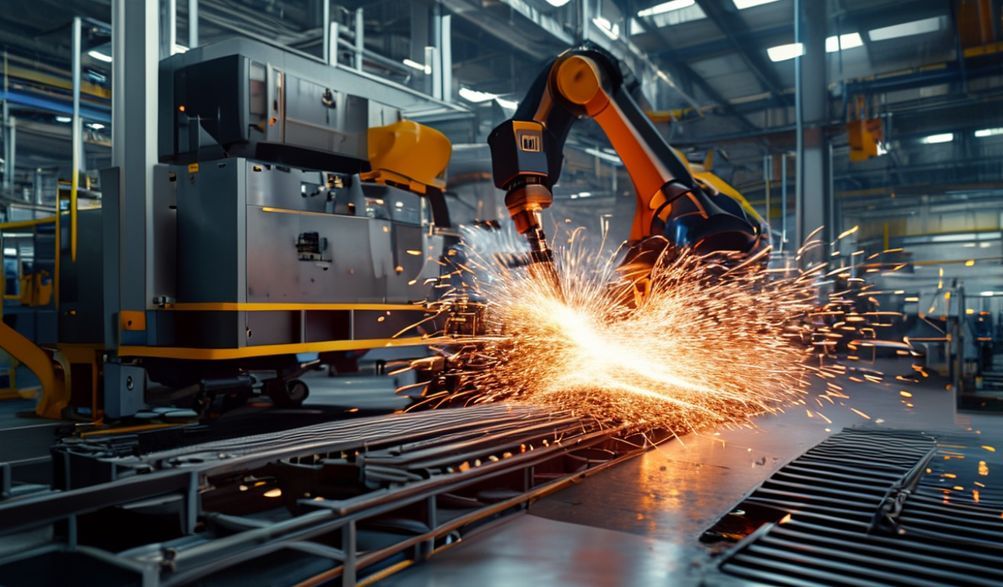
- Production Line Rigor: From laser cutting of steel components to robotic welding, the manufacturing process utilizes technology to ensure precision.
- Component Quality: FUDA sources reputable brand-name components for critical parts like hydraulic pumps, vibration motors, and electrical systems, ensuring reliability and simplifying future maintenance.
- Multi-Stage Testing: Every machine undergoes a stringent protocol:
- Welding inspection for integrity.
- Assembly alignment checks.
- A full, no-load trial run of all systems.
- A final, mandatory production trial run with actual raw materials, where sample blocks are produced and tested for strength and dimension. The machine does not leave the factory until it passes this real-world test.
Customization and Solution-Based Design
FUDA operates on a principle of providing solutions, not just selling products. They understand that every project has unique constraints and goals.
- Output Matching: They work with clients to select or configure a machine model that precisely matches required daily output, preventing over-investment or under-capacity.
- Mold Customization: Need a specific brick size, shape, or face texture for a historical restoration or architectural feature? FUDA’s in-house mold shop can engineer and manufacture a custom solution.
- Pallet & System Adaptation: They can adapt pallet sizes or machine configurations to integrate with a client’s existing curing or handling systems.
Example Case: A developer in Southeast Asia needed to produce a non-standard, large-format interlocking block for a slope-retention project. The local soil composition was also a challenge. FUDA engineers designed a custom mold for the block and adjusted the machine’s vibration and moisture parameters to work optimally with the client’s on-site material, delivering a complete, turnkey production solution.
A Deep Dive into Popular FUDA Block Making Machine Models
To illustrate their range, let’s examine three representative models from FUDA’s portfolio, each serving a distinct market segment.
High-Capacity Fully Automatic Block Machine
- Target Audience: Large commercial brick yards, industrial plants, and major construction material suppliers.
- Key Features: This model is built for volume. It features full PLC touchscreen control, a high-horsepower vibration system for maximum block density, and an automated multi-layer pallet circulation system that allows blocks to be conveyed away for curing while production continues uninterrupted.
- Output Capacity: Capable of producing thousands of blocks per hour (e.g., 10,000 – 30,000+ units in an 8-hour shift, depending on block type).
- Ideal For: Mass production of solid blocks, hollow blocks (for insulation and lightweight construction), paving stones, garden slabs, and concrete kerbstones.
Cost-Effective Semi-Automatic Brick Machine
- Target Audience: Medium-sized construction businesses, new brick manufacturing startups, and regional block producers.
- Key Features: This model strikes the optimal balance. It automates the critical compaction cycle (using the same robust vibration and pressure systems as automatic models) but may involve manual feeding or block removal. This significantly lowers the initial investment while delivering a massive leap in productivity and quality over manual methods.
- Ideal For: Producing standard clay bricks or concrete bricks for local housing projects, commercial buildings, and community development. It’s a robust entry point into automated manufacturing.
Mobile and On-Site Brick Making Machines
- Target Audience: Large construction contractors, government infrastructure agencies, and developers of remote housing projects.
- Key Features: Portability is the key. These machines are designed to be towed to the job site. Their major advantage is the elimination of long-distance brick transportation costs. They can often be configured to use the local subsoil (stabilized with a small amount of cement), making material sourcing cheap and easy.
- Experience in Practice: Imagine a 100km road project in a rural area. Transporting all required kerbstones and drainage blocks would be prohibitively expensive. A FUDA mobile plant set up at a central point along the route can produce all the necessary blocks on-demand, using locally quarried aggregate, slashing logistics costs and project timelines dramatically.
Beyond the Machine: The FUDA Partnership Ecosystem
The relationship with FUDA begins with the machine purchase but is defined by what happens after.
Comprehensive After-Sales Support
A machine is only as good as the support behind it. FUDA’s partnership model is built on this understanding.
- Installation & Commissioning: For most orders, FUDA can dispatch qualified engineers to supervise installation, ensure proper setup, and commission the machine on your site.
- Thorough Operator Training: Their technicians provide hands-on training for your production team, covering operation, routine maintenance, basic troubleshooting, and safety procedures.
- Global Parts & Service Network: They maintain an inventory of critical spare parts and have established service channels to provide technical support and guidance, minimizing potential downtime.
Guidance on Factory Layout and Business Planning
For clients setting up a new brick manufacturing business, FUDA’s value extends into consultancy.
- Plant Layout Optimization: They can advise on the most efficient factory floor plan for material flow, from raw storage to mixing, production, curing, and finished product storage.
- Operational Advice: This includes insights on raw material sourcing ratios, curing yard management (critical for final block strength), and basic business planning for production efficiency.
Frequently Asked Questions (FAQ)
What is the average output of a FUDA automatic block machine?
Output varies significantly by the specific model and the type of block being produced. A standard fully automatic block machine can produce between 10,000 and 30,000+ units in an 8-hour shift. The exact number depends on the block size, complexity (e.g., hollow blocks take slightly longer than solid ones), and the raw material mix. FUDA provides detailed output specifications for each model based on standard block types.
Can FUDA machines use fly ash or other waste materials?
Absolutely. Many FUDA models are specifically engineered to work with industrial by-products like fly ash and slag. In fact, they produce specialized fly ash brick making machines that optimize the mix ratio and compaction for these materials. This allows clients to produce high-quality, cost-effective bricks while contributing to greener construction practices.
What is the lead time for a machine order and delivery?
Lead time depends on two main factors: whether the machine is a standard model or requires customization, and the final shipping destination. For a standard machine, general production and preparation for shipping typically takes 30 to 45 days after order confirmation. Shipping time is additional. FUDA’s sales team provides clear, upfront timelines based on your specific requirements.
Does FUDA provide installation and training?
Yes, this is a cornerstone of their service. For most orders, FUDA can arrange for experienced engineers to travel to your site for on-site installation supervision and comprehensive operator training. This ensures your team is confident and capable of running the machine safely and at peak efficiency from the very first day of production.
How do I choose between an automatic and semi-automatic model?
The choice boils down to a balance of budget, required output, and labor availability.
* Choose an Automatic Model if you have high daily output demands, want to minimize labor costs per block, and require the highest level of product consistency for large-scale contracts.
* Choose a Semi-Automatic Model if you have a more moderate output target, are making your first investment in automation, or have readily available labor you wish to utilize efficiently. It offers a faster ROI for many growing businesses.
Conclusion
Selecting a block and brick making machine is one of the most consequential decisions for a construction business or project. It directly dictates your productive capacity, product quality, operational costs, and ultimately, your profitability and competitive edge.
As we’ve explored, the FUDA brick making factory brings a compelling value proposition to this decision. It combines decades of engineering expertise, rigorous manufacturing quality control, a flexible customization approach, and, crucially, a comprehensive partnership ecosystem of after-sales support and business guidance. They don’t just supply a machine; they provide a production solution with a long-term commitment to your success.
Ready to build your future on a solid foundation?
Take the next step today. Contact the FUDA engineering team for a free, no-obligation consultation to discuss your specific project requirements, output goals, and material plans. They will provide a tailored machine recommendation and a clear path forward.
Explore our detailed project portfolio to see FUDA machines in action across the globe, from large urban brick plants to remote infrastructure sites. Witness the tangible results of partnering with a manufacturer dedicated to building lasting relationships through reliable, innovative machinery and unwavering support.