
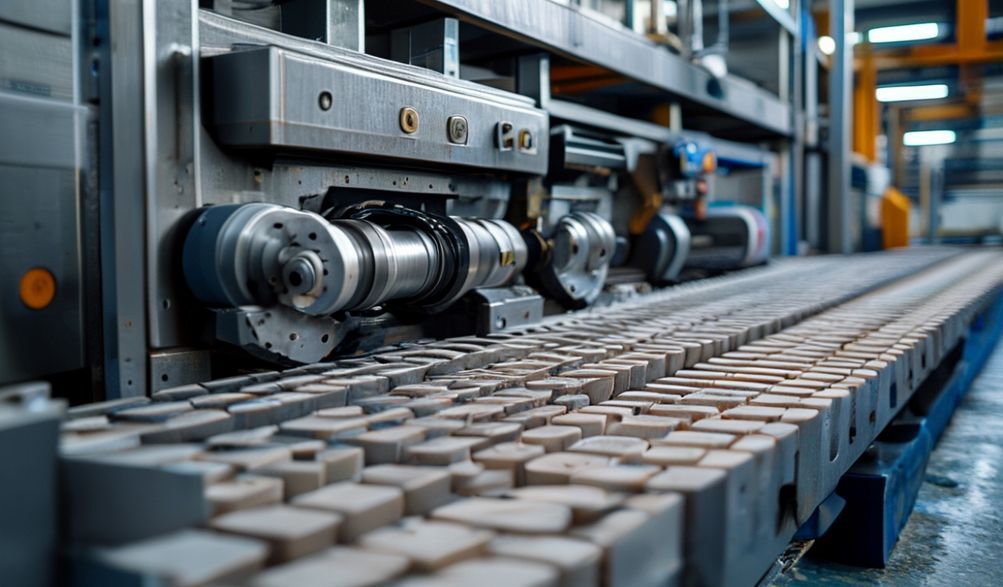
Your Ultimate Guide to Buying a Block Brick Machine for Sale from FUDA Factory
Introduction
In the world of construction and manufacturing, consistent bottlenecks threaten profitability and project timelines. The struggle to source high-quality, affordable bricks in reliable quantities is a universal pain point. Whether you’re a contractor facing material delays or an entrepreneur looking to capitalize on the booming construction sector, the core challenge remains the same: finding a production solution that is reliable, efficient, and cost-effective.
This is where the search for a “block brick machine for sale” begins. It’s a quest for autonomy, quality control, and a solid return on investment. Navigating the vast market of machinery suppliers, however, can be daunting. How do you distinguish a durable, productive asset from a costly mistake?
Enter FUDA Block Making Factory. As a leading industrial manufacturer, FUDA specializes in engineering the very solutions that bridge this gap. This guide is designed to cut through the noise. We will leverage deep industry expertise to dissect what makes a great block making machine, why FUDA has become a trusted name, and how you can make an informed, confident purchasing decision that powers your business growth for years to come.
Author/Entity Authority Note: This guide is compiled based on extensive industry knowledge and an in-depth understanding of FUDA’s manufacturing processes and product lines, designed to serve as a trustworthy resource for business owners and project managers.
Understanding Block Making Machines: Types and Applications
Before investing, it’s crucial to understand the machinery’s fundamentals. A block making machine is more than just equipment; it’s the heart of a production line, transforming raw, inexpensive materials into valuable, standardized building components.
What is a Block Making Machine?
At its core, a block making machine automates the process of forming bricks and blocks. It mixes raw materials—typically concrete, cement, sand, aggregate, and water—and uses a combination of vibration and hydraulic pressure to compact them into molds. The result is a precise, uniform, and structurally sound block, ready for curing and use.
- Key Industries Served:
- Construction: Producing hollow blocks for walls, solid blocks for foundations.
- Paving & Landscaping: Manufacturing interlocking pavers, garden edging, and landscaping bricks.
- Large-Scale Infrastructure: Creating curbstones, retaining wall blocks, and other specialized concrete products.
Different Types of Machines FUDA Offers
FUDA caters to a wide spectrum of needs, from small-scale startups to high-volume industrial plants. Their range can be categorized in several ways:
-
By Operation & Automation:
- Fully Automatic: High-speed, computer-controlled systems with automatic material feeding, molding, stacking, and pallet return. Ideal for 24/7 production with minimal labor.
- Semi-Automatic: A balance of automation and manual operation (e.g., manual feeding or block removal). Offers excellent productivity with a more manageable investment.
- Manual/Economy Models: Leverage machine-powered compaction but are operated by hand. Perfect for small businesses, community projects, or testing the market.
-
By Output & Mobility:
- Stationary Block Making Machines: High-output plants fixed in a factory setting. They are the powerhouse for large-scale, consistent production.
- Mobile Block Machines: Mounted on a trailer or wheels, these can be moved to different job sites. Excellent for producing bricks directly where they are needed, slashing transport costs.
-
By Product:
- Concrete Hollow Block Machines: The industry workhorse for standard construction blocks.
- Paver Making Machines: Specialized for producing high-density, aesthetically pleasing paving stones.
- Interlocking Brick Machines: For creating dry-stack blocks that lock together without mortar.
- Curbstone & Special Shape Machines: For manufacturing landscape borders, gutters, and custom architectural elements.
Matching the Machine to Your Project Needs
Selecting the right model is a strategic decision. Ask yourself these key questions:
- Required Daily Output: Do you need 5,000 blocks per day or 50,000? Your production target is the primary driver.
- Available Space & Power: Do you have a large factory shed or a smaller workshop? What is your available power supply (3-phase industrial or standard)?
- Automation Level: What is your available labor force and desired level of operator involvement?
- Budget & ROI Timeline: Consider total cost (machine, molds, shipping, installation) against your projected revenue and savings.
Why Choose a Block Machine from FUDA Factory?
In a competitive market, reputation and proven performance are everything. Choosing FUDA is not just buying a machine; it’s investing in a partnership built on industrial-grade reliability.
Proven Manufacturing Expertise & Experience
FUDA has established itself through years of dedicated focus on heavy-duty industrial machinery. This specialization means their engineering is not an afterthought—it’s their core competency. Their commitment to continuous Research & Development ensures their machines incorporate the latest advancements in efficiency, durability, and user-friendliness, giving your business a technological edge.
Hallmarks of FUDA Machine Quality
What truly sets a FUDA machine apart is the tangible quality built into every component:
- Robust Construction: Fabricated from high-grade, wear-resistant steel plates and reinforced frames. This isn’t light-gauge metal; it’s industrial architecture designed to withstand the immense pressures of continuous compaction.
- Precision Engineering: Tight tolerances in the mold system and vibration platform ensure every block has identical dimensions, sharp edges, and consistent density. This precision translates to professional-grade products that command better market prices.
- Designed for Longevity: Components like hydraulic cylinders, vibration motors, and bearing systems are sourced from reputable suppliers and are sized for endurance, not just minimum specification. This reduces downtime and extends the machine’s operational life by years.
- Energy-Efficient Design: Modern hydraulic systems and well-engineered vibration mechanisms deliver maximum compaction power with optimized energy consumption, directly lowering your ongoing operational costs.
Comprehensive Support & Service
FUDA’s relationship with a client extends far beyond the point of sale, building crucial trust.
- Pre-Sale Consultation: Their experts will analyze your requirements to recommend the most cost-effective and productive model for your specific goals.
- Comprehensive Training: Detailed operational and maintenance training is provided, either via on-site technician guidance or through remote video sessions and extensive manuals.
- Dedicated After-Sales Service: A reliable supply chain for genuine spare parts and accessible technical support for troubleshooting ensures your production line stays running.
- Clear Warranty Coverage: FUDA stands behind its build quality with clear warranty terms, typically covering major components and workmanship for a defined period, giving you peace of mind.
Key Features to Look for in a FUDA Block Making Machine
When evaluating a specific FUDA model, drill down into these critical features. They are the direct indicators of performance and value.
Core Performance Specifications
- Cycle Time: Measured in seconds per cycle, this is the primary determinant of your hourly output. A faster cycle time means more blocks per shift.
- Mold System: Look for a robust, heat-treated mold design. A key advantage is mold customization—FUDA can manufacture molds for unique block designs, allowing you to tap into niche markets.
- Pressure System: The synergy between high-frequency vibration (to remove air pockets and ensure a tight fill) and substantial hydraulic pressure (for final compaction) is what creates a dense, strong block. Inquire about the tonnage and vibration frequency.
Operational and Safety Features
- Control System: A user-friendly Programmable Logic Controller (PLC) with a touchscreen interface allows for easy operation, recipe storage for different block types, and diagnostic monitoring.
- Safety First: Integrated safety guards, emergency stop buttons, and pressure relief valves are non-negotiable for protecting your operators.
- Ease of Maintenance: A well-designed machine allows for easy access to key components like the hydraulic system and vibrators for routine servicing, minimizing downtime.
Output Versatility
Examine the range of block sizes and types a single machine can produce. A versatile machine with quick mold-change capabilities is a strategic asset. The quality of the finished block—its smooth surface finish, sharp edges, and high structural integrity—is the ultimate testament to the machine’s performance and will define the marketability of your product.
The Practical Buyer’s Guide: From Inquiry to Installation
Turning your decision into a reality involves clear steps. Here’s a transparent roadmap for working with FUDA.
Step 1: Defining Your Requirements
Prepare a brief for yourself before you contact any supplier. FUDA will need this to provide an accurate quote.
* Production Goals: Target output per 8-hour shift.
* Raw Materials: Types of sand, aggregate, and potential additives (fly ash) you plan to use.
* Block Specifications: Desired sizes, types (hollow, solid, paver), and any special shapes.
* Site Conditions: Factory space dimensions, available power supply, and floor strength.
Step 2: Requesting a Quote and Evaluating the Offer
Contact FUDA with your requirements. A professional quote will typically include:
* Machine Price: For the specified model.
* Mold Costs: For your chosen block types.
* Shipping & Insurance: Costs (e.g., FOB, CIF) to your nearest port.
* Installation & Training: If included or as a separate service.
* Remember: Compare the total value—quality, features, support, and longevity—not just the bottom-line price. The cheapest machine can become the most expensive asset if it fails frequently.
Step 3: Logistics, Installation, and Commissioning
- Shipping: FUDA will handle professional packing and coordinate sea freight. You will arrange inland transport from the destination port.
- Foundation Preparation: You will receive detailed foundation drawings. Preparing a level, reinforced concrete base is critical for stable operation.
- Commissioning: Upon arrival, FUDA can dispatch technicians (subject to agreement) to supervise installation, perform test runs with your local materials, and train your team, ensuring a smooth production launch.
Frequently Asked Questions (FAQ)
Q1: What is the approximate price range for a FUDA block making machine?
A: Prices vary significantly based on automation, output capacity, and configuration. Manual machines may start in the tens of thousands of USD, while high-end fully automatic production lines represent a larger industrial investment. The only way to get an accurate price is to request a custom quote based on your specific needs. FUDA offers models scalable to different investment levels.
Q2: Can FUDA provide custom molds for special block designs?
A: Absolutely. Custom mold design and manufacturing is a core service. Whether you have a unique architectural brick, a specialized paving pattern, or a proprietary interlocking design, FUDA’s engineering team can create the molds to bring your product to market.
Q3: What kind of after-sales support does FUDA offer internationally?
A: FUDA provides structured international support including: detailed English manuals and video guides, remote troubleshooting via video call, a reliable supply chain for dispatching genuine spare parts, and, for more complex issues, the possibility of arranging a technician’s site visit (terms and conditions apply).
Q4: How do I calculate the potential ROI (Return on Investment) for this machine?
A: Use this simplified framework:
1. Calculate your machine’s daily output potential in blocks.
2. Research the local selling price per block.
3. Calculate your daily production cost (raw materials + labor + utilities).
4. Your daily gross profit is (Output x Selling Price) minus Daily Cost.
Compare this to the total machine investment. A well-utilized FUDA machine, with its durability and efficiency, is designed to provide a strong ROI, often paying for itself within a predictable timeframe.
Q5: What are the main raw materials needed, and can I use local materials like soil or fly ash?
A: The standard mix is cement, sand, aggregate (crushed stone), and water. A significant advantage of these machines is their compatibility with mixed designs. Using industrial by-products like fly ash is not only possible but encouraged, as it can reduce material costs and create eco-friendly blocks. FUDA can provide basic mix ratio guidelines, but we always recommend testing with your local materials to perfect your recipe.
Conclusion
Choosing a block making machine is a pivotal decision that will impact your operational efficiency, product quality, and bottom line for years to come. It is an investment that demands careful consideration of engineering, support, and long-term value. As we’ve explored, a machine from FUDA Block Making Factory represents more than just a piece of equipment; it embodies proven manufacturing expertise, industrial-grade durability, and a partnership committed to your productivity.
The logical next step in your journey is to move from research to a personalized conversation. By defining your requirements and contacting the FUDA factory directly, you can obtain a tailored consultation and a precise quote. This investment isn’t merely a purchase—it’s the foundation for building a more profitable, resilient, and autonomous future for your construction or manufacturing business. Let FUDA provide the reliable, high-performance machinery that turns your raw materials into lasting success.