
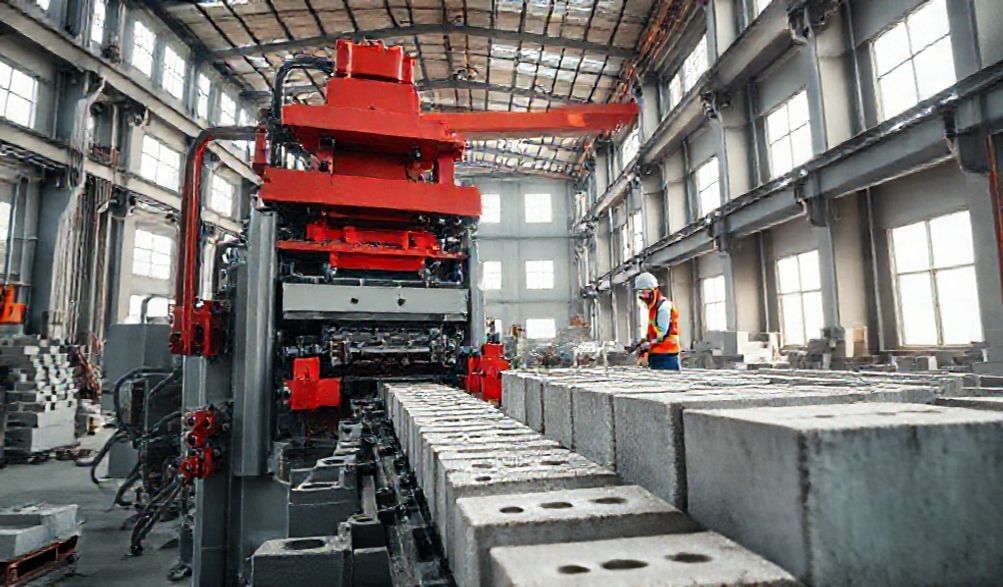
The Ultimate Guide to Sourcing High-Quality Brick Making Machines in Guangzhou
Introduction
The global construction boom shows no signs of slowing, creating an insatiable demand for reliable, high-quality building materials. At the heart of this supply chain is the humble brick, and the machines that produce them. For savvy business owners and project developers looking to invest in this essential equipment, one name consistently rises to the top: Guangzhou, China.
This guide serves as your comprehensive, insider’s manual to navigating the Guangzhou brick making machine industry. Drawing on deep market knowledge and technical expertise, we will cut through the noise to provide you with the clarity needed to make a confident investment. Our objective is not just to inform, but to empower you to avoid common, costly pitfalls and to build relationships with reputable, capable suppliers.
In the following sections, you will gain a clear understanding of:
* Why Guangzhou has become the world’s workshop for this machinery.
* The different types of machines available and which one suits your project.
* The critical technical specifications that separate adequate machines from exceptional ones.
* A proven, step-by-step framework for identifying and vetting manufacturers.
* A walkthrough of the entire procurement process, from initial inquiry to delivery at your site.
Let’s begin by exploring the foundations of Guangzhou’s dominance in this field.
Why Guangzhou is a Global Hub for Brick Making Machinery
Guangzhou is not just another manufacturing city; it is the pulsating core of the Pearl River Delta, one of the world’s most dynamic industrial regions. Sourcing from here isn’t merely about finding a supplier—it’s about tapping into a complete ecosystem designed for industrial production.
A Legacy of Manufacturing Excellence
The story begins with decades of focused industrial development. The Pearl River Delta transformed from agricultural land into the “Factory of the World,” cultivating an unparalleled concentration of skilled labor, precision engineers, and manufacturing management talent. This history means the knowledge of metallurgy, mechanics, and hydraulics required to build durable machinery is deeply ingrained in the local industry. You’re not dealing with newcomers; you’re engaging with workshops and factories that have often been refining their craft for generations.
Integrated Supply Chain Advantages
Perhaps the most significant advantage is the fully integrated supply chain. Within a short radius, a machinery factory has immediate access to:
* High-grade steel plate and component suppliers.
* Specialists in hydraulic pumps, cylinders, and valves.
* Manufacturers of industrial PLCs, motors, and electrical panels.
* This proximity reduces lead times, minimizes logistics costs for the manufacturer, and allows for quicker problem-solving during production. Furthermore, the world-class ports of Guangzhou, Shenzhen, and Hong Kong are within easy reach, ensuring smooth and cost-effective export to any global destination.
Innovation and Competitive Pricing
Guangzhou manufacturers are adept at reverse-engineering and adapting international technologies, then innovating upon them. They have mastered the balance between performance and affordability. The intense local competition and massive economies of scale drive continuous improvement and force prices to remain highly competitive. This doesn’t always mean “cheap,” but it does mean exceptional value—you can often secure advanced automation and robust construction at a fraction of the cost of European or American counterparts.
Types of Brick Making Machines Manufactured in Guangzhou
The variety available is vast, catering to projects from small rural builds to massive urban developments. Understanding these categories is your first step in defining your needs.
By Operation: Automatic vs. Semi-Automatic vs. Manual
- Fully Automatic Machines: These are high-output production lines. They integrate batching, mixing, conveying, molding, curing, and stacking with minimal human intervention. Controlled by advanced PLC systems, they are ideal for large-scale commercial block yards.
- Best for: High-volume production, markets with high labor costs, consistent product quality.
- Semi-Automatic Machines: A balance between investment and output. The core molding process is automated (vibration, compression, ejection), but loading of raw material or removal of finished blocks may be manual. They offer great flexibility.
- Best for: Medium-scale businesses, starting a block manufacturing venture, producing multiple product types.
- Manual or Simple Machines: Often egg-laying or table-type machines. They require significant manual labor for all steps but have a very low initial cost.
- Best for: Very small projects, community-based building, regions with extremely low capital.
By Output Product: Diverse Block and Brick Machines
Guangzhou factories produce machines for an astonishing array of end products:
* Hollow Block Making Machines: The workhorses of the industry, producing standard hollow blocks for walls. Capacity is often defined by blocks per cycle (e.g., 6-15 blocks).
* Paver / Interlocking Brick Machines: Designed for landscaping, driveways, and walkways. They create high-density, aesthetically pleasing pavers that lock together without mortar.
* Solid Brick Machines: Produce dense, solid bricks used for heavy-load bearing or decorative purposes.
* Curbstone and Special Shape Machines: These can produce roadside curbs, garden edging, and custom architectural elements.
By Process: Stationary vs. Mobile Plants
- Stationary Plants: These are fixed installations, typically the automatic or semi-automatic lines mentioned above. They are set up on a permanent foundation in a factory or yard and are built for decades of high-volume production.
- Mobile Plants (Block Making Machines): Mounted on a trailer, these units can be driven directly to a construction site. They produce blocks on-demand using local soil or aggregate, drastically reducing transport costs for the finished product. Ideal for large, remote infrastructure projects.
Key Specifications and Features to Evaluate
Moving beyond brochures requires a technical eye. Here are the critical factors that determine real-world performance and longevity.
Core Performance Metrics
- Production Capacity: Never rely on a theoretical “max” output. Ask for the stable, sustainable output per 8-hour shift under normal conditions for the specific block type you need.
- Cycle Time & Mold Configuration: How many seconds for one complete molding cycle? How many blocks per cycle? A machine with a 20-second cycle producing 10 blocks is fundamentally different from one with a 15-second cycle producing 4 blocks.
- Pressure & Power: Vibration force (measured in KN) and compression pressure (measured in tons or MPa) determine block density and strength. Ensure the electrical power requirements (voltage, frequency, total KW) are compatible with your local grid.
Build Quality and Durability Factors
This is where cost-cutting happens. Scrutinize:
* Steel Frame: It should be made from thick, reinforced steel plate (e.g., Q235 or better), not lightweight channel. Welds should be clean, even, and robust.
* Hydraulic System: Brand matters. Are the pumps, valves, and seals from recognized brands like Rexroth, Yuken, or at least reliable Chinese brands? A leaky, low-pressure system is a maintenance nightmare.
* Vibration Motors: These are the heart of the machine. High-frequency, durable motors from reputable suppliers are non-negotiable for consistent block quality.
* PLC & Electrical Panel: The control system should use a known PLC brand (Siemens, Mitsubishi, Omron, or Taiwanese brands like Delta). The panel should be neatly wired, labeled, and include proper circuit breakers.
Automation and Ease of Use
- Control Interface: A user-friendly, multilingual touchscreen (HMI) allows for easy parameter setting (pressure, cycle time) and fault diagnosis.
- Mold Changeover: How long and complex is it to switch molds for a different product? Well-designed machines allow for changeovers in under an hour.
- Maintenance Access: Are lubrication points, hydraulic hoses, and electrical components easily accessible for routine service? Good design prioritizes serviceability.
How to Identify Reputable Guangzhou Manufacturers & Suppliers
With thousands of suppliers online, separating the genuine factories from trading companies or unreliable workshops is your most crucial task.
Vetting Factory Credentials
- Business Licenses: Request a copy of their official Business License. Check the registered capital and scope of business—does it include “manufacturing”?
- Export History: Ask for references or records of previous exports to your region or similar markets. A supplier with a track record in Africa will understand different challenges than one selling only to Europe.
- Certifications: While not a guarantee, certifications like ISO 9001 (Quality Management) and CE (for the European market) indicate a commitment to systematic processes. Patents can signal genuine R&D investment.
Assessing Technical Capability and Support
- In-House Engineering: Do they have their own R&D and design team, or do they just assemble bought-in parts? Ask to speak with a technical engineer about your specific raw material concerns.
- After-Sales Service Plan: What does it include?
- Detailed, illustrated English manuals and electrical diagrams.
- Remote support via video call (WeChat, WhatsApp, Zoom).
- Availability of spare parts lists and a fair pricing policy for them.
- Will they send an engineer for installation and training? At what cost?
- Documentation Quality: The quality of their technical drawings and proposal documents is a proxy for the quality of their work.
The Critical Importance of Factory Audits and Samples
- Factory Tour (Virtual or In-Person): Insist on a live video tour of the production workshop, not a pre-recorded promo. Look for organization, modern equipment, and quality control checks. Ask to see the welding and assembly areas.
- Production Video: Request a video of a machine similar to the one you’re ordering, running under load, producing blocks. Watch for smooth operation and listen for abnormal noises.
- Sample Batch: If feasible, pay for a test production run using your raw material specifications (you may need to send samples). The resulting blocks are the ultimate proof of capability.
The Procurement Process: From Inquiry to Delivery
A structured process protects your investment and manages expectations on both sides.
Initial Communication and Quotation
- Prepare a Detailed RFQ: Your Request for Quotation should be a project brief. Include:
- Desired block type, size, and target compressive strength.
- Available raw materials (cement grade, aggregate type, potential additives like fly ash).
- Required output capacity (blocks per 8-hour shift).
- Your local power supply (Voltage, Phase, Frequency, e.g., 415V/3PH/50Hz).
- Preferred Incoterms (e.g., FOB Guangzhou Port or CIF [Your Port]).
- Understand the Quote: The quotation should clearly separate machine price, spare parts price, packaging cost, and freight. Ensure the offered Incoterms are explicitly defined.
Negotiation, Contract, and Payment Terms
- The Contract is Key: It must detail:
- Technical Specifications: Attach the finalized specs as an appendix.
- Warranty: Duration (e.g., 12 months), scope (which parts are covered), and conditions.
- Spare Parts: A list of recommended initial spare parts.
- Liability: Clauses for delayed shipment or non-conforming quality.
- Secure Payment Terms: Standard practice is a progressive payment:
- 30% deposit after signing the contract.
- 60% against pre-shipment inspection photos/videos.
- 10% after successful shipment or upon receipt of B/L copy.
- Always use Letter of Credit (L/C) or bank transfers (T/T), never unsecured methods.
Production, Inspection, and Shipping
- Pre-Shipment Inspection (PSI): Hire a third-party inspection company (like SGS, BV, or a local agent) to visit the factory before packing. They will verify the machine is built to spec, functions correctly, and is properly finished.
- Packaging: Machines must be crated in a robust, weather-resistant wooden case, with internal parts secured and protected from rust. Insist on photos of the packaging process.
- Shipping and Customs: Your supplier or freight forwarder will handle the export logistics. For import, you or your local agent will handle customs clearance using the provided documents (Commercial Invoice, Packing List, Bill of Lading, Certificate of Origin).
Frequently Asked Questions (FAQ)
Q1: What is the average price range for a brick making machine from Guangzhou?
A: Prices vary dramatically. A small manual or semi-automatic machine can start from $8,000 – $25,000. A medium-capacity semi-automatic line may range from $30,000 – $70,000. Large, fully automatic production plants can cost $100,000 to $500,000+. The key is to compare specifications, not just price tags. The cheapest option often carries hidden costs in maintenance, downtime, and poor output.
Q2: Can Guangzhou machines handle local raw materials in my country?
A: Absolutely. Reputable manufacturers design for adaptability. The key is communication. Provide detailed samples of your raw materials (sand, aggregate, cement, fly ash, soil) before ordering. The factory can test them and adjust the machine’s vibration frequency, pressure, and mix design recommendations to ensure optimal results with your local resources.
Q3: What is the typical warranty and how is after-sales service handled internationally?
A: A standard warranty is 12-18 months for core components (frame, hydraulic cylinder, vibration motor) from the date of shipment. After-sales is primarily handled via remote support (video calls, manuals). Many top suppliers have English-speaking engineers on call. For major issues, they may dispatch a technician, but travel and labor costs are typically borne by the buyer. Clarify this policy before signing.
Q4: How do I ensure the machine meets my country’s safety and electrical standards?
A: You must state this requirement explicitly during the quotation stage. Specify the required electrical standards (e.g., UL, IEC, or your national standard), voltage, and frequency. A competent supplier will use compliant components and provide the necessary certification documentation. Have this stipulation written into your contract.
Q5: What are the most common mistakes first-time buyers make?
A: The major pitfalls include:
* Choosing based on price alone. This is the number one error.
* Failing to verify the factory. Not conducting a video audit or checking credentials.
* Neglecting after-sales terms. Assuming support will be easy without a written agreement.
* Underestimating total cost. Forgetting to budget for shipping, import duties, installation, and foundation work.
* Not planning for spares. Waiting for a critical part to break before ordering it, causing weeks of downtime.
Conclusion
Guangzhou stands as a premier global hub for brick making machinery for compelling reasons: deep manufacturing expertise, an unbeatable supply chain, and a relentless drive for innovation that delivers outstanding value. Sourcing from this region can be the smartest decision for your business, provided you navigate the market with diligence and focus.
Remember, the core principle is to prioritize long-term machine performance and supplier reliability over the lowest initial price. The comprehensive vetting process—factory audits, technical reviews, and clear contracts—is your essential shield against risk.
Now, equipped with this insider’s guide, you are ready to proceed with confidence. Your logical next step is to compile a detailed, professional project requirement sheet that encapsulates your production goals, raw materials, and local standards. Use this document as the foundation for all communications with potential suppliers in Guangzhou. For those unfamiliar with cross-border trade, consider engaging a reputable sourcing agent based in China to act as your eyes, ears, and quality gatekeeper on the ground.