
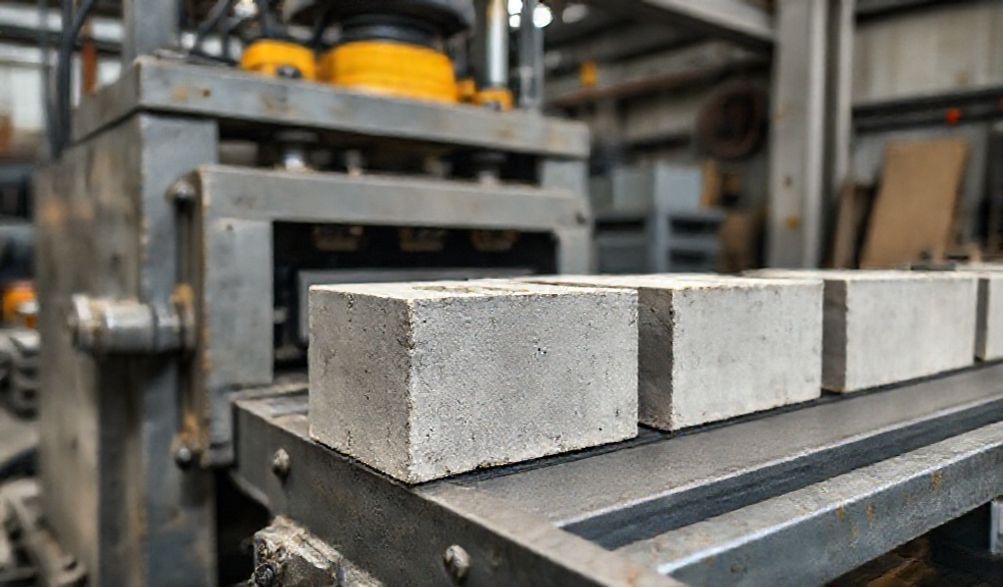
Кирпич ясаý машинасынын багасы: 2024-нҗи йылнын толук сатып алучы гетирмеси
Giriş
Özüňizde bir soňky jaý gurluşyk taslamasy üçin bir meýdanda durýandygyňyzy ýa-da kiçijik bir atelýedäki öz gurluşyk materiallary işiňizi giňeltmek barada arzuw edýändigiňizi göz öňüňize getiriň. Wizýa anyk: öz kerpiçleriňizi öndürmek hiliniň gözegçiligini, üpjün ediş zynjyrynyň garaşsyzlygyny we täze girdeji çeşmesini wada edýär. Ýöne soňra, amaly sorag gelýär:Buňa näçe tölemeli bolar?"Kiremit ýasap berýän maşyn bahasy" diýip onlaýn çalt gözleg geçirmek, birnäçe müňden birnäçe ýüz müň dollara çenli giň diapazony görkezýär. Muny nädip üpjün etmeli?
Bu senagatyň tejribeli hünärmeni hökmünde, diňe maşynyň bahasyna üns bermek, pes peýdaly maýa goýuma çalt ýol bolýandygyny aýdyp bilerin. Hakyky bahasy, onuň tutuş durmuş dowamyndaky jemi gymmatlygynda ýatýar. Bu gollanma, öndürijileriň düzgünlerini analiz etmek, iş eýeleri bilen gürleşmek we kerpiç öndürişiniň hakyky ykdysadyýetini düşünmek ýaly ýyllaryň dowamynda düzüldi. Biziň maksadymyz diňe bahalary sanawlamak däl-de, öndüriş maksatlaryňyz we büdjetiňiz bilen gabat gelýän gymmatlyk esasynda karar çykarmak üçin gerekli esaslandyryşy size berip bilmekdir.
Biz bahany kesgitleýän faktorlary düşündireris, dürli maşyn görnüşleri üçin 2024-nji ýylyň aýdyň baha aralyklaryny hödürleris, köplenç gözden gaçýan gizlin çykdajylary açarys we, iň möhümi, siziň goýmuşyňyzyň haçan özünüň bahasyny çykarjakdygyny hasaplamagy görkezeris. Kesgitlenen bahalar bazaryň ýagdaýy bilen üýtgese-de, biz gözden geçireris baha kesgitlemek prinsipleri siziň iň gymmatly guralyňyz bolup galar. Geliň, bahadan daşary çykalyp, peýdaly goýum üçin esas dözelim.
Кирпич ясаý машинасынын багасыны белгилейан факторлары түшүнмек
Kiremit ýasama maşynlarynyň bahalarynyň üýtgemesi tesadüfýet däl. Bu, inženerlik, materiallar we mümkinçilikleriň gönüden-göni aňladysydyr. Bu bölekleri düşünmek, gymmatlygy düşünmek üçin ilkinji ädimdir.
Esasy Maşın Görnüşi we Awtomatlaşdyryş Derejesi
Bu, bahanyň iň uly sebäbidir. Awtomatlaşdyrmanyň derejesi iş güjü talabyny, önümçiligiň tizligini we amaly çylşyrymlylygy kesgitleýär.
- Elderly Machines:Tamamyla adam zähmeti bilen garyndyrylan, iýmitlendirilen we gysylan. Olaryň ...iň pes başlangyç çykdajyammaiň ýokary dowam edýän işçilik çykdajysyweýrançylyk we iň pes önüm.
- Ýary-awtomatik maşynlar:Olar deňagramlylygy saklaýar. Olar, köplenç gidrawliki ýa-da mehaniki ulgam bilen, çuňlaýyş we gowşurma prosesini awtomatlaşdyrýar, ýöne çig materiallary el bilen ýüklemek ýa-da taýar bloklary aýyrmak zerur bolup biler. Bu, başlangyç goýumyny dolandyrylyp boljak derejede saklap, öndürişi ep-esli artdyrýar.
- Doly Awtomatik Maşynlar (ýa-da Zawodlar):Bulary tamamlanan önümçilik hatlarydyr. Olar awtomatik material berilmesini, garyşdyrmany, galyplamany, berkitmegi we käwagt ýygnamak/palletirlemegi birleşdirýär. Iş güýji esasan gözegçilik we serişdeçilik üçin gerek bolýar.ýokary başlangyç goýumHer bir blok üçin uly önüm we az iş hojalyk çykdajylary bilen aklaýýar.
Önümçiligi (Blok/Sagat):Her bir awtomatlaşdyryş kategoriýasynda, baha kuwwatlylyga görä üýtgeýär. Sagatda 1,000 blok öndürýän maşyn, 5,000 blok öndürýän maşyndan has arzan bolar, eger-de ikisi hem ýarym-awtomatik bolsa hem. Hemişe bahany subut edilen önüm çykyş kuwwatlylygy bilen baglanyşdyryň.
Esasy Bölümler we Gurluş Sypaty
Two machines may look similar, but the quality of their components dictates longevity, maintenance frequency, and brick consistency.
- Kalypa Sypaty we Materialy: The mold defines your final product. High-chromium alloy steel molds resist abrasion from cement and aggregate far better than mild steel, lasting years longer and producing bricks with sharper edges. This quality comes at a premium.
- Gidrawlik Sistema vs. Mekaniki Sistema: Hydraulic systems offer greater pressure control, leading to denser, stronger bricks, and are generally more durable under constant use. They are typically more expensive than purely mechanical lever/press systems but offer superior performance and consistency.
- Frame and Structure: A machine designed for high-volume production needs a robust, vibration-resistant frame, often made from reinforced steel plates. A lighter frame might save cost initially but will lead to more downtime and alignment issues.
Brand, Origin, and After-Sales Support
- Premium International Brands vs. Reliable Local Manufacturers: Established European or North American brands often command higher prices due to advanced R&D, stringent quality control, and global brand recognition. However, many manufacturers in countries like China, India, and Turkey now produce high-quality, reliable machines at a more competitive price point. The key is vetting the manufacturer thoroughly.
- The Real Cost of Support: A cheaper machine with no local technical support or a 6-month wait for spare parts can become a very expensive paperweight. The availability of on-site training, a comprehensive warranty (1+ years), and a ready inventory of spare parts is a critical part of the value equation. This support network has a cost built into the machine’s price.
Price Ranges for Different Types of Brick Making Machines
(Note: Prices are indicative for 2024 and can vary based on configuration, brand, and region. They are meant to provide a framework for budgeting.)
Manual & Small-Scale Machines (Economy Range: $1,000 – $10,000)
- Iň Gowy: Entrepreneurs starting a small business, community projects, producing specialty bricks (like landscape pavers) in low volume, or for on-site production on a single construction project.
- What to Expect: These are often simple, mechanical press machines (like the popular “egg-laying” mobile types) or small stationary manual presses. Production is labor-intensive, with output ranging from 200 to 1,500 blocks per 8-hour day, depending on crew size.
- Mysal: A basic manual concrete interlocking block machine might cost between $2,500 and $5,000.
Semi-Automatic Machines (Mid-Range: $10,000 – $50,000)
- Iň Gowy: Growing block yards, medium-scale construction companies supplying their own projects, and businesses looking to seriously enter commercial production with a balanced investment.
- What to Expect: This range includes robust stationary machines with hydraulic systems, automatic vibration and compression, and possibly automatic pallet feeders. Output can range from 800 to 3,000+ blocks per hour. You are paying for dramatically higher output and significantly reduced labor per block.
- Mysal: A quality semi-automatic hydraulic machine producing hollow blocks, with a production capacity of 2,000 blocks per hour, could fall in the $25,000 – $40,000 range.
Fully Automatic Stationary Plants (High Investment: $50,000 – $250,000+)
- Iň Gowy: Large-scale commercial brick and block manufacturing plants, major infrastructure contractors, or businesses aiming to dominate regional supply.
- What to Expect: This is a complete factory in a line. It includes automatic batching plants, mixers, conveyor systems, the core brick machine, curing systems, and stackers. Labor is minimal (2-4 operators for the entire line). Production can easily exceed 5,000 to 10,000+ blocks per hour.
- Justifying the Cost: The ROI comes from unparalleled scale, minimal unit labor cost, and consistent, high-quality output that can secure large contracts.
Mobil Gurluşyk Bloklary Ýasama Maşynlary
- Price Considerations: These specialized machines, mounted on a trailer for on-site production, typically fall into the $15,000 – $60,000 range. Their price is driven by their unique value: eliminating transport costs for finished blocks. A medium-capacity mobile hydraulic block maker might cost $30,000-$40,000.
The Hidden Costs of Owning a Brick Making Machine
The invoice price is just the beginning. A savvy buyer budgets for the total cost of ownership.
Installation, Foundation, and Utilities
- Site Preparation: A stationary plant, especially a large automatic one, requires a level, reinforced concrete foundation. This is a significant civil work cost.
- Güýç talap edýän zatlar: Semi- and fully-automatic machines often require three-phase industrial power supply. Upgrading your site’s electrical infrastructure can be costly.
- Utilities: Factor in the ongoing cost of electricity and water for the production process.
Raw Material Handling Systems
The machine itself needs to be fed. Costs can include:
* Feeders and Hoppers
* Pan or Twin-Shaft Mixers ($3,000 – $20,000+)
* Conveyor Belts to transport raw material or finished blocks.
* Curing Racks or Chambers.
Operational Costs: Labor, Power, and Maintenance
- Emegeý Even automatic plants need skilled operators and maintenance staff.
- Elektrik energiýasy sarp edişi: Hydraulic systems and vibrators are power-hungry; calculate your local industrial electricity rate.
- Preventive Maintenance: Regular oil changes, filter replacements, and part inspections are essential to avoid catastrophic breakdowns.
Spare Parts and Consumables (Molds, Pallets)
- Göwreler: Even the best molds wear out. Budget for replacement molds specific to your brick designs.
- Pallets: The steel or wooden pallets that bricks cure on undergo constant wear and need periodic replacement.
- Standard Spare Parts: Keep an inventory of common wear parts like hydraulic seals, vibration motor bearings, and springs.
How to Get the Best Value for Your Investment
Define Your Needs Clearly: A Self-Assessment
Answer these questions before you look at a single price:
* Production Volume: What is your daily/weekly block requirement now? In 2 years?
* Brick Types: Do you need to produce solid, hollow, interlocking, or paving blocks?
* Çig mal. Will you use concrete, fly ash, clay, or soil?
* Available Space & Power: What are the physical and electrical constraints of your site?
* Total Budget: What is your realistic budget, including hidden costs (add 20-30% to machine price)?
Where to Source: Direct Manufacturers, Local Dealers, or Import?
- Direct from Manufacturer (Overseas): Often the lowest FOB price. Risks: Complex logistics, customs clearance, potential language barriers, and uncertain after-sales support.
- Local Dealer/Distributor: Higher price, but includes import handling, local warranty, technical support, and spare parts inventory. This is often the best value for security.
- Local Manufacturer: Supports the local economy and minimizes logistics headaches. Compare their quality and specs rigorously against international standards.
Key Questions to Ask Before You Buy
- “What is included in the quoted price? (Delivery, installation, training?)”
- “What is the warranty period and what does it specifically cover?”
- “What is the lead time for critical spare parts, and are they stocked locally?”
- “Can you provide contact information for 2-3 current customers in a similar climate/region?”
- “Do you offer installation supervision and operator training?”
The Importance of Seeing a Demo or Visiting a Plant
If possible, always see the machine running. A video is not enough. Witness the build quality, noise level, ease of operation, and the quality of the finished blocks. Visit an existing customer’s plant to hear unfiltered feedback.
Calculating ROI: When Will Your Machine Pay for Itself?
This is the most critical calculation for your business plan.
A Simple ROI Framework
The core question is: How long until my net profit from the machine covers its total cost?
Simplified Formula:
Payback Period (Months) = Total Investment Cost / (Monthly Gross Profit - Monthly Operational Costs)
- Total Investment Cost: Machine price + shipping + installation + initial spare parts.
- Monthly Gross Profit: (Number of blocks sold per month * Profit per block).
- Monthly Operational Costs: Labor + raw materials + power + maintenance.
Case Study Examples
-
Scenario A (Semi-Auto Machine):
- Investment: $35,000
- Monthly Net Profit (after all ops costs): $3,500
- Payback: $35,000 / $3,500 = 10 months.
-
Scenario B (Small Manual Machine):
- Investment: $5,000
- Monthly Net Profit: $800
- Payback: $5,000 / $800 = 6.25 months. (While faster, the absolute profit ceiling is much lower).
Factors That Accelerate ROI
- High Local Demand & Stable Pricing
- Low-Cost, Consistent Raw Material Supply
- Efficient Operation minimizing waste and downtime.
- Diversified Product Range (making multiple block types for different markets).
Frequently Asked Questions (FAQ) About Brick Making Machine Prices
Q1: What is the cheapest brick making machine available?
A: You can find small, manual press machines online for as low as $1,000-$2,000. However, “cheapest” is rarely the best value. Consider production limits and high physical labor costs. It’s better to define the minimum viable output you need and find the most reliable machine in that budget.
Q2: Is it cheaper to import a machine from overseas?
A: The FOB (Free on Board) price may be lower, but you must add shipping, insurance, import duties, customs clearance fees, and local agent charges to get the “landed cost.” Often, the 15-30% savings on the base price is erased by these fees and the long-term risk of poor local support.
Q3: Can I get a good quality machine under $5,000?
A: In this budget, you are firmly in the manual machine category. You can get a decent quality manual machine for producing concrete blocks or pavers. For any form of automatic operation, this budget is unrealistic. Focus on build quality and mold material from reputable small-scale manufacturers.
Q4: Does a higher price always mean better quality?
A: Generally, yes—you pay for better components, engineering, and support. However, it’s not an absolute rule. Always cross-reference the price with the specifications (hydraulic pressure, motor power, production capacity), component brands (e.g., known hydraulic pump brands), and the depth of after-sales service. A mid-priced machine with excellent support can be better value than a premium machine with none.
Q5: Are there financing options available for these machines?
A: Yes. Many established manufacturers offer in-house financing or leasing plans. Local banks also provide equipment loans for industrial machinery. Some government agricultural or small-business development schemes also offer grants or subsidized loans for such capital investments. Always inquire directly.
Netije
Navigating the world of brick making machine prices is less about finding the lowest number and more about identifying the highest long-term value. The “right” price is the one that aligns with your production goals, operational capacity, and growth trajectory, ensuring the machine is an asset that drives profit, not a liability that drains it.
Your path forward is clear. Use the self-assessment checklist in this guide to crystallize your needs. Get detailed, specification-based quotes from at least three reputable suppliers—comparing not just price, but warranty, support, and delivery terms. Prioritize those who offer robust after-sales service. If the numbers align, request a custom ROI projection based on your local market conditions.
Remember, this purchase is the foundation of your production capability. Investing time in thorough due diligence now will pave the way for a sustainable and profitable brick-making business for years to come. Take this guide, use it as your roadmap, and make your investment with confidence.
<