
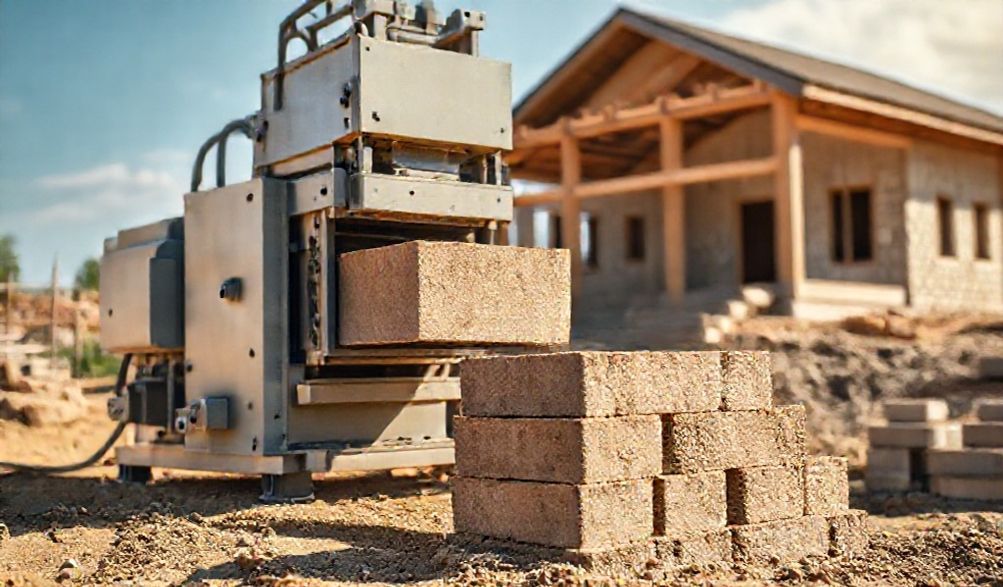
Гылыпландырылмаган топрак блоклары машыналарынын акыркы гулламасы: Тейярлыклы гурашдырмак
Giriş
Özümiziň aýak astymyzdaky topragyň özi, häzirki zaman gurluşygynyň iki uly problemine çözgüt bolup durýan bir dünýäni göz öňüňize getiriň: artýan material bahalary we uly ekologiýa täsiri. Arzan we abat jaýa eýe bolmak isleýän milliardlar we hakyky dowamlylyga göreşýän arhitektorlar we gurluşykçylar üçin bu göz öňüne getirme uzak ütopya däl. Bu, häzirki zaman üçin täzeden işlenip düzülen gadymy material: gysylan toprak bilen, bir blokdan bir bloka, şu gün gurulýar.
Bu ıŋylak rewolýusiýanyň merkezinde güýçli, ýöne köplenç gözden gaçýan gural ýatýar:Ыкма блоклары (ЫБ) машинасыBu gollanma, senagat bilimi, inženerlik usullary we tejribeli maglumatlar esasında düzüldi. Öz öyüňizi gurýan, hünärmen arhitektor ýa-da "ekoložik" telekeçi bolsaňyz-da, bu tehnologiýanyň syryny aýdyň görkezeris. Biz CEB maşynynyň näme, ýönekeý topragy güýçli gurluş blokuna öwürmegi, onuň berýän peýdalary we ony amatly ulanmak üçin zerur ädimleri gözden geçireris. Bu diňe bir gurluş usuly däl, eýsem berk, arzan we ekologik gurluşyň ýoludyr.
Kompressirlenen Toprak Blok Maşyny näme?
Esasy Funksiýa we Kesgit
Ыйык топрак блок машинасы, дымлы топракды ыгытып, тыгыз, геометриялык так курулуш блокларына айландырмак учин механизмлик яда гидравлик пресс болуп саналар. Онун негизги ишини душунмек аябан мухимдыр:гысымаBaşga toprak tehnikalary üçin enjamlardan tapawutlylykda, CEB maşyny önümine goşmaýar (material taýýarlamak aýratyn bolsa-da) ýa-da ony ýakmaýar. Ol toprak bölejiklerini birleşdirmek üçin uly, ýörite basyş ulanyp, diňe mehaniki güýç bilen güýçli, birleşdiriji birlik döredýär. Bu energetik çykdajyly peçde ýakmadan tapawudy, bu tehnologiýanyň örän dowamly bolmagyny üpjün edýär.
Gysgaça Taryh: Gadymy Usuldan Häzirki Zaman Inženerligine
Адамзатдың топракдан тургузулуш билен байланышы көп миңжыллыклары бардыр, бул көп асырлар бойы турган саман, топрак дувар жана кепе үйлерде көрүне.механикалык кысылганBloklar 20-nji asyryň ortasynda başlandy. Bir möhüm oýlap tapyş, 1947-nji ýylda...Синва Рам1950-nji ýyllarda işlenip düzülen el bilen dolandyrylýan press. Bu ýönekeý lever gurulmasy, güneşde gurudylan adobe bloklary bilen deňeşdirilende, dolandyrylýan ýokary basyşly ýygnamanyň has güýçli we yzygiderli bloklary öndürýändigini subut etdi.
Şol esaslandyryjy dizaýndan başlap, CEB maşynlary örän uly üýtgeşiklik geçirdi. Bu gün olar, ýokary derejeli netijelilik we ölçeg hödürleýän, diesel ýa-da elektrik dwigatelli kämil mobil bölümlerden başlap, gowulandyrylan el preslerine çenli giňişlik diapazonda özüni görkezýär. Bu ösüş gadymy material bilimi we häzirki inženerligiň ajaýyp birleşmesini aňladýar.
Çykgyt: Gysyldylan Toprak Bloklaryny (GTBlar) Düşünmek
Bu prosesiň netijesi Gysylan Toprak Blogy: ýiti gyraly we gaty, göniburçly blog. Onuň aýratynlyklary toprak doganlaryndan tapawutlanýar:
* Adobe-га қаршы:Adobe güneşde gurudylýar, mehaniki ýol bilen sygylmaýar. Ýokary basyşly ýygnaýyş sebäpli, CEB adatça has ýygjam, berk we ölçeglerde has birmeňzeş bolýar.
* гарадылан кирпичлер:Ýakylan kerpiçler ýokary temperatura (1000°C-den ýokary) şertinde bişirilýär, bu proses köp energiýa we uglerod çykaryşyna sebäp bolýar. Gysylan kerpiçler bolsa, güýjün ýakmazlykdan, ýöne gysyş we gowulama prosesi arkaly alýarlar, netijede energiýa täsiri diňe bir bölege barabar bolýar.
Sıkışdırılmış Toprak Blok Maşını Näme Ýaly Işleýär?
Esasy Amal Etmek Prensibi
Esasy ylmyň özi gözel we ýönekeýdir:Toprak + Optimal Çyglylyk + Ýokary Basyş = Berkitilen Blok.Basgyç toprak bölejiklerini ýakyn aragatnaşyga getirýär, bu bolsa sürtülme we ýapyşyklyk döredip, gurluş berkligini berýär. Azajyk çyglylyk ("süýjülik") bolsa, bölejikleri gysylma wagtynda işjeň suratda süýşürip we ýygnap bilelikde ýerleşmäge mümkinçilik berýär.
Step-by-Step Process Düzgünleşdirme
- Material taýýarlamak:Hemme ýer bilen başlanýar. Görnüşli ýer, köplenç gurluşyk meýdanynyň özünden alynýar we soňra uly daşlar, kökler we organiki maddalary aýyrmak üçin elenýär. Maýatnik, yzygiderli we birmeňzeş goşundy bolmalydyr.
- Namylylyk Üýtgetmek:Suw goşulýar, ýetmek üçinЫйсазлыктың оптимал дүрби (often identified by a standard or modified Proctor test). This is critical—too little water and the block won’t bind; too much and it becomes weak and prone to shrinkage cracks.
- Loading & Compression: The prepared mix is fed into a steel mold chamber. A hydraulic ram or mechanical piston then applies immense pressure—often ranging from 500 to over 2,000 PSI. This compresses the loose soil to about half its original volume.
- Чыгаруу жана дарылоо: The newly formed block is ejected from the mold onto a pallet. It is then carefully stacked and allowed to air-cure for several weeks. Curing is not drying; it’s a gradual process where the block gains strength through continued hydration and particle bonding. Stabilized blocks (with cement or lime) require moist-curing for maximum strength development.
Types of Machines: Manual, Mechanical, and Hydraulic
- Manual/Lever Presses: Operated by human power, these are low-cost, low-output machines (e.g., 50-100 blocks per day). Ideal for small-scale, community-led, or DIY projects where capital is limited and labor is available. They offer a profound hands-on understanding of the process.
- Mechanical (Mobile) Presses: These are the workhorses of commercial CEB production. Powered by diesel or electric engines, they use mechanical linkages to generate high pressure. They are often mounted on trailers for on-site mobility and can produce hundreds to thousands of blocks per day. This is the most common type for building single homes or larger developments.
- Hydraulic Presses: These industrial-grade machines use hydraulic systems to deliver the highest and most consistent pressure. They are typically stationary, designed for maximum output and block uniformity in a centralized production yard setting.
Key Benefits of Using a CEB Machine
Environmental & Sustainability Advantages
- Өте төмен эмбоди энергия: The most celebrated benefit. With no firing process, the energy input is primarily the compression force and material transport, resulting in a carbon footprint far lower than fired bricks or concrete blocks.
- Local & Abundant Material: It leverages the most local material possible—often the soil excavated for the building’s foundation. This drastically cuts transportation emissions, costs, and supply chain complexity.
- Fully Recyclable: At end of life, CEBs can be crushed and returned to the earth or re-moistened and re-pressed, creating a truly circular material loop.
- Excellent Thermal Mass: Dense earth has a high capacity to absorb, store, and slowly release heat. This naturally regulates indoor temperatures, reducing reliance on mechanical heating and cooling systems and delivering long-term energy savings.
Economic & Practical Benefits
- Арзандыгы: By valorizing on-site soil, material costs can be reduced by 50% or more compared to conventional masonry. The major investment shifts to the machine and skilled labor.
- Durability & Strength: When properly formulated and stabilized, CEBs can achieve compressive strengths that meet or exceed those of standard concrete masonry units (CMUs), as per ASTM D1633 standards. They are highly durable against weathering.
- Fire, Pest, and Sound Resistance: Being mineral-based, they are non-combustible (fire-resistant). They are also immune to termites and rodents and provide exceptional acoustic insulation due to their mass.
- Empowerment & Skill Development: CEB technology is scalable and teachable. It enables communities to build for themselves, fostering local skill development and reducing dependency on imported materials and specialized labor.
Critical Considerations Before You Buy or Rent
Soil Suitability: The Most Important Factor
Not all dirt is building material. The ideal soil is a “rammed earth mix” containing:
* Лай (15-30%): Acts as the binder.
* Silt (10-20%): Fills voids.
* Sand & Gravel (50-75%): Provides the skeletal structure and strength.
Action: Before any machine purchase, invest in professional lab testing. Supplement this with simple field tests like the jar test (to see soil stratification) and the ribbon test (to gauge clay plasticity).
Production Capacity & Project Scale
Match the machine to your project’s scope. A small manual press might be perfect for a garden wall or shed. Building a 2,000 sq. ft. home, however, could require 10,000+ blocks, making a mechanical press a necessity to complete production in a reasonable timeframe. Calculate your total block need and research machine output in blocks per hour.
Stabilization: When and Why It’s Needed
Stabilization involves adding a small percentage (typically 3-10%) of a binder like Portland cement or hydrated lime to the soil mix.
* Purpose: It significantly increases compressive strength, reduces erosion from driving rain, and minimizes water absorption and expansion. It is often considered essential in climates with significant freeze-thaw cycles or heavy rainfall.
* ТӨЛЕМ-АЛЫШ: Stabilization increases cost, embodied energy, and can reduce the block’s vapor permeability (its ability to “breathe”).
Machine Specifications to Compare
When evaluating machines, scrutinize these key specs:
* Pressure Rating: Measured in PSI or MPa. Higher pressure generally yields denser, stronger blocks.
* Block Size & Shape Options: Can it produce different thicknesses or interlocking shapes?
* Power Source & Fuel Efficiency: Diesel, electric, or manual? What is the operating cost?
* Portability & Set-Up: Is it trailer-mounted? How many people are needed to operate it?
* Build Quality & Support: Is it made of durable steel? What is the warranty? Is training and technical support available? Reliable after-sales service is a critical, often overlooked factor.
Getting Started with Your CEB Project
Step 1: Education and Feasibility Study
Begin with knowledge. Research local building codes—some regions have specific standards for earth construction (like New Mexico’s Earth Building Code). Study climate-appropriate designs (e.g., wide eaves for wet climates). Analyze case studies from similar environments to understand best practices and potential pitfalls.
Step 2: Soil Testing and Mix Design
This step is non-negotiable. Send soil samples to a geotechnical lab for a full analysis. Based on the results, develop a mix design—the precise recipe of soil, stabilizer (if any), and water. Make hundreds of test blocks with this mix, vary the parameters, and then have the best ones tested for compressive strength. This upfront work prevents costly failures later.
Step 3: Selecting the Right Machine Partner
Choosing a supplier is as important as choosing the machine. Look for:
* A proven track record and verifiable project portfolio.
* Transparency about machine capabilities and limitations.
* Comprehensive operator training offerings.
* Availability of spare parts and responsive technical support.
* Willingness to connect you with previous customers for references.
Step 4: Training, Prototyping, and Production
Never start full production on day one. Use the first week for intensive crew training and prototyping. Fine-tune the mix, master the machine’s operation, and establish efficient workflow patterns for material handling, block stacking, and curing. This period of practice ensures quality and efficiency for the entire production run.
Frequently Asked Questions (FAQ)
Q1: How strong are compressed earth blocks?
A: With proper soil grading and stabilization (e.g., 5-8% cement), CEBs can routinely achieve compressive strengths of 600 to 1,200+ PSI, which meets or exceeds the minimum requirement for many load-bearing concrete block applications (ASTM C90). Unstabilized blocks are weaker but can still be suitable for non-structural infill or in arid climates.
Q2: Are CEB buildings suitable for wet or cold climates?
A: Yes, but they require good boots and a good hat. This means:
* A raised, moisture-proof foundation.
* High-quality stabilization for erosion resistance.
* Wide roof overhangs to protect walls from driving rain.
* A vapor-permeable yet protective exterior plaster.
Their high thermal mass is actually a major asset in cold climates, storing passive solar heat.
Q3: How much does a CEB machine cost?
A: Costs vary enormously by type and capacity:
* Manual Presses: $1,500 – $5,000
* Mid-Range Mechanical Presses: $15,000 – $40,000
* High-Capacity Hydraulic Presses: $50,000 – $100,000+
Consider this an investment offset by massive material savings. Renting is also a viable option for single projects.
Q4: Can I make the blocks myself without a machine?
A: For true гысылдырылан earth blocks, a machine is essential to achieve the consistent density and strength that define the material. You can create adobe blocks (sun-dried, molded) without a press, but they have different structural properties, dry slower, and are less dimensionally uniform.
Q5: Where can I see examples of CEB buildings?
A: Renowned examples include many structures at the Auroville Earth Institute in India and various Earthship homes globally. Excellent online resources are the “Earth Architecture” website and the project galleries of major machine manufacturers like Vermeer or Advanced Earthen Construction Technologies (AECT).
Netije
The compressed earth block machine is far more than a piece of construction equipment. It is a catalyst for change, transforming one of our planet’s most abundant resources into safe, affordable, and beautiful shelter. Its value proposition—blending environmental stewardship with economic pragmatism—is powerful and increasingly relevant.
Success, however, hinges on a triad: the right technology (a reliable machine), applied expertise (soil science and structural understanding), and trustworthy execution (meticulous curing and detailing). This guide provides the foundation. The next step is yours. Begin with a soil test. Connect with the global community of earth builders. Consult with reputable engineers and machine suppliers. By embracing this method, you’re not just planning a building; you’re investing in a more resilient, sustainable, and empowered future, built from the ground up.
<