Кирпич Өндүриш Жабдыктарында Автоматлаштырылган Денҗелериң Стратегиялык Гид
Giriş
Кирпич өндүриш жабдыктарының ландшафтында автоматтык жана кол машиналарының айырмашылыгы, жөнөкөй иш стили тандоодан ашык нерсени билдирет; бул өндүриш курулушунун бүтүн бизнес моделин, масштабдаштырылуучулугун жана базардагы орнун аныктайт.
Спектрды анықлау: Адам күшімен жүргізілетіннен толық автономды жүйелерге дейін
Kiremit enjamlarynyň klassifikasiýasy, adam gatnaşygyň yzygiderli mehaniki we elektronik ulgamlaryň ornuny alýan awtomatlaşdyryş dowamy hökmünde düşünmek has amatlydyr.
- Колданма Кирпич Машиналары: Адам Күчү Баш Дүйүүр
- Bular esasan, işlemiň her bir basgançagy üçin doly derejede adam fiziki güýjüne we kontroline bagly bolan mehaniki gurallardyr. Operator, çyg malzemeni galypa el bilen ýerleşdirmek, gysma güýjüni ulanmak üçin bir düwmäni ýa-da uçurylýan çarhyň mehanizmini işe girizmek, soňra bolsa düzülen kerpiji el bilen çykarmak we gurytmak üçin ýerleşdirmek üçin jogapkär. Maşynyň özüniň esasy funksiýalary üçin garaşsyz güýj çeşmesi ýok. Bu prosesiň tutuş ritmi, hiliniň ylalaşyjylygy we önümi operatoryň ussatlygyna, güýjüne we çydamlylygyna göni baglydyr.
- Ýary-awtomatiki Kerpiç Maşynlary: Gibrid Geçiş Noktasy
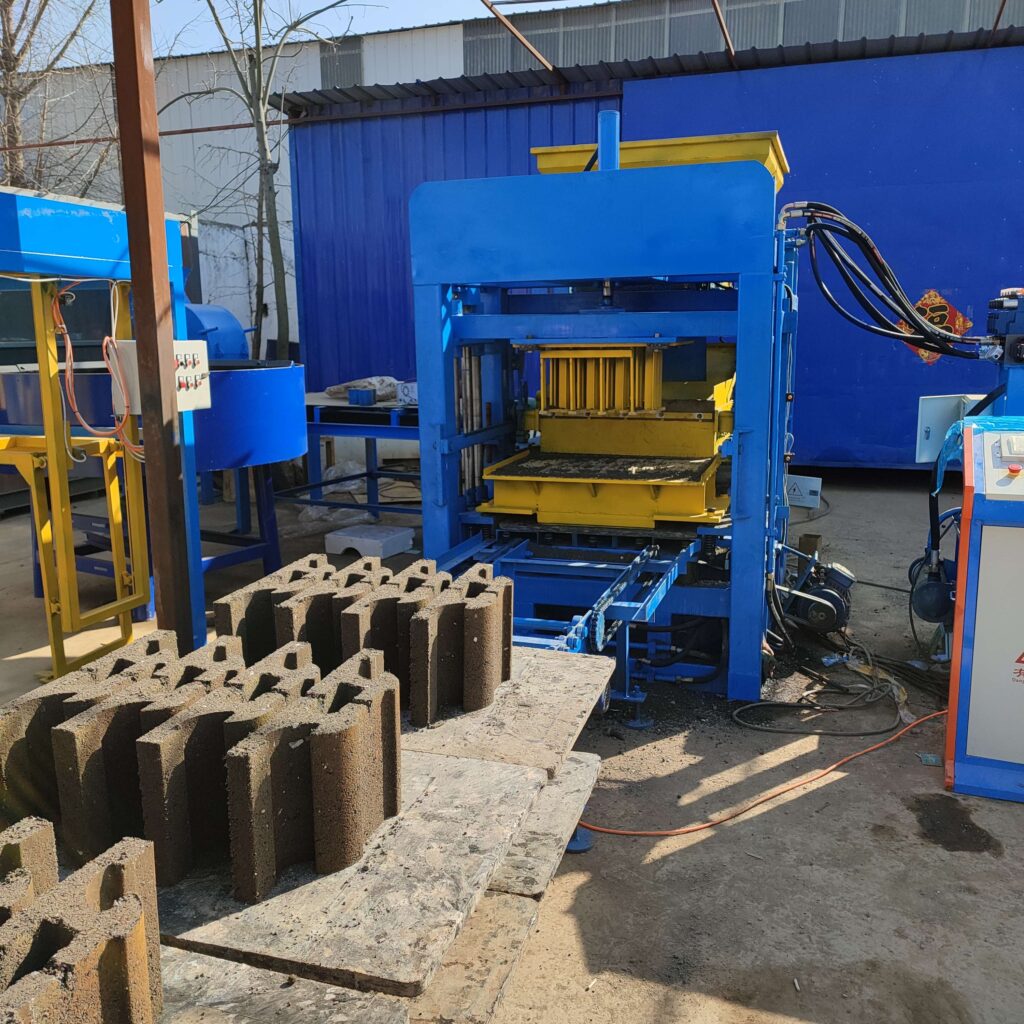
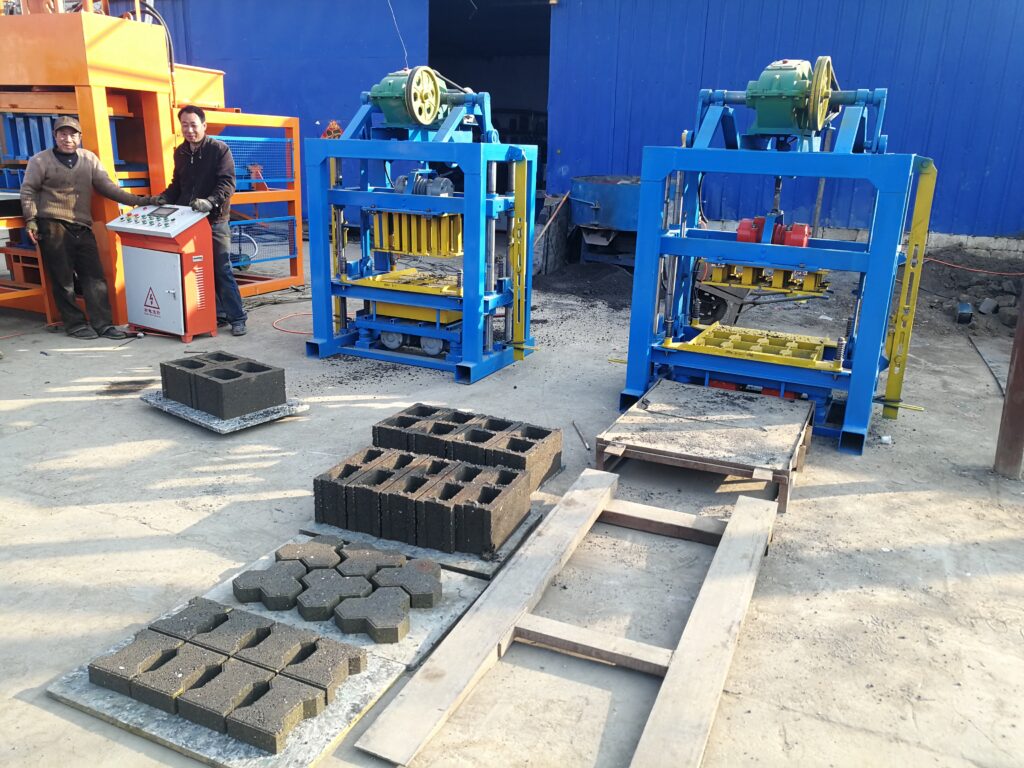
- Bu kategoriýa, köplenç elektrik motorunyň gidrawliki nasos ýa-da mehaniki pressi herekete getirmegi arkaly, döwüriň iň agyr bölegi bolan – gysmagy mehanizirläýär. Operatoruň roly, güýji üpjün etmekden prosesi dolandyrmaga geçýär. Olar maşyny (ýa-da kiçi bunkeri) el bilen doldurýarlar we köplenç gysmak döwrüni düwmä ýa-da lewenden başlaýarlar. Soňra maşyn awtomatiki usulda gysmagy we çykarmagy ýerine ýetirýär. Operator materiallary işlemek, palet ýerleşdirmek (eger ulanylýan bolsa) we kerpiçleri aýyrmak üçin esasy ähmiýete eýe bolup galýar. Bu dereje, fiziki ýüklemäni azaldýan, şol bir wagtda doly awtomatlaşdyrmadan has pes girijilik bahasyny saklaýan deňagramlylygy üpjün edýär.
- Doly Awtomatik Kerpiç Maşynlary: Integrirleşdirilen Sistema Awtomatlaşdyrmasy
- Bu, insanyň girmegi diňe gözegçilik, gözleýiş we adaty ýerine ýetiriş bilen çäklendirilen doly öndüriş ulgamydyr. Olar birnäçe awtomatlaşdyrylan kiçi ulgamlary birleşdirýär:
- Awtomatlaşdyrylan Material Üpjünçiligi:Uly ýokarydan ýerleşdirilen uly bunkerden konweýerler ýa-da berijiler arkaly.
- Awtomatlaşdyrylan palet aýlawy:Ýapyk ulgam presse paletleri girizýär, olary ýerleşdirýär we ýüklenen paletleri daşlaýar.
- Programmalyşdyrylyp Dolandyryş:PLC bütin birleşdirilen tsikly - doldurmak, basmak, çykarmak we üýşürmek işlerini dolandyrýar, köplenç bir operator kontrol panelinden gözegçilik edýär.
- Integrirlenen Önümleriň Gaýtadan Işlenişi:Awtomatlaşdyrylan ýygnagylar, robot kollar ýa-da ötüriji hatarlar ýaşyl kerpiçleri gowşadyş meýdanlaryna geçirýär.
- Операторуň roly maşyna saklaýjysy we proses dolandyryjysy hökmüne öwrülýär.
- Bu, insanyň girmegi diňe gözegçilik, gözleýiş we adaty ýerine ýetiriş bilen çäklendirilen doly öndüriş ulgamydyr. Olar birnäçe awtomatlaşdyrylan kiçi ulgamlary birleşdirýär:
Салыстырмалы талдау: Көп өлчәмдүү баалоо
بұл жүйелердің арасында таңдау бірнеше маңызды бизнес және операциялық параметрлер бойынша теңгерімді талап етеді.
- Iş güji zerurlygy we ussatlyk profili
- Gollanma:Ýokary iş güýji. Maksatly önüm almak üçin köp sanly ýönekeý ýa-da ýarym hünärli işçiler talap edilýär. Öndürijilik işçileriň sanyna we fiziki kuwwatyna göni proporsionaldyr.
- Ýary-awtomatik: Reduced physical labor but still requires consistent operator attendance. May need 1-2 operators per machine for feeding and product handling. Basic machine operation skills are needed.
- Doly Awtomatik: Drastically reduced direct labor. A single skilled operator can oversee multiple machines or an entire line. The required skill set shifts towards basic mechatronics, PLC interface literacy, and preventative maintenance.
- Production Capacity and Output Consistency
- Gollanma: Very low and highly variable output (e.g., 200-500 bricks per 8-hour shift, per machine). Consistency in brick weight, density, and dimensions depends entirely on the operator’s consistent technique, which is difficult to maintain.
- Ýary-awtomatik: Moderate and more stable output (e.g., 800-2,500 bricks per 8-hour shift). The machine ensures consistent compaction pressure and cycle time, but variations in manual feeding can still cause some product variance.
- Doly Awtomatik: High and extremely consistent output (e.g., 3,000-15,000+ bricks per 8-hour shift). The automated, repetitive cycle guarantees near-identical product quality for every unit, batch after batch. Output is predictable and scalable.
- Initial Capital Investment and Operational Economics
- Gollanma: Very low initial capital outlay. The primary cost is the machine itself. However, the cost-per-brick is high when factoring in intensive labor costs and low output.
- Ýary-awtomatik: Moderate capital investment. Offers a favorable balance for small to medium enterprises (SMEs) by increasing output without a quantum leap in price. Operational costs include power and moderate labor.
- Doly Awtomatik: High initial capital investment. However, the cost-per-brick is typically the lowest in the long run due to high output, minimal labor costs, and optimized material use. Justification is based on volume and return on investment (ROI) calculations.
- Product Quality and Technological Sophistication
- Gollanma: Quality is artisan-like and variable. Suitable for niche, non-standardized products but risky for contracts requiring strict adherence to engineering specifications.
- Ýary-awtomatik: Good and reliable quality for standard bricks. Capable of meeting common commercial standards, as key parameters are machine-controlled.
- Doly Awtomatik: Excellent and precise quality. Essential for high-specification products like precision interlocking pavers, engineered masonry units, or where certification (e.g., ASTM, ISO) is required. Often includes data logging and quality monitoring features.
Strategic Selection Criteria for Client Advisory
Choosing the appropriate level of automation is a strategic decision. Key client assessment points include:
- Market Demand and Project Scale
- Is the client supplying a local, small-scale housing project (favoring semi-automatic) or bidding on large infrastructure contracts requiring guaranteed, high-volume supply (necessitating fully automatic)? The scale and consistency of demand are primary drivers.
- Capital Availability and Investment Horizon
- What is the client’s access to finance? A manual/semi-automatic machine can be a bootstrapping tool to generate capital for future automation. A fully automatic line requires significant upfront capital but a faster ROI if the market is ready.
- Local Labor Costs and Skill Availability
- In regions with low labor costs and limited technical training, semi-automatic machines may offer the most practical economic balance. In high-wage economies or areas with a skilled technician base, the labor-saving calculus strongly favors full automation.
- Business Growth Trajectory and Scalability
- A semi-automatic machine can be a starting point. Some systems are designed to be “automation-ready,” allowing for the later addition of pallet circulators and auto-feeders. Fully automatic lines are the end-state for scalable, industrial production.
The Hidden Considerations: Beyond the Purchase Price
- Infrastructure and Utility Requirements
- Gollanma: Requires minimal infrastructure—a flat, sheltered space.
- Ýary-awtomatik: Requires a reliable electrical connection of moderate power.
- Doly Awtomatik: Demands robust three-phase electrical supply, significant floor space for the production line and curing area, often compressed air, and a stable concrete foundation.
- Maintenance Complexity and Downtime Risk
- Gollanma: Simple mechanical maintenance; low skill required. Downtime has limited financial impact.
- Ýary-awtomatik: Requires basic hydraulic and electrical troubleshooting skills.
- Doly Awtomatik: Demands advanced preventative maintenance schedules and access to technical support for PLCs, sensors, and complex mechanical systems. Unplanned downtime is very costly, making service agreements crucial.
- Flexibility and Changeover Time
- Gollanma: Highly flexible for custom one-off products; changeover is instant.
- Ýary-awtomatik: Relatively easy mold changeovers; good for short production runs of different products.
- Doly Awtomatik: Changeovers (e.g., mold and program changes) can be more time-consuming. Economically justified for long runs of a single product type, though advanced lines offer faster changeover features.
Netije
For the equipment distributor, the conversation about automation is a conversation about the client’s business future. There is no universally “best” option; only the most appropriate solution for a given set of commercial, logistical, and aspirational conditions. A manual machine is a tool for livelihood creation in a micro-enterprise. A semi-automatic machine is the engine for a stable, growing small business. A fully automatic line is the cornerstone of an industrial-scale operation competing on quality, cost, and volume. By comprehensively evaluating factors from local labor economics to client growth ambitions, distributors can provide invaluable strategic guidance. This consultative approach—positioning the right level of automation as a key to unlocking specific market opportunities—builds enduring partnerships and establishes the distributor as an essential architect of their clients’ success in the competitive construction materials industry.
Frequently Asked Questions (FAQ)
Q1: Can a semi-automatic machine be upgraded to a fully automatic one later?
A: In some cases, yes, but with important caveats. The core press of a well-designed semi-automatic machine might be compatible with add-on modules like an automatic feeder, a pallet return system, and a stacker. However, this depends entirely on the original machine’s design (frame strength, control system compatibility, etc.). The upgrade cost can approach that of a new system, and performance may not match a purpose-built automatic line. It is crucial to discuss “automation readiness” with the manufacturer at the initial purchase if this is a potential future path.
Q2: Which automation level offers the fastest return on investment (ROI)?
A: The ROI is highly context-dependent. In a low-wage, small-market setting, a yarımawtomatik maşyn often offers the fastest and most reliable ROI due to its moderate cost and significant productivity jump over manual labor. In a high-volume, competitive market or a region with high labor costs, a doly awtomatik maşyn, despite its high initial cost, can achieve a faster ROI due to its very low per-unit production cost and high output, provided it operates near capacity.
Q3: How significant is the difference in final product quality between a semi-automatic and a fully automatic machine?
A: While a well-operated semi-automatic machine can produce bricks that meet standard specifications, a fully automatic machine provides superior consistency. It eliminates human variability in feeding and cycle initiation, ensuring every brick is compressed with identical pressure and timing. This leads to tighter tolerances on dimensions, more uniform density and strength, and a more consistent visual appearance—critical for large, high-profile projects where batch uniformity is non-negotiable.
Q4: What are the typical power requirements for each tier?
A:
- Gollanma: No external power required.
- Ýary-awtomatik: Typically requires a standard single-phase or three-phase electrical connection, with power ratings commonly ranging from 5 HP to 15 HP for the motor driving the hydraulic system.
- Doly Awtomatik: Invariably requires a robust three-phase electrical supply. Total connected power can range from 25 HP to over 100 HP, accounting for the main press, conveyor motors, mixer, hydraulic power units, and control systems.
Q5: Is operator safety a differentiator between these types?
A: Absolutely. Elli maşynlar carry high risks of repetitive strain injury and physical fatigue. Ýary-awtomatik maşynlar introduce moving parts and hydraulic pressure; operators must keep hands clear during the auto-cycle, requiring basic safety training. Fully automatic machines pose the highest inherent mechanical risk due to multiple synchronized moving parts but are equipped with comprehensive safety features like guarded zones, light curtains, emergency stop circuits, and lock-out/tag-out procedures, making the overall environment safer when protocols are followed. The risk shifts from physical strain to one of managing complex machinery.