
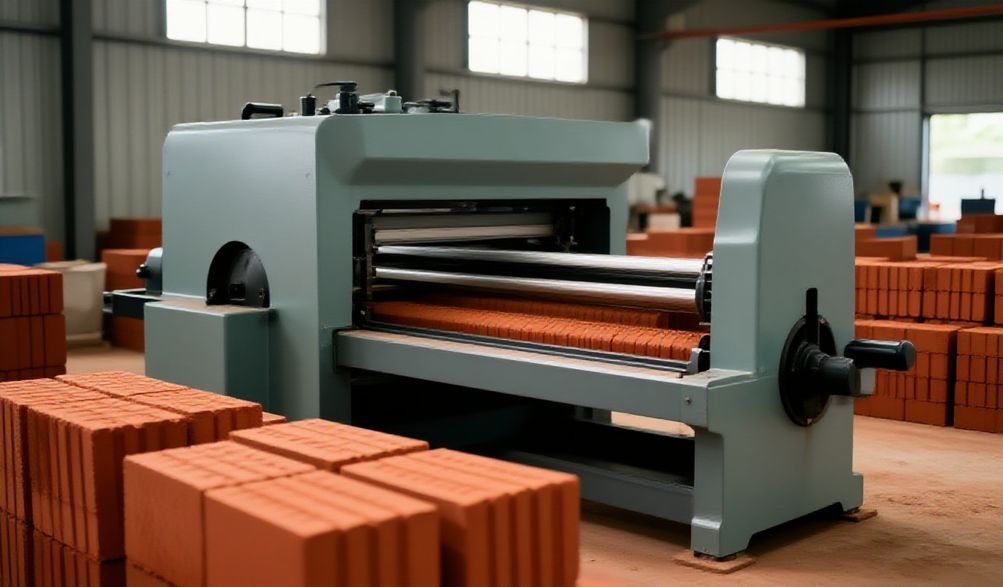
தமிழ்நாட்டில் களிமண் செங்கல் தயாரிக்கும் இயந்திரங்களுக்கான இறுதி வழிகாட்டி (2026)
Panimula
Ang skyline ng Tamil Nadu ay isang patunay sa walang hanggang tradisyon na nagtatagpo sa modernong pag-unlad. Mula sa sinaunang mga templo ng Madurai hanggang sa mga umuusbong na koridor ng IT sa Chennai, ang simpleng ladrilyong luwad ay nananatiling matatag, na siyang bumubuo sa mismong gulugod ng pagkakakilanlan ng arkitektura ng estado. Sa kasalukuyan, ang pamana na ito ay pinalalakas ng isang walang ulirang pag-alsa sa konstruksiyon—malalaking proyekto ng imprastraktura, ambisyosong mga programa sa pabahay, at masiglang mga pag-unlad pangkomersyo ang nagtutulak sa pangangailangan para sa mga ladrilyo sa mga bagong tuktok.
Gayunman, para sa maraming tagagawa at negosyante, ang pagtugon sa pangangailangang ito gamit ang tradisyonal na manwal na pamamaraan ay isang walang humpay na pakikibaka. Ang proseso ay labis na nakakapagod at nangangailangan ng maraming manggagawa, pinahihirapan ng hindi pantay na kalidad, at masyadong mabagal upang mapakinabangan ang kasalukuyang mga oportunidad. Ang mga hamon sa paghahanap ng bihasang manggagawa, pamamahala sa tumataas na gastos, at pakikipagkumpitensya sa mas malalaki at mekanisadong mga yunit ay totoo at nangangailangan ng agarang aksyon.
Ang solusyon ay nasa matalinong mekanisasyon. Ang modernongகளிமண் செங்கல் தயாரிக்கும் இயந்திரங்கள் தமிழ்நாடுang mga ito ay hindi lamang mga kagamitan; sila ay mga nagbabagong sistema ng negosyo na idinisenyo para sa kahusayan, kakayahang kumita, at hindi matatawarang kalidad. Ang gabay na ito ay binuo mula sa malalim na pananaw sa industriya, teknikal na pagsusuri, at pag-unawa sa natatanging industriyal at heograpikal na tanawin ng Tamil Nadu, kasama na ang mga tiyak na kondisyon ng lupa nito. Layunin naming magbigay ng mapagkakatiwalaang, mapagkakatiwalaang impormasyon na maaari mong pagkatiwalaan.
Sa komprehensibong gabay na ito, matututuhan mo ang iba't ibang uri ng makina na available, mahahalagang katangiang dapat isaalang-alang, kung paano kilalanin ang mga nangungunang supplier sa loob ng estado, isang malinaw na pagsusuri sa pamumuhunan at ROI, at mahahalagang pinakamahusay na gawi sa pagpapatakbo. Simulan natin ang pagtatayo ng pundasyon para sa iyong tagumpay.
டமிழ்நாட்டில் களிமண் செங்கல் தயாரிக்கும் இயந்திரத்தை ஏன் தேர்வு செய்ய வேண்டும்?
Ang pamumuhunan sa isang makina ng paggawa ng ladrilyo ay isang estratehikong desisyon sa negosyo. Sa konteksto ng dinamikong merkado ng Tamil Nadu, ito ay nagiging isang pangangailangan para sa paglago at pagpapanatili.
Ang Konteksto ng Pamilihan ng Konstruksiyon sa Tamil Nadu
Malinaw at makapangyarihan ang mga salik sa paglago. Ang mga inisyatibo ng pambansang pamahalaan tulad ng Pradhan Mantri Awas Yojana (PMAY) at mga proyektong pabahay na pinamumunuan ng estado ay lumilikha ng tuluy-tuloy na pangangailangan. Kasabay nito, ang pag-unlad ng mga industrial corridor, pagpapalawak ng komersyal na real estate, at mga pag-upgrade sa imprastraktura ng lungsod ay nagpapasigla sa pangangailangan para sa de-kalidad na mga materyales sa paggawa.
Ito ay nagdudulot ng kakaibang kalamangan para sa mga lokal na tagagawa. Ang Tamil Nadu ay may masaganang deposito ng de-kalidad na luwad. Ang paggamit ng lokal na luwad ay makabuluhang nagpapababa sa gastos sa pagdadala ng hilaw na materyales, nagbibigay-daan sa mas mahusay na pagkontrol ng kalidad mula sa pinagmulan, at sumusuporta sa ekonomiya ng rehiyon. Ang isang lokal na pagawaan na may makabagong makinarya ay nasa perpektong posisyon upang maging pangunahing tagasuplay para sa mga umuusbong na proyektong ito.
Mga Pakinabang Higit sa Tradisyonal na Pamamaraan ng Manwal
Ang paglipat mula sa manwal patungo sa mekanisadong produksyon ay nagdudulot ng mga tunay at nagbabagong-buhay na benepisyo:
- Kapansin-pansing Pagtaas sa Produksyon ng Output:Ang isang semi-awtomatikong makina ay kayang gumawa sa loob ng isang oras ng produkto na maaaring abutin ng isang buong araw para sa isang pangkat ng mga manggagawang manwal. Ang kakayahang mag-eskala na ito ay mahalaga para sa pagtanggap ng mas malalaking kontrata at pagpapalago ng iyong negosyo.
- Superyor at Pantay na Kalidad ng BrikAng mga makina ay naglalapat ng pare-parehong presyon at kawastuhan sa paghubog. Nagreresulta ito sa mga ladrilyong may pantay-pantay na sukat, mas mataas na lakas ng pagpiga, mas mahusay na mga gilid, at propesyonal na pagkakagawa—mga katangiang partikular na hinahanap ng mga arkitekto at tagapagtayo.
- Significant Reduction in Labor Costs and Dependency: While some operational roles remain, the heavy reliance on large numbers of skilled manual molders is eliminated. This reduces long-term labor costs and mitigates the risk of labor shortages.
- Optimized Use of Raw Materials: Automated mixing and precise molding minimize clay and water wastage. This not only cuts material costs but also aligns with more sustainable production practices.
- Faster ROI for Business Owners: The combination of higher output, lower per-unit cost, and the ability to command a better price for quality bricks leads to a significantly faster return on your machinery investment compared to stagnant manual operations.
Types of Clay Brick Making Machines Available in Tamil Nadu
The market offers a range of machines to suit every scale of operation. Understanding these types is the first step in making the right choice.
Manual / Manu-manong Paggawa ng Makina ng Ladrilyo
These are the entry point into mechanized production.
- Angkop Para Sa: Small-scale startups, rural entrepreneurs, self-help groups, or for producing bricks for in-house construction projects with low-volume needs.
- Mga Pangunahing Tampok: They are highly affordable, portable (often mounted on wheels), and require no electricity or diesel, making them perfect for areas with unreliable power. Operation relies on human force to compress the clay into molds.
Mga Semi-Awtomatikong Makina ng Paggawa ng Bato
This category represents the most popular choice for small to medium-scale enterprises (SMEs) in Tamil Nadu.
- Angkop Para Sa: Growing businesses aiming to supply local builders, housing projects, and the general market consistently.
- Mga Pangunahing Tampok: These machines strike an optimal balance. They use mechanical systems, often hydraulic or vibratory, for the critical mixing and compaction processes, while manual intervention is needed for feeding raw material and removing finished bricks. They offer a substantial boost in output and quality over manual machines while remaining relatively affordable to operate and maintain.
Mga Ganap na Awtomatikong Halaman sa Paggawa ng Briks
These are industrial-grade production lines designed for large-scale output.
- Angkop Para Sa: Established manufacturers aiming to supply major infrastructure projects, large construction companies, or become regional wholesalers.
- Mga Pangunahing Tampok: The process is entirely automated—from feeding raw clay and mixing to molding, curing, and stacking. These plants integrate conveyors, automated pallet systems, and sophisticated control panels. They require a higher initial investment but deliver massive output with minimal manual labor, ensuring the lowest cost per brick at high volumes.
Key Features to Consider Before Buying
Selecting the right machine requires careful evaluation of several technical and practical factors.
Production Capacity (Bricks Per Hour/Day)
This is the most critical specification. Industry practice shows that buying a machine with slightly more capacity than your current need is wise, allowing room for growth. Assess your target market, existing orders, and business plan. A machine producing 2,000-3,000 bricks per 8-hour shift might suffice for a local supplier, while a plant supplying a city may need 10,000+.
Brick Type and Size Compatibility
Determine what products you want to sell.
* Masinsinang Bricks: The standard for most construction.
* Hollow Bricks: Gaining popularity for their lighter weight and thermal insulation properties.
* Mga Bloke ng Paver: For landscaping and paving applications.
* Interlocking Bricks: Used in certain modern construction techniques.
Ensure the machine supports interchangeable molds. A reputable supplier in Coimbatore or Chennai should offer a variety of standard and custom mold options.
Power Requirement & Operational Costs
Machines come in electric motor or diesel engine variants.
* Kuryente: Cleaner, quieter, and generally cheaper to run, but dependent on Tamil Nadu’s industrial power supply and tariff.
* Diesel: Offers complete independence from the grid, crucial for locations with frequent power cuts, but involves fuel costs and maintenance.
Calculate the estimated daily power/fuel consumption to understand your ongoing operational expense.
Durability and After-Sales Service
This cannot be overstated. The machine must be built with robust materials (high-grade steel) to withstand the abrasive nature of clay and continuous operation. Crucially, verify the supplier’s after-sales support.
* Is there a local service center or technician network in Tamil Nadu?
* What is the warranty period?
* Are spare parts readily available? A machine is a long-term asset; reliable service ensures its longevity and your peace of mind.
Top Manufacturers and Suppliers in Tamil Nadu
Navigating the supplier landscape is key to a successful purchase.
How to Identify a Reputable Supplier
Look for these markers of a trustworthy partner:
* Subok na Rekord ng Tagumpay: Several years of operation and a strong client portfolio.
* Pisikal na Presensya: A manufacturing unit or service center located in Tamil Nadu’s industrial hubs like Coimbatore (the engineering capital), Chennai, TiruppuroHosur. This proximity is vital for support.
* Malinaw na Komunikasyon: Willingness to provide detailed specifications, clear pricing, and client references.
* Service Commitment: A documented warranty and a clear after-sales service agreement.
Leading Local Industrial Hubs
Tamil Nadu’s manufacturing strength is concentrated in specific districts, making them ideal starting points for your search:
* Coimbatore: Renowned as the “Engineering Hub of South India,” it hosts numerous machinery manufacturers with deep expertise in fabrication and automation.
* Chennai: The industrial and commercial capital, with suppliers catering to large-scale projects across the state and beyond.
* Other Districts: Areas like Tiruppur, Erode, and Madurai also have a significant presence of light and medium engineering units.
The Importance of Site Visits and Demos
Never buy based solely on a brochure or website. Insist on visiting the supplier’s workshop. Seeing the machine being assembled or tested builds confidence in their manufacturing quality. Request a live demonstration using clay similar to yours. If possible, ask to speak to one or two of their existing customers in Tamil Nadu. This first-hand feedback is invaluable for assessing performance and service reliability.
The Investment: Cost Analysis and ROI
A clear financial understanding turns an equipment purchase into a strategic investment.
Price Range Overview
Prices vary widely based on type, capacity, automation level, and brand. Here is a broad indicative range (exclusive of GST and transportation):
* Manual na Makina:₱50,000 hanggang ₱200,000
* Semi-Automatikong Makina: ₹ 3,00,000 to ₹ 15,00,000
* Ganap na Awtomatikong mga Halaman: ₹ 20,00,000 and can go significantly higher for large, customized setups.
Calculating Your Return on Investment (ROI)
You can create a simple projection:
1. Calculate Daily Cost: Machine EMI (if financed) + Daily Operational Cost (Power/Fuel + Labor for operation + Raw Clay).
2. Calculate Daily Revenue: (Number of Bricks Produced per Day) x (Selling Price per Brick in your local Tamil Nadu market).
3. Analyze: Daily Revenue minus Daily Cost gives you a rough daily profit. This will help you estimate your payback period. A well-run semi-automatic unit commonly reported by Tamil Nadu-based owners can see an ROI within 1.5 to 3 years, depending on scale and market efficiency.
Government Schemes and Financing
Explore financial support options:
* MSME Schemes: The Government of India and the Tamil Nadu government often have subsidy schemes or credit guarantee programs for manufacturing equipment purchases.
* Bank Loans: Most nationalized and private banks offer term loans for machinery under priority sector lending for MSMEs.
Consult with a local Chartered Accountant or the District Industries Centre (DIC) for the most current and applicable schemes.
Operational Best Practices and Maintenance
Owning the machine is the first step; operating it optimally ensures lasting profitability.
Preparing Tamil Nadu Clay for Optimal Results
Local soil conditions vary. For best results:
* Test Your Soil: A simple sedimentation test can determine the clay, silt, and sand ratio. Ideal brick-making clay typically needs a certain plasticity, which can be adjusted by adding sand (for less plasticity) or finer clay (for more).
* Control Moisture: The moisture content is critical. Clay that is too wet will stick; too dry will not compact properly. The “optimum moisture content” is usually determined by feel and experience—it should hold shape under pressure without oozing water.
* Remove Impurities: Stones, roots, and organic matter must be removed to prevent brick defects and machine wear.
Routine Maintenance Checklist
- Daily: Clean all clay residue from the mold, hopper, and mixing chamber. Check for loose bolts and nuts. Lubricate all moving parts as per the manual.
- Weekly: Inspect hydraulic hoses and connections for leaks. Check the oil level in the hydraulic tank and engine (if diesel). Tighten any vibratory mounts.
- Monthly: Conduct a thorough inspection of wear parts like mold liners, mixer blades, and compression plates. Replace as needed.
Troubleshooting Common Issues
- Poor Brick Strength: Usually caused by incorrect clay mixture (too much sand), insufficient compaction pressure, or improper curing.
- Bricks Sticking in Mold: Often due to clay being too wet or the mold surfaces not being cleaned and lubricated regularly.
- Surface Cracks: Can result from too-rapid drying (insufficient curing), excessive clay shrinkage, or uneven moisture content in the raw mix.
FAQ: Clay Brick Making Machine in Tamil Nadu
Q1: What is the average price of a clay brick making machine in Tamil Nadu?
Isalin ang teksto sa Filipino. I-output LAMANG ang isinalin na teksto. As outlined above, prices range from around ₹50,000 for basic manual machines to over ₹20 lakhs for fully automatic plants. The final cost depends entirely on capacity, automation, and features. We strongly advise getting detailed quotations from multiple suppliers in Coimbatore or Chennai for an accurate comparison.
Q2: Can I get a machine customized for a specific brick design?
Isalin ang teksto sa Filipino. I-output LAMANG ang isinalin na teksto. Yes, most reputable manufacturers offer custom mold design and fabrication services. You can produce bricks with unique profiles, textures, or interlocking patterns, allowing you to cater to niche architectural markets.
Q3: Is training provided for operating the machine?
Isalin ang teksto sa Filipino. I-output LAMANG ang isinalin na teksto. A trustworthy supplier will always provide comprehensive hands-on training for your operators at the time of installation. Confirm the duration and scope of training before finalizing your purchase order.
Q4: What is the typical lead time for delivery and installation?
Isalin ang teksto sa Filipino. I-output LAMANG ang isinalin na teksto. For standard models, lead time can be 2-6 weeks. For customized machines or large plants, it may extend to 8-12 weeks. Always get a written delivery commitment from your supplier.
Q5: Are there any pollution control norms to follow for a brick kiln/unit in Tamil Nadu?
Isalin ang teksto sa Filipino. I-output LAMANG ang isinalin na teksto. This is a crucial compliance question. Brick manufacturing units, especially if using kilns for firing, are subject to regulations. You must consult the latest guidelines from the Tamil Nadu Pollution Control Board (TNPCB). The norms cover emissions, water usage, and general environmental management. Ensuring your entire production process is compliant from the start is essential for lawful and sustainable operation.
Konklusyon
Investing in the right clay brick making machine in Tamilnadu is a decisive step toward modernizing your production, capturing a share of the state’s construction boom, and building a sustainable, profitable enterprise. It moves you from a cycle of manual limitations to a platform of scalable, quality-driven growth.
The future points towards even greater efficiency and sustainability, with trends like energy-efficient motors, recycling of waste materials, and improved curing technologies gaining ground. As you move forward, let this guide serve as your foundation. Conduct thorough research, prioritize suppliers with demonstrated kadalubhasaan and local karanasan, and always base your decisions on verified data and firsthand evaluations.
Ready to take the next step? Begin by shortlisting verified suppliers from Tamil Nadu’s industrial hubs, schedule site visits, and get detailed proposals tailored to your business vision. Your journey to becoming a leading brick supplier in Tamil Nadu starts with this informed decision.
<