
Ang Komprehensibong Gabay sa Pagbili ng Makina ng Interlocking Brick sa Nigeria (2026)
Panimula
Nakaharap ang Nigeria sa isang nakakagulat na kakulangan sa pabahay, na tinatayang lalampas sa 28 milyong yunit. Sa harap ng tumataas na gastos para sa semento, bakal, at mga imported na materyales sa paggawa, ang industriya ng konstruksyon ay nagsusumamo ng mga sustainable, cost-effective na alternatibo. Ang tradisyonal na paggawa ng ladrilyo ay kadalasang labor-intensive, nakakasama sa kapaligiran, at hindi pare-pareho ang kalidad, na lumilikha ng mga bottleneck para sa mga proyekto ng lahat ng laki.
Pasok ang makina ng interlocking brick—isang mapagbabagong piraso ng teknolohiya na muling humuhubog sa landscape ng konstruksyon sa Nigeria. Sa pamamagitan ng pagpapahintulot sa lokal na produksyon ng matibay, mortar-less na mga brick mula sa madaling makuha na lupa at kaunting semento, ang makina na ito ay nag-aalok ng isang makapangyarihang solusyon sa mga hamon ng pagtatayo ng ating bansa.
Ang komprehensibong gabay na ito ay hindi lamang teoretikal. Ito ay binuo batay sa malawak na pananaliksik sa merkado, konsultasyon sa mga praktikal na inhinyerong sibil ng Nigeria at matagumpay na mga tagagawa ng bloke, at isang masusing pagsusuri sa mga katotohanang pang-operasyon sa loob ng natatanging konteksto ng ating ekonomiya at imprastraktura. Sa pagtatapos ng artikulong ito, magkakaroon ka ng malinaw na pang-unawa sa mga uri ng makina na available, ang mga kritikal na salik para sa paggawa ng matalinong pagbili, isang makatotohanang pananaw sa mga gastos at ROI, at isang subok na estratehiya para sa paghahanap ng isang kagalang-galang na supplier sa Nigeria.
Ano ang Interlocking Brick Machine at Bakit Ito Nagbabago sa Konstruksyon sa Nigeria?
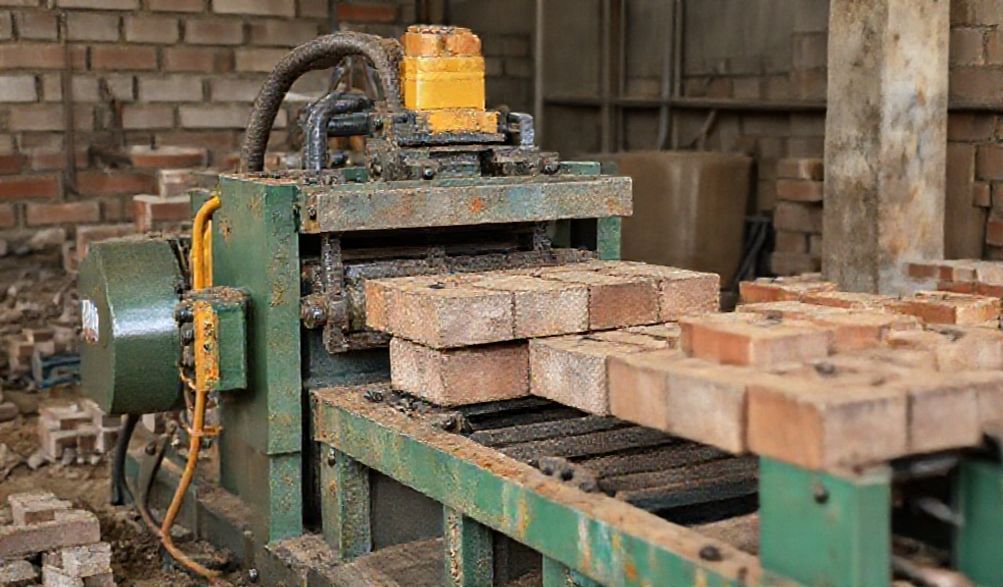
Ang interlocking brick machine ay isang aparato na pumipiga ng pinaghalong lupa (karaniwang laterite), maliit na porsyento ng semento, at tubig upang maging mga ladrilyong may espesyal na disenyong mga tagay at uka. Ang mga katangiang ito ay nagbibigay-daan sa mga ladrilyo na magkakabit-kabit tulad ng mga piraso ng puzzle sa panahon ng konstruksyon.
Paano Gumagana ang Interlocking Bricks: Ang Pagiging Simple ng Inhinyeriya
Ang pangunahing inobasyon ay nasa disenyo ng ladrilyo. Ang mekanismong interlocking ay nag-aalis ng pangangailangan para sa basang mortar sa mga patayong kasukasuan sa pagitan ng mga ladrilyo.
- Bilis ng Konstruksiyon:Ang mga pader ay maaaring itayo hanggang tatlong beses na mas mabilis kaysa sa mga karaniwang pamamaraan, dahil hindi na kailangang maghintay na tumigas ang mortar sa pagitan ng mga hilera.
- Nabawasang Dalubhasang Manggagawa:Ang simpleng sistema ng pagla-lock ay nangangahulugang mas kaunting espesyalisadong pagsasanay ang kailangan ng mga mason, na tumutugon sa isang pangunahing hadlang sa industriya.
- Integridad ng Estruktura:Kapag wastong piniga, ang mga brick na ito ay nag-aalok ng mataas na lakas ng pagpiga. Ang disenyong magkakawing ay nagbibigay din ng mahusay na lakas ng paggupit, na nagpapalakas sa mga istruktura laban sa mga pahalang na puwersa.
Ang Konteksto ng Nigeria: Pagtugon sa mga Lokal na Hamon
Ang teknolohiyang ito ay partikular na angkop sa mga pangangailangan ng Nigeria. Direkta nitong tinutugunan ang ilang mga sistemikong isyu:
- Pagkuha ng Materyales:Pinapakinabangan nito ang masaganang laterite soil ng Nigeria, na nagbabawas sa pag-asa sa mamahalin at pabagu-bagong mga imported na materyales.
- Kakulangan sa Pabahay:Ang bilis at mas mababang gastos bawat metro kuwadrado ay ginagawa itong isang magagamit na teknolohiya para sa mga malalaking proyekto ng abot-kayang pabahay, mula sa pampubliko hanggang sa pribado.
- Negosyo:Nagbubukas ito ng malalaking oportunidad para sa maliliit at katamtamang negosyo. Maaaring magsimula ang mga indibidwal ng negosyo sa paggawa ng ladrilyo upang magsuplay sa umuusbong na merkado ng konstruksyon sa mga urban at peri-urban na lugar.
- Pagkakahanay ng Pamahalaan:Sinusuportahan ng teknolohiya ang mga inisyatiba tulad ng Pambansang Patakaran sa Pabahay at umaayon sa mga promosyon ng Nigerian Building and Road Research Institute (NBRRI) para sa mga sustenableng lokal na materyales sa paggawa.
Types of Interlocking Brick Machines Available in Nigeria
Choosing the right type of machine is your first critical decision. The Nigerian market offers three main categories, each suited to different scales and budgets.
Manual Interlocking Brick Machines
These are hand-operated presses, often using a lever mechanism to generate compression force.
- Angkop Para Sa: Startups with limited capital, small personal projects, community-led builds, and areas with unreliable electricity.
- Mga Kalamangan:
- Pinakamababang paunang gastos.
- Zero energy consumption.
- Highly portable and simple to maintain.
- Mga Disbentahe:
- Low output (typically 300-800 bricks per day).
- Physically demanding operation.
- Brick quality can vary with operator consistency.
Semi-Automatic Interlocking Brick Machines
This category often uses a hydraulic system (powered by electricity or a diesel engine) to apply pressure. Some loading and brick removal may still be manual.
- Angkop Para Sa: Growing SMEs, medium-scale housing developments, and cooperative societies.
- Mga Kalamangan:
- Excellent balance between cost and production capacity.
- More consistent brick quality due to uniform pressure.
- Reduces physical strain compared to manual machines.
- Mga Disbentahe:
- Higher initial investment than manual presses.
- Requires a power source (generator or grid).
- Needs basic technical knowledge for operation and maintenance.
Fully Automatic Interlocking Brick Machines
These are complete production lines. They automatically mix raw materials, compress bricks, and sometimes even stack them on pallets.
- Angkop Para Sa: Large block manufacturing plants, major construction firms undertaking big projects, and investors targeting high-volume supply.
- Mga Kalamangan:
- Very high output (5,000+ bricks per day).
- Exceptional consistency and quality.
- Maximizes labor efficiency.
- Mga Disbentahe:
- Significant capital investment required.
- Dependent on stable, high-capacity power supply.
- Requires advanced technical skills for maintenance and repair.
Comparative Table: Interlocking Brick Machine Types in Nigeria
| Feature | Manual | Semi-Automatic | Fully Automatic |
| :— | :— | :— | :— |
| Capital Cost | Low (₦150,000 – ₦500,000) | Medium (₦800,000 – ₦3,000,000) | High (₦4,000,000+) |
| Output/Day | 300 – 800 bricks | 1,000 – 3,000 bricks | 5,000 – 10,000+ bricks |
| Power Needs | None | Diesel Generator / Grid | Stable Grid/Industrial Generator |
| Labor Needed | 2-3 persons | 2-4 persons | 3-5 persons |
| Ideal User | Entrepreneur, Self-builder | SME, Contractor | Large Manufacturer, Major Developer |
Key Factors to Consider Before Buying Your Machine
Beyond the machine type, several Nigeria-specific factors will determine your long-term success.
Production Capacity & Scale of Your Project
Be ruthlessly realistic about your needs. Are you building a single house, starting a supply business for a local market, or aiming for large contractors? Your daily brick requirement dictates the machine size. Buying an under-capacity machine slows you down; an over-spec machine ties up capital unnecessarily.
Soil Quality and Brick Mix Formulation
This is where technical expertise is non-negotiable. Not all soil is equal.
- The Ideal Mix: A general guideline for stabilized laterite bricks in Nigeria is a ratio of 1 part cement to 6-8 parts of laterite soil (by volume), with about 10% water. However, this must be tailored.
- Soil Testing is Critical: Always test your soil for composition, clay content, and organic matter. Simple field tests exist, but for a new venture, a lab test is a wise investment. The right soil ensures strength and durability.
- Machine Adaptability: Ensure the machine you choose can effectively compress the specific mix you plan to use. Some machines are better suited for sandier mixes, others for more clayey soils.
Power Source and Operational Costs
Factor in Nigeria’s energy reality.
- Diesel vs. Electricity: Calculate the fuel consumption of a diesel-powered hydraulic machine versus the cost of running an electric motor on a generator or grid power in your location. Diesel prices are volatile.
- Total Operational Cost: Include:
- Raw materials (cement, soil transport).
- Labor wages.
- Regular maintenance (grease, hydraulic oil, wear parts).
- Power/fuel.
- A contingency for spare parts.
After-Sales Support: The Most Critical Factor
Your relationship with the supplier begins pagkatapos payment. A machine without support is a liability.
- Lokal na Teknikal na Suporta: Does the supplier have trained technicians within Nigeria who can respond to breakdowns?
- Pagsasanay: Do they offer comprehensive training on machine operation, maintenance, and brick mix formulation?
- Garantiya: What is covered, and for how long?
- Kagamitan sa Pagkukumpuni: Are common wear parts (moulds, hydraulic seals, bearings) stocked locally, or must they be shipped from abroad, causing weeks of downtime?
- Red Flag: Avoid “ghost” suppliers who only have a website or a PO Box. Prioritize companies with a physical office, workshop, or showroom you can visit.
Finding a Reliable Supplier in Nigeria: A Buyer’s Checklist
Navigating the supplier landscape requires due diligence.
Local Dealers vs. Direct Import: Weighing the Options
- Local Dealer:
- Mga Kalamangan: Easier communication, established service network, faster access to parts, understands local challenges.
- Mga Disbentahe: May have a higher markup; ensure they are authorized dealers.
- Direct Import (e.g., from China, India):
- Mga Kalamangan: Potentially lower unit cost.
- Mga Disbentahe: High shipping and customs costs, complex logistics, zero local support, massive risk if machine arrives faulty. You are on your own for all maintenance.
Recommendation: For most Nigerian buyers, a reputable local supplier is the safer, wiser choice. Look for suppliers who are members of relevant bodies like the Manufacturers Association of Nigeria (MAN) or have verifiable partnerships with known international manufacturers.
Essential Questions to Ask Any Supplier
- “Can you provide contact details for 2-3 past clients in my region (e.g., Lagos, Abuja, Port Harcourt) for a reference check?”
- “What is included in the purchase price? (Delivery, installation, training?)”
- “What is the warranty period and what specific components does it cover?”
- “Where are your spare parts stocked, and what is the typical lead time for a critical part like a hydraulic pump?”
- “Do you have a technical team? What are your service call-out terms and costs after the warranty?”
- “Can you provide guidance or documentation on optimal soil mix ratios for my area?”
Visiting a Showroom or Existing Installation
Never buy based on pictures or videos alone. Insist on:
- A Showroom Visit: See and feel the machine’s build quality.
- A Site Visit: Ask the supplier to take you to an existing customer’s yard. Speak to that owner privately about their experience with the machine and the supplier’s support.
The Business Case: Cost Analysis and ROI for an Interlocking Brick Venture
Let’s translate this into a practical business plan for a small-scale SME.
Startup Cost Breakdown (Semi-Automatic Machine Example)
- Machine Cost: ₦1,800,000
- Delivery & Installation: ₦50,000
- Generator (5KVA): ₦300,000
- Site Preparation (Simple shed): ₦200,000
- Paunang Stock ng Hilaw na Materyales: ₦150,000
- Miscellaneous/Tools: ₦100,000
- Operational Capital (1 month): ₦200,000
- Total Estimated Startup Capital: ₦2,800,000
Revenue Projections and Market Pricing
- Market Price per Brick: Varies by region. Let’s assume an average of ₦120 per brick in a city like Ibadan or Benin.
- Daily Production Target: A conservative 1,200 bricks with a semi-automatic machine.
- Monthly Revenue (25 days): 1,200 bricks/day * 25 days * ₦120 = ₦3,600,000
Calculating Your Return on Investment (ROI)
Monthly Operational Costs:
* Cement & Soil: ₦400,000
* Labor (3 staff): ₦180,000
* Diesel for Generator: ₦120,000
* Maintenance & Contingency: ₦50,000
* Total Monthly Cost: ₦750,000
Monthly Gross Profit: ₦3,600,000 (Revenue) – ₦750,000 (Cost) = ₦2,850,000
Payback Period: ₦2,800,000 (Startup Cost) / ₦2,850,000 (Monthly Profit) ≈ 1 month.
This is a simplified, optimistic scenario. In reality, factor in market fluctuations, downtime, and slower initial sales ramp-up. A more conservative payback period for a well-run operation is 3-6 months, which remains an excellent return.
FAQ Section
Q1: What is the average price range for an interlocking brick machine in Nigeria?
A1: Prices vary widely. Manual machines start from around ₦150,000. Semi-automatic machines range from ₦800,000 to ₦3,000,000. Fully automatic production lines can cost from ₦4 million to over ₦15 million, depending on capacity and automation level.
Q2: Can I use laterite soil alone, or do I need to mix it with cement?
A2: You must use a stabilizer. For durable, load-bearing bricks, Portland cement is the most common and reliable stabilizer. The cement reacts to create a strong bond. Using soil alone will result in bricks that degrade quickly with water exposure.
Q3: How many bricks can one machine produce in a day?
A3: As shown in the comparison table, output depends entirely on the machine type: Manual (300-800/day), Semi-Automatic (1,000-3,000/day), Fully Automatic (5,000+/day). Actual output also depends on crew efficiency and workflow.
Q4: Are buildings made with interlocking bricks approved by Nigerian building codes?
A4: Yes, when constructed properly. The Nigerian Building and Road Research Institute (NBRRI) has extensively researched, endorsed, and provided specifications for cement-stabilized laterite bricks. Compliance with recommended mix designs, compaction, and construction guidelines is key. For any project, always engage a registered structural engineer to ensure your design meets all safety standards.
Q5: Where can I get training on operating the machine and the brick mix formula?
A5: Reputable local machine suppliers should provide comprehensive training as part of the purchase package. Additionally, organizations like NBRRI and some state agricultural or entrepreneurship development agencies occasionally offer workshops on alternative building technologies.
Konklusyon
The interlocking brick machine represents more than just a piece of equipment; it is a catalyst for change in the Nigerian construction sector. It empowers developers to build faster and more affordably, and it creates a clear path for entrepreneurs to build profitable, sustainable businesses that address a fundamental national need.
Your journey should begin with a clear assessment of your specific goals, budget, and local market conditions. Remember, you are making an investment, not just a purchase. The right machine, backed by the right supplier support, can yield returns far beyond the financial.
We encourage you to use this guide as a foundation for your own thorough research. Visit multiple suppliers, speak to current machine owners, and test your soil. Arm yourself with knowledge to make a confident, successful investment in Nigeria’s future.
METADATA_START—
DISPLAY_TITLE: The Ultimate Guide to Buying an Interlocking Brick Machine in Nigeria (2026)
SEO_TITLE: Interlocking Brick Machine Nigeria: 2026 Buyer’s Guide
META_DESC: Complete guide to buying an interlocking brick machine in Nigeria. Compare types, costs, suppliers & calculate your ROI. Make an informed investment.
IMG_PROMPT: A dynamic, sunlit shot at a construction site in Nigeria, focusing on a modern hydraulic interlocking brick machine in action. A worker’s hands are placing a freshly pressed, reddish-brown laterite brick onto a neatly stacked wall. The background shows a partially built, mortar-less wall, with other bricks and bags of cement visible. The image conveys industry, innovation, and local manufacturing.
—METADATA_END—