
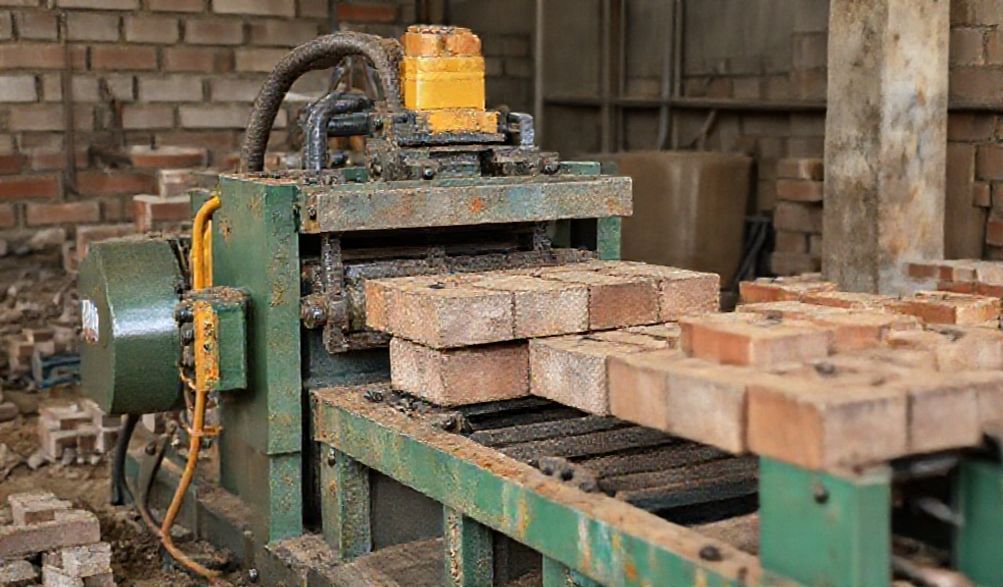
Hướng Dẫn Toàn Diện Để Mua Máy Sản Xuất Gạch Lát Vỉa Hè Tại Nigeria (2026)
Giới thiệu
Nigeria đang đối mặt với tình trạng thiếu hụt nhà ở trầm trọng, ước tính vượt quá 28 triệu đơn vị. Trước chi phí xi măng, thép và vật liệu xây dựng nhập khẩu ngày càng tăng, ngành xây dựng đang khẩn thiết tìm kiếm các giải pháp thay thế bền vững và tiết kiệm chi phí. Sản xuất gạch truyền thống thường tốn nhiều lao động, gây áp lực lên môi trường và chất lượng không đồng đều, tạo ra những nút thắt cho các dự án ở mọi quy mô.
Hãy nói đến máy sản xuất gạch không nung - một công nghệ đột phá đang định hình lại bức tranh xây dựng tại Nigeria. Bằng cách cho phép sản xuất tại chỗ những viên gạch bền chắc, không cần vữa từ đất sẵn có và một lượng nhỏ xi măng, cỗ máy này mang đến giải pháp mạnh mẽ cho những thách thức xây dựng của quốc gia chúng ta.
Hướng dẫn toàn diện này không chỉ mang tính lý thuyết. Nó được xây dựng dựa trên nghiên cứu thị trường sâu rộng, tham vấn với các kỹ sư xây dựng dân dụng đang hành nghề tại Nigeria và các nhà sản xuất gạch block thành công, cùng một phân tích chuyên sâu về thực tế vận hành trong bối cảnh kinh tế và cơ sở hạ tầng độc đáo của chúng ta. Đến cuối bài viết này, bạn sẽ nắm được hiểu biết rõ ràng về các loại máy móc có sẵn, các yếu tố then chốt để đưa ra quyết định mua sắm sáng suốt, cái nhìn thực tế về chi phí và tỷ suất hoàn vốn (ROI), cùng một chiến lược đã được chứng minh để tìm kiếm nhà cung cấp uy tín tại Nigeria.
Máy Sản Xuất Gạch Khóa Là Gì & Tại Sao Nó Đang Cách Mạng Hóa Ngành Xây Dựng Nigeria?
Máy sản xuất gạch liên kết là thiết bị nén hỗn hợp đất (thường là đất laterit), một tỷ lệ nhỏ xi măng và nước thành những viên gạch có rãnh và gờ được thiết kế đặc biệt. Những đặc điểm này cho phép các viên gạch khớp vào nhau như mảnh ghép trong quá trình xây dựng.
Cách Gạch Liền Khối Hoạt Động: Sự Đơn Giản Trong Kỹ Thuật
Điểm đột phá cốt lõi nằm ở thiết kế của viên gạch. Cơ chế khóa liên kết loại bỏ nhu cầu sử dụng vữa ướt tại các mối nối dọc giữa các viên gạch.
- Tốc độ thi côngTường có thể được xây dựng nhanh hơn gấp ba lần so với các phương pháp thông thường, vì không cần chờ vữa khô giữa các lớp xây.
- Giảm Lao động Có Kỹ năng:Hệ thống khóa đơn giản giúp thợ xây cần ít đào tạo chuyên sâu hơn, giải quyết một rào cản then chốt trong ngành.
- Tính Toàn Vẹn Cấu TrúcKhi được nén chặt đúng cách, những viên gạch này mang lại khả năng chịu nén cao. Thiết kế khóa liên kết cũng cung cấp khả năng chịu cắt tuyệt vời, giúp công trình chống chịu tốt hơn với lực ngang.
Bối cảnh Nigeria: Giải quyết các thách thức địa phương
Công nghệ này đặc biệt phù hợp với nhu cầu của Nigeria. Nó trực tiếp giải quyết một số vấn đề mang tính hệ thống:
- Nguồn cung ứng vật liệu: It leverages Nigeria’s abundant laterite soil, reducing dependence on expensive, fluctuating imported materials.
- Thâm hụt nhà ở: The speed and lower cost per square meter make it a viable technology for large-scale affordable housing projects, both public and private.
- Khởi nghiệp: It creates significant SME opportunities. Individuals can start a brick-making venture to supply the booming construction market in urban and peri-urban areas.
- Government Alignment: The technology supports initiatives like the National Housing Policy and aligns with the Nigerian Building and Road Research Institute (NBRRI) promotions for sustainable local building materials.
Types of Interlocking Brick Machines Available in Nigeria
Choosing the right type of machine is your first critical decision. The Nigerian market offers three main categories, each suited to different scales and budgets.
Manual Interlocking Brick Machines
These are hand-operated presses, often using a lever mechanism to generate compression force.
- Lý Tưởng Cho: Startups with limited capital, small personal projects, community-led builds, and areas with unreliable electricity.
- Ưu điểm:
- Chi phí ban đầu thấp nhất.
- Zero energy consumption.
- Highly portable and simple to maintain.
- Nhược điểm:
- Low output (typically 300-800 bricks per day).
- Physically demanding operation.
- Brick quality can vary with operator consistency.
Semi-Automatic Interlocking Brick Machines
This category often uses a hydraulic system (powered by electricity or a diesel engine) to apply pressure. Some loading and brick removal may still be manual.
- Lý Tưởng Cho: Growing SMEs, medium-scale housing developments, and cooperative societies.
- Ưu điểm:
- Excellent balance between cost and production capacity.
- More consistent brick quality due to uniform pressure.
- Reduces physical strain compared to manual machines.
- Nhược điểm:
- Higher initial investment than manual presses.
- Requires a power source (generator or grid).
- Needs basic technical knowledge for operation and maintenance.
Fully Automatic Interlocking Brick Machines
These are complete production lines. They automatically mix raw materials, compress bricks, and sometimes even stack them on pallets.
- Lý Tưởng Cho: Large block manufacturing plants, major construction firms undertaking big projects, and investors targeting high-volume supply.
- Ưu điểm:
- Very high output (5,000+ bricks per day).
- Exceptional consistency and quality.
- Maximizes labor efficiency.
- Nhược điểm:
- Significant capital investment required.
- Dependent on stable, high-capacity power supply.
- Requires advanced technical skills for maintenance and repair.
Comparative Table: Interlocking Brick Machine Types in Nigeria
| Feature | Manual | Semi-Automatic | Fully Automatic |
| :— | :— | :— | :— |
| Capital Cost | Low (₦150,000 – ₦500,000) | Medium (₦800,000 – ₦3,000,000) | High (₦4,000,000+) |
| Output/Day | 300 – 800 bricks | 1,000 – 3,000 bricks | 5,000 – 10,000+ bricks |
| Power Needs | None | Diesel Generator / Grid | Stable Grid/Industrial Generator |
| Labor Needed | 2-3 persons | 2-4 persons | 3-5 persons |
| Ideal User | Entrepreneur, Self-builder | SME, Contractor | Large Manufacturer, Major Developer |
Key Factors to Consider Before Buying Your Machine
Beyond the machine type, several Nigeria-specific factors will determine your long-term success.
Production Capacity & Scale of Your Project
Be ruthlessly realistic about your needs. Are you building a single house, starting a supply business for a local market, or aiming for large contractors? Your daily brick requirement dictates the machine size. Buying an under-capacity machine slows you down; an over-spec machine ties up capital unnecessarily.
Soil Quality and Brick Mix Formulation
This is where technical expertise is non-negotiable. Not all soil is equal.
- The Ideal Mix: A general guideline for stabilized laterite bricks in Nigeria is a ratio of 1 part cement to 6-8 parts of laterite soil (by volume), with about 10% water. However, this must be tailored.
- Soil Testing is Critical: Always test your soil for composition, clay content, and organic matter. Simple field tests exist, but for a new venture, a lab test is a wise investment. The right soil ensures strength and durability.
- Machine Adaptability: Ensure the machine you choose can effectively compress the specific mix you plan to use. Some machines are better suited for sandier mixes, others for more clayey soils.
Power Source and Operational Costs
Factor in Nigeria’s energy reality.
- Diesel vs. Electricity: Calculate the fuel consumption of a diesel-powered hydraulic machine versus the cost of running an electric motor on a generator or grid power in your location. Diesel prices are volatile.
- Total Operational Cost: Include:
- Raw materials (cement, soil transport).
- Labor wages.
- Regular maintenance (grease, hydraulic oil, wear parts).
- Power/fuel.
- A contingency for spare parts.
After-Sales Support: The Most Critical Factor
Your relationship with the supplier begins sau payment. A machine without support is a liability.
- Hỗ trợ Kỹ thuật Địa phương: Does the supplier have trained technicians within Nigeria who can respond to breakdowns?
- Đào tạo: Do they offer comprehensive training on machine operation, maintenance, and brick mix formulation?
- Bảo hành: What is covered, and for how long?
- Sẵn có Phụ tùng Thay thế: Are common wear parts (moulds, hydraulic seals, bearings) stocked locally, or must they be shipped from abroad, causing weeks of downtime?
- Red Flag: Avoid “ghost” suppliers who only have a website or a PO Box. Prioritize companies with a physical office, workshop, or showroom you can visit.
Finding a Reliable Supplier in Nigeria: A Buyer’s Checklist
Navigating the supplier landscape requires due diligence.
Local Dealers vs. Direct Import: Weighing the Options
- Local Dealer:
- Ưu điểm: Easier communication, established service network, faster access to parts, understands local challenges.
- Nhược điểm: May have a higher markup; ensure they are authorized dealers.
- Direct Import (e.g., from China, India):
- Ưu điểm: Potentially lower unit cost.
- Nhược điểm: High shipping and customs costs, complex logistics, zero local support, massive risk if machine arrives faulty. You are on your own for all maintenance.
Recommendation: For most Nigerian buyers, a reputable local supplier is the safer, wiser choice. Look for suppliers who are members of relevant bodies like the Manufacturers Association of Nigeria (MAN) or have verifiable partnerships with known international manufacturers.
Essential Questions to Ask Any Supplier
- “Can you provide contact details for 2-3 past clients in my region (e.g., Lagos, Abuja, Port Harcourt) for a reference check?”
- “What is included in the purchase price? (Delivery, installation, training?)”
- “What is the warranty period and what specific components does it cover?”
- “Where are your spare parts stocked, and what is the typical lead time for a critical part like a hydraulic pump?”
- “Do you have a technical team? What are your service call-out terms and costs after the warranty?”
- “Can you provide guidance or documentation on optimal soil mix ratios for my area?”
Visiting a Showroom or Existing Installation
Never buy based on pictures or videos alone. Insist on:
- A Showroom Visit: See and feel the machine’s build quality.
- A Site Visit: Ask the supplier to take you to an existing customer’s yard. Speak to that owner privately about their experience with the machine and the supplier’s support.
The Business Case: Cost Analysis and ROI for an Interlocking Brick Venture
Let’s translate this into a practical business plan for a small-scale SME.
Startup Cost Breakdown (Semi-Automatic Machine Example)
- Machine Cost: ₦1,800,000
- Delivery & Installation: ₦50,000
- Generator (5KVA): ₦300,000
- Site Preparation (Simple shed): ₦200,000
- Initial Raw Material Stock: ₦150,000
- Miscellaneous/Tools: ₦100,000
- Operational Capital (1 month): ₦200,000
- Total Estimated Startup Capital: ₦2,800,000
Revenue Projections and Market Pricing
- Market Price per Brick: Varies by region. Let’s assume an average of ₦120 per brick in a city like Ibadan or Benin.
- Daily Production Target: A conservative 1,200 bricks with a semi-automatic machine.
- Monthly Revenue (25 days): 1,200 bricks/day * 25 days * ₦120 = ₦3,600,000
Calculating Your Return on Investment (ROI)
Monthly Operational Costs:
* Cement & Soil: ₦400,000
* Labor (3 staff): ₦180,000
* Diesel for Generator: ₦120,000
* Maintenance & Contingency: ₦50,000
* Total Monthly Cost: ₦750,000
Monthly Gross Profit: ₦3,600,000 (Revenue) – ₦750,000 (Cost) = ₦2,850,000
Payback Period: ₦2,800,000 (Startup Cost) / ₦2,850,000 (Monthly Profit) ≈ 1 month.
This is a simplified, optimistic scenario. In reality, factor in market fluctuations, downtime, and slower initial sales ramp-up. A more conservative payback period for a well-run operation is 3-6 months, which remains an excellent return.
FAQ Section
Q1: What is the average price range for an interlocking brick machine in Nigeria?
A1: Prices vary widely. Manual machines start from around ₦150,000. Semi-automatic machines range from ₦800,000 to ₦3,000,000. Fully automatic production lines can cost from ₦4 million to over ₦15 million, depending on capacity and automation level.
Q2: Can I use laterite soil alone, or do I need to mix it with cement?
A2: You must use a stabilizer. For durable, load-bearing bricks, Portland cement is the most common and reliable stabilizer. The cement reacts to create a strong bond. Using soil alone will result in bricks that degrade quickly with water exposure.
Q3: How many bricks can one machine produce in a day?
A3: As shown in the comparison table, output depends entirely on the machine type: Manual (300-800/day), Semi-Automatic (1,000-3,000/day), Fully Automatic (5,000+/day). Actual output also depends on crew efficiency and workflow.
Q4: Are buildings made with interlocking bricks approved by Nigerian building codes?
A4: Yes, when constructed properly. The Nigerian Building and Road Research Institute (NBRRI) has extensively researched, endorsed, and provided specifications for cement-stabilized laterite bricks. Compliance with recommended mix designs, compaction, and construction guidelines is key. For any project, always engage a registered structural engineer to ensure your design meets all safety standards.
Q5: Where can I get training on operating the machine and the brick mix formula?
A5: Reputable local machine suppliers should provide comprehensive training as part of the purchase package. Additionally, organizations like NBRRI and some state agricultural or entrepreneurship development agencies occasionally offer workshops on alternative building technologies.
Conclusion
The interlocking brick machine represents more than just a piece of equipment; it is a catalyst for change in the Nigerian construction sector. It empowers developers to build faster and more affordably, and it creates a clear path for entrepreneurs to build profitable, sustainable businesses that address a fundamental national need.
Your journey should begin with a clear assessment of your specific goals, budget, and local market conditions. Remember, you are making an investment, not just a purchase. The right machine, backed by the right supplier support, can yield returns far beyond the financial.
We encourage you to use this guide as a foundation for your own thorough research. Visit multiple suppliers, speak to current machine owners, and test your soil. Arm yourself with knowledge to make a confident, successful investment in Nigeria’s future.
METADATA_START—
DISPLAY_TITLE: The Ultimate Guide to Buying an Interlocking Brick Machine in Nigeria (2026)
SEO_TITLE: Interlocking Brick Machine Nigeria: 2026 Buyer’s Guide
META_DESC: Complete guide to buying an interlocking brick machine in Nigeria. Compare types, costs, suppliers & calculate your ROI. Make an informed investment.
IMG_PROMPT: A dynamic, sunlit shot at a construction site in Nigeria, focusing on a modern hydraulic interlocking brick machine in action. A worker’s hands are placing a freshly pressed, reddish-brown laterite brick onto a neatly stacked wall. The background shows a partially built, mortar-less wall, with other bricks and bags of cement visible. The image conveys industry, innovation, and local manufacturing.
—METADATA_END—