Detalyadong Pagsusuri ng mga Uri ng Makina at Teknolohiyang Pang-operasyon
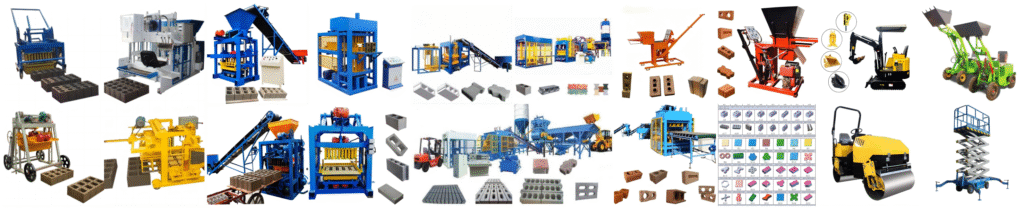
Ang pamilihan ay nag-aalok ng isang magkakaugnay na ekosistema ng mga makina, kung saan bawat isa ay dinisenyo upang tumugon sa tiyak na dami ng produksyon, antas ng awtomasyon, at kahandaan ng kapital.
1. Mga Manual at Semi-Automatic na Makina: Ang Saligan ng Produksyon sa Antas ng Pagsisimula
Ang mga makinaryang ito ang nagsisilbing abot-kayang pasukan sa pagmamanupaktura ng bloke, na binibigyang-diin ang mababang puhunan at pagiging simple ng operasyon.
- Pangunahing Prinsipyo ng Pagpapatakbo:Karaniwan silang mga single-station, press-type na makina. Ang isang handa nang semi-dry na pinaghalong kongkreto ay manu-manong inilalagay sa isang kahong pangmolde. Pagkatapos, pinapagana ng operator ang isang lever o isang mekanikal/hydraulic na press mechanism upang pindutin ang pinaghalo. Ang panginginig, na kadalasang ibinibigay ng isang panlabas na table vibrator o mga nakakabit na motor, ay mahalaga para makamit ang tamang densidad at mailabas ang mga hangin.
- Mga Pangunahing Katangian at Saklaw ng Produkto:
- Workflow na Nakasentro sa Tao:Ang lahat ng paghawak ng materyales—paghahalo, pagpapakain, pag-aalis ng mga berdeng bloke, at pagpapatigas—ay manwal. Ang produksyon ay direktang nakadepende sa laki ng pangkat at tibay ng mga manggagawa.
- Ang Kakayahang Umangkop sa Pamamagitan ng mga Molde:Ang isang malaking pakinabang ay ang kakayahang makagawa ng iba't ibang produkto—solidong bloke, guwang na bloke, paving slabs, curbstone—sa pamamagitan lamang ng pagpapalit ng molde. Ginagawa nitong perpekto ang mga ito para sa maliliit at pasadyang order.
- Kapasidad ng Output:Ang makatotohanang produksyon ay nasa pagitan ng 300 hanggang 1,000 bloke bawat 8-oras na turno, depende sa kahusayan ng tauhan at laki ng bloke.
- Pagsasagawa ng Estratehiya:Angkop para sa mga micro-enterprise, mga proyektong pabahay na pinamumunuan ng komunidad, at produksiyon sa mismong lugar para sa mga tiyak na proyektong konstruksiyon kung saan napakamahal ng gastos sa transportasyon ng mga tapos na bloke.
2. Ganap na Awtomatikong Nakatigil na Makina: Ang Makina ng Katamtamang Sukat na Industriya
Ang kategoryang ito ay kumakatawan sa pinakamahalagang bahagi para sa mga seryosong negosyo ng paggawa ng bloke, na nag-aalok ng pinakamainam na balanse sa pagitan ng awtomasyon, produksyon, at pamumuhunan.
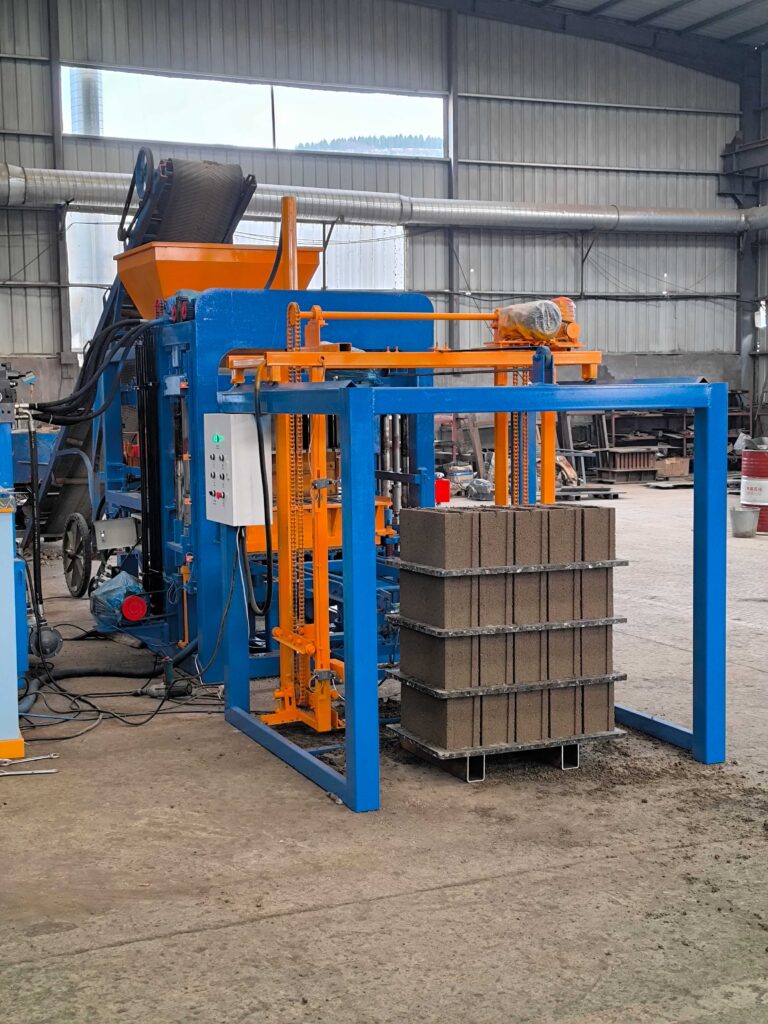
- Pangunahing Prinsipyo ng Pagpapatakbo:Ang mga ito ay mga integradong sistema na nakasentro sa isang high-pressure, multi-directional na vibro-compaction press. Ang proseso ay paikot at awtomatiko: isang paleta ay inilalagay sa posisyon, ang kongkreto ay tiyakang isinasalin sa hulma, ang ulo ng pindot ay bumababa nang may sabay na panginginig, ang bloke ay itinutulak palabas papunta sa paleta, at ang paleta ay inililipat sa isang lugar ng pagpapatigas. Ang buong siklo ay kinokontrol ng isang Programmable Logic Controller (PLC).
- Mga Pangunahing Subsystem at Tampok na Teknolohikal:
- Awomatikong Paghawak ng Materyal:Kabilang ang mga conveyor ng feed, mga electronic weighing hopper, at mga panghalo, na tinitiyak ang pare-parehong kalidad ng timpla.
- Mataas na Presyon ng Pagpiga:Ang mga sistemang haydroliko ay naglalapat ng presyon mula 50 hanggang 150+ tonelada, na lumilikha ng mga bloke na may mataas na densidad at lakas, kasama ang napakahusay na pagkakapantay-pantay ng ibabaw.
- Sistema ng Sirkulasyon ng Pallet:Isang pangunahing pagkakaiba. Ang mga pallet ay awtomatikong kinakarga, nililinis, pinapahiran ng langis, at nire-recycle sa loob ng sistema, na nagbibigay-daan sa tuluy-tuloy na produksyon.
- Pagkakaiba-iba ng Produkto:Ang mga advanced na modelo ay nagtatampok ng "multilayer" o "split-press" na teknolohiya upang makagawa ng mga paving stone na may kulay na mukha at chemically bonded o mga insulated block sa isang ikot lamang.
- Pagsasagawa ng Estratehiya:Ang pamantayan para sa kumikitang mga block yard na naghahatid sa mga rehiyonal na pamilihan ng konstruksiyon, mga planta ng ready-mix na konkreto na nagdudiversipika sa mga produkto, at mga dedikadong tagagawa ng bloke na tumatarget sa mga kontrata ng munisipyo at komersyal.
3. Ganap na Awtomatikong Mobile na Halaman at Makina ng Paglalagay ng Itlog: Kakayahang Umangkop para sa Ebolusyonaryong mga Site
Isinakripisyo ng mga yunit na ito ang ilang antas ng bilis ng produksyon para sa walang kapantas na kakayahang pang-lohistika at mas mababang pangangailangan sa imprastraktura.
- Pangunahing Prinsipyo ng Pagpapatakbo:Hindi tulad ng mga nakatigil na halaman, ang mga makina ay gumagawa ng mga bloke nang direkta sa kongkretong sahig o sa isang nakahandang slab. Matapos ikompak ang isang bloke, ang makina ay sumusulong (o ang molde ay umuusad) upang ilagay ang "hilaw" na bloke sa lugar nito sa curing strip. Ang pamamaraang ito na "maglagay-at-umalis" ay nag-aalis ng pangangailangan para sa mga pallet at masalimuot na sistema ng paglilipat.
- Pangunahing Katangian:
- Mababang Pangangailangan sa Imprastruktura:Walang kailangang mabigat na pundasyon o masalimuot na conveyor para sa pagbabalik ng pallet. Ang pagpapatigas ay nangyayari mismo sa lugar.
- Paggalaw: Many are mounted on trailers or wheels, allowing a single machine to serve multiple sites or be easily relocated as a project progresses.
- Simplified Operation: Generally have fewer moving parts than high-speed stationary plants, which can simplify maintenance.
- Pagsasagawa ng Estratehiya: Ideal for large, linear projects (road construction with kerb production), remote area development, and businesses that prioritize the ability to move their production facility to the market.
Investment Framework: Understanding Price Determinants and Total Cost of Ownership (TCO)
For procurement agents and their clients, the purchase price is merely the entry point of the financial analysis. A sophisticated evaluation considers the complete TCO and return on investment (ROI).
Capital Expenditure (CapEx) Pricing Tiers and Drivers
Machine prices are dictated by automation, robustness, and output.
- Tier 1: Manual & Semi-Automatic Machines
- Saklaw ng Presyo: Typically from a few thousand to low tens of thousands of USD.
- Gastos na Nagtutulak Simplicity of design, material (steel) costs, and inclusion of a basic motor/vibrator. Price variations are often based on the number of blocks produced per cycle (e.g., single vs. tri-block machines).
- Tier 2: Fully Automatic Stationary Machines
- Saklaw ng Presyo: This is a broad range, from approximately mid-five figures to several hundred thousand USD.
- Gastos na Nagtutulak
- Antas ng Automatisasyon: A machine with automatic pallet feed and product stacker commands a premium.
- Production Speed (Cycles/Hour): Higher speed requires more robust hydraulics, controls, and steel frames.
- Pressure Capacity: Higher tonnage presses produce stronger blocks and justify higher costs.
- Control System Sophistication: A full-color touchscreen HMI with diagnostic capabilities and recipe storage adds value.
- Tier 3: Large-Scale Turnkey Production Lines
- Saklaw ng Presyo: Investments can reach millions of USD.
- Gastos na Nagtutulak This price encompasses not just the block-making machine, but the entire ecosystem: automated batching plants, robotic pallet handling and curing systems, climate-controlled curing chambers, and packaging lines. It is a complete factory solution.
The Critical Analysis of Operational Expenditure (OpEx) and ROI
A discerning buyer looks beyond the invoice.
- Mga Gastos sa Pagpapatakbo: These include energy consumption (significant for hydraulic systems and vibrators), labor for operation and maintenance, mold and wear-part replacement, and consumables like pallet oil and release agents.
- Kahusayan sa Produksyon: A higher-priced automatic machine with a 20% faster cycle time and 5% lower reject rate will often outperform a cheaper alternative within months.
- Kalidad Pagkakapare-pareho Machines producing blocks with precise dimensions and high, uniform strength reduce waste for the end-user (the mason) and build a superior brand reputation for the manufacturer, allowing for premium pricing.
- Sample ROI Calculation: A distributor should be prepared to model this. For instance: A $100,000 automatic machine producing 5,000 blocks/day at a net profit of $0.10/block can generate $500/day. Factoring in operating costs and downtime, the payback period could be under 12 months with sufficient market demand.
Conclusion: Positioning as a Strategic Partner in Production
For the distribution and procurement channel, success in the block machinery market requires a paradigm shift from selling equipment to enabling production businesses. This demands:
- Technical Consultancy: The ability to assess a client’s local market (demand for hollow vs. solid blocks, paving trends), raw material availability, and financial capacity to recommend the correct machine type.
- Financial Acumen: Building persuasive, transparent TCO and ROI models that justify the investment and help clients secure financing.
- Lifecycle Support: The machinery sale is the beginning. Competitive advantage is secured by offering reliable spare parts, expert technical service, and operator training programs. Dowtime is the primary enemy of your client’s profitability and your reputation.
By providing holistic solutions that encompass the right technology, clear financial planning, and unwavering support, you transition from a supplier to an indispensable partner in your clients’ growth, cementing your role in building the very fabric of infrastructure.
Mga Madalas Itanong (FAQ)
Q1: What is the single most important factor in determining the final strength of the block?
Isalin ang teksto sa Filipino. I-output LAMANG ang isinalin na teksto. While machine pressure is vital, the consistency and quality of the raw material mix is paramount. The correct ratio of cement, aggregates (sand and gravel), and water, along with proper mixing, is fundamental. A high-quality machine cannot compensate for a poor mix design. Distributors should consider offering basic mix design consultancy or partnerships with batching plant suppliers.
Q2: How significant is after-sales service, and what should we look for in a manufacturer’s support package?
Isalin ang teksto sa Filipino. I-output LAMANG ang isinalin na teksto. It is absolutely critical. Look for manufacturers that offer: Comprehensive On-Site Training for operators and maintenance staff, Clear Documentation (parts manuals, electrical diagrams), Availability of a Local Parts Inventory or guaranteed short shipping times for critical wear parts, and Remote Technical Support capabilities. The service commitment is often more important than a marginal difference in initial price.
Q3: Can one machine produce different types and sizes of blocks?
Isalin ang teksto sa Filipino. I-output LAMANG ang isinalin na teksto. Yes, versatility is a key feature. This is achieved through interchangeable mold boxes. A reputable manufacturer will offer a catalog of molds for hundreds of different products. The changeover process time—from minutes to a few hours—is a specification to compare. The machine’s control system should also allow for easy adjustment of vibration time and pressure for different products.
Q4: What are the power requirements for a fully automatic stationary machine?
Isalin ang teksto sa Filipino. I-output LAMANG ang isinalin na teksto. Requirements vary significantly. A mid-range machine might require a 3-phase electrical connection with a total installed power of 30-75 kW. It is crucial to verify the specific voltage (e.g., 380V/50Hz or 460V/60Hz) and amperage requirements with the manufacturer to ensure the client’s site can be properly equipped. Mobile egg-layer machines often use diesel engines for complete independence.
Q5: How do we guide a client in choosing between a stationary plant and a mobile egg-layer machine?
Isalin ang teksto sa Filipino. I-output LAMANG ang isinalin na teksto. This decision hinges on business model and logistics. A stationary plant is for a fixed-site factory supplying a regional market. It offers higher output and lower per-unit cost at scale. An egg-layer is for a project-based business, remote operations, or a start-up wanting to minimize initial site preparation costs. It offers flexibility but typically at a lower hourly output.
Q6: What is a realistic expected lifespan of a well-maintained automatic block making machine?
Isalin ang teksto sa Filipino. I-output LAMANG ang isinalin na teksto. The structural frame and core components of a quality machine can last 15-20 years or more with proper maintenance. Hydraulic seals, electrical components, and vibrator bearings are wear items that require periodic replacement. The longevity is directly tied to the preventative maintenance program initiated from day one, a program a good distributor should help establish.