
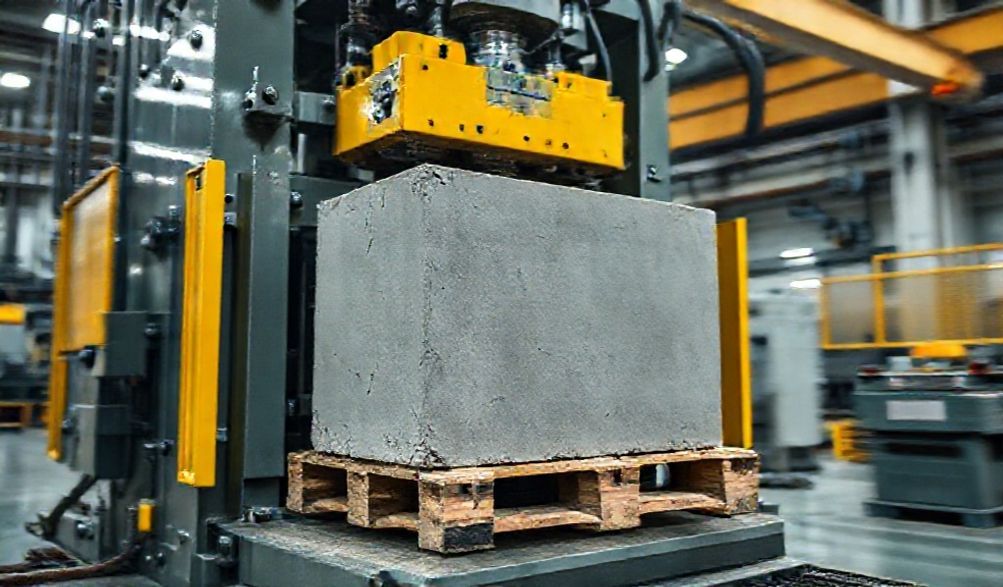
Ang Komprehensibong Gabay sa Hydraulic Block Machines: Kahusayan, Mga Uri, at Mga Tip sa Pagbili
Panimula
Ang pandaigdigang merkado ng mga bloke sa konstruksiyon ay inaasahang lalampas sa$450 bilyon pagsapit ng 2030Hinimok ng walang humpay na urbanisasyon at pag-unlad ng imprastruktura. Ngunit sa sentro ng paglago na ito ay naroon ang isang mahalagang hamon: paano matutugunan ng mga tagagawa ang tumataas na pangangailangan nang hindi isinasakripisyo ang kalidad, gastos, o bilis?
Sa loob ng mga dekada, ang tradisyonal na paggawa ng bloke ay naging kasingkahulugan ng nakakapagod na paggawa, hindi pare-parehong produksyon, at nakakabagot na mga bottleneck. Ang mga manwal na pamamaraan at maging ang mga naunang mekanikal na vibratory machine ay kadalasang nagdudulot ng iba't ibang densidad, mahinang pagtapos sa ibabaw, at limitadong kapasidad sa produksyon. Sa kasalukuyang mapagkumpitensyang larangan, ang mga ganitong kawalan ng kahusayan ay direktang banta sa kakayahang kumita at pagpapalawak.
Ipasok anghaydrolikong bloke ng makinaang moderno, makapangyarihan, at de-kalidad na solusyon na nagdulot ng rebolusyon sa industriya ng mga materyales sa konstruksiyon. Ito ay hindi lamang isa pang kagamitan; ito ang puso ng isang kumikitang, mataas ang produksiyong planta para sa paggawa ng dekalidad na mga bloke ng semento, mga paver, mga curbstone, at mga interlocking brick.
Ang gabay na ito ay binuo mula sa dekada ng kolektibong kadalubhasaan sa industriya, mga prinsipyo ng inhenyeriya, at praktikal na kaalaman sa pagpapatakbo. Ang aming layunin ay simple: upang bigyan ka ng komprehensibo at walang kinikilingan na sanggunian na magbibigay sa iyo ng ganap na kaalaman sa paggawa ng desisyon sa pamumuhunan. Sa pagtatapos ng artikulong ito, mauunawaan mo ang:
- Ang pangunahing mekanismo at mga pakinabang ng pagpiga gamit ang haydroliko.
- Ang mga tunay na pakinabang para sa kalidad ng iyong produkto at kita.
- Ang iba't ibang uri ng mga makina at kung paano pumili ng angkop sa iyong pangangailangan.
- Isang detalyadong talaan ng mga kritikal na salik para sa pagpili ng makina at supplier.
- Mga mahahalagang pinakamahuhusay na pamamaraan para sa operasyon, pagpapanatili, at kaligtasan.
Magtayo tayo ng pundasyon ng kaalaman.
Ano ang isang Hydraulic Block Machine at Paano Ito Gumagana?
Pangunahing Kahulugan
Ang hydraulic block machine ay isang mekanisadong kagamitan na dinisenyo upang gumawa ng mga konkretong bloke sa pamamagitan ng paggamit ng isang high-pressure hydraulic system upang i-compress ang isang handang halo ng kongkreto sa tumpak na mga molde na yari sa bakal. Hindi tulad ng mga pamamaraang umaasa lamang sa panginginig, ang hydraulic system ay naglalapat ng napakalaking, kontroladong puwersa, na nagreresulta sa isang masinsinang naikompak at istruktural na mas mataas ang kalidad na produkto.
The Hydraulic Advantage
To appreciate the innovation, it helps to contrast it with older systems. Traditional vibratory machines rely on high-frequency shaking to settle the mix. While functional, this can lead to inconsistent density, higher porosity, and a noisier operation. The hydraulic advantage is one of controlled force:
- Superior Compaction: Hydraulic pressure (measured in Bar or PSI) forcibly compresses the mix, pushing out air voids and creating a denser matrix.
- Enhanced Strength: This density directly translates to higher compressive strength, often exceeding building code requirements with ease.
- Excellent Finish & Accuracy: The process yields blocks with sharp edges, smooth surfaces, and consistent dimensional tolerances, crucial for modern construction.
Step-by-Step Operational Cycle
The process is a marvel of efficient, repeatable engineering. Here’s a breakdown of a standard cycle:
- Pagpapakain: The raw concrete mix (a blend of cement, aggregates, and water) is loaded into the machine’s feed hopper, either manually or via an automated conveyor system.
- Pagsusukat at Paghubog: A precisely measured amount of mix is distributed into the mold cavity. The mold itself defines the shape—be it a hollow block, solid paver, or specialty shape.
- Pagpapatigas: This is the critical phase. A hydraulic ram descends with immense, programmable pressure, compacting the mix into the mold. This can be combined with vibration for certain products, but the primary force is hydraulic.
- Pag-eject: The hydraulic system then reverses, lifting the ram. Simultaneously, a ejection plate pushes the freshly formed, now solid, block up and out of the mold onto a waiting pallet or conveyor belt.
- Pagpapagaling: The block is then transferred (manually or via pallet conveyor) to a curing area. It’s vital to note that curing happens off the machine. The blocks must be kept moist and at a stable temperature for days to reach their full strength.
Key Benefits of Using a Hydraulic Block Machine
Investing in a hydraulic block machine is an investment in the core competitiveness of your business. The benefits cascade from the production floor to your financial statements.
Unmatched Product Quality & Strength
This is the most significant advantage. The high-pressure compaction produces blocks with:
* High Density & Low Porosity: This means better durability, frost resistance, and lower water absorption.
* Exceptional Compressive Strength: Consistently achieving 7 MPa, 10 MPa, or higher, ensuring reliability in structural applications.
* Konsistensya ng Dimensyon: Uniform size and shape streamline the bricklaying process, reducing mortar use and labor time on construction sites.
High Production Efficiency & Output
Automation is key to scalability.
* Mabilis na Ikot ng Pagproseso Modern machines can produce a block in as little as 10-20 seconds.
* Multi-Shift Potential: Unlike manual labor, these machines can operate 16-24 hours a day with proper maintenance.
* Pagpapainam ng Paggawa: One semi-automatic machine can replace a large team of manual laborers, freeing skilled workers for supervision and quality control.
Remarkable Versatility in Product Range
Diversify your product line without diversifying your machinery.
* Quick Mold Changes: Interchangeable molds allow you to switch from producing hollow blocks to paving stones, garden kerbs, or interlocking bricks in a relatively short time.
* Pagpapasadya: With the right mold, you can produce blocks in different sizes, textures, and even incorporate color pigments directly into the mix.
Reduced Operational Costs & Waste
Efficiency translates directly to savings.
* Lower Labor Costs: Automated processes reduce dependency on large crews.
* Kahusayan sa Materyales: Precise metering and high compaction minimize spillage and material waste.
* Reduced Maintenance: Hydraulic systems, when maintained properly, often have longer service intervals and greater reliability than complex mechanical gearboxes.
Improved Working Environment
A better workplace is a more productive one.
* Lower Noise Pollution: Hydraulic presses are significantly quieter than constant, high-decibel vibratory systems.
* Reduced Physical Strain: Automation handles the heaviest tasks, decreasing worker fatigue and the risk of repetitive strain injuries.
Types of Hydraulic Block Machines
Navigating the market requires understanding the categories. Your choice depends entirely on your target production scale, budget, and level of desired automation.
By Operation Mode
- Ganap na Awomatiko: The pinnacle of efficiency. These computer-controlled systems integrate automatic pallet feeders, block conveyors, and stackers. They require minimal human intervention and are designed for large-scale plants with high-volume, consistent output demands.
- Semi-Awomatiko: The sweet spot for many growing businesses. The core pressing cycle is automated, but an operator is needed to load raw materials and/or remove finished blocks. They offer an excellent balance between output, cost, and flexibility.
- Manual (Egg-Laying Type): These are simple, often mobile machines. The operator controls the entire process—filling, compacting, and moving the machine to “lay” the block on the curing floor. Ideal for small-scale projects, start-ups, or on-site production where investment capital is low.
By Production Capacity
- Small-scale: Typically producing between 1,000 to 4,000 standard blocks per 8-hour shift. Usually semi-automatic or manual machines.
- Medium-scale: Output ranges from 5,000 to 10,000+ blocks per shift. This category includes robust semi-automatic and entry-level fully automatic lines.
- Large-scale Stationary Plants: High-output systems producing 15,000 to 30,000+ blocks per shift. These are always fully automatic, custom-engineered production lines.
By Block Output Type
- Nakatigil na Makinarya: The most common type. The machine remains fixed. Blocks are ejected onto pallets and then transported via forklift or conveyor to a separate curing area (rack or chamber).
- Mobile na Makina ng "Pagpapapisa ng Itlog": The machine moves on wheels along a prepared concrete strip. It compacts and ejects the block directly onto the curing floor, then moves forward to produce the next one. Curing happens in place, which saves on pallet costs but requires more floor space.
Critical Factors to Consider Before Buying
This is where due diligence separates a wise investment from a costly mistake. Look beyond the brochure.
Assessing Your Business Needs
Start with a clear internal audit:
* Target Volume: What is your daily/weekly production requirement now, and in 5 years?
* Product Mix: What specific block types (size, shape, strength) will you sell most?
* Available na Espasyo: Do you have space for just the machine, or also for curing racks, raw material storage, and finished goods?
* Budget: Be realistic. Include not just the machine cost, but also shipping, installation, foundation, initial spare parts, and training.
Machine Specifications Deep Dive
These technical details dictate performance and longevity.
- Hydraulic System Pressure: This is the engine’s horsepower. Higher pressure (e.g., 180 Bar vs. 120 Bar) generally enables denser blocks and the ability to use leaner mix designs. Ask for the working pressure.
- Mold Capacity & Customization: How many blocks per cycle (e.g., 4, 6, 10)? What standard molds are included? What is the cost and lead time for custom molds?
- Mga Pangangailangan sa Kuryente: Are you set up for a high-voltage 3-phase electrical connection, or do you need a diesel-powered option for remote sites?
- Antas ng Automatiko at Sistema ng Kontrol: Is it a simple relay system or a Programmable Logic Controller (PLC)? PLCs offer better diagnostics and consistency.
- Build Quality & Components: Inspect the structural steel (thickness, welding). Ask for brands of critical parts like the hydraulic pump (e.g., Rexroth, Kawasaki), valves, and seals. Renowned components mean reliability.
Supplier Evaluation Checklist
The machine is only as good as the company behind it.
- Manufacturer Reputation & History: How long have they been building these machines? Do they specialize in block machinery?
- Technical Support & After-Sales Service: This is critical. Do they provide installation supervision? Is there a 24/7 support hotline? How quickly can they ship spare parts?
- Warranty Terms: Read the fine print. What is covered (parts, labor)? For how long? What are the warranty obligations on your part (e.g., using specified oil)?
- Client References & Portfolio: Ask for contact information for 2-3 clients in a similar business or region. A credible supplier will provide this. Look for video case studies.
Operation, Maintenance & Safety Best Practices
Owning the machine is step one. Operating it correctly ensures it remains a profit center for years.
Foundation & Installation
Never underestimate this. A weak or uneven foundation will cause misalignment, excessive wear, and poor block quality. Pour a level, reinforced concrete foundation exactly to the supplier’s specifications.
Daily Operational Procedures
Develop and post clear Standard Operating Procedures (SOPs):
* Startup: Check oil levels, inspect for leaks, ensure guards are in place, run a test cycle empty.
* Operasyon: Monitor pressure gauges, listen for unusual sounds, ensure the mix consistency is uniform.
* Shutdown: Clean the mold, hopper, and feed system thoroughly. Park the machine in a safe position.
Essential Preventive Maintenance Schedule
Proactive care prevents 95% of major breakdowns.
- Daily: Clean all components, check for hydraulic leaks, inspect hoses and fittings.
- Weekly: Tighten any loose bolts/nuts, check electrical connections, clean sensors.
- Monthly: Check hydraulic oil level and condition, clean or replace air filters, lubricate all moving points as per the manual.
- Annually: Consider changing the hydraulic oil and filters completely. Have a technician perform a comprehensive system check.
Common Troubleshooting Tips
- Block Sticking in Mold: Likely caused by a worn/damaged mold, insufficient mold release agent, or an overly wet mix.
- Low Compaction Pressure: Check hydraulic oil level and condition, look for pump issues or pressure relief valve settings.
- Uneven Block Height: Often due to an uneven feed of concrete into the mold cavity or a worn mold.
Non-Negotiable Safety Protocols
- Lockout/Tagout (LOTO): This procedure MUST be followed before any cleaning, adjustment, or maintenance. It isolates all energy sources.
- Kagamitang Pangkaligtasan (Personal Protective Equipment o PPE): Safety glasses, steel-toe boots, and hearing protection are mandatory.
- Machine Guarding: Never operate with safety guards removed or interlocks bypassed.
- Paghawak ng Materyal: Train staff on safe lifting techniques for molds and finished blocks.
Frequently Asked Questions (FAQ)
What is the average cost of a hydraulic block machine?
Prices vary dramatically based on type and automation. Small manual “egg-layer” machines can start from $15,000 – $30,000. Robust semi-automatic machines typically range from $45,000 – $100,000. Large, fully automatic production lines can cost $150,000 to $500,000+. Always get detailed, formal quotes that include shipping, duties, and installation costs.
What is the difference between hydraulic and vibratory block machines?
The core difference is the compaction method.
| Feature | Hydraulic Block Machine | Vibratory Block Machine |
| :— | :— | :— |
| Compaction Force | High-pressure hydraulic ram. | High-frequency vibration. |
| Block Density | Very high, low porosity. | Lower, more porous. |
| Product Strength | Superior compressive strength. | Adequate for non-load-bearing uses. |
| Surface Finish | Excellent, smooth, and precise. | Can be rougher. |
| Noise Level | Relatively lower. | Typically much higher. |
| Best For | High-quality, structural blocks, pavers. | Lighter products, some landscaping items. |
Can I produce different shapes and sizes with one machine?
Yes, absolutely. This is a key benefit. By changing the mold box and the specific mold inserts, you can produce a vast array of products. However, factor in the cost (several hundred to a few thousand dollars per mold)at anglead time (4-8 weeks for custom molds) from your supplier.
What raw materials (mix design) are needed?
A standard mix includes:
* Semento: The binder (OPC or PPC).
* Pinagsama-sama: A well-graded blend of fine (sand) and coarse (6mm or 10mm gravel/crushed stone).
* Tubig: Clean, potable water for hydration.
The exact ratio (e.g., 1:6:4 – Cement:Sand:Aggregate) depends on your target block strength. Mix consistency is paramount—a uniform mix ensures consistent block quality. Admixtures like fly ash can be used to reduce cost or enhance certain properties.
How do I ensure the blocks cure properly for maximum strength?
Curing is the process of maintaining adequate moisture and temperature for cement hydration. For optimal strength:
* Keep freshly produced blocks covered with plastic sheeting or in a curing chamber for at least 7 days.
* Maintain a moist environment—misting or steam curing is ideal.
* Avoid rapid drying from sun or wind. Properly cured blocks gain strength gradually over 28 days.
Is operator training difficult?
Not at all for basic operation. A reputable supplier will provide comprehensive training during installation, covering operation, routine maintenance, and safety. An operator can learn to run a semi-automatic machine proficiently in a few days. Mastering troubleshooting and optimization comes with experience and ongoing support.
Conclusion
Choosing a hydraulic block machine is one of the most significant decisions for your construction materials business. It’s an investment that directly dictates your product quality, production capacity, and long-term profitability. As we’ve explored, these machines offer unparalleled advantages in strength, efficiency, and versatility over traditional methods.
Our final recommendation is this: Let your specific business needs drive the decision, not just the upfront price. Conduct thorough due diligence on both the machine specifications and the supplier’s reputation for support and service. The most expensive machine is the one that sits idle waiting for a spare part or technical assistance.
The industry continues to evolve, with trends pointing towards even greater energy efficiency, IoT connectivity for predictive maintenance, and smarter automation. By making an informed choice today, you future-proof your operation.
Ready to transform your block production capability?
* Download our comprehensive hydraulic block machine buyer’s checklist to ensure you’ve covered every critical question.
* Contact our technical team for a free, no-obligation consultation tailored to your project’s volume, product mix, and budget.
* Explore our video library to see our range of hydraulic machines in action at client sites worldwide.