
Aylana shaklidagi g'isht mashinalari bo'yicha yakuniy qo'llanma: Samaradorlik, turlari va qanday tanlash kerak
Dunyo qurilmoqda. Kengayib borayotgan shahar qurilishidan tortib, muhim infratuzilma loyihalarigacha bo‘lgan global talab bardoshli, arzon va yuqori sifatli qurilish materiallariga nihoyatda katta. Ushbu qurilish bumining markazida asosiy tarkibiy qism: g‘isht turadi. Biroq, an’anaviy g‘isht ishlab chiqarish usullari—mehnat talab qiluvchi, nomutanosib va sekin—zamon talabiga yetolmay qolmoqda. Shu bilan birga, aylanma g‘isht mashinasi: sanoat muhandisligining inqilobiy mahsuli bo‘lib, loy, beton va uchqun kulini ajoyib samaradorlik bilan aniqlikdagi qurilish bloklariga aylantirib berdi.
Bu avtomatlashtirilgan kuch markazi qo'lda ishlab chiqarishdan keskin o'tishni ifodalab, ishlab chiqaruvchilarga masshtab oshirish, yuqori sifat va sezilarli xarajat tejash imkoniyatini taklif etadi. Biroq bozorda turli modellar, texnik xususiyatlar va ishlab chiqaruvchilar mavjud bo'lsa, o'z faoliyatingiz uchun qanday qilib to'g'ri tanlov qilish mumkin? Ushbu qamrovli qo'llanma sizning ishonchli manbayingiz bo'lish uchun mo'ljallangan. Ishlab chiqarish liniyangizni yangilashni istayotgan biznes egasi, materiallar ta'minlayotgan qurilish menejeri yoki g'isht ishlab chiqarish sohasini baholayotgan investor bo'ling, biz rotatsion g'isht mashinasining sirini ochamiz. Biz uning asosiy texnologiyasi, shubhasiz afzalliklari, turlarini o'rganamiz va mukammal mashinani tanlash uchun batafsil, bosqichma-bosqich yo'riqnoma taqdim etamiz. Bizning tavsiyalarimiz sanoat muhandislik tamoyillari, operatsion ma'lumotlar va amaliy tajribaga asoslanib, qaroringizni yo'naltiradi.
Rotary Brick Machine nima? Asosiy texnologiyasi tushuntirildi
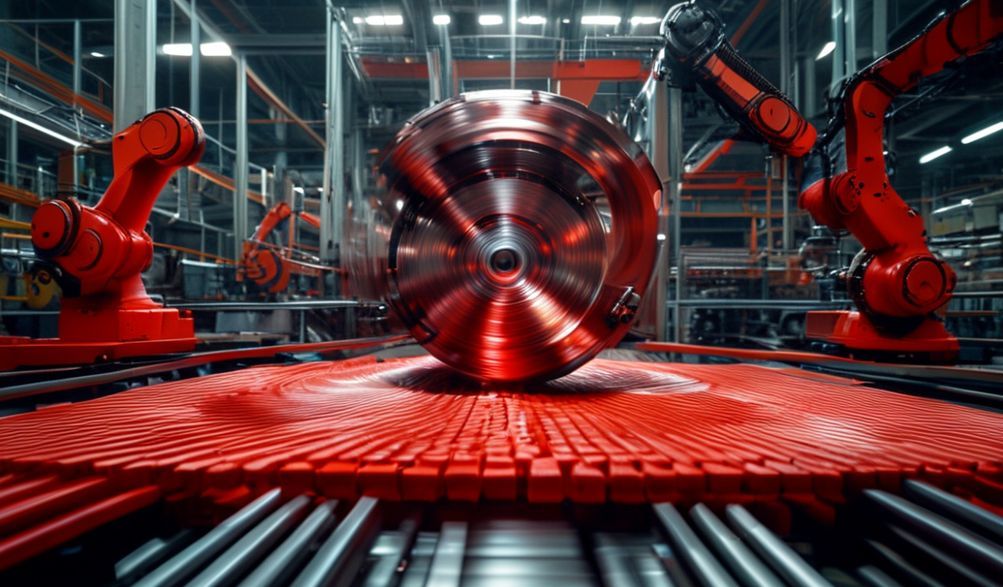
Rotatsion g'isht mashinasi, o'z mohiyatida, g'isht ishlab chiqarishning butun jarayonini avtomatlashtirish uchun mo'ljallangan uzluksiz, aylana ishlab chiqarish tizimidir. G'ishtlarni partiyalab ishlab chiqaradigan statik yoki chiziqli mashinalardan farqli o'laroq, rotatsion mashina bir nechta ish stantsiyalari bilan jihozlangan aylanadigan stol yoki platformada ishlaydi. Xom ashyo bir nuqtada yuklanadi va stol aylanganda, material ketma-ket qoliplash, siqish, chiqarish va quritish bosqichlaridan o'tadi, so'ngra tayyor g'isht tushiriladi—bularning barchasi bitta silliq, uzilmas sikl davomida amalga oshiriladi. Ana shu "karusel" usuli uning yuqori mahsuldorlik qobiliyatining kalitidir.
Operatsion tsikli: Xom ashyodan tayyor g'ishtgacha
Tsiklni tushunish mashinaning samaradorligini qadrlash uchun muhimdir. Jarayon sanoat uyg'unligining namunasi hisoblanadi:
- Oziqlantirish va Aralashtirish:Oldindan aralashtirilgan xom ashyo (loy, agregatli beton yoki bog'lovchi moddali uchqun kul) avtomatik ravishda markaziy bunkerga yuklanadi, u esa uni aylanadigan stoldagi qoliplarga bir tekis taqsimlaydi.
- Molding/Compression: As the mold rotates into position under the press head, immense hydraulic or mechanical pressure is applied. This compacts the material with extreme force, defining the brick’s shape, density, and structural integrity.
- Ejektsiya: The newly formed, compacted brick (often on a pallet) is gently ejected from the mold onto the continuing rotary path.
- Drying/Curing: Depending on the machine type and material, the brick may undergo initial drying via integrated systems (like heat or air flow) as it rotates, or it is transferred to a separate curing chamber. For concrete bricks, this stage is critical for strength development.
- Offloading: At the final station, the finished, stable brick is automatically stacked or transferred onto a conveyor for collection, packaging, and storage.
This cycle repeats continuously at each station with every rotation, creating a non-stop output stream.
Asosiy Komponentlar va Ularining Vazifalari
The reliability of this cycle depends on robust, precision-engineered components:
- Central Rotary Table: The heart of the machine. This heavy-duty rotating platform houses the mold carousels and must maintain perfect balance and alignment under constant load and vibration.
- Mold Carousels & Pallet System: These hold the individual brick molds. A synchronized pallet system often moves beneath the molds, carrying the brick through each stage without deformation.
- Hydraulic or Mechanical Press System: The source of compaction force. This system determines the final brick’s compressive strength and uniformity.
- Feeding Hopper and Distribution System: Ensures a consistent, measured volume of raw material is delivered to every mold, which is vital for brick consistency.
- Dasturlash mumkin bo'lgan mantiqiy boshqaruvchi (PLC): The machine’s brain. This automated control panel manages rotation speed, pressure cycles, and diagnostics, allowing for precise operation and easy adjustment.
Advantages of Using a Rotary Brick Machine
Investing in a rotary brick machine is a strategic decision with measurable returns. Here are the compelling benefits that drive this investment.
Unmatched Production Efficiency & Output
The continuous rotary motion eliminates the start-stop delays inherent in batch processing. This allows for:
* 24/7 Ish Rejimi: Machines can run around the clock with minimal supervision, maximizing capital utilization.
* High Speed: Depending on the model and brick type, a standard rotary machine can produce 8,000 to 25,000 bricks in an 8-hour shift—a output increase of 200-400% compared to many static machines.
* Izchil Oqim: The automated cycle guarantees a steady, predictable production rate, simplifying logistics and supply chain planning.
Superior Brick Quality and Uniformity
Precision engineering translates to a superior product. Every brick is produced under identical conditions of pressure, fill volume, and cycle time. This results in:
* O'lchov aniqligi: Bricks have consistent length, width, and height, leading to faster, cleaner construction with less mortar waste.
* Uniform Density & Strength: Consistent compaction ensures every brick meets the specified compressive strength standard, enhancing the structural safety of buildings.
* Excellent Surface Finish: High-quality molds produce bricks with smooth, defined edges and faces.
Significant Labor and Cost Savings
Automation is a primary driver of cost efficiency.
* Reduced Workforce: One automated machine can replace a large number of manual laborers involved in molding, handling, and stacking.
* Lower Operational Cost per Brick: While the initial investment is higher, the reduced labor, higher yield, and minimal waste dramatically lower the long-term cost of each brick produced.
* Reduced Human Error: Automation minimizes inconsistencies and product loss due to manual handling mistakes.
Space Optimization and Energy Efficiency
The compact, circular design of a rotary machine has a smaller footprint than an equivalent-capacity linear production line. Furthermore, modern machines are designed with efficiency in mind:
* Focused Energy Use: Energy is directed precisely where needed—in the press and drive motors.
* Heat Recovery: Advanced systems can capture and reuse heat from the compression and curing processes, reducing overall energy consumption for drying.
Types of Rotary Brick Machines and Their Applications
Not all rotary machines are the same. Selecting the right type depends on your raw material, desired output, and budget.
By Drive Mechanism: Hydraulic vs. Mechanical
- Hydraulic Rotary Machines: Use hydraulic cylinders to generate pressing force.
- Afzalliklari: Superior control over pressure and speed, capable of producing very high-density bricks (like pavers), quieter operation, and better shock absorption.
- Kamchiliklari: Generally more expensive, requires maintenance of hydraulic fluid and seals, and can be sensitive to temperature extremes.
- Mechanical Rotary Machines: Use a cam, flywheel, or toggle mechanism to generate force.
- Afzalliklari: Often have a lower initial cost, simpler mechanical design, and can be very fast for standard brick production.
- Kamchiliklari: Less pressure control, can be noisier and produce more vibration, and may not be suitable for ultra-high-strength products.
By Production Material: Clay, Concrete, and Fly Ash Bricks
The machine must be adapted to the material’s properties:
* Loydan g'isht mashinalari: Handle plastic, moist clay. They often include de-airing systems to remove air pockets and may be connected to tunnel kilns for firing.
* Beton G'isht Mashinalari: Designed for semi-dry concrete mixes. They apply high pressure for compaction and often include a curing chamber or system for steam curing to achieve rapid strength gain.
* Fly Ash G'isht Mashinalari: Optimized for fly ash (a byproduct of coal combustion) mixed with lime, gypsum, or cement. They require precise moisture control and high pressure to form durable, eco-friendly bricks.
By Automation Level: Semi-Automatic vs. Fully Automatic
- Yarim Avtomatik: Handles the core molding and compression cycle automatically but may require manual intervention for feeding raw material, placing/removing pallets, or stacking finished bricks. A cost-effective entry point for smaller operations.
- To'liq Avtomatik: Integrates all steps—from raw material feeding and mixing to brick stacking and pallet return—into one seamless, computer-controlled process. Maximizes output and minimizes labor but requires a higher investment and more technical oversight.
Critical Factors for Choosing the Right Rotary Brick Machine
This is the heart of your investment decision. A systematic approach will prevent costly mistakes.
Ishlab chiqarish talablaringizni baholash
Start with a clear internal audit:
* Output Needs: Calculate your current and projected future brick demand (bricks per day/month).
* G'isht spetsifikatsiyalari: Determine the types, sizes (solid, hollow, paver), and strength grades you need to produce.
* Site Constraints: Measure available floor space, ceiling height, and ensure you have the necessary electrical power (e.g., 3-phase) and water supply.
Machine Specifications to Scrutinize
When comparing models, go beyond the brochure. Key specs include:
* Pressure Force (Tonnage): Directly correlates to brick density and strength. (e.g., 150 tons for standard bricks, 300+ tons for heavy-duty pavers).
* Motor quvvati: Indicates the machine’s drive capacity and energy draw.
* Rotation Speed & Cycle Time: Determines how many bricks are produced per hour.
* Number of Stations: More stations generally mean higher output per rotation.
* Mold Compatibility & Changeover: Can it easily accept different molds? How long does a size changeover take?
* PLC Features: Look for user-friendly interfaces with diagnostic alerts and data logging capabilities.
Manufacturer Evaluation: Building Trust
This is perhaps the most critical step for ensuring long-term success and upholding E-E-A-T (Experience, Expertise, Authoritativeness, Trustworthiness) in your own supply chain.
* History & Reputation: How long has the company been building these machines? Seek out independent reviews and testimonials.
* Sertifikatlar: Look for international quality and safety certifications like ISO 9001ваСЕ белгиси, which indicate adherence to stringent manufacturing standards.
* Technical Support & After-Sales Service: A reliable manufacturer offers comprehensive installation supervision, operator training, and a clear warranty. Crucially, inquire about spare parts availability and local service support. The machine’s lifespan depends on accessible maintenance.
* Client Portfolio: A manufacturer with a diverse, global client base demonstrates proven capability.
Cost Analysis: Beyond the Initial Purchase Price
Adopt a Total Cost of Ownership (TCO) perspective:
1. Initial Purchase: Machine cost, shipping, and import duties.
2. Oʻrnatish va ishga tushirish: Foundation work, electrical hookup, and technician costs.
3. Operating Costs: Electricity, raw materials, labor for operation and supervision.
4. Texnik xizmat ko'rsatish xarajatlari: Regular service, replacement parts (molds, seals, bearings).
5. Potential ROI: Based on your production volume and local brick price, a well-utilized machine often achieves payback within 1.5 to 3 years.
Installation, Operation, and Maintenance Best Practices
Proper setup and care are non-negotiable for performance and longevity.
Foundation and Installation Essentials
The foundation is not just a slab; it’s a critical structural component.
* It must be a level, reinforced concrete foundation designed to handle the machine’s dynamic weight and operational vibrations.
* Follow the manufacturer’s exact specifications for depth, bolt placement, and curing time. A poor foundation leads to misalignment, excessive wear, and breakdowns.
Daily Operational Procedures and Safety
Consistency is key to safe, efficient operation.
* Pre-Start Checklist: Verify lubrication levels, check for loose parts, clear the work area, and ensure safety guards are in place.
* Monitoring: During operation, regularly check hydraulic pressure gauges, listen for unusual noises, and inspect sample bricks for quality.
* Safety First: Operators must wear appropriate PPE (safety glasses, gloves, steel-toe boots). Lock-out/Tag-out (LOTO) procedures must be strictly followed during any maintenance.
Preventive Maintenance Schedule
Proactive care prevents 95% of major failures. Adhere to a schedule:
* Daily: Clean the machine, check hydraulic oil levels, and visually inspect for leaks or damage.
* Weekly: Lubricate all bearings and guide rails as specified. Tighten any loose bolts or fittings.
* Monthly: Inspect hydraulic hoses and seals for wear. Check mold liners for excessive wear and clean them thoroughly.
* Annually (or per operating hours): Change hydraulic oil and filters. Have a certified technician perform a full calibration of the PLC and pressure systems.
Tez-tez so'raladigan savollar (FAQ)
Q1: What is the average production capacity of a standard rotary brick machine?
A: Capacity varies widely. A standard 10-12 station machine can typically produce between 8,000 to 20,000 bricks per 8-hour shift. The exact number depends on brick size, material, and the machine’s cycle time. High-capacity models can exceed 30,000 bricks per shift.
Q2: Can one machine produce different sizes and types of bricks?
A: Yes, through interchangeable molds. This allows production of solid, hollow, or paving blocks of different dimensions. However, changing molds requires downtime (from 30 minutes to a few hours), so it’s most efficient for batch production of one type at a time.
Q3: How long does it typically take to see a return on investment (ROI)?
A: The ROI period depends on your production scale, local market demand, and operational efficiency. For a well-utilized machine in a stable market, a typical range is 1.5 to 3 years. Higher production volumes and efficient operation shorten this period.
Q4: What are the most common maintenance issues and how can they be prevented?
A: Common issues include hydraulic oil leaks (prevent with regular seal inspection), mold wear leading to poor brick finish (prevent with regular cleaning and scheduled replacement), and bearing failure (prevent with strict adherence to the lubrication schedule). A proactive preventive maintenance plan, as outlined above, is the best defense.
Q5: Is specialized training required to operate this machinery?
A: Absolutely. Reputable manufacturers provide formal training for both operators and maintenance technicians. This training is essential for safe operation, maximizing productivity, ensuring brick quality, and maintaining the machine’s warranty. Never operate the machine without proper instruction.
Xulosa
The rotary brick machine stands as a transformative pillar in modern construction material manufacturing. It is far more than just a piece of equipment; it is a strategic asset that delivers unparalleled efficiency, consistent and superior quality, and a clear path to business scalability and profitability. By moving beyond antiquated methods, it addresses the core challenges of cost, labor, and output head-on.
Your journey to acquiring this asset must be grounded in careful planning. Use this guide as your foundation: thoroughly assess your production needs, scrutinize technical specifications, and, most importantly, conduct diligent due diligence on manufacturers. Prioritize partners who offer not just a machine, but a long-term commitment to support through training, service, and parts availability.
Let this knowledge empower you to ask the right questions, evaluate options with confidence, and ultimately select the rotary brick machine that will become the engine of your business growth for years to come. The future of building is efficient, automated, and precise—and it starts with the right foundation.
<