
Hướng Dẫn Toàn Diện Về Máy Gạch Quay: Hiệu Suất, Các Loại Máy và Cách Lựa Chọn
Thế giới đang xây dựng. Từ các khu đô thị mở rộng trải dài đến những dự án cơ sở hạ tầng thiết yếu, nhu cầu toàn cầu về vật liệu xây dựng bền vững, giá cả phải chăng và chất lượng cao là không ngừng nghỉ. Trọng tâm của cơn bùng nổ xây dựng này nằm ở một thành phần cơ bản: viên gạch. Tuy nhiên, các phương pháp sản xuất gạch truyền thống – tốn nhiều lao động, thiếu tính đồng nhất và chậm chạp – đang gặp khó khăn trong việc theo kịp nhịp độ. Máy ép gạch quay ra đời: một kiệt tác kỹ thuật công nghiệp mang tính cách mạng, biến đất sét, bê tông và tro bay thành những khối xây dựng chính xác với hiệu suất đáng kinh ngạc.
Sức mạnh tự động hóa này đại diện cho một bước chuyển biến lớn so với sản xuất thủ công, mở ra cho các nhà sản xuất con đường mở rộng quy mô, chất lượng vượt trội và tiết kiệm chi phí đáng kể. Nhưng với nhiều mẫu mã, thông số kỹ thuật và nhà sản xuất trên thị trường, làm thế nào để bạn lựa chọn đúng đắn cho hoạt động của mình? Hướng dẫn toàn diện này được thiết kế để trở thành nguồn thông tin chuẩn xác dành cho bạn. Dù bạn là chủ doanh nghiệp muốn nâng cấp dây chuyền sản xuất, quản lý xây dựng tìm nguồn nguyên liệu, hay nhà đầu tư đánh giá lĩnh vực sản xuất gạch, chúng tôi sẽ giải mã máy ép gạch tuynel. Chúng ta sẽ khám phá công nghệ cốt lõi, những ưu điểm không thể phủ nhận, các loại máy khác nhau, đồng thời cung cấp một khuôn khổ lựa chọn từng bước chi tiết để chọn ra thiết bị hoàn hảo. Những phân tích của chúng tôi dựa trên nguyên lý kỹ thuật ngành, dữ liệu vận hành và chuyên môn thực tiễn để định hướng quyết định của bạn.
Máy Ép Gạch Quay là gì? Giải thích Công nghệ Cốt lõi
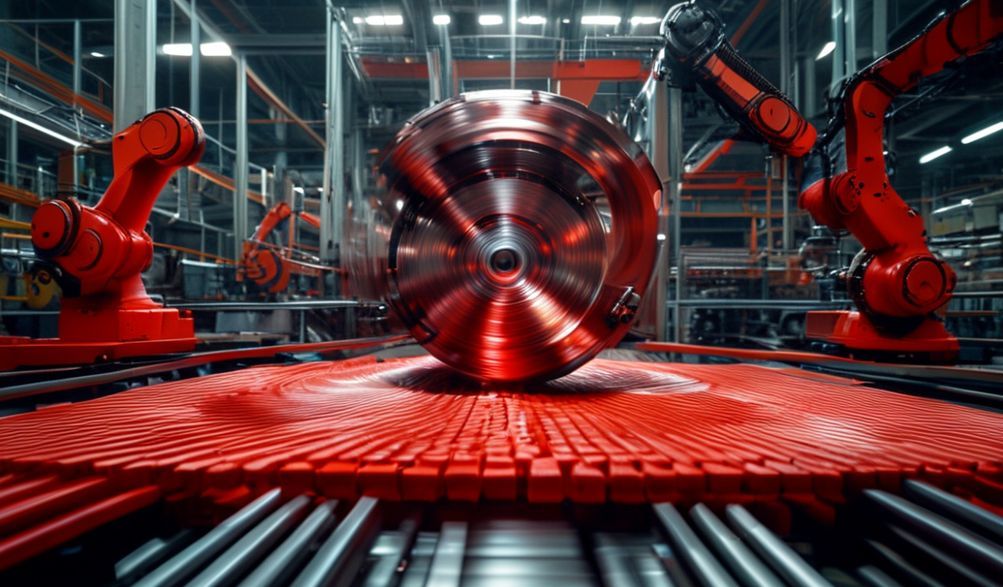
Về cốt lõi, máy ép gạch kiểu quay là một hệ thống sản xuất liên tục, tuần hoàn được thiết kế để tự động hóa toàn bộ quy trình sản xuất gạch. Khác với các máy tĩnh hoặc tuyến tính sản xuất gạch theo mẻ, máy quay hoạt động trên một bàn xoay hoặc bệ phẳng được trang bị nhiều trạm làm việc. Nguyên liệu thô được đưa vào tại một điểm, và khi bàn xoay chuyển động, nguyên liệu lần lượt trải qua các giai đoạn tạo khuôn, ép nén, đẩy sản phẩm và sấy khô trước khi một viên gạch thành phẩm được tháo ra — tất cả trong một chu kỳ liền mạch, không bị gián đoạn. Phương pháp "băng chuyền vòng" này chính là chìa khóa cho khả năng sản xuất cao của nó.
Chu trình Vận hành: Từ Nguyên liệu Thô đến Gạch Thành phẩm
Hiểu rõ chu kỳ là điều then chốt để đánh giá cao hiệu suất của cỗ máy. Quy trình này là một mẫu mực của sự hài hòa công nghiệp:
- Cho ăn & Trộn thức ăn:Nguyên liệu thô trộn sẵn (đất sét, bê tông có cốt liệu, hoặc tro bay với chất kết dính) được tự động đưa vào phễu trung tâm, sau đó phân phối đều vào các khuôn trên bàn quay.
- Molding/Compression: As the mold rotates into position under the press head, immense hydraulic or mechanical pressure is applied. This compacts the material with extreme force, defining the brick’s shape, density, and structural integrity.
- Đẩy ra: The newly formed, compacted brick (often on a pallet) is gently ejected from the mold onto the continuing rotary path.
- Drying/Curing: Depending on the machine type and material, the brick may undergo initial drying via integrated systems (like heat or air flow) as it rotates, or it is transferred to a separate curing chamber. For concrete bricks, this stage is critical for strength development.
- Offloading: At the final station, the finished, stable brick is automatically stacked or transferred onto a conveyor for collection, packaging, and storage.
This cycle repeats continuously at each station with every rotation, creating a non-stop output stream.
Các Thành Phần Chính và Chức Năng của Chúng
The reliability of this cycle depends on robust, precision-engineered components:
- Central Rotary Table: The heart of the machine. This heavy-duty rotating platform houses the mold carousels and must maintain perfect balance and alignment under constant load and vibration.
- Mold Carousels & Pallet System: These hold the individual brick molds. A synchronized pallet system often moves beneath the molds, carrying the brick through each stage without deformation.
- Hydraulic or Mechanical Press System: The source of compaction force. This system determines the final brick’s compressive strength and uniformity.
- Feeding Hopper and Distribution System: Ensures a consistent, measured volume of raw material is delivered to every mold, which is vital for brick consistency.
- Bộ điều khiển logic khả trình (PLC): The machine’s brain. This automated control panel manages rotation speed, pressure cycles, and diagnostics, allowing for precise operation and easy adjustment.
Advantages of Using a Rotary Brick Machine
Investing in a rotary brick machine is a strategic decision with measurable returns. Here are the compelling benefits that drive this investment.
Hiệu Suất và Sản Lượng Sản Xuất Vô Song
The continuous rotary motion eliminates the start-stop delays inherent in batch processing. This allows for:
* Hoạt động 24/7 Machines can run around the clock with minimal supervision, maximizing capital utilization.
* Tốc Độ Cao: Depending on the model and brick type, a standard rotary machine can produce 8,000 to 25,000 bricks in an 8-hour shift—a output increase of 200-400% compared to many static machines.
* Thông lượng Ổn định: The automated cycle guarantees a steady, predictable production rate, simplifying logistics and supply chain planning.
Superior Brick Quality and Uniformity
Precision engineering translates to a superior product. Every brick is produced under identical conditions of pressure, fill volume, and cycle time. This results in:
* Độ chính xác kích thước: Bricks have consistent length, width, and height, leading to faster, cleaner construction with less mortar waste.
* Mật độ và Cường độ Đồng đều Consistent compaction ensures every brick meets the specified compressive strength standard, enhancing the structural safety of buildings.
* Hoàn thiện bề mặt xuất sắc: High-quality molds produce bricks with smooth, defined edges and faces.
Significant Labor and Cost Savings
Automation is a primary driver of cost efficiency.
* Reduced Workforce: One automated machine can replace a large number of manual laborers involved in molding, handling, and stacking.
* Lower Operational Cost per Brick: While the initial investment is higher, the reduced labor, higher yield, and minimal waste dramatically lower the long-term cost of each brick produced.
* Reduced Human Error: Automation minimizes inconsistencies and product loss due to manual handling mistakes.
Space Optimization and Energy Efficiency
The compact, circular design of a rotary machine has a smaller footprint than an equivalent-capacity linear production line. Furthermore, modern machines are designed with efficiency in mind:
* Focused Energy Use: Energy is directed precisely where needed—in the press and drive motors.
* Heat Recovery: Advanced systems can capture and reuse heat from the compression and curing processes, reducing overall energy consumption for drying.
Types of Rotary Brick Machines and Their Applications
Not all rotary machines are the same. Selecting the right type depends on your raw material, desired output, and budget.
By Drive Mechanism: Hydraulic vs. Mechanical
- Hydraulic Rotary Machines: Use hydraulic cylinders to generate pressing force.
- Ưu điểm: Superior control over pressure and speed, capable of producing very high-density bricks (like pavers), quieter operation, and better shock absorption.
- Nhược điểm: Generally more expensive, requires maintenance of hydraulic fluid and seals, and can be sensitive to temperature extremes.
- Mechanical Rotary Machines: Use a cam, flywheel, or toggle mechanism to generate force.
- Ưu điểm: Often have a lower initial cost, simpler mechanical design, and can be very fast for standard brick production.
- Nhược điểm: Less pressure control, can be noisier and produce more vibration, and may not be suitable for ultra-high-strength products.
By Production Material: Clay, Concrete, and Fly Ash Bricks
The machine must be adapted to the material’s properties:
* Máy Sản Xuất Gạch Đất Sét: Handle plastic, moist clay. They often include de-airing systems to remove air pockets and may be connected to tunnel kilns for firing.
* Máy Sản Xuất Gạch Bê Tông: Designed for semi-dry concrete mixes. They apply high pressure for compaction and often include a curing chamber or system for steam curing to achieve rapid strength gain.
* Máy Sản Xuất Gạch Tro Bay: Optimized for fly ash (a byproduct of coal combustion) mixed with lime, gypsum, or cement. They require precise moisture control and high pressure to form durable, eco-friendly bricks.
By Automation Level: Semi-Automatic vs. Fully Automatic
- Bán Tự Động: Handles the core molding and compression cycle automatically but may require manual intervention for feeding raw material, placing/removing pallets, or stacking finished bricks. A cost-effective entry point for smaller operations.
- Hoàn Toàn Tự Động: Integrates all steps—from raw material feeding and mixing to brick stacking and pallet return—into one seamless, computer-controlled process. Maximizes output and minimizes labor but requires a higher investment and more technical oversight.
Critical Factors for Choosing the Right Rotary Brick Machine
This is the heart of your investment decision. A systematic approach will prevent costly mistakes.
Đánh Giá Yêu Cầu Sản Xuất Của Bạn
Start with a clear internal audit:
* Output Needs: Calculate your current and projected future brick demand (bricks per day/month).
* Thông số kỹ thuật gạch: Determine the types, sizes (solid, hollow, paver), and strength grades you need to produce.
* Site Constraints: Measure available floor space, ceiling height, and ensure you have the necessary electrical power (e.g., 3-phase) and water supply.
Machine Specifications to Scrutinize
When comparing models, go beyond the brochure. Key specs include:
* Lực Ép (Tấn Lực): Directly correlates to brick density and strength. (e.g., 150 tons for standard bricks, 300+ tons for heavy-duty pavers).
* Công suất động cơ: Indicates the machine’s drive capacity and energy draw.
* Rotation Speed & Cycle Time: Determines how many bricks are produced per hour.
* Number of Stations: More stations generally mean higher output per rotation.
* Mold Compatibility & Changeover: Can it easily accept different molds? How long does a size changeover take?
* PLC Features: Look for user-friendly interfaces with diagnostic alerts and data logging capabilities.
Manufacturer Evaluation: Building Trust
This is perhaps the most critical step for ensuring long-term success and upholding E-E-A-T (Experience, Expertise, Authoritativeness, Trustworthiness) in your own supply chain.
* History & Reputation: How long has the company been building these machines? Seek out independent reviews and testimonials.
* Chứng chỉ: Look for international quality and safety certifications like ISO 9001vàDấu CE, which indicate adherence to stringent manufacturing standards.
* Technical Support & After-Sales Service: A reliable manufacturer offers comprehensive installation supervision, operator training, and a clear warranty. Crucially, inquire about spare parts availability and local service support. The machine’s lifespan depends on accessible maintenance.
* Client Portfolio: A manufacturer with a diverse, global client base demonstrates proven capability.
Cost Analysis: Beyond the Initial Purchase Price
Adopt a Total Cost of Ownership (TCO) perspective:
1. Lần mua đầu tiên Machine cost, shipping, and import duties.
2. Lắp đặt & Vận hành: Foundation work, electrical hookup, and technician costs.
3. Operating Costs: Electricity, raw materials, labor for operation and supervision.
4. Chi phí bảo trì: Regular service, replacement parts (molds, seals, bearings).
5. Potential ROI: Based on your production volume and local brick price, a well-utilized machine often achieves payback within 1.5 đến 3 năm.
Installation, Operation, and Maintenance Best Practices
Proper setup and care are non-negotiable for performance and longevity.
Foundation and Installation Essentials
The foundation is not just a slab; it’s a critical structural component.
* It must be a level, reinforced concrete foundation designed to handle the machine’s dynamic weight and operational vibrations.
* Follow the manufacturer’s exact specifications for depth, bolt placement, and curing time. A poor foundation leads to misalignment, excessive wear, and breakdowns.
Daily Operational Procedures and Safety
Consistency is key to safe, efficient operation.
* Pre-Start Checklist: Verify lubrication levels, check for loose parts, clear the work area, and ensure safety guards are in place.
* Monitoring: During operation, regularly check hydraulic pressure gauges, listen for unusual noises, and inspect sample bricks for quality.
* Safety First: Operators must wear appropriate PPE (safety glasses, gloves, steel-toe boots). Lock-out/Tag-out (LOTO) procedures must be strictly followed during any maintenance.
Preventive Maintenance Schedule
Proactive care prevents 95% of major failures. Adhere to a schedule:
* Hàng ngày: Clean the machine, check hydraulic oil levels, and visually inspect for leaks or damage.
* Hàng tuần: Lubricate all bearings and guide rails as specified. Tighten any loose bolts or fittings.
* Monthly: Inspect hydraulic hoses and seals for wear. Check mold liners for excessive wear and clean them thoroughly.
* Annually (or per operating hours): Change hydraulic oil and filters. Have a certified technician perform a full calibration of the PLC and pressure systems.
Các Câu Hỏi Thường Gặp (FAQ)
Q1: What is the average production capacity of a standard rotary brick machine?
A: Capacity varies widely. A standard 10-12 station machine can typically produce between 8,000 to 20,000 bricks per 8-hour shift. The exact number depends on brick size, material, and the machine’s cycle time. High-capacity models can exceed 30,000 bricks per shift.
Q2: Can one machine produce different sizes and types of bricks?
A: Yes, through interchangeable molds. This allows production of solid, hollow, or paving blocks of different dimensions. However, changing molds requires downtime (from 30 minutes to a few hours), so it’s most efficient for batch production of one type at a time.
Q3: How long does it typically take to see a return on investment (ROI)?
A: The ROI period depends on your production scale, local market demand, and operational efficiency. For a well-utilized machine in a stable market, a typical range is 1.5 đến 3 năm. Higher production volumes and efficient operation shorten this period.
Q4: What are the most common maintenance issues and how can they be prevented?
A: Common issues include hydraulic oil leaks (prevent with regular seal inspection), mold wear leading to poor brick finish (prevent with regular cleaning and scheduled replacement), and bearing failure (prevent with strict adherence to the lubrication schedule). A proactive preventive maintenance plan, as outlined above, is the best defense.
Q5: Is specialized training required to operate this machinery?
A: Absolutely. Reputable manufacturers provide formal training for both operators and maintenance technicians. This training is essential for safe operation, maximizing productivity, ensuring brick quality, and maintaining the machine’s warranty. Never operate the machine without proper instruction.
Conclusion
The rotary brick machine stands as a transformative pillar in modern construction material manufacturing. It is far more than just a piece of equipment; it is a strategic asset that delivers unparalleled efficiency, consistent and superior quality, and a clear path to business scalability and profitability. By moving beyond antiquated methods, it addresses the core challenges of cost, labor, and output head-on.
Your journey to acquiring this asset must be grounded in careful planning. Use this guide as your foundation: thoroughly assess your production needs, scrutinize technical specifications, and, most importantly, conduct diligent due diligence on manufacturers. Prioritize partners who offer not just a machine, but a long-term commitment to support through training, service, and parts availability.
Let this knowledge empower you to ask the right questions, evaluate options with confidence, and ultimately select the rotary brick machine that will become the engine of your business growth for years to come. The future of building is efficient, automated, and precise—and it starts with the right foundation.
<