
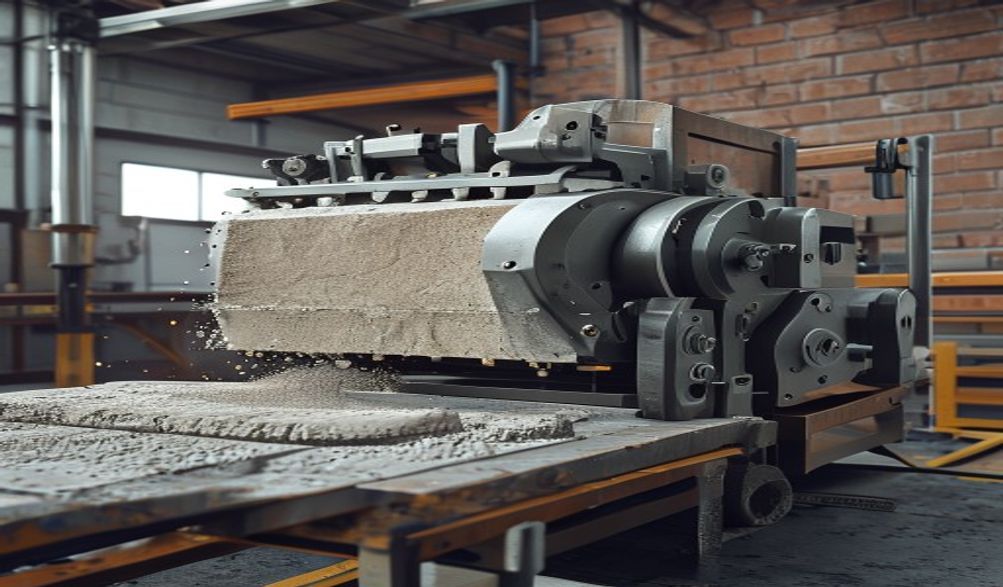
G‘isht Tayyorlash Mashinasini Qanday Tanlash Kerak: 2024-yil uchun Xaridorlar Qo‘llanmasi
Kirish
Ko'plab modellar, mexanizmlar va global yetkazib beruvchilar bilan to'g'ri g'isht ishlab chiqarish mashinasini tanlash judayam murakkab tuyulishi mumkin. Bu yuqori darajadagi mas'uliyat talab etadigan qaror. Noto'g'ri tanlov kapitalning behuda sarflanishiga, doimiy past ishlab chiqarishga va bozor yoki loyiha standartlariga javob bermaydigan yakuniy mahsulotga olib kelishi mumkin.
Ushbu keng qamrovli qo‘llanma shovqinni bartaraf etishga qaratilgan. O‘nlab yillik jamoaviy sanoat tajribasiga tayangan holda, biz sizga aniq va ishonchli investitsiya qilishga yordam beradigan ravshan, bosqichma-bosqich tizimni taqdim etamiz. Biz shunchaki mashinalar ro‘yxatini keltirmaymiz; biz sizga ko‘rsatamizg'isht yasash mashinasini qanday tanlash kerakbu sizning aniq ishlab chiqarish ehtiyojlaringiz, xom ashyo manbalaringiz va uzoq muddatli biznes maqsadlaringizga to'liq mos keladigan.
Ushbu qo'llanma oxiriga kelib, siz kundalik quvvat va avtomatlashtirish darajasidan tortib, ta'minotchilarni tekshirish va umumiy egalik qiymatigacha bo'lgan asosiy omillarni tushunasiz. Bu bilim sizga investitsiyangizni maksimal darajada oshiruvchi va kelgusi yillarda ishonchli ishlaydigan uskunalarni tanlash imkoniyatini beradi.
1. Loyihangiz Talablarini Baholang: Tanlovingiz Asosi
Har qanday ehtiyojlarni chuqur baholamasdan o'tish, xaridorlar qiladigan eng keng tarqalgan va qimmat xatodir. Avval vazifani aniqlamasdan, to'g'ri vosita tanlab bo'lmaydi. Bu bosqich keyingi barcha qarorlarni yo'naltiradigan muhokamaga chidamli mezonlarni belgilaydi.
Asosiy G'isht Turi va Spetsifikatsiyalaringizni Aniqlang
Ishlab chiqarmoqchi bo'lgan g'ishtingiz mashinaning asosiy funksiyasini belgilaydi. Avvalo, mahsulotingizni aniq belgilang.
-
Oddiy G'isht Turlari:
- Qattiq G'ishtlar:Zich, yuk ko'taruvchi devorlar uchun ishlatiladi. Yuqori siqilishga chidamlilik talab qilinadi.
- Pustak G'ishtlar:Yengil, izolyatsiya uchun bo'shliqlari va material iste'molini kamaytirish uchun mo'ljallangan. Qurilishda keng qo'llaniladi.
- O'zaro bog'langan g'ishtlar:Mortarsiz bir-biriga mos keladigan tarzda ishlab chiqilgan, yo‘l qoplamalari va ba’zi devor tizimlari uchun ideal.
- Yotqazish g'ishtlari:Bezaksiz va bardoshli, silliq sirt va yuqori mustahkamlikni talab qiladi.
-
Asosiy Spetsifikatsiyalar:
- Oʻlcham va oʻlchovlar:Aniq uzunlik, kenglik va balandlik.
- Siqish Mustahkamligi (MPa):Strukturaviy mustahkamlikning muhim ko'rsatkichi. Mahalliy qurilish qoidalari talablarini bilib oling.
- Sirt Teksturasi va Silliqlik:Silliq, rustik yoki naqshli? Bu qoliplarning dizayni va ishlab chiqarish texnikasiga ta'sir qiladi.
Kunlik/Haftalik Talab Qilinadigan Ishlab Chiqarish Quvvatini Hisoblang
Sizning maqsadli natijangiz mashina o'lchami va avtomatlashtirish darajasini belgilovchi asosiy omildir. Realistik bo'ling.
- Talabga asoslangan prognoz:Siz bitta katta loyihaga yetkazib berasizmi yoki ochiq bozorga sotasizmi? Vaqt o'tishi bilan g'isht ehtiyojingizni hisoblang.
- Chiqish ko'rsatkichlarini tushunish:Yetkazib beruvchilar ko'pincha soatiga "nazariy" mahsulot chiqishini ko'rsatadi. Amalda esa, material yetkazib berish, quritish vaqti va mehnat unumdorligi kabi omillar buni kamaytiradi. Yaxshi qoida shundan iboratki,barqaror chiqish 70-80%nazariy maksimalning
- Masshtabni Boshqarish:
- Kichik miqyosli / StartapKuniga 1,000 dan 5,000 gacha g'isht.
- Oʻrta miqyosli:Кунга 5,000 – 20,000 тағача гўшт.
- Keng miqyosli / Sanoat:Kuniga 20,000 dan ortiq g'isht.
Mavjud Xom Ashyolaringizni Aniqlang
Xom ashyo - bu sizning jarayoningizning yurakdir. Mashina uni samarali boshqarish uchun mo'ljallangan bo'lishi kerak.
-
Material mosligi:
- LoyEkstruder yoki qattiq loy jarayoni talab qilinadi. Ko'pincha quritish va pishirish kerak (siqilgan tuproq bloklar ishlab chiqarilmasa).
- Concrete (Cement, Aggregate, Sand, Fly Ash): The most common material for block making machines. Uses vibration and compression.
- Soil/Stabilized Earth: For compressed earth blocks (CEBs), requiring high mechanical pressure without vibration.
-
The Direct Influence: Your material choice immediately narrows the field. A machine optimized for concrete will struggle with clay, and vice versa. Some modern machines offer adaptability, but specialization usually yields better quality and efficiency.
2. Understand the Different Types of Brick Making Machines
With your requirements defined, you can now navigate the different technologies available. Each type offers a distinct balance of cost, labor, and output.
Qo'lda, Yarim Avtomatik va To'liq Avtomatik Mashinalar
This spectrum represents the level of human involvement and investment.
-
Qo'lda Boshqariladigan Mashinalar: Operated entirely by hand (filling, compacting, ejecting).
- Afzalliklari: Very low cost, simple maintenance, no power needed.
- Kamchiliklari: Very low output, high labor intensity, inconsistent product quality.
- Eng yaxshisi: Micro-enterprises, very small projects, or regions with extremely low labor costs.
-
Yarim avtomat mashinalar: Mechanize the core forming process (e.g., vibration, compression) but require manual feeding of raw material and removal of finished bricks.
- Afzalliklari: Good balance of cost and output, improved consistency, lower skill requirement than manual.
- Kamchiliklari: Still labor-dependent for feeding and handling.
- Eng yaxshisi: Small to medium businesses with moderate capital and available labor.
-
To'liq avtomatik mashinalar: Integrated systems with automated material feeding, mixing (if included), molding, stacking, and sometimes palletizing.
- Afzalliklari: Very high, consistent output. Drastically reduced labor costs and human error.
- Kamchiliklari: High initial investment, complex maintenance, requires stable power supply.
- Eng yaxshisi: Medium to large-scale production, where output consistency and labor savings justify the capital outlay.
Statsionar blok mashinalari va mobil g'isht mashinalari
This choice is about your production philosophy: centralized factory or on-site manufacturing?
-
Стационар блок станоклари: Installed in a fixed location, typically a factory or yard.
- Afzalliklari: Generally more robust, higher capacity, and can be part of a larger integrated production line (with mixers, conveyors).
- Kamchiliklari: Bricks must be transported to the construction site. Requires a dedicated, prepared space with proper foundation.
- Eng yaxshisi: Established block yards and permanent manufacturing plants.
-
Mobil G'isht Mashinalari: Mounted on a trailer or wheels for easy relocation.
- Afzalliklari: Eliminate brick transport costs; produce directly at the construction site. Faster setup.
- Kamchiliklari: Often have lower capacity than large stationary models. Can be less stable.
- Eng yaxshisi: Large construction companies building projects in remote locations or developers who move from site to site.
Key Machine Mechanisms: Hydraulic, Vibration, and Compression
The mechanism defines how the brick is formed and impacts its final density and strength.
-
Gidravlik Bosim: Uses hydraulic cylinders to apply immense, controlled pressure to the raw material in a mold.
- Ta'sir: Produces very dense, high-strength bricks with a smooth finish. Excellent for interlocking and compressed earth blocks.
- Match With: Soil, clay, and concrete mixes where extreme compaction is desired.
-
Vibration (High-Frequency): Uses electric or hydraulic vibrators to settle concrete mix into a mold, removing air pockets.
- Ta'sir: Produces standard hollow and solid concrete blocks efficiently. The most common mechanism for concrete block making.
- Match With: Concrete mixes (with cement, fly ash, aggregate).
-
Kombinatsion Tizimlar: Many high-quality machines, especially automatic ones, use a vibration and compression combo. Vibration settles the mix, and a hydraulic press applies final top pressure for superior density and a uniform finish.
3. Evaluate Critical Machine Features and Build Quality
Two machines may look similar on a spec sheet but differ vastly in longevity. Here, you must look at the engineering details.
Core Components: Mold Quality, Frame Strength, and Power System
These are the bones and muscles of the machine. Never compromise here.
-
Qoliplar Sifati: The mold defines the brick.
- Look For: Hardened, heat-treated steel (e.g., Cr12, 45# steel). Precision machining for smooth surfaces and tight tolerances.
- Why It Matters: Poor molds wear quickly, leading to misshapen bricks, increased downtime for replacement, and higher long-term costs.
-
Рамканинг беркиклиги: The frame absorbs all operational stress.
- Look For: Heavy-duty, welded steel construction with reinforced corners and gussets. Avoid light, bolted-together frames.
- Why It Matters: A weak frame will flex, causing misalignment, poor brick quality, and ultimately, catastrophic failure.
-
Elektr tizimi: The heart of operation.
- Look For: Brand-name electric motors (e.g., Siemens, WEG) and hydraulic pumps/packs (e.g., Rexroth, Yuken) with adequate power ratings.
- Why It Matters: Reliable, efficient components ensure consistent performance, lower energy consumption, and easier sourcing of replacement parts.
Automation Features and Control Systems
Automation is about precision, repeatability, and data.
- Dasturiy mantiqiy boshqaruvchilar (PLC-lar): The machine’s brain.
- Foyda: Allows for precise control over cycle times, pressure, and vibration duration. Enables fault diagnostics and easy adjustment of settings for different products.
- Touchscreen Human-Machine Interface (HMI):
- Foyda: Provides an intuitive dashboard for operators, displaying production counts, fault codes, and allowing parameter changes.
- Automated Material Feeding and Stacking:
- Foyda: Creates a continuous production flow, maximizing output and minimizing physical labor and product handling damage.
Energy Efficiency and Operational Costs
The purchase price is just the beginning. Consider how the machine consumes resources.
- Compare Power Ratings: A machine with a more efficient design or higher-quality components may use a 15kW motor to do the same work as a competitor’s 22kW model, saving significant electricity over its lifetime.
- Design for Efficiency: Look for features like variable-speed drives on motors or load-sensing hydraulics, which reduce energy waste.
4. Research and Vet Potential Suppliers Thoroughly
The machine is only as good as the company that builds and supports it. This step is about risk mitigation.
Evaluating Supplier Reputation and History
- Longevity & Track Record: How long have they been in business? A 20-year-old company has likely refined its designs and survived market tests.
- Client Testimonials & Portfolios: Ask for case studies or contact lists of clients in your region. A reputable supplier will provide them.
- Factory Audits: If feasible, visit the manufacturing facility. You can assess their quality control processes, engineering capability, and inventory firsthand.
The Non-Negotiables: Warranty, After-Sales Service, and Parts Availability
This is your safety net. Scrutinize it.
- Kafolat: A comprehensive warranty should cover defects in materials and workmanship for critical components (frame, molds, power systems) for at least 1-2 years. Understand what voids it.
- Sotilgandan keyingi xizmat: Do they offer installation supervision and operator training? What is their technical support structure? Is it via email, phone, or remote desktop? What are their response time guarantees?
- Ehtiyot qismlar mavjudligi: Ensure they maintain an inventory of wear parts (mold liners, seals, vibrator motors) and can ship them promptly. Long lead times for parts equate to costly production downtime.
Request and Analyze Quotations and Proposals
Standardize the information you request to make an apples-to-apples comparison.
- Your Quote Checklist:
- Detailed machine specifications and model number.
- Itemized pricing (machine, spare parts kit, optional features).
- Shipping terms (FOB, CIF, or DDP) and estimated delivery time.
- Scope of after-sales support (installation, training, warranty).
- Drawings for foundation and utility (power, air) requirements.
5. Analyze Cost vs. Value for Long-Term ROI
Shift your mindset from “purchase price” to “total cost of ownership” and long-term value.
Understanding the Total Cost of Ownership (TCO)
The true cost includes every expense from purchase to disposal.
- Dastlabki xarajatlar: Machine price, shipping, insurance, import duties, installation, and initial training.
- Operatsion xarajatlar: Electricity/fuel, labor, raw materials, routine maintenance.
- Ishlamay qolish narxlari: Lost production revenue during breakdowns and maintenance.
- Lifecycle Costs: Replacement of wear parts (molds, liners, hydraulic seals) and eventual major overhauls.
Balancing Your Budget with Quality and Needs
The cheapest machine is often the most expensive in the long run.
- Avoid False Economy: A low-quality machine will have higher breakdown rates, produce more waste (rejected bricks), and have a shorter lifespan, erasing any initial savings.
- Smart Compromises: You might compromise on a semi-automatic vs. a fully automatic model to fit your budget, but you should never compromise on the quality of core components like the frame, molds, and power system.
Financing Options and ROI Projections
- Financing: Some suppliers offer financing plans. Alternatively, explore equipment loans from local banks or development agencies focused on industry.
- Simple ROI Projection:
- HisoblangTotal Annual Production (bricks/day x operating days).
- Determine your Net Profit per Brick (Selling Price – Total Cost per Brick [material, labor, power, overhead]).
- Annual Profit = Total Annual Production x Net Profit per Brick.
- Simple Payback Period = Total Machine Investment / Annual Profit.
This projection highlights how a slightly more expensive, more reliable, and efficient machine can pay for itself faster by maximizing uptime and output.
Tez-tez so'raladigan savollar (FAQ)
What is the average cost of a brick making machine?
There is no single “average” due to the vast range. Manual machines can start from $1,000 – $5,000. Semi-automatic stationary machines typically range from $10,000 – $50,000. Large, fully automatic production lines can cost $100,000 to over $500,000. The price is directly tied to capacity, automation level, and build quality.
Can one machine produce different types of bricks?
Yes, in most cases. The primary method is by changing the mold. However, ease varies. On a simple manual machine, it might take 30 minutes. On a complex automatic line, mold changeover might require specialized tools and several hours of downtime. When comparing machines, ask about mold changeover time and the cost of additional molds.
How much space and what kind of foundation is needed?
Requirements vary dramatically:
* Small Manual/Semi-Auto: A 50-100 sqm shed with a level, compacted earth or simple concrete floor.
* Medium Semi/Fully Auto: A 200-500 sqm workshop with a reinforced concrete foundation (often 300-500mm thick) specified by the supplier.
* Large Automatic Line: A 1000+ sqm factory space with a heavy-duty industrial foundation, 3-phase high-voltage power, and possibly overhead cranes.
Always follow the supplier’s foundation and utility layout drawings precisely.
What is the most common mistake people make when choosing a machine?
Two linked mistakes: 1) Choosing based solely on the lowest purchase price, ignoring quality and TCO, and 2) Failing to accurately assess long-term production needs, leading to a machine that is either underpowered for growth or overly complex and expensive for their actual demand. Thorough planning, as outlined in this guide, prevents both.
Xulosa
Choosing the right brick making machine is a strategic investment that forms the foundation of your business or project’s success. By following this five-step process—defining your precise needs, understanding machine types, evaluating build quality, vetting suppliers meticulously, and analyzing total cost versus value—you move from a position of uncertainty to one of informed confidence.
Remember, this decision is not just about buying a piece of equipment; it’s about securing a reliable, profitable production capability for years to come. Prioritize your specific requirements, demand proven quality from reputable partners, and invest in a solution that grows with you.
Have more specific questions about your project? The next step is to consult with industry experts or reach out to shortlisted suppliers with your detailed requirements for personalized guidance and quotations.
<