
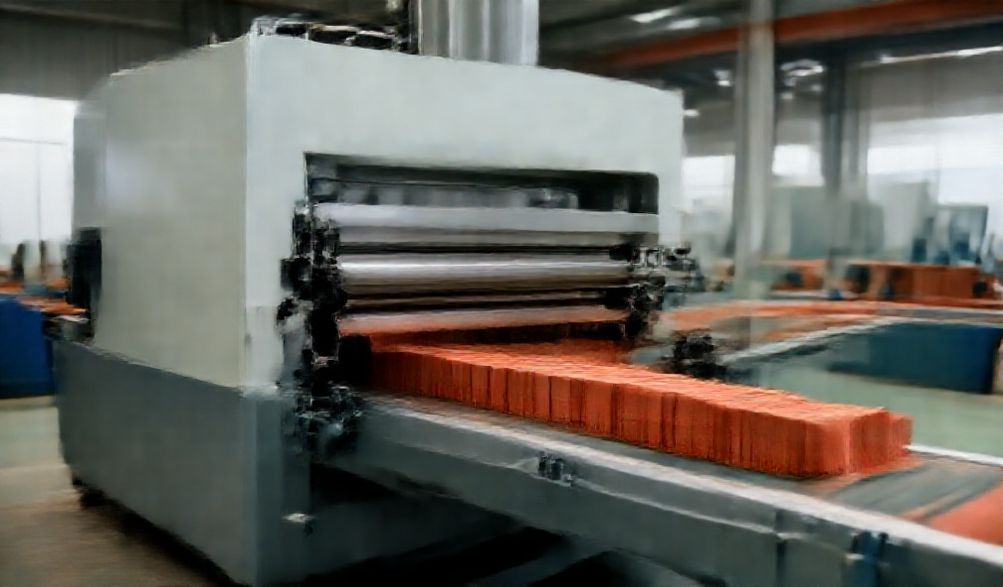
The Ultimate Guide to China Solid Brick Making Machines: Quality, Cost & How to Choose
In an era of rapid global urbanization and infrastructure development, the demand for durable, affordable, and readily available construction materials has never been higher. At the heart of this supply chain is a fundamental component: the solid brick. For entrepreneurs, construction companies, and governments looking to establish or expand brick production, the machinery source has become overwhelmingly clear. China has solidified its position as the undisputed epicenter for manufacturing robust, innovative, and cost-effective solid brick making machinery.
However, navigating this vast and dynamic market presents a significant challenge. The landscape is filled with thousands of manufacturers, ranging from world-class engineering firms to less reputable workshops. Variations in quality, price, transparency, and after-sales support can turn a promising investment into a costly headache. This guide serves as your comprehensive, expert-led resource. We will cut through the noise, drawing on deep industry insights, technical analysis, and practical procurement wisdom to empower you to make an informed, confident, and successful purchase decision. Let’s build that knowledge from the ground up.
Why China Dominates the Solid Brick Machine Market
TushunishNima uchun China leads this industry is the first step to sourcing wisely. It’s not a coincidence; it’s the result of decades of strategic development and industrial evolution.
Ishlab Chiqarish Keng Miqyos va Tajriba Sarmoyasi
China’s title as the “world’s factory” is particularly apt for heavy machinery. For over 30 years, the country has developed unparalleled ecosystems for manufacturing. In the brick machinery sector, this has led to the formation of powerful industrial clusters in provinces like Shandong, Fujian, and Henan.
These clusters create a powerful synergy. Within a concentrated geographic area, you find:
* Specialized foundries and steel suppliers.
* Manufacturers of hydraulic components and electrical panels.
* Expert mold and die workshops.
* A deep pool of skilled welders, fitters, and engineers.
This integrated supply chain drastically reduces production time and cost while fostering an environment of continuous innovation and competition among manufacturers.
Unbeatable Price-to-Performance Ratio
This is often the primary draw for international buyers, and for good reason. Chinese solid brick making machines typically offer a compelling value proposition that is difficult to match.
The competitive pricing stems from:
* Iqtisodiy Miqyos: Massive production volumes spread fixed costs (R&D, tooling) across many units.
* Integratsiyalangan Ta'minot Zanjirlari: As mentioned, sourcing components locally and efficiently keeps input costs low.
* Skilled Labor at Competitive Rates: A large workforce with relevant technical skills contributes to lower assembly costs.
It’s crucial to frame this correctly: it’s not just about being the cheapest. It’s about accessing a level of machine capability and automation that, when sourced from Europe or North America, often comes with a premium that can be 2 to 3 times higher. Chinese manufacturers have mastered delivering robust functionality at an accessible price point.
Technological Advancement and Adaptability
Gone are the days when “Made in China” implied basic, copycat technology. The leading Chinese manufacturers are at the forefront of brick machine innovation.
Modern machines now routinely feature:
* PLC (Programmable Logic Controller) Systems: For automated, precise, and repeatable operation cycles.
* Energiya tejovchi dizaynlar: Incorporating variable-speed drives and optimized hydraulic systems to reduce power consumption—a major operational cost.
* Semi and Full Automation: From automatic material feeding and brick stacking to robotic pallet handling, reducing labor needs and improving safety.
Furthermore, Chinese engineers have become experts in moslashtirish. They can adapt a machine’s design to work optimally with your specific local raw materials, whether it’s clay, fly ash, shale, or a concrete mix, and to produce the exact brick size, shape, and compressive strength your market requires.
Key Types of Solid Brick Making Machines from China
Not all brick machines are created equal. Your project’s success hinges on selecting the right type of technology for your needs. Here’s a breakdown of the main categories.
Hydraulic Press Machines (For High-Density, Precision Bricks)
Working Principle: These machines use a high-pressure hydraulic system to compress raw material into a mold. The pressure is applied steadily and can be precisely controlled.
- Eng yaxshisi: Producing high-strength, uniform solid bricks, high-quality pavers, kerbstones, and interlocking blocks where precision and superior finish are critical.
- Afzalliklari:
- Produces bricks with excellent density and compressive strength.
- Smooth, consistent finish on all brick faces.
- Generally quieter operation than vibratory machines.
- Highly versatile for different products with mold changes.
- Kamchiliklari:
- Higher initial investment cost.
- Cycle time can be slower than vibratory compaction, potentially yielding lower hourly output for standard bricks.
- The hydraulic system requires careful maintenance.
Vibratory Compaction Machines (For High-Volume Output)
Working Principle: These machines use a combination of powerful vibration and mechanical pressure to compact material inside a mold. The vibration helps to remove air pockets and densely pack the material.
- Eng yaxshisi: Large-scale production of standard solid clay or concrete bricks where high output volume is the primary goal.
- Afzalliklari:
- Very high production speed (cycle time can be under 15 seconds).
- Rugged construction designed for 24/7 continuous operation.
- Often more straightforward mechanically than complex hydraulic systems.
- Highly effective for standard brick formats.
- Kamchiliklari:
- Operation can be significantly noisier.
- Bricks may have slightly lower density and surface finish compared to top-tier hydraulic presses.
- More limited in producing highly intricate or large-format blocks.
Manual & Semi-Automatic Machines (For Small Business & Startups)
Working Principle: These are simple, often lever-operated or small electrically-powered machines that require significant human intervention for material feeding, compaction, and brick ejection.
- Eng yaxshisi: Entrepreneurs with low startup capital, very small-scale projects, community-based building initiatives, or areas with unreliable electricity.
- Afzalliklari:
- Extremely low purchase cost.
- Simple to maintain and repair locally.
- Minimal or no power requirements for manual models.
- Portable and easy to set up.
- Kamchiliklari:
- Very low output (often hundreds of bricks per day, not per hour).
- Labor-intensive and physically demanding.
- Brick quality is highly dependent on operator skill, leading to potential inconsistency.
The Essential Buyer’s Checklist: How to Select a Reliable Supplier
This is the most critical phase of your journey. Diligent supplier vetting is your primary shield against risk.
Verifying Manufacturer Credentials & Experience
Don’t take a website at face value. Conduct due diligence:
* Business License & Factory Audit: Insist on seeing their official business license (you can ask a local agent to verify it via China’s Administration for Industry and Commerce – AIC). A mandatory virtual factory tour via video call is non-negotiable. Look for organization, workflow, and the quality of work in progress.
* Industry Certifications: While not a guarantee, certifications like ISO 9001(Sifatni boshqarish) vaCE (for export to many markets) indicate a commitment to systematic processes and safety standards.
* Portfolio & Client References: Ask for detailed photos and videos of machines they have produced and installed. Most importantly, request contact information for 2-3 past international clients in a region similar to yours. Take the time to speak with them.
Assessing Machine Quality Beyond the Brochure
The specification sheet tells only part of the story. Drill down into the details:
* Asosiy Komponentlar: Specify and verify the brands of critical parts. For hydraulics, ask for Rexroth, Kawasaki, or Yuken. For PLCs, Siemens or Mitsubishi are top-tier. For molds, inquire about the grade and hardness of the steel used. A machine built with reputable components will last longer and perform better.
* Production Data & Testing: Request actual, verified production data (bricks per hour under specific conditions) and a brick quality report. The gold standard is to send a sample of your raw materials to the factory for them to conduct a live test and send you the resulting bricks for your own evaluation.
* Build Quality & Safety: During your video tour, look at weld quality (should be clean and even), the thickness of structural steel, and the presence of essential safety features like mechanical guards, emergency stop buttons, and electrical safety interlocks.
Understanding the Total Cost of Ownership (TCO)
The machine price is just the entry ticket. Smart buyers budget for the TCO:
* Cost Breakdown:
* Machine FOB Price
* Shipping, Insurance, and Logistics to your port
* Import Duties and Taxes (consult a local customs broker)
* Installation & Commissioning (by their engineer or a local technician)
* Initial Spare Parts Kit (at least 1-2% of machine cost)
* Operator & Maintenance Training
* After-Sales Service Agreement: This is your long-term safety net. The contract must clearly state:
* Warranty period (typically 12 months for parts, excluding wear items).
* Response time for technical support (e.g., 24-hour remote support via WhatsApp/Video).
* Spare parts pricing policy and guaranteed lead time for shipment.
* Terms for an engineer’s on-site visit (cost, duration, responsibilities).
* Operatsion xarajatlar: Calculate estimated energy consumption (kW per hour) and understand the routine maintenance schedule (daily greasing, weekly checks, etc.).
Navigating the Procurement Process: From Inquiry to Installation
A structured process prevents misunderstandings and ensures a smooth transaction.
Step 1: Detailed RFQ and Technical Communication
Start with a comprehensive Request for Quotation (RFQ). A good RFQ should include:
* Raw Material Analysis: Type, composition, moisture content, particle size.
* G'isht spetsifikatsiyalari: Desired final size, weight, density, and minimum compressive strength.
* Production Requirement: Target output (bricks per 8-hour shift).
* Site Conditions: Available power supply (voltage, phase), factory space, and ceiling height.
* Preferred Level of Automation: Manual feeding? Automatic stacking?
This clarity allows suppliers to provide accurate proposals and shows you are a serious buyer.
Step 2: Negotiation, Contract, and Payment Security
- Payment Terms: Standard terms are often 30% deposit via T/T (Telegraphic Transfer), 70% balance against copy of Bill of Lading. Consider using Escrow services (like Alibaba Trade Assurance) for added security, especially with new suppliers.
- The Contract: This must be detailed and in English. It should include, as appendices: Final Technical Specifications, Warranty Terms, Accepted Payment Terms, Delivery Schedule, and Penalty Clauses for late delivery or performance shortfalls. Do not proceed without a signed contract.
Step 3: Logistics, Customs Clearance, and Installation
- Shipping: Understand Incoterms. FOB (Erkin Bordda) is common, where you control the main shipping and insurance. CIF (Xarajat, Sug‘urta va Yuk Tashish) means the supplier arranges it to your port. Using a reliable freight forwarder is highly recommended.
- Key Documents: Ensure you receive and check: Commercial Invoice, Packing List, Bill of Lading, Certificate of Origin, and any required manuals in advance.
- Installation: Clarify who is responsible. Will the supplier send an engineer (at whose cost?), or will they provide detailed installation manuals and video guides for your local team? On-site commissioning is invaluable for starting up correctly.
Tez-tez so'raladigan savollar (FAQ)
Q1: What is the typical price range for a China-made solid brick making machine?
A: Prices vary dramatically based on type and automation. A small manual machine can start around 3,000 – 8,000 AQSh dollari. A robust semi-automatic vibratory machine may range from 15,000 – 40,000 AQSh dollari. A fully automatic hydraulic production line with feeding and stacking systems can range from $50,000 to $150,000+. The key is to get detailed quotes based on your specific RFQ.
Q2: How can I ensure the machine quality without visiting China?
A: A comprehensive virtual factory tour is essential. Furthermore, insist on a live performance test using a sample of your raw materials, which they should courier back to you. Request high-resolution videos of the machine in action for other clients, focusing on the operation, the bricks produced, and the final packing for shipment.
Q3: What is the lead time for production and delivery?
A: For a standard model, production typically takes 20-35 days. Sea freight can add 30-45 days to major ports worldwide, plus time for customs clearance at your destination (5-10 days). For large, custom-designed lines, production can take 60-90 days. Always build buffer time into your project plan.
Q4: Do Chinese suppliers provide training and operational manuals?
A: Reputable suppliers absolutely should. Your contract must stipulate the provision of clear English-language operation manuals, maintenance guides, electrical circuit diagrams, and parts lists. Basic training is often included—either via detailed videos, online sessions, or, preferably, from their engineer during on-site installation.
Q5: How do I handle machine breakdowns and spare parts?
A: This underscores the importance of the after-sales agreement. Start by purchasing a recommended initial spare parts kit. For breakdowns, the supplier should first provide remote troubleshooting via video call. If a part is needed under warranty, they should ship it promptly. Post-warranty, you should have a clear process and price list for ordering spare parts. Building a good relationship with your supplier is key here.
Xulosa
Sourcing a solid brick making machine from China presents a tremendous opportunity: access to advanced, reliable, and highly customizable manufacturing technology at a value-driven price point. However, this opportunity is only fully realized through meticulous supplier vetting, clear technical communication, and a focus on building a partnership, not just making a one-time purchase.
Remember, the true measure of your investment is not the sticker price, but the Umumiy Egallik Qiymati and the strength of the After-Sales Support behind it. By applying the insights from this guide—verifying credentials, understanding the technology, and managing the procurement process step-by-step—you transform from a hopeful buyer into an informed partner. You are now equipped to make a decision that will lay a solid, profitable foundation for your brick-making business for years to come.
<