
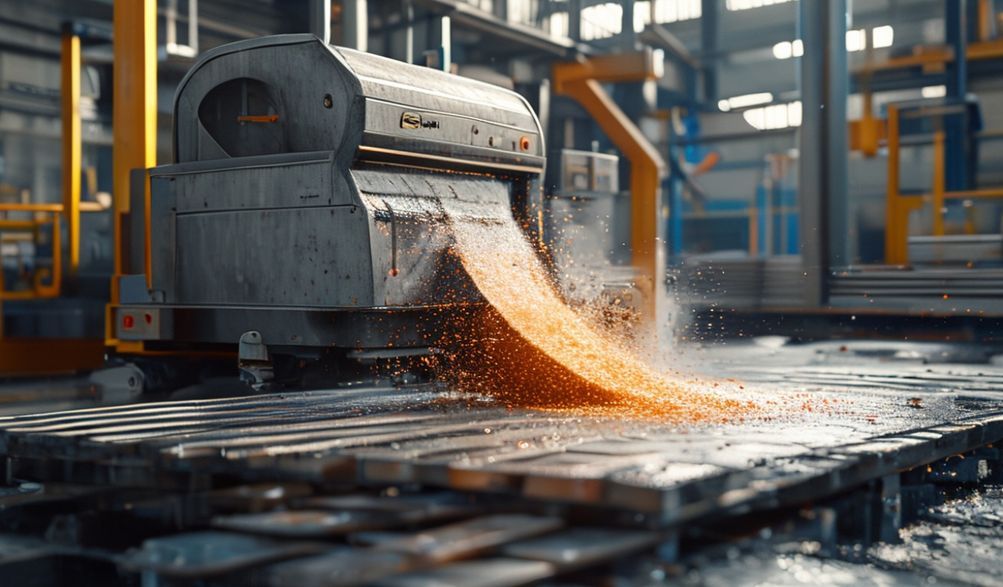
Бетон блок машинларининг тўлиқ қўлланмаси: Тўпламлари, ишлатилиши ва қандай танлаш керак
Kirish
Bilasizmi, beton bloklar har yili milliardlab ishlab chiqarilishi bilan sayyoramizdagi eng ko'p iste'mol qilinadigan qurilish materiallaridan biridir? Osmono'par binolar poydevorlaridan tortib, hovli qo'riq devorlarigacha, oddiy ko'ringan beton blok zamonaviy qurilishning asosini tashkil etadi. Ammo har bir bir xil va bardoshli blok ortida muhim uskuna: beton blok mashinasi yotadi.
Ushbu qamrovli qo‘llanma sizning ishonchli manbaingiz bo‘lish uchun mo‘ljallangan. Sohangiz qanday bo‘lishidan qat’iy nazar – maydonda material ishlab chiqarish jarayonini soddalashtirmoqchi bo‘lgan pudratchi, yirik zavod uchun uskunalar ta’minlayotgan xaridlar menejeri yoki ishlab chiqarish imkoniyatlarini o‘rganayotgan tadbirkor – qaroringizni asosli qabul qilish eng muhim omildir. Sanoat bilimi, texnik spetsifikatsiyalar va amaliy operatsion tushunchalar asosida tuzilgan ushbu qo‘llanma beton blok mashinalari haqidagi tushunarsizliklarni bartaraf etadi.
Siz ularning ishlash prinsiplarini o'rganasiz, mavjud turlarini kashf etasiz va o'z ehtiyojlaringiz uchun mos mashinani tanlash bo'yicha amaliy maslahatlar olasiz. Shuningdek, biz muhim operatsion amaliyotlar, texnik xizmat ko'rsatish jadvallari va hatto investitsiya qilishning biznes jihatlarini ham yoritamiz, bu sizga samaradorlik, sifat va rentabellikni oshiruvchi qarorlar qabul qilishda yordam beradi.
Beton blok mashinasi nima? Asosiy tamoyillari va ishlash prinsipi
Beton blok mashinasi - bu sement, agregatlar va suv aralashmasini ma'lum shakl va o'lchamdagi qoliplash uchun siqib, beton qurilish bloklarini (CMU) ishlab chiqarish uchun mo'ljallangan qurilma. Barcha turlarida asosiy printsip bir xil: yarim quruq beton aralashmasini quritishga tayyor yuqori zichlikdagi, aniq shakllangan blokka aylantirish. Ushbu jarayondagi samaradorlik, hajm va avtomatlashtirish darajasi mashinaning toifasini belgilaydi.
Asosiy Mexanika: Xom Ashyodan Tayyor Blokgacha
Transformatsiya aniq bir ketma-ketlik bo'yicha amalga oshiriladi:
1. Aralash:Xom ashyolar (odatda sement, qum, shag'al yoki maydalangan tosh) bir hil, yarim quruq beton aralashmasini yaratish uchun aralashtirgichda aniq miqdordagi suv bilan birlashtiriladi. Namlik darajasi juda muhimdir—ortiqcha ho'l bo'lsa, blok egiladi; ortiqcha quruq bo'lsa, u to'g'ri zichlanmaydi.
2. Qoliplash:Aralashma, blokning shaklini (masalan, bo'sh, qattiq, plitka) belgilaydigan qoliplash qutisi yoki "qolip"ga yuboriladi.
3. Siqish:Bu eng muhim bosqichdir. Mashina bir qatoryuqori chastotali tebranishваgidravlik yoki mexanik bosim(tonnaj) aralashmani siqish uchun, havo bo'shliqlarini yo'q qilish va talab qilinadigan zichlik va mustahkamlikka erishish uchun.
4. Demolding & Curing:Yangi shakllangan yoki "yashil" blok qolipdan paletaga yoki erga chiqariladi. Keyin u quritish jarayoniga kiradi, bu yerda bir necha kun davomida nazorat qilinadigan namlik va harorat ostida mustahkamlik oladi, ko'pincha maxsus quritish kamerasida.
Standart Mashinaning Asosiy Komponentlari
Asosiy qismlarni tushunish ishlatish va nosozliklarni bartaraf etishda yordam beradi:
* Хоппер:Qoliplashdan oldin xom beton aralashmasini ushlab turadi.
* Mikser:Ingredientlarni aralashtiradi (ba'zi modellarda birlashtirilgan, boshqalarida alohida).
* Qoliplar/Qoliplar qutisi:Blokni shakllantiruvchi asosiy asbob. Almashtiriladigan qoliplar bitta mashinaga turli xil blok turlarini ishlab chiqarish imkonini beradi.
* Vibrator tizimi:Odatda, beton aralashmasini qoliplarga zich joylashtirish uchun elektr yoki gidravlik vibrator ishlatiladi.
* Siquqlash Tizimi:Gidravlik dom yoki mexanik dastgoh yakuniy bosim kuchini qo'llaydi.
* Boshqaruv Tizimi:Oddiy qo'lda boshqariladigan mashinalardagi oddiy dastgohlardan tortib, avtomatik modellardagi dasturlanuvchi mantiqiy boshqaruv (PLC) paneligacha bo'lgan diapazonda ishlab chiqarish tsiklini boshqaradi.
* Avtomatik modellarda paleta aylanish tizimi:Bloklarni chiqarish va quritish maydoniga tashish uchun paletalarni mashina orqali harakatlantirish.
Zamonaviy Blok Yasalishida Avtomatlashtirishning O‘rni
Avtomatlashtirish blok ishlab chiqarishni tubdan o'zgartirdi. Zamonaviy mashinalar har bir parametrni – tebranish vaqtini, bosimni, xom ashyo miqdorini – boshqarish uchun PLC (dasturiy boshqaruv qurilmalari) dan foydalanadi, bu har bir blokning bir xil bo'lishini ta'minlaydi. Avtomatlashtirilgan paletalar bilan ta'minlovchi qurilmalar, yig'uvchi moslamalar va kub konveyerlari qo'lda mehnatni keskin kamaytiradi, mahsulot chiqishini oshiradi (ba'zida soatiga minglab bloklarga yetadi) va operatorlar xavfsizligini yaxshilaydi. Ushbu texnologik o'zgarish mashina turlari o'rtasidagi asosiy farqlovchi omil hisoblanadi.
Beton blok mashinalari turlari: To'g'ri moslamani topish
To'g'ri mashinani tanlash ishlab chiqarish hajmi, byudjet va mehnat resurslarining mavjudligiga bog'liq. Sanoat amaliyoti shuni ko'rsatadiki, mashina turini loyiha doirangizga moslashtirish muvaffaqiyatli ishlashning birinchi qadamidir.
Qo'lda Ishlatiladigan Beton Blok Mashinalari
Bular eng oddiy, inson kuchi bilan ishlaydigan mashinalardir.
* Mukammal mos keladi: Small-scale projects (e.g., building a single home, garden wall), startups with minimal capital, or regions with very low labor costs.
* Operatsiya: An operator manually fills the mold, engages a lever to apply vibration/pressure, and then demolds the block.
* Afzalliklari:
* Very low initial investment.
* Ishlatish va texnik xizmat ko'rsatish oson.
* No power requirement (for purely mechanical models).
* Kamchiliklari:
* Very low output (typically 100-500 blocks per 8-hour shift).
* High labor intensity and physical strain.
* Inconsistency in block quality due to human variables.
Semi-Automatic Concrete Block Machines
These machines automate the critical compaction and vibration phases but require manual intervention for feeding mix and removing finished blocks.
* Mukammal mos keladi: Medium-scale production for local construction businesses, supplying small housing developments, or producing specialty blocks intermittently.
* Operatsiya: The operator feeds mix into the hopper, and the machine automates the molding, compaction, and demolding cycle. Blocks are then manually removed and stacked for curing.
* Afzalliklari:
* Good balance between cost, output, and quality consistency.
* Higher output than manual machines (e.g., 800-2,000 blocks per shift).
* Significantly improves block density and uniformity.
* Kamchiliklari:
* Still requires several operators for material handling and block removal.
* Output is limited by manual handling speed.
Fully Automatic Concrete Block Machines
These are complete production systems, automating the entire process from raw material feeding to block stacking.
* Mukammal mos keladi: Large-scale commercial plants, high-volume infrastructure projects, and businesses where consistent, high-throughput production is critical.
* Operatsiya: With a PLC control panel, the machine manages material batching, mixing, molding, compaction, curing pallet circulation, and block stacking. Operators primarily monitor the system and perform maintenance.
* Afzalliklari:
* Very high, consistent output (can exceed 10,000 blocks per 8-hour shift).
* Exceptional quality control and dimensional accuracy.
* Drastically reduced direct labor costs per block.
* Kamchiliklari:
* High initial capital investment.
* Requires significant space, a strong foundation, and three-phase power.
* More complex maintenance requiring technical skill.
Mobile Block Machines vs. Stationary Plants
This is a crucial strategic choice:
* Мобил блок машиналари: Mounted on a trailer, these are designed for on-site production. They eliminate transport costs for blocks and are perfect for large, remote projects like dams, road construction, or large-scale rural housing. They are typically semi-automatic.
* Стационар ўсимликлар: Fixed installations at a factory or yard. They benefit from optimized layouts, easier integration with curing systems, and can house larger, fully automatic lines. They supply a market from a central location.
Key Factors to Consider When Choosing a Machine
Moving beyond basic type, a deep dive into specifications and requirements is necessary for a trustworthy investment decision.
Ishlab chiqarish talablaringizni baholash
Ask these questions first:
* Kundalik/Haftalik natijalar How many blocks do you need to produce to meet demand?
* Блокларнинг Түрлари ва Ўлчамлари: Will you produce standard hollow blocks, solid blocks, pavers, interlocking blocks, or specialty shapes? Each may require different mold kits.
* Loyiha Miqyosi va Davomiyligi:Bu bir martalik loyiha uchunmi yoki doimiy biznes uchunmi?
Machine Specifications Deep Dive
Compare these technical specs across models:
* Sikl vaqti: The time to produce one block or one mold of blocks. Faster cycles mean higher output.
* Mold Capacity: How many blocks are produced per cycle (e.g., 3-block mold, 6-block mold).
* Bosim (Tonaj): The compaction force, measured in tons. Higher tonnage (e.g., 150+ tons) produces denser, stronger blocks suitable for load-bearing applications.
* Quvvat talablari: Manual (none), single-phase (for small semi-autos), or industrial three-phase power (for automatic plants).
Quality of Output: What to Look For
Request sample blocks from a machine you’re considering. Evaluate:
* Density & Strength: A well-compacted block should feel heavy and solid.
* O'lchov aniqligi: Measure samples. They must be consistent and within standard tolerances (e.g., +/- 1.5mm).
* Sirt silliqligi: Should be smooth, without cracks or chips.
* Izchillik: Ten blocks should look and feel virtually identical.
Total Cost of Ownership: Beyond the Purchase Price
The smartest buyers look at lifetime cost:
* Boshlang'ich investitsiya: Machine price, mold costs, and installation.
* Operatsion xarajatlar: Electricity consumption, labor wages, and raw material costs per block.
* Maintenance & Parts: Availability and cost of wear parts (mold liners, vibrator motors, hydraulic seals). A machine from a reputable brand with local parts support can save significant downtime and cost.
* Foundation & Space: Don’t forget the cost of preparing a level, reinforced concrete base for stationary machines.
Operational Best Practices and Maintenance
Owning the right machine is only half the battle. Proper operation and maintenance, as seasoned operators report, are what ensure longevity, safety, and consistent profit margins.
Raw Material Preparation: The Foundation of Quality Blocks
The machine can only work with what it’s given. Industry standards emphasize mix design:
* Ideal Ratios: A common mix is 1 part cement, 3 parts sand, and 5 parts coarse aggregate (1:3:5), but this varies based on desired strength and local materials.
* Water Content: This is critical. The mix should be semi-dry—holding its shape when squeezed in your hand but crumbling apart when poked.
* Qo‘shimchalar: Plasticizers or color pigments can be added for specific workability or aesthetic requirements.
Step-by-Step: Operating Your Machine for Optimal Results
- Safety First: Always wear PPE (safety glasses, gloves, hearing protection). Ensure all guards are in place.
- Pre-Start Check: Verify lubrication points, check hydraulic oil levels, and ensure the mold is clean and secure.
- Material uzatish: Load the hopper with a consistent, well-mixed batch of concrete.
- Tsiklni boshlash: Start the machine cycle via the control panel or lever. Let the automation/vibration sequence complete fully.
- Block Removal & Curing: Carefully remove the green block and place it on a level, stable curing rack. Maintain proper moisture (often by covering with plastic sheeting) for at least 24-48 hours before air curing.
Essential Maintenance Schedule for Longevity
Adherence to a schedule prevents costly breakdowns:
* Daily: Clean the mold, hopper, and feed system thoroughly after production. Check for loose bolts or parts.
* Weekly: Lubricate all moving parts as per the manual. Inspect hydraulic hoses for leaks.
* Monthly: Check vibration motor mounts and bolts. Inspect the hydraulic oil for contamination. Calibrate sensors on automatic machines.
Troubleshooting Common Concrete Block Machine Issues
- Poor Compaction/Weak Blocks: Likely caused by incorrect water content (too wet or too dry), insufficient vibration time, or low compaction pressure.
- Surface Cracks: Usually from too much water in the mix or improper curing (drying too quickly).
- Sticking in Mold: A dirty, damaged, or poorly lubricated mold. Can also be caused by an overly wet mix.
- Inconsistent Block Height: Worn mold components, uneven feeding of the mix, or an unlevel machine foundation.
The Business Case: ROI and Applications
Understanding the market and financials establishes the authoritativeness of your investment.
Diverse Applications of Machine-Made Concrete Blocks
The product versatility drives demand:
* Turar-joy qurilishi: Foundation walls, partition walls, and chimney blocks.
* Commercial/Industrial: Load-bearing walls in warehouses, factories, and multi-story buildings.
* Landshaft va qattiq yuzalar dizayni: Pavers, retaining wall units, and garden edging.
* Infrastructure: Sound barrier walls, drainage systems, and utility blocks.
Calculating Your Return on Investment (ROI)
A simplified framework:
1. Calculate your cost per block: (Cost of Cement + Sand + Aggregate + Power + Labor + Machine Depreciation) / Number of Blocks Produced.
2. Determine the local market price for a similar quality block.
3. Your gross profit per block = Market Price – Cost per Block.
4. Simple Payback Period = (Total Machine Investment Cost) / (Gross Profit per Block * Blocks Sold per Month).
Misol: If your machine costs $50,000 and you net $0.20 profit per block selling 20,000 blocks a month, your payback period is roughly 12.5 months.
Starting a Concrete Block Manufacturing Business: An Overview
Key considerations beyond the machine:
* Space & Zoning: Secure a yard or warehouse with room for production, raw material storage, and block curing. Verify industrial zoning.
* Licensing & Standards: Obtain necessary business licenses and ensure your blocks meet relevant national or regional quality standards (e.g., ASTM C90 in the US).
* Supply Chain: Secure reliable, cost-effective sources for cement and aggregates.
* Market Analysis: Identify your primary customers: contractors, DIY stores, or government tenders.
Frequently Asked Questions (FAQ) About Concrete Block Machines
Q1: What is the average cost range for a concrete block machine?
A: Prices vary dramatically. A small manual machine can start at a few hundred dollars. Semi-automatic machines range from $5,000 to $50,000. Fully automatic production lines can cost from $50,000 to over $500,000, depending on capacity and sophistication. Always correlate price with specifications and output.
Q2: Can one machine produce different block types and sizes?
A: Yes, through the use of interchangeable molds. Most manufacturers offer a range of mold kits (for hollow blocks, solid blocks, pavers, etc.). However, changing molds requires time and labor, so it’s most efficient for batch production of one type at a time.
Q3: How much space and what kind of foundation is needed for setup?
A: A small semi-automatic machine might need a 10m x 10m area. A full plant requires a large shed or factory space. The foundation must be a level, reinforced concrete slab, often 6-8 inches thick, to absorb the machine’s vibration and weight. Always follow the manufacturer’s specific foundation drawing.
Q4: What is the typical lifespan of a well-maintained machine?
A: With diligent maintenance and proper operation, a quality concrete block machine can last 15 to 25 years. Key structural components like the frame last the longest, while wear parts like molds and vibrators will need replacement every few years depending on usage.
Q5: Are there specific safety certifications or operator training required?
A: While operator certification isn’t universally mandated, it is critically important. Reputable manufacturers provide operational training. Always insist on it. Safety practices—like lockout/tagout procedures during maintenance, using PPE, and understanding emergency stops—are non-negotiable for a trustworthy operation.
Xulosa
Selecting and operating a concrete block machine is a significant decision with direct implications for your project’s efficiency or your business’s bottom line. The key takeaways are to meticulously match the machine type—manual, semi-automatic, or fully automatic—to your genuine production needs and budget. Look beyond the sticker price to the total cost of ownership, and never compromise on the quality of output or the rigor of your maintenance schedule.
Choosing the right equipment is transformative. It empowers you to control material quality, reduce costs, and meet demand reliably. Use this guide as a foundational benchmark for your research. When you’re ready, consult with reputable manufacturers, request live demonstrations using your local materials, and make an investment built on knowledge and insight.
<