
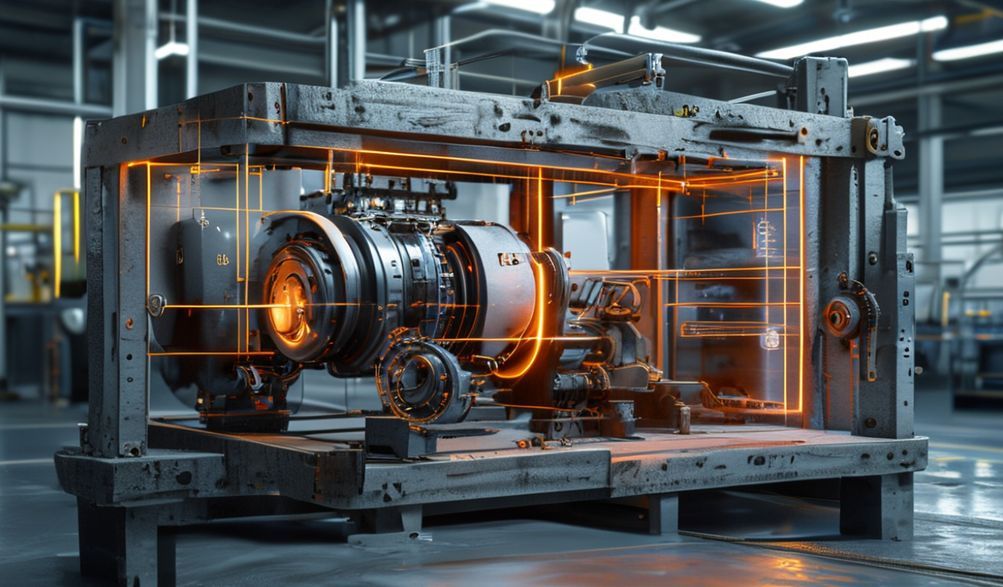
Hướng Dẫn Toàn Diện Về Thiết Kế Máy Sản Xuất Gạch Bê Tông: Thông Tin Chi Tiết & Tài Liệu PDF từ Nhà Máy FUDA
Giới thiệu
Trong một thời đại được định nghĩa bởi quá trình đô thị hóa nhanh chóng và xu hướng xây dựng bền vững, viên gạch bê tông khiêm tốn vẫn là nền tảng của xã hội hiện đại. Nhưng đằng sau mỗi viên gạch đồng đều, cường độ cao là cả một công trình kỹ thuật phức tạp: máy sản xuất gạch bê tông. Hiệu quả, sản lượng và lợi nhuận của bất kỳ hoạt động sản xuất gạch nào không chỉ phụ thuộc vào việc sở hữu một chiếc máy, mà còn vào việc thấu hiểu trí tuệ được tích hợp trong thiết kế của nó.
Nếu bạn đã tìm kiếm "thiết kế máy sản xuất gạch bê tông pdf," mục đích của bạn rất rõ ràng. Bạn không chỉ đang xem lướt qua—bạn đang tìm kiếm kiến thức kỹ thuật có thể áp dụng ngay. Bạn có thể là một quản lý nhà máy đang muốn tối ưu hóa sản lượng, một kỹ sư được giao nhiệm vụ bảo trì, một doanh nhân đang đánh giá khoản đầu tư, hoặc một sinh viên nghiên cứu về cơ khí công nghiệp. Bạn cần nhiều hơn là những tờ rơi quảng cáo; bạn cần những nguyên tắc nền tảng và tài liệu đáng tin cậy chi phối hiệu suất của máy móc.
Hướng dẫn này được xây dựng từ góc nhìn am hiểu ngành, dựa trên các nguyên tắc kỹ thuật đã được kiểm chứng và những thông tin chi tiết từ các nhà sản xuất nhưNhà máy sản xuất gạch FUDAChúng tôi tin rằng việc làm sáng tỏ thiết kế máy móc là bước đầu tiên hướng tới việc đưa ra quyết định mua sắm thông minh hơn, đạt được hiệu suất vận hành tối ưu và đảm bảo độ tin cậy lâu dài. Trong các phần tiếp theo, chúng tôi sẽ phân tích các yếu tố thiết kế cốt lõi của những máy móc này, giải thích cách mỗi thành phần tác động đến lợi nhuận cuối cùng của bạn, và hướng dẫn bạn đến những nguồn tài liệu kỹ thuật quan trọng đáng tin cậy mà bạn đang tìm kiếm.
Nguyên lý cốt lõi trong thiết kế máy sản xuất gạch bê tông
Cốt lõi, một máy làm gạch là một hệ thống các lực đồng bộ. Thiết kế của nó là sự cân bằng cẩn thận giữa độ vững chắc cấu trúc, chuyển động chính xác và nguồn lực được kiểm soát để biến hỗn hợp bê tông khô thành một cấu kiện xây dựng hoàn hảo.
The Production Cycle & Machine Layout
Every machine is designed around a core production cycle. Understanding this cycle is key to understanding the machine’s physical layout:
- Cho ăn: The raw, dry concrete mix is loaded into a hopper.
- Đo lường & Truyền tải: A feeder system delivers a precise volume of mix into the mold cavity.
- Nén chặt: The mix is subjected to high-frequency vibration and hydraulic pressure to achieve maximum density.
- Đúc khuôn The compacted mix takes the exact shape of the mold (hollow block, solid block, paver, etc.).
- Đẩy ra: The freshly formed, green block is pushed out onto a pallet or conveyor.
- Curing & Return: The block is moved to a curing area, and the empty pallet is returned to the start of the cycle.
The machine’s design—from the placement of the hydraulic power unit to the path of the mold table—is optimized to make this cycle as fast, repeatable, and energy-efficient as possible.
Key Mechanical Systems & Their Design Considerations
Mold & Mold Table Design
The mold is the heart of the machine. Its design dictates your final product.
* Vật liệu: High-chromium, hardened alloy steel is standard for wear resistance.
* Độ chính xác: Tolerances are microscopic. Perfectly square corners and smooth surfaces are essential for easy block ejection and consistent block dimensions.
* Interchangeability: A well-designed system allows for relatively quick mold changes, enabling production flexibility between different block types.
Vibration and Compaction System
This system is responsible for the block’s structural integrity. Design choices here directly affect strength.
* Các loại: Eccentric shaft vibrators (common) or hydraulic vibration systems.
* Frequency & Amplitude: High-frequency, low-amplitude vibration is typically used for fine, dense blocks. The design must ensure even distribution of vibration across the entire mold table.
* Compaction Force: Hydraulic rams provide the final top pressure, working in tandem with vibration to eliminate all air voids.
Hydraulic Power System
This is the muscle of the machine. Reliability is non-negotiable.
* Design for Pressure: The system must deliver consistent, high pressure for compaction and ejection without leakage or pressure drops.
* Control: Sophisticated valve blocks and controls manage the sequence and force of every cylinder movement.
* Cooling & Filtration: Good design includes adequate oil cooling and filtration to ensure longevity, especially in hot climates or high-volume operations.
Feeding & Mixing System Integration
Consistency starts here. The machine design must ensure a uniform, on-demand supply of mix.
* Hopper Design: Angled walls and sometimes vibrators prevent material bridging and ensure consistent flow.
* Feed Shoe: This component moves over the mold, depositing the mix. Its design ensures even filling without segregation of materials.
Control Systems & Automation
The nervous system of the machine has evolved from simple lever controls to advanced digital interfaces.
* PLC (Programmable Logic Controller): The standard for modern machines. It automates the entire production cycle with perfect repeatability.
* Touch-Screen HMIs (Human-Machine Interfaces): Allow operators to input block counts, adjust vibration times, monitor pressures, and diagnose faults.
* Design Impact: A well-designed control system is intuitive, protected from dust and moisture, and provides clear diagnostic information to minimize downtime.
Why Design Directly Impacts Block Quality & Production Efficiency
You cannot separate machine design from business outcomes. Every engineering decision has a direct consequence on your product and profitability.
Achieving Consistent Block Density and Strength
A block’s compressive strength is a direct function of its density. Poor design leads to weak blocks.
* Vibration Design: Inadequate or uneven vibration leaves air pockets, creating weak points.
* Compaction Force: Insufficient hydraulic pressure fails to consolidate the mix fully. The design must ensure this force is applied evenly across the entire mold surface.
Maximizing Output (Blocks/Hour)
Cycle time is money. Design elements that shave seconds off each cycle compound into massive productivity gains.
* Mold Movement Speed: The speed and stability of the mold table transfer.
* Optimized Vibration Duration: The PLC must be programmed (and the system capable of) delivering the precise amount of vibration needed—no more, no less.
* High-Level Automation: Automated pallet feeders and stackers remove human bottlenecks from the cycle.
Minimizing Waste and Downtime
Robust design is the enemy of operational cost.
* Wear Part Accessibility: Easily replaceable mold liners, wear plates, and seal kits can be changed in hours, not days.
* Maintenance Access: Can an engineer easily reach the hydraulic valves or vibration motors? Good design considers servicability.
* Simplified Mold Changes: A design that allows for a 30-minute mold changeover versus a 4-hour one dramatically increases plant flexibility and reduces lost production time.
Analyzing the FUDA Brick Making Machine Design Philosophy
While specific, proprietary blueprints are confidential, the design philosophy of established manufacturers like Phúc Đạt is evident in their machine construction and industry reputation. Analyzing this philosophy offers practical insights into how theory is applied.
Overview of FUDA’s Approach to Machinery
Based on their market presence and machine specifications, FUDA’s design philosophy appears to emphasize:
* Durability for Demanding Environments: Use of robust structural steel and commercial-grade components to ensure longevity in continuous production settings.
* Tính Đơn Giản Trong Vận Hành: Designing machines that are user-friendly, reducing the learning curve for new operators.
* Adaptability: Offering a range of models (from manual to fully automatic) and mold options to suit different market scales and product requirements.
Design Features Commonly Seen in FUDA Machines
While you must verify specs for any specific model, typical design hallmarks in this class of machinery include:
* Heavy-Duty Structural Frames: Welded steel frames designed to withstand constant vibration and shock loads without fatigue.
* Integrated Vibration Systems: Often utilizing multiple, synchronized vibration motors mounted directly to the reinforced mold table for efficient power transfer.
* Modular Hydraulic Stations: Self-contained, accessible power units with clear gauges and service points.
The Importance of Manufacturer Documentation
This is where design knowledge becomes actionable. A manufacturer’s commitment to quality is often reflected in the documentation they provide. Detailed design-influenced information is captured in:
* Technical Specification Sheets (for selection).
* Parts Catalogs & Exploded-View Diagrams (for maintenance).
* Electrical and Hydraulic Schematics (for troubleshooting).
* Full Operation & Maintenance Manuals.
How to Find & Use Authentic “Concrete Block Making Machine Design PDF” Resources
In the digital age, finding a PDF is easy. Finding the phải PDF is critical. Inaccurate information can lead to machine damage, safety risks, and production errors.
The Right Way to Source Technical PDFs
- The Primary Source (The ONLY Source for Accuracy):Cáiofficial manufacturer’s website. Look for a “Downloads,” “Resources,” “Support,” or “Manual” section. For a company like FUDA, this would be their official online portal. If a PDF isn’t publicly listed, contact their sales or technical support department directly via official email or phone. They can provide documentation specific to your machine model and serial number.
- A Word of Caution on Secondary Sources: Be extremely wary of third-party “PDF repository” sites. Documents found here may be:
- Outdated: For an older, incompatible machine model.
- Generic: A superficial overview, not the detailed schematic you need.
- Inaccurate: Poorly scanned or altered, leading to dangerous misunderstandings.
What to Look for in a Quality Machine Design PDF
A valuable technical document should include:
* Clear, legible exploded-view assembly drawings with part numbers.
* Material specifications for key wear components.
* Circuit diagrams for electrical and hydraulic systems.
* Step-by-step procedures for assembly, calibration, and routine maintenance.
* Safety warnings and lockout/tagout procedures.
Using Design PDFs Effectively
- For Selection: Compare hydraulic pressure ratings, vibration motor power, and cycle times between models.
- For Operation: Understand the machine’s limits and optimal settings for different mix designs.
- For Maintenance: Follow prescribed lubrication schedules and use the correct part numbers when ordering replacements.
- For Troubleshooting: Use electrical and hydraulic schematics to diagnose faults systematically, rather than through guesswork.
Key Design Factors to Consider Before Purchasing a Machine
Armed with design knowledge, you can move beyond price as the primary metric and evaluate a machine as a long-term production asset.
Matching Machine Design to Your Product Line
- What block sizes and types (hollow, solid, interlocking) will you produce? The Thiết kế khuônvàmachine tonnage must accommodate this.
- What is your target block strength (e.g., 7N, 10N)? This dictates the required compaction forcevàvibration system capability.
Assessing Structural & Mechanical Design for Longevity
- Kết cấu khung Look for heavy, continuous welds and ample cross-bracing.
- Chất Lượng Linh Kiện Are hydraulic cylinders and pumps from reputable brands? Are bearings sealed and rated for high-load, high-vibration environments?
- Finish & Protection: Is the machine painted with a corrosion-resistant finish? Are electrical components housed in IP-rated enclosures?
Operational & Safety Design Features
- Ergonomics: Are controls within easy reach? Is the machine height appropriate for operators?
- Safety: Are all moving parts guarded? Are there emergency stop buttons at multiple access points? Does the design include mechanical safety locks for maintenance?
- Noise & Vibration Damping: Consider the working environment. Does the design include features to reduce operational noise and isolate vibration?
FAQ Section
Q1: Where can I find a genuine FUDA concrete block machine design PDF or manual?
A: The most reliable method is to visit the official FUDA machinery website and navigate to their support or contact section. Direct inquiry to their sales or service team via official channels is the surest way to obtain accurate, model-specific documentation. Avoid unofficial sources to ensure you receive correct and safe information.
Q2: What is the most critical part of the machine’s design for producing strong blocks?
A: The integrated vibration and compaction system. Effective, high-frequency vibration removes entrapped air, while sufficient and evenly distributed hydraulic pressure consolidates the mix. A failure in either design aspect will result in blocks with low density and compromised compressive strength.
Q3: Can I modify the design of my block making machine to produce a new block shape?
A: The primary modification is changing the mold. However, this is not always simple. You must consult your machine’s design manual and the manufacturer to ensure the new mold is compatible with your machine’s feed shoe dimensions, clamping system, vibration table, and ejection stroke. Significant shape changes may exceed the machine’s original design parameters.
Q4: How does machine design affect maintenance costs?
A: Profoundly. A well-designed machine features modular components, easy access panelsvàstandardized parts. This allows for quick, inexpensive repairs. A poorly designed machine with bespoke parts, cramped service areas, and complex disassembly sequences will have higher labor costs and longer downtime for every maintenance task.
Q5: Are the design principles different for stationary vs. mobile (egg-laying) block machines?
A: Yes, the design priorities shift. Stationary plant machines are designed for maximum speed and integration into a production line (automatic pallet feeders, conveyors). Mobile “egg-laying” machines are designed as self-contained units, prioritizing portability and simplicity over sheer speed. They integrate the molding and pallet handling in one footprint, often using a simpler vibration system. The core principle of compaction remains, but the execution is tailored to the application.
Conclusion
Understanding the design of a concrete block making machine is not an academic exercise—it is a fundamental business competency. From the metallurgy of the mold to the logic of the PLC, every design choice cascades into your daily production quality, efficiency, and operational costs.
We have underscored the critical importance of sourcing technical intelligence, such as design PDFs and manuals, directly from official manufacturers. This is the only way to guarantee the accuracy and safety of the information you use to operate and maintain your valuable equipment.
Let this guide serve as your framework. Whether you are evaluating machinery from FUDA or any other manufacturer, use this knowledge to ask informed questions, scrutinize specifications, and look beyond the surface. Ultimately, investing in a well-designed machine is an investment in the consistency, quality, and profitability of your construction material production for years to come.
Your Next Step: Contact manufacturers directly. Request the full technical specifications and operation manuals for the models you are considering. Consult with a production engineer to audit your specific product goals and site requirements against the design features of the available machinery. Make your investment a decision powered by knowledge.
<