
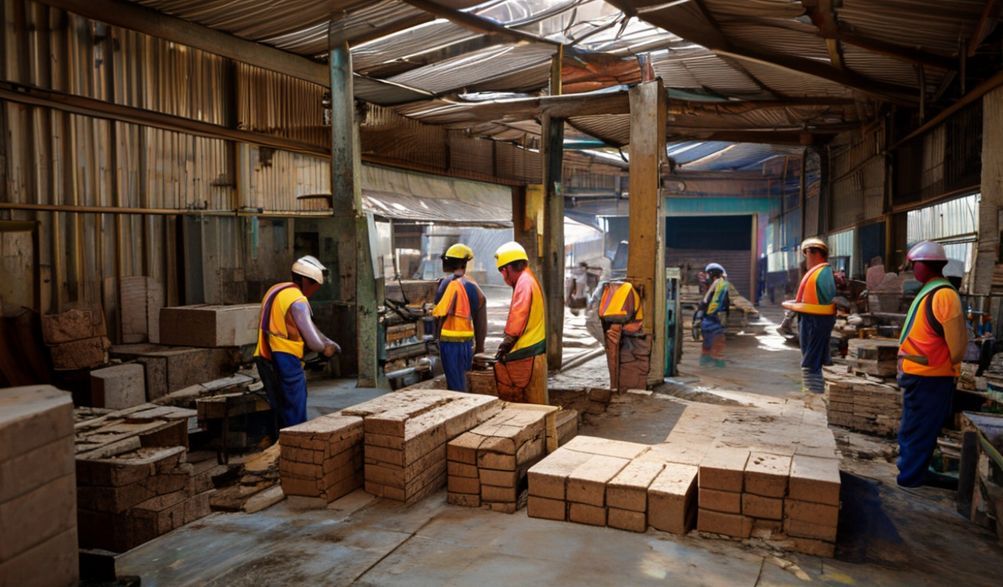
Hướng Dẫn Toàn Diện Về Máy Sản Xuất Gạch Xi Măng QT4-22 Cho Bangladesh
Giới thiệu
Khung cảnh đường chân trời của Bangladesh đang biến đổi với tốc độ chóng mặt. Khi ngành xây dựng tăng trưởng hơn 8% mỗi năm và các dự án cơ sở hạ tầng trị giá hàng tỷ đô la đang được triển khai, nhu cầu về vật liệu xây dựng bền vững, giá cả phải chăng chưa bao giờ cao hơn thế. Trong hơn một thập kỷ, tôi đã làm việc trực tiếp tại hiện trường—từ những dự án đô thị dày đặc ở Dhaka đến các khu mở rộng công nghiệp tại Chittagong—hỗ trợ các doanh nhân và nhà thầu xây dựng lựa chọn và tối ưu hóa máy móc cho chính sự bùng nổ này. Trong khoảng thời gian đó, một thiết bị lao động bền bỉ đã liên tục chứng minh giá trị cho những ai bước vào ngành sản xuất gạch block: máy làm gạch xi măng bán tự động QT4-22.
Hướng dẫn này không chỉ dựa trên thông số kỹ thuật từ tài liệu quảng cáo. Nó được viết từ kinh nghiệm thực tế trong việc lắp đặt, vận hành và xử lý sự cố của máy QT4-22 trong điều kiện đặc thù tại Bangladesh. Nếu bạn là một doanh nhân Bangladesh, một công ty xây dựng đang phát triển, hay một nhà thầu muốn tích hợp chuỗi cung ứng theo chiều dọc, bài viết này chính là dành cho bạn. Chúng tôi sẽ loại bỏ những thuật ngữ tiếp thị rườm rà và cung cấp một phân tích rõ ràng, thiết thực và phù hợp với bối cảnh địa phương. Bạn sẽ hiểu sâu về năng lực của máy, có được bảng phân tích chi phí và lợi tức đầu tư thực tế cho thị trường nội địa, những mẹo vận hành quan trọng thích ứng với khí hậu của chúng ta, cùng lời khuyên đáng tin cậy để định hướng quy trình mua hàng.
Tìm hiểu về Máy Làm Gạch QT4-22: Thông số kỹ thuật và Khả năng vận hành
QT4-22 là một máy sản xuất gạch bê tông bán tự động cố định. Thiết kế của nó tạo ra sự cân bằng hoàn hảo giữa tự động hóa để đảm bảo chất lượng và vận hành thủ công để linh hoạt, biến nó thành nền tảng cho sản xuất quy mô nhỏ đến trung bình.
Thông Số Kỹ Thuật Cốt Lõi
Hãy phân tích những con số quan trọng cho kế hoạch kinh doanh của bạn.
- Sản lượng sản xuấtTrong một ca làm việc hiệu quả 8 giờ, một máy QT4-22 được vận hành tốt có thể sản xuất khoảng4.000 đến 5.000gạch block rỗng tiêu chuẩn (200mm x 100mm x 400mm). Sản lượng thay đổi tùy theo loại gạch và tay nghề của đội thợ.
- Kích thước khối linh hoạt:Chỉ bằng cách thay đổi khuôn, một máy có thể sản xuất:
- Gạch Đặc & Gạch Rỗng
- Gạch lát vỉa hè (dùng cho cảnh quan và lối đi bộ)
- Khối liên kết (để bảo vệ mái dốc và tường chắn)
- Các khối bó vỉa và các hình dạng tiêu chuẩn khác.
- Yêu cầu về nguồn điện:Thường được cung cấp với các tùy chọn nguồn kép quan trọng cho Bangladesh:
- Điện:13.5 kW, tương thích với điện áp công nghiệp tiêu chuẩn của Bangladesh là380V, 3 pha, 50Hz.
- Đi-ê-zenTùy chọn động cơ diesel 12 mã lực, một giải pháp dự phòng quan trọng trước tình trạng dao động nguồn điện thỉnh thoảng xảy ra.
- Các thành phần chính:Trang bị hệ thống động cơ rung mạnh mẽ 5.5kW và đơn vị áp lực thủy lực đáng tin cậy để đảm bảo độ đặc chắc và cường độ của khối bê tông.
- Kích thước:Bản thân máy móc rất chắc chắn nhưng tiết kiệm không gian, chỉ cần diện tích nhà xưởng sản xuất khoảng 6m x 4m.
Cách QT4-22 Hoạt Động: Lợi Thế Bán Tự Động
Nhãn "bán tự động" là lợi thế then chốt trên thị trường của chúng ta. Đây là chu trình hoạt động:
- Cho Ăn Thủ Công:Công nhân đổ hỗn hợp bê tông đã chuẩn bị vào phễu.
- Tự động hóa Rung động & NénHỗn hợp được phân phối vào khuôn. Động cơ rung mạnh mẽ nén chặt bê tông, sau đó áp lực thủy lực từ phía trên tác động để tạo thành khối đặc chắc.
- Tháo khuôn & Xử lý Pallet:Máy tự động nâng khuôn, để lại khối bê tông tươi trên pallet gỗ. Công nhân sau đó di chuyển thủ công các pallet này đến khu vực bảo dưỡng.
Quy trình này tận dụng tự động hóa cho nhiệm vụ then chốt là tạo ra các khối bền vững và đồng nhất, đồng thời sử dụng lao động thủ công cho khâu cấp liệu và xử lý - một mô hình tiết kiệm chi phí, phù hợp hoàn hảo với bối cảnh lao động của Bangladesh.
Các Tính Năng Chính về Độ Bền và Đầu Ra
- Kết cấu Thép Bền Vững: Built to withstand continuous use in a production environment.
- Hệ thống thủy lực áp suất cao: Ensures blocks have high compressive strength, meeting and often exceeding local PWD standards.
- Wear-Resistant Molds: Made from high-quality steel and often chrome-plated, these molds withstand the abrasive concrete mix, ensuring long life and consistent block dimensions.
- Strong Vibration System: The core of quality. Effective vibration removes air pockets, creating a dense, non-porous, and durable block.
Why the QT4-22 is a Strategic Choice for the Bangladesh Market
Meeting Bangladesh’s Construction Material Demand
The shift is undeniable. Environmentally damaging fired clay bricks are being progressively phased out by government policy, while architects and engineers increasingly specify Cement Concrete Blocks (CCB). CCBs offer superior thermal insulation (reducing cooling costs), better fire resistance, and excellent compressive strength. The QT4-22 positions you directly in the middle of this sustainable and growing market demand.
Cost-Effectiveness and ROI Analysis
Let’s talk numbers. A realistic financial model is essential.
-
Initial Investment (Estimated Range):
- QT4-22 Machine (Local dealer, including basic molds): BDT 1,200,000 – 1,600,000.
- Additional Molds: BDT 40,000 – 80,000 each.
- Shed Construction & Foundation: BDT 200,000 – 400,000.
- Total Setup Cost (Approx.): BDT 1.5 – 2.2 Million.
-
Operational Cost per Block (Example):
- Raw Materials (Cement, Sand, Stone Dust): ~BDT 12-14
- Labor & Utilities: ~BDT 2-3
- Total Cost/Block: ~BDT 14-17
-
Revenue & Break-Even:
- Selling Price (Standard Hollow Block): BDT 22-25
- Profit per Block: BDT 5-8
- Daily Profit (at 4,000 blocks): BDT 20,000 – 32,000
- Estimated Break-Even Point: With consistent sales, the initial investment can often be recovered within 8 to 14 months.
Adaptability to Local Conditions
- Ideal for SMEs: Its scale is perfect for family-run businesses or small enterprises looking to establish a block yard.
- Ít Tốn Công Chăm Sóc: The mechanical design is relatively simple, and most local mechanics can be trained to handle basic servicing.
- Sẵn có Phụ tùng Thay thế: Common wear parts (springs, seals, hydraulic hoses) are increasingly available in Dhaka’s industrial markets like Tejgaon, reducing downtime.
Operational Guide: Running a QT4-22 Successfully in Bangladesh
Raw Material Preparation: Getting the Mix Right
The quality of your blocks is 50% machine and 50% mix design. For the Bangladeshi context:
- Xi măng: Use a reputable brand of Portland cement (e.g., CEM II/B-M).
- Aggregate: Use a well-graded mix of coarse sand (e.g., from Sylhet or local river sources) and stone chips (3/8″ or 10mm). Ensure they are clean and free of clay or organic matter.
- Standard Mix Ratio (by volume): A good starting point is 1 part Cement : 4 parts Mixed Aggregate (Sand + Stone Chips).
- Water-Cement Ratio: Aim for a 0.45 – 0.55 ratio. The mix should be cohesive, not soggy. Excess water drastically reduces final strength.
Step-by-Step Production Process
- Setup & Mixing: Ensure the machine is on a level, solid foundation. Mix raw materials in a pan mixer or concrete mixer until uniform.
- Cho ăn & Tạo khuôn: Feed the mix into the hopper and start the cycle. Ensure the mold is filled evenly.
- Curing (The Most Critical Step): After 24 hours on the pallet, carefully remove the green blocks and stack them for water curing. Keep them saturated for at least 7 days. The blocks gain most of their strength over the full 28-day curing period.
- Storage: Once cured, store blocks in a dry, covered area ready for dispatch.
Safety First: Always ensure workers wear gloves, safety glasses, and closed-toe shoes. Never place hands near the mold during the compression cycle.
Maintenance for Longevity in a Humid Climate
Bangladesh’s humidity is the biggest threat to machinery.
- Hàng ngày: Clean all concrete residue from the machine, mold, and pallets. Check hydraulic oil levels.
- Hàng tuần: Lubricate all moving parts (guide rods, bearings) with grease. Inspect the mold for wear or damage.
- Monthly: Tighten all bolts and nuts. Check the hydraulic system for leaks. Apply a light oil or anti-rust spray on unpainted steel surfaces to prevent corrosion.
- Annual: Consider a full hydraulic oil change and a comprehensive inspection by a technician.
Navigating the Purchase: Suppliers and Key Considerations in Bangladesh
Local Dealers vs. Direct Import: Pros and Cons
| Aspect | Local Dealer (Dhaka/Chittagong) | Direct Import from China |
| :— | :— | :— |
| Giá | Higher upfront cost. | Potentially lower FOB price. |
| Warranty & Service | Key Advantage. Typically 1-year warranty with local service engineers. | Often difficult and costly to enforce. |
| Spare Parts | Readily available or can be sourced quickly. | Long lead times, import hassles. |
| Installation & Training | Usually included. | Self-arranged, extra cost and risk. |
| Customs & Logistics | Handled by dealer. | You bear all costs, paperwork, and risks of delay/damage. |
Recommendation: For your first machine, a reputable local dealer is almost always the wiser investment. The after-sales support is invaluable.
Essential Questions to Ask Your Supplier
- Do you have a local service engineer, and what is the response time?
- What is the exact warranty period and what components does it cover (e.g., hydraulic system, vibration motor)?
- Is on-site installation and operator training included in the price?
- Can you provide contact information for 2-3 of your existing QT4-22 clients in Bangladesh for a reference?
- What is the availability and cost of common spare parts like molds, springs, and hydraulic seals?
Site Preparation Checklist
Before your machine arrives, prepare your site:
* Production Shed: A covered, well-ventilated area of at least 6m (L) x 4m (W) x 3m (H).
* Curing Area: A shaded, accessible open space (can be 5-10 times the production area).
* Foundation: A level, reinforced concrete pad (approx. 150mm thick) as per the machine manual.
* Utilities: Reliable 380V 3-phase power connection or secure diesel storage. Ample water supply for mixing and curing.
* Raw Material Storage: Covered zones for cement (must be dry) and aggregates.
Frequently Asked Questions (FAQ) About QT4-22 in Bangladesh
Q1: What is the actual production output per day of the QT4-22 in a Bangladeshi setup?
A: With a skilled crew of 4-5 workers, you can realistically produce 4.000 đến 5.000 standard hollow blocks in an 8-hour shift. Output depends on worker efficiency, mold type (solid blocks are faster), and mix preparation speed.
Q2: What is the total investment cost, including everything to start production?
A: A comprehensive setup, including machine, basic molds, shed construction, raw material stock for one month, and labor, typically requires a total investment between BDT 1.5 million and BDT 2.2 million. Always budget a 10% contingency.
Q3: How does the quality of blocks compare to traditional bricks?
A: QT4-22 blocks are superior in almost every way. They offer higher and more consistent compressive strength (often 5-7 MPa vs. 3-4 MPa for bricks), perfect dimensional accuracy (saving on mortar and plaster), and better thermal/sound insulation. They are also more seismically suitable.
Q4: Is technical training required to operate this machine?
A: While the machine is designed to be user-friendly, mandatory training from your supplier is crucial. Proper training ensures worker safety, maximizes production output, and guarantees the block quality needed to compete in the market. Most local workers become proficient within a week.
Q5: Where can I find reliable after-sales service and spare parts in Bangladesh?
A: This is why choosing the right supplier is key. Reputable dealers have their own service networks, often based in Dhaka (Tejgaon, Mirpur I/A) or Chittagong. Before buying, verify their service capability and spare parts inventory.
Conclusion
The QT4-22 cement brick block making machine represents more than just a piece of equipment; it represents a viable, profitable entry point into Bangladesh’s vital construction materials sector. It balances automation with practicality, offering a path to produce high-quality blocks that meet modern construction demands.
Based on extensive field experience, a well-managed QT4-22 unit, with a focus on quality raw materials and proper curing, can indeed become the cornerstone of a successful and growing business. My final advice is to take the knowledge from this guide and apply it on the ground. Visit existing block plants, ask detailed questions, and insist on live demonstrations from your shortlisted suppliers. Conduct your due diligence with the confidence that this technology, when implemented correctly, has a proven track record of success across Bangladesh.
As your business grows, this semi-automatic machine can be the first step toward even larger, fully automatic production lines. Let this guide be your foundation for that journey.
About the Author:
Md. Arif Rahman is a Mechanical Engineer with over 12 years of hands-on experience in the construction machinery sector across South Asia. He has personally supervised the installation, commissioning, and optimization of more than 50 concrete block making plants in Bangladesh, focusing on practical efficiency and sustainable business growth for local entrepreneurs.