
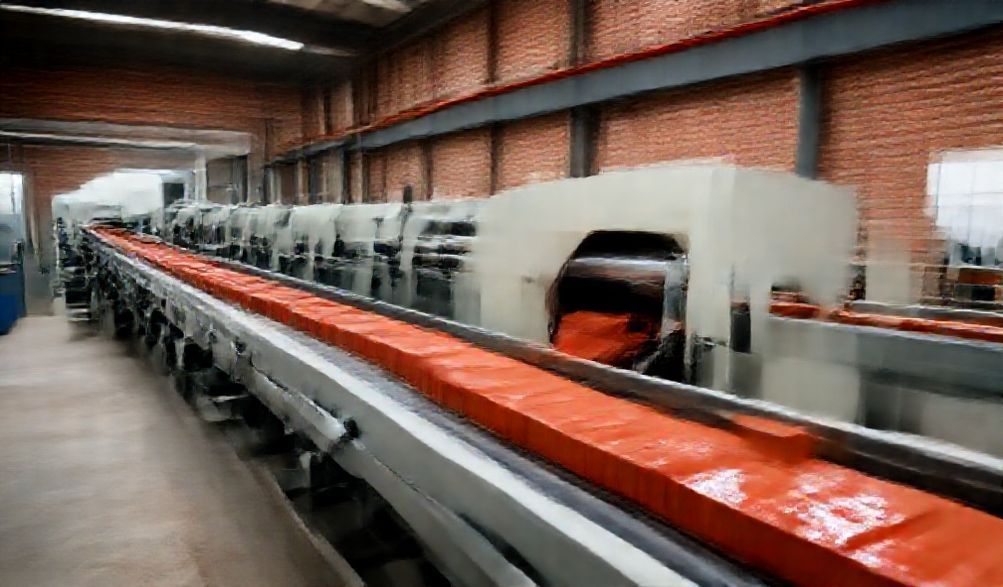
Hướng Dẫn Toàn Diện Về Dây Chuyền Máy Sản Xuất Gạch Đất Sét | Chuyên Môn Nhà Máy FUDA
Trong hàng nghìn năm, gạch đã tạo nên nền tảng vật chất và biểu tượng của nền văn minh nhân loại. Từ những mái vòm cổ đại đến các tòa nhà chọc trời hiện đại, độ bền và tính linh hoạt của chúng là vô song. Tuy nhiên, nghệ thuật làm gạch đã trải qua một bước chuyển cách mạng. Ngày nay, sản xuất cạnh tranh và bền vững không phụ thuộc vào một máy móc đơn lẻ, mà vào một hệ thống tinh vi, đồng bộ: dây chuyền sản xuất gạch đất sét tự động.
Đối với các chủ doanh nghiệp và quản lý nhà máy, việc tìm nguồn cung ứng loại máy móc này là một thách thức then chốt. Làm thế nào để tìm ra một giải pháp đáng tin cậy, hiệu quả và tiết kiệm chi phí? Làm thế nào để đảm bảo công nghệ phù hợp với loại đất sét cụ thể của bạn, nhu cầu thị trường và tham vọng phát triển của bạn? Đây chính là lúc chuyên môn sâu về ngành trở nên vô giá.
Tại Nhà máy Sản xuất Gạch FUDA, chúng tôi đã dành hàng thập kỷ không chỉ chế tạo máy móc, mà còn thiết kế, lắp đặt và tối ưu hóa toàn bộ dây chuyền sản xuất từ nền tảng. Các kỹ sư của chúng tôi đã trực tiếp giải quyết mọi thách thức sản xuất có thể tưởng tượng. Hướng dẫn này tận dụng kinh nghiệm thực tiễn trực tiếp đó để làm sáng tỏ dây chuyền sản xuất gạch đất sét. Chúng tôi sẽ phân tích các thành phần, định lượng lợi ích và cung cấp một khuôn khổ rõ ràng để đưa ra quyết định đầu tư chiến lược sáng suốt, giúp thúc đẩy doanh nghiệp của bạn trong nhiều thập kỷ tới.
Dây chuyền sản xuất gạch đất sét là gì? Vượt xa một máy đơn lẻ
Một dây chuyền sản xuất gạch đất sét là một hệ thống công nghiệp tích hợp hoàn chỉnh, được thiết kế để biến đất sét thô thành những viên gạch thành phẩm chất lượng cao với sự can thiệp thủ công tối thiểu. Đó là một bản giao hưởng của các máy móc chuyên dụng hoạt động nhịp nhàng, trong đó đầu ra của một công đoạn trở thành đầu vào liền mạch cho công đoạn tiếp theo. Hãy hình dung nó như sự khác biệt giữa một xưởng thủ công và một nhà máy ô tô chính xác—cả hai đều có thể tạo ra sản phẩm, nhưng quy mô, tính đồng nhất và hiệu quả hoàn toàn khác biệt.
Từ Đất Sét Thô Đến Viên Gạch Hoàn Chỉnh: Quy Trình Hệ Thống
Hành trình trên một dây chuyền sản xuất hiện đại là một dòng chảy liên tục và được kiểm soát chặt chẽ:
- Chuẩn bị nguyên vật liệu:Đất sét thô được nghiền, sàng lọc và đồng nhất để đạt được kích thước hạt và độ ẩm đồng đều.
- Hình thànhĐất sét đã được chuẩn bị sẽ được đùn ép hoặc ép thành các hình dạng gạch chính xác (đặc, rỗng hoặc có lỗ).
- Xử Lý Tự Động:机器人或堆垛机轻轻地将湿砖放置到干燥车或托盘上,而无变形。
- Sấy khô:Gạch di chuyển qua buồng sấy được kiểm soát để loại bỏ độ ẩm đồng đều, ngăn ngừa các vết nứt.
- Sa thải:砖坯在隧道窑或霍夫曼窑中经过高温烧制,使黏土玻璃化,从而达到最高强度和抗风化能力。
- Làm mát & Phân loại:Cuối cùng, gạch được làm nguội và phân loại, sẵn sàng để đóng gói và xuất xưởng.
Dây chuyền sản xuất hiện đại bao gồm các thành phần cốt lõi sau: máy móc tự động hóa, hệ thống điều khiển (như PLC và SCADA), cảm biến và thiết bị IoT, robot công nghiệp, hệ thống quản lý kho và vận chuyển nguyên liệu (như băng tải và AGV), phần mềm quản lý sản xuất (MES), và các hệ thống giám sát chất lượng và an toàn.
Mỗi giai đoạn đều phụ thuộc vào máy móc mạnh mẽ, được thiết kế chuyên biệt.
-
Đơn vị Chuẩn bị Đất Sét This is the foundation of quality. It typically includes:
- Crushers & Feeders: Break down large clay lumps for consistent processing.
- Mixers & Rollers: Thoroughly blend clay with water (and additives if needed) to achieve the perfect plasticity for extrusion.
-
Forming/Brick Making Machine: The heart of the line. Key types are:
- Máy Ép Đùn: Force clay through a die to create a continuous column of clay, which is then wire-cut into individual bricks. Ideal for high-volume production of various profiles.
- Pressing Machines: Use high pressure to compact clay into molds, often used for dense paving bricks or special shapes.
-
Automated Handling & Setting Systems: The backbone of efficiency.
- Băng tải: Transport material and bricks between stages.
- Robotic Setters/Stackers: Automate the precise placement of green (unfired) bricks, eliminating heavy manual labor and damage.
-
Drying Chamber: A critical, often overlooked stage. Controlled temperature and humidity ensure moisture is removed slowly and uniformly, preventing structural weaknesses.
-
Tunnel Kiln or Hoffman Kiln: The furnace where bricks gain their permanent strength. Modern kilns, like those engineered by FUDA, are designed for exceptional fuel efficiency and consistent firing temperatures.
Why a “Line” Beats a Standalone Machine
Investing in an integrated system offers transformative advantages:
* Tính nhất quán Automated control at every stage guarantees uniform brick size, density, and color batch after batch.
* Âm lượng đầu ra: Achieve production rates of tens of thousands to hundreds of thousands of bricks per day, impossible with standalone machines.
* Hiệu suất Lao động Dramatically reduces the workforce required for heavy, repetitive tasks, reallocating human skill to supervision and quality control.
* Integrated Quality: Problems are detected and corrected systematically within the line, minimizing waste and rejects.
Key Advantages of Automating Your Brick Production with FUDA
Transitioning to an automated production line is a strategic leap forward. Here’s how it translates into tangible business benefits.
Unmatched Production Efficiency & Scalability
Automation removes bottlenecks. What might take a week of manual labor can be accomplished in a single day. A well-designed FUDA line can scale to meet massive project demands or market expansion, turning large, time-sensitive orders from a stress point into a competitive advantage.
Chất Lượng Gạch Vượt Trọng và Đồng Đều
Human variability is eliminated. Every brick is formed, dried, and fired under identical, digitally monitored conditions. This results in:
* Uniform dimensions for faster, easier bricklaying.
* Consistent compressive strength, ensuring structural integrity.
* Even color and texture, enhancing aesthetic appeal for architectural projects.
Giảm Chi Phí Đáng Kể Trong Dài Hạn
The initial investment is strategically offset by ongoing savings:
* Lower Labor Costs: Automation reduces dependency on large manual crews.
* Optimized Energy Use: Modern, insulated kilns and efficient dryers designed by FUDA significantly reduce fuel consumption per brick.
* Giảm Thiểu Lãng Phí Nguyên Vật Liệu Precise control and handling lead to a drastic reduction in breakage and rejects.
Enhanced Worker Safety and Operational Control
The most dangerous tasks—handling heavy wet bricks, working near high-temperature kilns—are handled by machinery. Furthermore, production is managed via centralized Programmable Logic Controller (PLC) systems, allowing for precise adjustments, real-time monitoring, and data-driven process optimization.
How to Choose the Right Production Line for Your Factory
Selecting a “one-size-fits-all” line is a common pitfall. The right solution is tailored to your unique context. Here is a framework for your decision, guided by FUDA’s consultative approach.
Assessing Your Raw Materials: Clay Type & Properties
Your clay is unique. Its mineral composition, plasticity, and shrinkage properties directly dictate machine specifications. FUDA’s process begins with testing your clay samples in our lab. We then customize the preparation and extrusion systems to ensure optimal performance with your local material, preventing costly operational issues down the line.
Defining Your Production Goals: Capacity & Brick Types
You must have clear answers to:
* Đầu ra mục tiêu: How many bricks per shift, day, or year do you need to produce?
* Hỗn hợp sản phẩm: Will you produce solid bricks, hollow blocks for insulation, perforated bricks, or paving stones? The line must be flexible enough to accommodate your product portfolio.
Energy Considerations: Fuel Types & Kiln Technology
Energy is a major operational cost. We evaluate the most efficient and cost-effective fuel source for your region—be it coal, natural gas, or biomass. FUDA specializes in designing energy-optimized tunnel kilns that maximize heat recovery and minimize consumption, ensuring your plant remains competitive.
Factory Space & Layout Planning
Efficiency is also about flow. A cramped or illogical layout creates congestion and inefficiency. As part of our service, FUDA provides detailed factory layout blueprints to ensure a smooth, linear material flow from raw clay yard to finished product storage, maximizing your available space.
Inside FUDA Brick Making Factory: Our Expertise in Action
Our guidance is not theoretical; it is forged on our own factory floor and proven at client sites worldwide.
Decades of Engineering & Hands-On Manufacturing Experience
FUDA is not just a sales agent; we are direct manufacturers. Our engineers have decades of cumulative experience solving real-world production problems. This deep, practical knowledge is baked into every machine we design.
Custom-Engineered Solutions, Not Just “Off-the-Shelf” Machines
We begin every project with a consultation. We listen to your goals, analyze your materials, and assess your site. The result is a production line custom-engineered for your specific capacity requirements, product types, and local conditions, ensuring you get a perfect fit, not a compromise.
Quality Control from Steel to Shipment
Quality is systematic. We use premium-grade steels and components from trusted suppliers. Every subsystem undergoes rigorous functional testing at our facility before disassembly for shipment. We build machinery to last, ensuring durability in demanding industrial environments.
Global Installations & Proven Performance
FUDA lines are operating successfully across diverse regions—from Southeast Asia to Africa to the Middle East. This global footprint is a testament to our technology’s adaptability to different clays, climates, and operational standards, giving you confidence in a proven solution.
Ensuring a Successful Investment: Service & Support
A machine is only as good as the support behind it. FUDA’s partnership extends far beyond the delivery of equipment.
Comprehensive Installation & Commissioning Supervision
Our experienced technicians travel to your site to supervise assembly, installation, and commission the entire line. We ensure it is calibrated correctly and producing to specification before we leave.
Thorough Operator & Maintenance Training Programs
We believe in knowledge transfer. We provide hands-on training for your operators, maintenance staff, and supervisors, empowering your team to run the line efficiently and perform routine maintenance, ensuring long-term independence.
Reliable Supply of Genuine Spare Parts
Downtime is costly. FUDA maintains an extensive inventory of genuine spare parts and provides clear drawings and part numbers, guaranteeing you can quickly source what you need to keep your production running smoothly.
Long-Term Technical Support & Consultation
Our relationship doesn’t end at startup. We offer ongoing technical support via phone, email, and video call. As your needs evolve, our engineers are available for consultation to help you optimize processes or plan expansions.
Các Câu Hỏi Thường Gặp (FAQ)
Q1: What is the average lead time for a complete FUDA clay brick production line?
A: Lead time varies based on the line’s complexity and level of customization. A standard line typically takes 60-90 days for manufacturing after final design approval, plus shipping. FUDA’s integrated project management ensures efficient coordination from design to delivery.
Q2: Can FUDA machinery adapt to different types of clay, like shale or soft mud?
A: Absolutely. Adapting to local raw materials is a FUDA specialty. We conduct thorough material testing and customize our crushers, mixers, and extruder augers/dies specifically for your clay’s characteristics, whether it’s stiff shale, soft surface clay, or industrial by-products.
Q3: What kind of after-sales service and warranty does FUDA provide?
A: FUDA provides a standard 12-month warranty on the entire production line against manufacturing defects. More importantly, we offer a comprehensive after-sales package including the installation supervision, training, and lifelong technical support detailed above.
Q4: How do I calculate the potential ROI for automating my brick plant?
A: A simplified framework considers: (Increased Daily Output Value + Savings from Reduced Labor & Waste) – Operational Costs (Energy, Maintenance). The key drivers are dramatically higher volume and lower per-unit costs. For a precise analysis, we offer a dedicated consultation to model your ROI based on your local costs and market prices.
Q5: Does FUDA assist with factory layout design and energy efficiency planning?
A: Yes, this is a critical part of our pre-sales engineering service. We provide complete layout drawings to optimize flow and space usage. Our kiln and dryer designs focus on maximum thermal efficiency, and we advise on the most economical energy solutions for your specific location.
Conclusion
Investing in a complete clay brick making production line is one of the most significant strategic decisions you will make for the future growth, quality, and competitiveness of your business. It is a move from artisanal production to industrial manufacturing.
FUDA Brick Making Factory stands apart as a partner in this transition. We combine decades of direct manufacturing experience with a commitment to custom engineering and end-to-end support. We don’t just sell machines; we deliver sustainable, profitable production solutions and the expertise to make them thrive.
Ready to transform your brick production? Take the next step with confidence. Contact the FUDA engineering team today for a personalized consultation. Send us your clay samples for a free material test, or request a virtual tour of our factory to see the quality and innovation behind our name. Let’s build the future of your business, brick by perfect brick.
<