
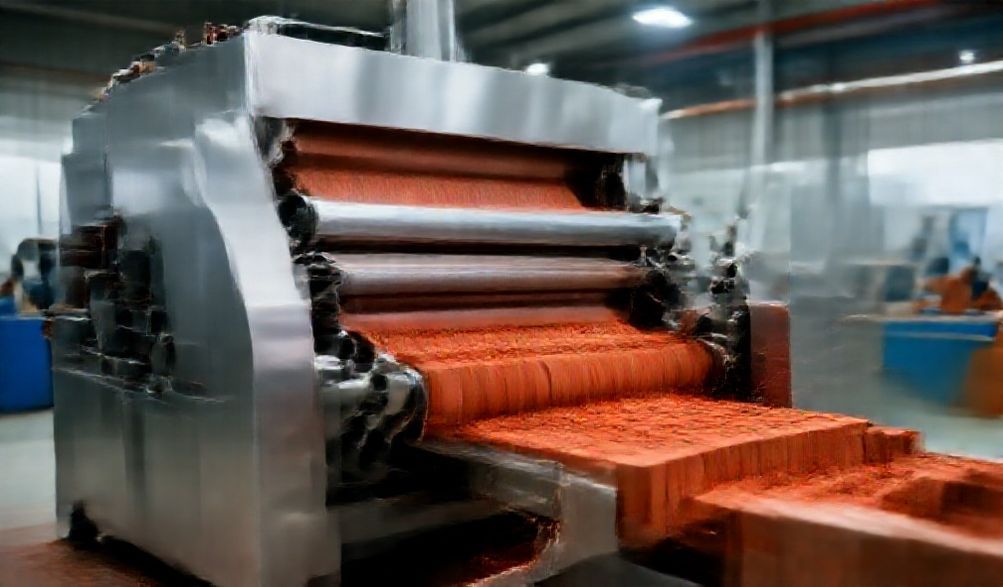
Hướng Dẫn Toàn Diện Về Máy Sản Xuất Gạch Đất Sét Từ Nhà Máy FUDA Trung Quốc
Giới thiệu
Trong thời đại đô thị hóa nhanh chóng và ngày càng chú trọng đến xây dựng bền vững, nhu cầu về vật liệu xây dựng bền bỉ, hiệu quả chi phí và thân thiện với môi trường chưa bao giờ cao hơn. Giữa những lựa chọn thay thế hiện đại, gạch đất sét nổi bật như một giải pháp vượt thời gian, đã được chứng minh qua hàng thiên niên kỷ. Tuy nhiên, đối với các doanh nhân và doanh nghiệp muốn tham gia hoặc mở rộng quy mô trong ngành công nghiệp thiết yếu này, một thách thức lớn đang hiện hữu: tìm nguồn máy móc sản xuất gạch đáng tin cậy, hiệu quả và giá cả phải chăng.
Đây là lúc chuyên môn phát huy tác dụng. Để định hướng trong bối cảnh sản xuất toàn cầu, bạn cần một đối tác với kiến thức kỹ thuật sâu rộng và thành tích đã được chứng minh. Đó chính là Nhà máy Sản xuất Khối FUDA, một lực lượng hàng đầu trong lĩnh vực máy móc công nghiệp tại Trung Quốc, chuyên về thiết kế kỹ thuật và sản xuất các sản phẩm chất lượng cao.máy làm gạch đất sét.
Hướng dẫn này đóng vai trò là nguồn thông tin chuyên gia và khách quan dành cho bạn. Chúng tôi sẽ vượt ra ngoài những lời chào hàng cơ bản để cung cấp một phân tích chi tiết, dựa trên tri thức. Mục tiêu của chúng tôi là trang bị cho bạn những hiểu biết cần thiết để đưa ra quyết định tự tin và sáng suốt cho doanh nghiệp của mình. Bạn sẽ đạt được sự hiểu rõ về giá trị bền vững của gạch đất sét, cơ chế sản xuất hiện đại, những lợi thế cụ thể khi hợp tác với một nhà sản xuất có uy tín như FUDA, cùng một lộ trình thực tế để việc mua sắm diễn ra thành công.
Tại sao Gạch Đất Sét Vẫn Là Vật Liệu Xây Dựng Hàng Đầu
Trước khi đầu tư vào máy móc, việc hiểu rõ sức mạnh thị trường của sản phẩm là vô cùng quan trọng. Gạch đất sét không phải là di tích của quá khứ; chúng là vật liệu xây dựng liên tục có tính thời sự với những ưu điểm vốn có mà các giải pháp thay thế hiện đại khó có thể sánh kịp.
Độ Bền và Tuổi Thọ Vượt Trội
Gạch đất sét đồng nghĩa với sự trường tồn. Hiệu năng của chúng bắt nguồn từ khoa học vật liệu:
* Tính Toàn Vẹn Cấu TrúcĐược nung ở nhiệt độ cực cao, đất sét trải qua quá trình thủy tinh hóa, tạo ra sản phẩm có độ bền nén đặc biệt. Điều này cho phép các công trình gạch chịu được tải trọng lớn và chống chọi với áp lực môi trường qua nhiều thế kỷ.
* Khả năng chống cháy:Là một vật liệu gốm, gạch đất sét vốn dĩ không cháy. Nó cung cấp một rào cản lửa quan trọng, một đặc tính an toàn thiết yếu trong xây dựng dân dụng và thương mại.
* Bảo Trì Tối Thiểu:Gạch có khả năng chống mục nát, nấm mốc và hư hại do côn trùng. Nó không yêu cầu xử lý hóa chất hay sơn phủ thường xuyên, dẫn đến chi phí bảo trì dài hạn thấp hơn đáng kể so với nhiều vật liệu bề mặt ngoại thất khác.
Cách nhiệt tự nhiên và Hiệu suất năng lượng
Gạch đóng góp đáng kể vào hiệu suất nhiệt của một tòa nhà thông qua khái niệm khối nhiệt.
* Khối Nhiệt:Gạch đất sét hấp thụ, lưu trữ và từ từ giải phóng nhiệt. Sự điều tiết tự nhiên này giúp ổn định nhiệt độ trong nhà, giữ cho nội thất mát mẻ hơn vào mùa hè và ấm áp hơn vào mùa đông.
* Nhu cầu năng lượng giảm:Bằng cách làm dịu đi sự biến động nhiệt độ hàng ngày, gạch ốp giảm sự phụ thuộc vào hệ thống HVAC. Điều này trực tiếp dẫn đến giảm tiêu thụ năng lượng và hóa đơn tiện ích thấp hơn trong suốt vòng đời của tòa nhà, một điểm bán hàng quan trọng trong thị trường có ý thức về năng lượng ngày nay.
Tính Bền Vững và Lợi Ích Môi Trường
Trong thời đại chú trọng xây dựng xanh, gạch đất sét mang lại những giá trị sinh thái thuyết phục.
* Thành Phần Tự Nhiên:Nguyên liệu thô chính là đá phiến hoặc đất sét bề mặt, dồi dào và có sẵn trong tự nhiên.
* Khả năng tái chế và tái sử dụng:到一座建筑使用寿命结束时,砖块可以被清理并用于新的建筑工程,或者粉碎后用作骨料、填埋材料或园艺材料,从而形成一个循环的生命周期。
* Đánh giá vòng đời (LCA):Mặc dù quá trình nung đòi hỏi năng lượng, nhưng độ bền đặc biệt và tính chất cách nhiệt của gạch có nghĩa là chúngembodied energy—the total energy used over the product’s life—is highly favorable when amortized over 100+ years of service.
Tìm Hiểu Về Máy Móc Sản Xuất Gạch Đất Sét
Modern brick production is a sophisticated process that transforms raw clay into precise, consistent units. Understanding the machinery is key to selecting the right system.
Core Components of a Modern Brick Making Machine
A standard automated line integrates several key stations:
1. Máy trộn: Blends raw clay with precise amounts of water (and sometimes additives) to achieve a homogeneous, plastic consistency optimal for extrusion.
2. Extruder (or Pug Mill): The heart of the machine. It compacts and de-airs the prepared clay mix, forcing it through a die to form a continuous column of clay with the desired profile (solid, perforated, etc.).
3. Cutter: Uses wires or blades to slice the extruded clay column into individual, wet bricks (known as “green” bricks) with exact dimensions.
4. Hệ Thống Điều Khiển: The brain of the operation. Modern PLC (Programmable Logic Controller) systems automate the entire process, allowing for precise control over extrusion speed, cutting frequency, and overall synchronization for maximum efficiency and consistency.
Types of Machines: From Semi-Automatic to Fully Automatic Lines
The level of automation you choose depends on your scale, budget, and labor availability.
* Máy móc Thủ công/Quy mô Nhỏ Often simple, single-function presses. They require significant manual labor for feeding, molding, and removal. Suitable for very low-volume or artisanal production.
* Máy Bán Tự Động: Automate core processes like mixing and extrusion but may require manual handling for mold setting, brick removal, or stacking. Offers a good balance between cost and increased output for small to medium businesses.
* Dây chuyền sản xuất hoàn toàn tự động: Represent the pinnacle of efficiency. These integrated systems handle the entire process from raw material feeding to the automatic stacking of green bricks onto kiln cars or pallets. They are designed for high-volume, consistent production with minimal manual intervention.
Các Thông Số Kỹ Thuật Chính Cần Biết
When evaluating machines, focus on these critical specs:
* Công suất đầu ra: Measured in bricks per hour (or per 8-hour shift). This must align with your business plan.
* Yêu cầu về nguồn điện: Voltage (e.g., 380V/50Hz) and total power consumption (KW). Ensure your facility can support it.
* Các Loại Khuôn & Khả Năng Thay Thế Lẫn Nhau The mold defines the brick’s shape and size. Systems that allow for quick mold changes increase operational flexibility.
* Extrusion Pressure & Vacuum System: Higher de-airing vacuum and extrusion pressure typically produce denser, stronger bricks with better dimensional stability.
Spotlight on FUDA Block Making Factory: Expertise You Can Trust
With numerous global suppliers, why focus on a specific Chinese factory? The answer lies in depth of specialization, proven history, and a commitment to partnership. FUDA Block Making Factory exemplifies these qualities.
Decades of Manufacturing Experience & Industry Authority
FUDA is not a generic trading company. It is an established manufacturer with deep roots in the brick and block machinery industry. Founded over two decades ago, FUDA has grown by focusing exclusively on construction machinery. This long-term focus has allowed them to:
* Accumulate vast, practical knowledge about clay behaviors, production challenges, and market needs worldwide.
* Continuously refine their machine designs based on real-world feedback from hundreds of installations across different continents.
* Build a reputation as a specialist, not a generalist, which is critical for complex industrial equipment.
Cam kết với Nghiên cứu & Phát triển và Đổi mới Công nghệ
To stay at the forefront, FUDA invests significantly in its Research and Development department. This commitment translates to tangible benefits for buyers:
* Efficiency Upgrades: Constant refinement of gearboxes, drive systems, and control software to reduce energy consumption per brick and increase overall line efficiency.
* Material Science Integration: Working with material scientists to optimize machine parameters for different clay types, ensuring consistent quality even with variable raw materials.
* Smart Manufacturing Features: Incorporating user-friendly HMI (Human-Machine Interface) touchscreens, fault diagnosis systems, and data logging capabilities for modern, manageable production.
Quality Control and Manufacturing Standards
Quality is engineered into every machine from the ground up at the FUDA factory.
* Nguồn cung ứng vật liệu: Critical components like hydraulic systems, PLCs, bearings, and steel are sourced from reputable, often name-brand, suppliers to ensure reliability.
* In-House Manufacturing & Testing: Key structural components are fabricated and machined in-house under strict tolerances. Every completed machine undergoes a rigorous Factory Acceptance Test (FAT), running for hours under load to verify performance before it is approved for shipment.
* International Compliance: FUDA machines are engineered to meet relevant international safety and quality standards, such as CE certification, which is a mandatory requirement for the European market and a strong indicator of quality for buyers globally.
A Comprehensive Product Portfolio for Every Need
Understanding that one size does not fit all, FUDA offers a scalable range of solutions:
* Entry-Level Semi-Automatic Machines: For entrepreneurs and small businesses starting their production journey.
* High-Capacity Fully Automatic Lines: For large-scale brick plants and industrial producers aiming for maximum output.
* Turnkey Project Support: For clients establishing a complete new factory, FUDA can provide comprehensive support, from plant layout design to machinery supply, installation guidance, and technician training.
How to Choose the Right Clay Brick Machine for Your Project
Selecting machinery is a strategic investment. Here’s a framework to guide your decision-making process.
Assessing Your Production Volume and Business Goals
Start with a clear business plan.
* Calculate Realistic Demand: Analyze your target market. What is your current and projected 5-year sales volume?
* Match Machine to Volume: Choose a machine that can comfortably meet your peak demand without constant overloading. A good rule is to select a machine with a 20-30% higher capacity than your current needs to allow for growth.
* Consider Shifts: Can you operate one 8-hour shift or three? A smaller machine running multiple shifts can sometimes be more economical than a larger, underutilized one.
Evaluating Automation Level and Labor Requirements
Automation is a trade-off between capital expenditure and operating costs.
* Labor Cost vs. Machine Cost: In regions with high labor costs, investing in a fully automatic line quickly justifies itself through labor savings and consistency. Where labor is more affordable, a semi-automatic system may offer a faster ROI.
* Skill Availability: Fully automatic lines require more skilled technicians for maintenance and programming. Ensure you have access to this talent or that the supplier provides exceptional training.
* Consistency & Waste Reduction: Automated systems drastically reduce human error, leading to more consistent brick quality and lower rates of waste (breakage, dimensional inaccuracy).
Importance of After-Sales Support and Service
The machine’s quality is only half the equation; the supplier’s support completes it. This is a critical area where FUDA builds long-term partnerships.
* Lắp đặt & Vận hành: Does the supplier provide on-site technician support to install and commission the machine? FUDA typically offers this crucial service.
* Đào tạo Toàn diện: Operators and maintenance staff must be thoroughly trained on the machine’s operation, daily checks, and basic troubleshooting.
* Bảo hành & Phụ tùng thay thế: A clear warranty (e.g., 12-18 months on core components) is essential. Equally important is the guaranteed availability of spare parts and the ability to ship them quickly anywhere in the world to minimize downtime.
The Practical Guide to Sourcing from China’s FUDA Factory
Navigating an international machinery purchase can seem daunting. Breaking it down into clear steps makes the process transparent and manageable.
Step-by-Step Procurement Process
A typical professional procurement journey follows this sequence:
1. Initial Inquiry: You contact FUDA with your basic requirements (desired brick type, target output, level of automation).
2. Technical Discussion: FUDA’s engineering team engages in detailed discussions to understand your raw material properties and specific needs, recommending the most suitable machine model.
3. Formal Quotation: You receive a detailed proforma invoice outlining machine specifications, price, payment terms, delivery time, and warranty details.
4. Payment & Contract: Upon agreement, a sales contract is signed, and an initial deposit (commonly 30-50%) is paid to initiate production.
5. Production & Inspection: During manufacturing, you can request photos/videos. Before shipping, you or a third-party inspector can witness the Factory Acceptance Test (FAT).
6. Shipping & Delivery: After final payment, the machine is professionally crated and shipped via your chosen Incoterms.
Navigating Logistics, Shipping, and Customs
Being prepared smoothes the logistics phase.
* Understand Incoterms: Key terms are FOB (Free On Board) and CIF (Cost, Insurance, and Freight). FOB means you own the goods and control the shipping once they leave the Chinese port. CIF means the supplier arranges and pays for shipping to your nearest port. FOB often offers more control and potential cost savings.
* Choose a Reliable Freight Forwarder: If going FOB, work with a forwarder experienced in heavy machinery to handle ocean freight, customs clearance at your port, and final land transport to your factory.
* Prepare Documentation: Ensure you understand the import duties, taxes, and any required certifications (like SONCAP, COC, etc.) for your country. Your freight forwarder is key here.
Ensuring a Smooth Installation and Commissioning
The project isn’t complete until the machine is producing bricks on your floor.
* Site Preparation: Follow FUDA’s foundation and utility (power, water) guidelines precisely before the machine arrives.
* Leverage Technical Support: Take full advantage of the on-site installation and commissioning service offered by FUDA’s technicians. Their hands-on guidance is invaluable.
* Initial Production Run: Use this period to fine-tune the machine with your local clay and produce your first batches under expert supervision.
Các Câu Hỏi Thường Gặp (FAQ)
Q1: What is the typical lead time for a clay brick making machine from FUDA factory?
A: For standard models, the lead time is typically 30-45 days after receiving the deposit. For fully customized lines or large turnkey projects, it can extend to 60-90 days. The timeline is confirmed during the quotation stage.
Q2: Can FUDA provide custom molds for special brick shapes and sizes?
A: Absolutely. Custom mold design and manufacturing is a core service. You can provide drawings or samples, and FUDA’s engineering team will design and produce the molds. Lead time for custom molds is additional, usually 15-25 days.
Q3: What kind of after-sales service and warranty does FUDA offer?
A: FUDA typically provides a 12-18 month warranty on core components. They offer lifetime technical support via email, WhatsApp, and video call. Comprehensive operation and maintenance manuals, along with part lists and diagrams, are provided. Critical spare parts are guaranteed to be available for long-term support.
Q4: How does FUDA ensure the machine’s quality before shipment?
A: Every machine undergoes a mandatory Factory Acceptance Test (FAT). This involves assembling the machine, running it under full load for a sustained period, and checking all functions. Buyers are welcome to attend this test in person or via live video stream to verify performance before shipping.
Q5: What are the main advantages of choosing a Chinese manufacturer like FUDA over local suppliers?
A: The primary advantages are hiệu quả chi phí without sacrificing quality, direct access to the engineering and manufacturing team, and vast experience in exporting to diverse global markets. Chinese manufacturers like FUDA operate within a mature industrial ecosystem, allowing them to integrate high-quality components at a competitive price point, which is often difficult for local assemblers to match.
Conclusion
The journey to establishing or upgrading a clay brick production facility is anchored in two key decisions: the commitment to a timeless building material and the selection of the right production partner. Clay bricks offer enduring structural, environmental, and economic benefits that secure their place in the future of construction. The machinery that produces them is the engine of your business, and its reliability, efficiency, and support define your operational success.
As we have detailed, choosing a partner like Nhà máy sản xuất khối FUDA means more than just buying a machine; it means gaining access to decades of specialized engineering experience, a robust quality-controlled manufacturing process, and a partnership-focused approach to after-sales support. This guide, rooted in industry expertise and a transparent look at the procurement process, is designed to empower your decision with knowledge.
Take the next step with confidence.
* Primary CTA: Request a Detailed Quotation and Project Consultation from FUDA’s Engineering Team.
* Secondary CTA: Download our Comprehensive Clay Brick Machine Specification Catalog.
Investing in a high-quality clay brick making machine from a reputable manufacturer is not merely a purchase—it is a strategic foundation for long-term business growth, stability, and your contribution to building a more durable world.
<