
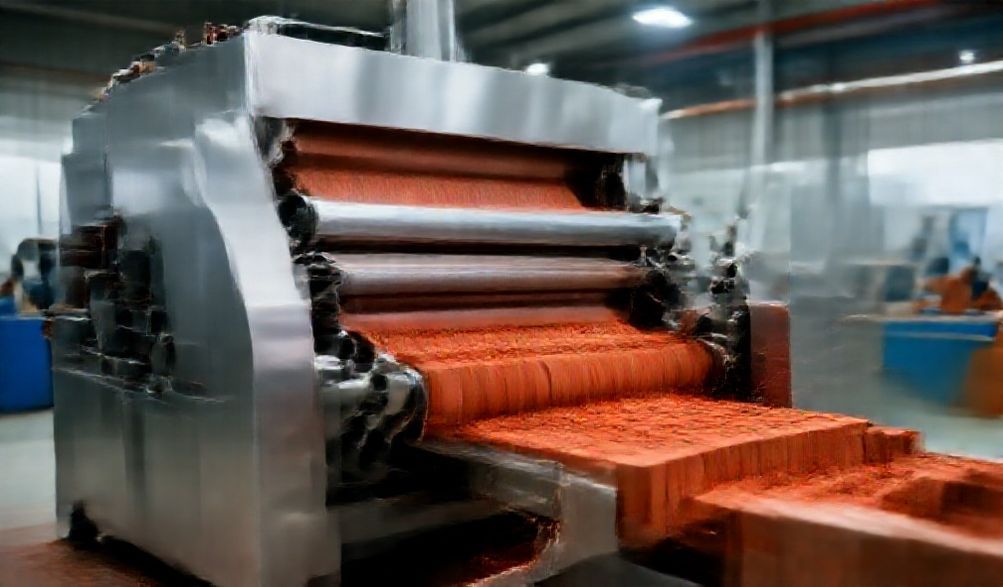
Le Guide Ultime des Machines à Fabriquer des Briques en Terre Cuite de l'Usine FUDA en Chine
Introduction
À une époque d'urbanisation rapide et d'accent croissant sur la construction durable, la demande de matériaux de construction durables, économiques et écologiques n'a jamais été aussi forte. Parmi les alternatives modernes, la brique d'argile se distingue comme une solution intemporelle, éprouvée depuis des millénaires. Cependant, pour les entrepreneurs et les entreprises souhaitant entrer ou se développer dans cette industrie essentielle, un défi majeur se profile : s'approvisionner en machines de production de briques fiables, efficaces et abordables.
C'est là que l'expertise entre en jeu. Naviguer dans le paysage mondial de la fabrication exige un partenaire doté d'une connaissance technique approfondie et d'un parcours éprouvé. C'est là que FUDA Block Making Factory intervient, une force de premier plan dans le secteur chinois des machines industrielles, spécialisée dans l'ingénierie et la production demachines à fabriquer des briques en terre cuite.
Ce guide constitue votre ressource experte et impartiale. Nous dépasserons les simples arguments commerciaux pour vous offrir une analyse détaillée et fondée sur la connaissance. Notre objectif est de vous fournir les éclairages nécessaires pour prendre une décision éclairée et en toute confiance pour votre entreprise. Vous acquerrez une compréhension claire de la valeur durable de la brique en terre cuite, des mécanismes de la production moderne, des avantages spécifiques à s'associer à un fabricant établi comme FUDA, ainsi qu'une feuille de route pratique pour un approvisionnement réussi.
Pourquoi les briques en terre cuite restent un matériau de construction de premier choix
Avant d'investir dans des machines, il est crucial de comprendre la solidité du marché du produit. Les briques en terre cuite ne sont pas une relique du passé ; elles restent un matériau de construction continuellement pertinent, avec des avantages intrinsèques que les alternatives modernes peinent à égaler.
Durabilité et Longévité Inégalées
Les briques d'argile sont synonymes de pérennité. Leurs performances sont ancrées dans la science des matériaux.
* Intégrité Structurelle :Cuit à des températures extrêmement élevées, l'argile subit un processus de vitrification, ce qui donne un produit doté d'une résistance à la compression exceptionnelle. Cela permet aux structures en brique de supporter des charges importantes et de résister aux contraintes environnementales pendant des siècles.
* Résistance au feu :En tant que matériau céramique, la brique d'argile est intrinsèquement incombustible. Elle constitue une barrière anti-incendie essentielle, une caractéristique de sécurité vitale dans la construction résidentielle et commerciale.
* Entretien Minimal :La brique résiste à la pourriture, aux moisissures et aux dommages causés par les insectes. Elle ne nécessite ni traitements chimiques ni peintures fréquentes, ce qui entraîne des coûts d'entretien à long terme nettement inférieurs à ceux de nombreux autres matériaux de façade.
Isolation Naturelle et Efficacité Énergétique
Les briques contribuent de manière significative à la performance thermique d'un bâtiment grâce au concept de l'inertie thermique.
* Masse Thermique:Les briques d'argile absorbent, stockent et libèrent lentement la chaleur. Cette régulation naturelle modère les températures intérieures, gardant les intérieurs plus frais en été et plus chauds en hiver.
* Demande d'énergie réduite :En lissant les fluctuations quotidiennes de température, la maçonnerie réduit la dépendance aux systèmes de CVC. Cela se traduit directement par une consommation énergétique moindre et des factures d'utilité plus basses sur la durée de vie du bâtiment, un argument de vente clé dans le marché actuel soucieux de l'énergie.
Durabilité et Avantages Environnementaux
À une époque axée sur la construction écologique, les briques en terre cuite offrent des références écologiques convaincantes.
* Composition Naturelle :La matière première principale est le schiste ou l'argile de surface, abondants et d'origine naturelle.
* Recyclabilité et Réutilisabilité :À la fin de la vie d'un bâtiment, les briques peuvent être nettoyées et réutilisées dans de nouvelles constructions ou broyées pour servir de granulats, de remblai ou de matériau d'aménagement paysager, créant ainsi un cycle de vie circulaire.
* Évaluation du Cycle de Vie à Long Terme (ACV-LT)Bien que le processus de cuisson nécessite de l'énergie, la durabilité exceptionnelle et les propriétés isolantes des briques signifient que leurénergie intrinsèque—l'énergie totale utilisée tout au long de la durée de vie du produit—est très favorable lorsqu'elle est amortie sur plus de 100 ans de service.
Comprendre la Machinerie de Fabrication de Briques en Terre Cuite
La production moderne de briques est un processus sophistiqué qui transforme l’argile brute en unités précises et homogènes. Comprendre la machinerie est essentiel pour choisir le bon système.
Composants Essentiels d'une Machine Moderne de Fabrication de Briques
Une ligne automatisée standard intègre plusieurs postes clés :
1. Mixer :Mélange l'argile brute avec des quantités précises d'eau (et parfois d'additifs) pour obtenir une consistance homogène et plastique optimale pour l'extrusion.
2. Extrudeuse (ou malaxeur)Le cœur de la machine. Il compacte et désaère le mélange d'argile préparé, le forçant à travers une filière pour former une colonne continue d'argile avec le profil souhaité (plein, perforé, etc.).
3. Cutter :Utilise des fils ou des lames pour trancher la colonne d'argile extrudée en briques individuelles et humides (appelées briques "vertes") aux dimensions exactes.
4. Système de Contrôle :Le cerveau de l'opération. Les systèmes modernes d'automates programmables industriels (API) automatisent l'ensemble du processus, permettant un contrôle précis de la vitesse d'extrusion, de la fréquence de coupe et de la synchronisation générale pour une efficacité et une cohérence maximales.
Types de machines : des lignes semi-automatiques aux lignes entièrement automatiques
Le niveau d'automatisation que vous choisissez dépend de votre échelle, de votre budget et de la disponibilité de la main-d'œuvre.
* Machines manuelles/à petite échelle :Souvent des presses simples, à fonction unique. Elles nécessitent une main-d'œuvre importante pour l'alimentation, le moulage et le retrait. Convient à une production de très faible volume ou artisanale.
* Machines semi-automatiques :Automatise les processus principaux comme le mélange et l'extrusion, mais peut nécessiter une manipulation manuelle pour la mise en place des moules, le retrait des briques ou l'empilage. Offre un bon équilibre entre le coût et l'augmentation de la production pour les petites et moyennes entreprises.
* Lignes de production entièrement automatiques :Représentez le summum de l’efficacité. Ces systèmes intégrés prennent en charge l’ensemble du processus, de l’alimentation en matières premières à l’empilage automatique des briques crues sur les wagons de four ou les palettes. Ils sont conçus pour une production de grand volume et constante, avec une intervention manuelle minimale.
Principales spécifications techniques à connaître
When evaluating machines, focus on these critical specs:
* Capacité de sortie : Measured in bricks per hour (or per 8-hour shift). This must align with your business plan.
* Exigences en matière d'alimentation électrique :Tension (par exemple, 380V/50Hz) et consommation électrique totale (KW). Assurez-vous que votre installation peut la supporter.
* Types de Moules & Interchangeabilité : The mold defines the brick’s shape and size. Systems that allow for quick mold changes increase operational flexibility.
* Extrusion Pressure & Vacuum System: Higher de-airing vacuum and extrusion pressure typically produce denser, stronger bricks with better dimensional stability.
Spotlight on FUDA Block Making Factory: Expertise You Can Trust
With numerous global suppliers, why focus on a specific Chinese factory? The answer lies in depth of specialization, proven history, and a commitment to partnership. FUDA Block Making Factory exemplifies these qualities.
Decades of Manufacturing Experience & Industry Authority
FUDA is not a generic trading company. It is an established manufacturer with deep roots in the brick and block machinery industry. Founded over two decades ago, FUDA has grown by focusing exclusively on construction machinery. This long-term focus has allowed them to:
* Accumulate vast, practical knowledge about clay behaviors, production challenges, and market needs worldwide.
* Continuously refine their machine designs based on real-world feedback from hundreds of installations across different continents.
* Build a reputation as a specialist, not a generalist, which is critical for complex industrial equipment.
Engagement en R&D et Innovation Technologique
To stay at the forefront, FUDA invests significantly in its Research and Development department. This commitment translates to tangible benefits for buyers:
* Efficiency Upgrades: Constant refinement of gearboxes, drive systems, and control software to reduce energy consumption per brick and increase overall line efficiency.
* Material Science Integration: Working with material scientists to optimize machine parameters for different clay types, ensuring consistent quality even with variable raw materials.
* Smart Manufacturing Features: Incorporating user-friendly HMI (Human-Machine Interface) touchscreens, fault diagnosis systems, and data logging capabilities for modern, manageable production.
Quality Control and Manufacturing Standards
Quality is engineered into every machine from the ground up at the FUDA factory.
* Approvisionnement en Matériaux : Critical components like hydraulic systems, PLCs, bearings, and steel are sourced from reputable, often name-brand, suppliers to ensure reliability.
* In-House Manufacturing & Testing: Key structural components are fabricated and machined in-house under strict tolerances. Every completed machine undergoes a rigorous Factory Acceptance Test (FAT), running for hours under load to verify performance before it is approved for shipment.
* International Compliance: FUDA machines are engineered to meet relevant international safety and quality standards, such as CE certification, which is a mandatory requirement for the European market and a strong indicator of quality for buyers globally.
A Comprehensive Product Portfolio for Every Need
Understanding that one size does not fit all, FUDA offers a scalable range of solutions:
* Entry-Level Semi-Automatic Machines: For entrepreneurs and small businesses starting their production journey.
* High-Capacity Fully Automatic Lines: For large-scale brick plants and industrial producers aiming for maximum output.
* Turnkey Project Support: For clients establishing a complete new factory, FUDA can provide comprehensive support, from plant layout design to machinery supply, installation guidance, and technician training.
How to Choose the Right Clay Brick Machine for Your Project
Selecting machinery is a strategic investment. Here’s a framework to guide your decision-making process.
Assessing Your Production Volume and Business Goals
Commencez par un plan d'affaires clair.
* Calculate Realistic Demand: Analyze your target market. What is your current and projected 5-year sales volume?
* Match Machine to Volume: Choose a machine that can comfortably meet your peak demand without constant overloading. A good rule is to select a machine with a 20-30% higher capacity than your current needs to allow for growth.
* Consider Shifts: Can you operate one 8-hour shift or three? A smaller machine running multiple shifts can sometimes be more economical than a larger, underutilized one.
Evaluating Automation Level and Labor Requirements
Automation is a trade-off between capital expenditure and operating costs.
* Labor Cost vs. Machine Cost: In regions with high labor costs, investing in a fully automatic line quickly justifies itself through labor savings and consistency. Where labor is more affordable, a semi-automatic system may offer a faster ROI.
* Skill Availability: Fully automatic lines require more skilled technicians for maintenance and programming. Ensure you have access to this talent or that the supplier provides exceptional training.
* Consistency & Waste Reduction: Automated systems drastically reduce human error, leading to more consistent brick quality and lower rates of waste (breakage, dimensional inaccuracy).
Importance of After-Sales Support and Service
The machine’s quality is only half the equation; the supplier’s support completes it. This is a critical area where FUDA builds long-term partnerships.
* Installation et Mise en Service : Does the supplier provide on-site technician support to install and commission the machine? FUDA typically offers this crucial service.
* Formation Complète : Operators and maintenance staff must be thoroughly trained on the machine’s operation, daily checks, and basic troubleshooting.
* Garantie & Pièces Détachées : A clear warranty (e.g., 12-18 months on core components) is essential. Equally important is the guaranteed availability of spare parts and the ability to ship them quickly anywhere in the world to minimize downtime.
The Practical Guide to Sourcing from China’s FUDA Factory
Navigating an international machinery purchase can seem daunting. Breaking it down into clear steps makes the process transparent and manageable.
Step-by-Step Procurement Process
A typical professional procurement journey follows this sequence:
1. Initial Inquiry: You contact FUDA with your basic requirements (desired brick type, target output, level of automation).
2. Technical Discussion: FUDA’s engineering team engages in detailed discussions to understand your raw material properties and specific needs, recommending the most suitable machine model.
3. Formal Quotation: You receive a detailed proforma invoice outlining machine specifications, price, payment terms, delivery time, and warranty details.
4. Payment & Contract: Upon agreement, a sales contract is signed, and an initial deposit (commonly 30-50%) is paid to initiate production.
5. Production & Inspection: During manufacturing, you can request photos/videos. Before shipping, you or a third-party inspector can witness the Factory Acceptance Test (FAT).
6. Shipping & Delivery: After final payment, the machine is professionally crated and shipped via your chosen Incoterms.
Navigating Logistics, Shipping, and Customs
Being prepared smoothes the logistics phase.
* Understand Incoterms: Key terms are FOB (Free On Board) and CIF (Cost, Insurance, and Freight). FOB means you own the goods and control the shipping once they leave the Chinese port. CIF means the supplier arranges and pays for shipping to your nearest port. FOB often offers more control and potential cost savings.
* Choose a Reliable Freight Forwarder: If going FOB, work with a forwarder experienced in heavy machinery to handle ocean freight, customs clearance at your port, and final land transport to your factory.
* Prepare Documentation: Ensure you understand the import duties, taxes, and any required certifications (like SONCAP, COC, etc.) for your country. Your freight forwarder is key here.
Ensuring a Smooth Installation and Commissioning
The project isn’t complete until the machine is producing bricks on your floor.
* Site Preparation: Follow FUDA’s foundation and utility (power, water) guidelines precisely before the machine arrives.
* Leverage Technical Support: Take full advantage of the on-site installation and commissioning service offered by FUDA’s technicians. Their hands-on guidance is invaluable.
* Initial Production Run: Use this period to fine-tune the machine with your local clay and produce your first batches under expert supervision.
Foire aux Questions (FAQ)
Q1: What is the typical lead time for a clay brick making machine from FUDA factory?
A: For standard models, the lead time is typically 30-45 days after receiving the deposit. For fully customized lines or large turnkey projects, it can extend to 60-90 days. The timeline is confirmed during the quotation stage.
Q2: Can FUDA provide custom molds for special brick shapes and sizes?
A: Absolutely. Custom mold design and manufacturing is a core service. You can provide drawings or samples, and FUDA’s engineering team will design and produce the molds. Lead time for custom molds is additional, usually 15-25 days.
Q3: What kind of after-sales service and warranty does FUDA offer?
A: FUDA typically provides a 12-18 month warranty on core components. They offer lifetime technical support via email, WhatsApp, and video call. Comprehensive operation and maintenance manuals, along with part lists and diagrams, are provided. Critical spare parts are guaranteed to be available for long-term support.
Q4: How does FUDA ensure the machine’s quality before shipment?
A: Every machine undergoes a mandatory Factory Acceptance Test (FAT). This involves assembling the machine, running it under full load for a sustained period, and checking all functions. Buyers are welcome to attend this test in person or via live video stream to verify performance before shipping.
Q5: What are the main advantages of choosing a Chinese manufacturer like FUDA over local suppliers?
A: The primary advantages are rentabilité without sacrificing quality, direct access to the engineering and manufacturing team, and vast experience in exporting to diverse global markets. Chinese manufacturers like FUDA operate within a mature industrial ecosystem, allowing them to integrate high-quality components at a competitive price point, which is often difficult for local assemblers to match.
Conclusion
The journey to establishing or upgrading a clay brick production facility is anchored in two key decisions: the commitment to a timeless building material and the selection of the right production partner. Clay bricks offer enduring structural, environmental, and economic benefits that secure their place in the future of construction. The machinery that produces them is the engine of your business, and its reliability, efficiency, and support define your operational success.
As we have detailed, choosing a partner like Usine de Fabrication de Blocs FUDA means more than just buying a machine; it means gaining access to decades of specialized engineering experience, a robust quality-controlled manufacturing process, and a partnership-focused approach to after-sales support. This guide, rooted in industry expertise and a transparent look at the procurement process, is designed to empower your decision with knowledge.
Take the next step with confidence.
* Primary CTA: Request a Detailed Quotation and Project Consultation from FUDA’s Engineering Team.
* Secondary CTA: Download our Comprehensive Clay Brick Machine Specification Catalog.
Investing in a high-quality clay brick making machine from a reputable manufacturer is not merely a purchase—it is a strategic foundation for long-term business growth, stability, and your contribution to building a more durable world.
<