1. Khám phá Máy Sản xuất Gạch Tro: Chức năng và Công nghệ Cốt lõi
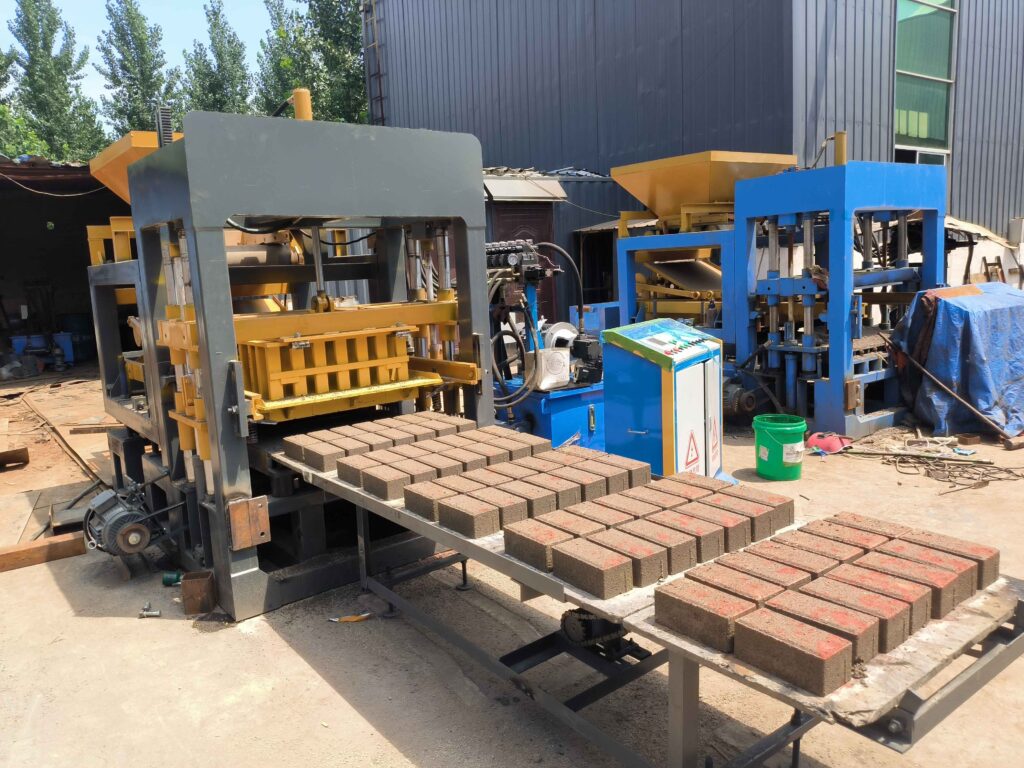
Máy sản xuất gạch tro bay là một thiết bị công nghiệp chuyên dụng, được thiết kế để sản xuất gạch xây dựng từ hỗn hợp cốt liệu chính là tro bay - một loại bột mịn thu được từ quá trình đốt than tại các nhà máy nhiệt điện - cùng với xi măng, vôi, thạch cao và nước. Khác với phương pháp sản xuất gạch đất sét truyền thống, quy trình này sử dụng công nghệ kết dính lạnh, nghĩa là không cần nung trong lò, nhờ đó loại bỏ việc tiêu thụ nhiên liệu hóa thạch và ngăn chặn suy thoái lớp đất mặt.
1.1. Nguyên Lý Sản Xuất Cơ Bản:
Công nghệ này chủ yếu dựa vào quy trìnhrung và nén chặtNguyên liệu thô được định lượng và trộn chính xác để tạo thành bê tông bán khô. Hỗn hợp này sau đó được đưa vào khuôn bên trong máy. Máy sau đó tác động hai lực quan trọng:
- Rung động tần số cao:Hành động này làm lỏng hỗn hợp bê tông, cho phép các hạt lắng xuống dày đặc và loại bỏ các lỗ rỗng khí bị mắc kẹt.
- Áp Lực Cơ Học hoặc Thủy LựcSau hoặc đồng thời với rung động, một áp lực đáng kể được áp dụng lên hỗn hợp. Áp lực này kích hoạt hóa học tro bay và vôi, khởi phát phản ứng pozzolanic vốn là yếu tố then chốt cho độ bền của viên gạch, đồng thời nén chặt vật liệu thành một khối rắn chắc với hình dạng chính xác.
Hiệu ứng kết hợp của rung động và áp suất tạo ra một viên gạch đặc chắc, bền chặt, kích thước chính xác và có bề mặt nhẵn mịn, sẵn sàng để đưa vào quá trình bảo dưỡng.
1.2. Lợi Thế Sản Phẩm Cuối Cùng:
Gạch được sản xuất bởi các máy móc này mang lại những ưu điểm vượt trội, thúc đẩy nhu cầu thị trường:
- Độ Bền Nén Cao:Chúng thường bền hơn gạch đất sét đỏ truyền thống.
- Kích Thước và Hình Dạng Đồng ĐềuĐiều này giúp giảm độ dày lớp vữa, từ đó rút ngắn thời gian thi công và tiết kiệm chi phí vật liệu.
- Tính Bền vững Môi trường:Họ tận dụng một sản phẩm phế thải công nghiệp, góp phần vào nền kinh tế tuần hoàn và thường đủ điều kiện để đạt chứng nhận công trình xanh.
- Cách nhiệt tuyệt vời:Gạch tro bay cung cấp khả năng chịu nhiệt tốt hơn so với gạch đất sét, dẫn đến tiết kiệm năng lượng trong các tòa nhà.
2. Phân Tích Chi Tiết Các Phân Loại Máy Gạch Tro Bay và Các Mức Giá
Thị trường máy sản xuất gạch tro được phân khúc, với giá cả tương quan trực tiếp đến mức độ tự động hóa, công suất đầu ra và các tính năng. Hiểu rõ các phân khúc này là điều cần thiết để nhắm đúng đối tượng khách hàng mục tiêu.
2.1. Máy Thủ Công và Bán Tự Động: Phân Khúc Nhập Môn và Doanh Nghiệp Vừa và Nhỏ
Thể loại này đại diện cho điểm khởi đầu dễ tiếp cận nhất cho các doanh nhân nhỏ và được đặc trưng bởi yếu tố lao động thủ công đáng kể.
- Đặc điểm chính:
- Hoạt động:Cấp liệu thủ công nguyên liệu thô và lấy gạch thành phẩm ra.
- Quyền lực: Often equipped with a single electric motor to drive the vibration mechanism.
- Mobility: Some models are mounted on wheels for easy movement around a worksite.
- Đầu ra: Typically ranges from 500 to 2,000 bricks per 8-hour shift.
- Pricing Range: This category is the most cost-sensitive. Prices can range from $1,000 to $8,000.
- Các yếu tố chi phí:
- Chất Lượng Xây Dựng: Thickness of steel in the frame and mold.
- Motor Power and Brand: Quality of the vibration motor.
- Chất Lượng Khuôn Hardness and precision of the mold steel.
- Mức độ Tự động hóa: Semi-automatic models with hydraulic assistance for de-molding will be at the higher end of this range.
2.2. Fully Automatic Stationary Machines: The Core of Commercial Production
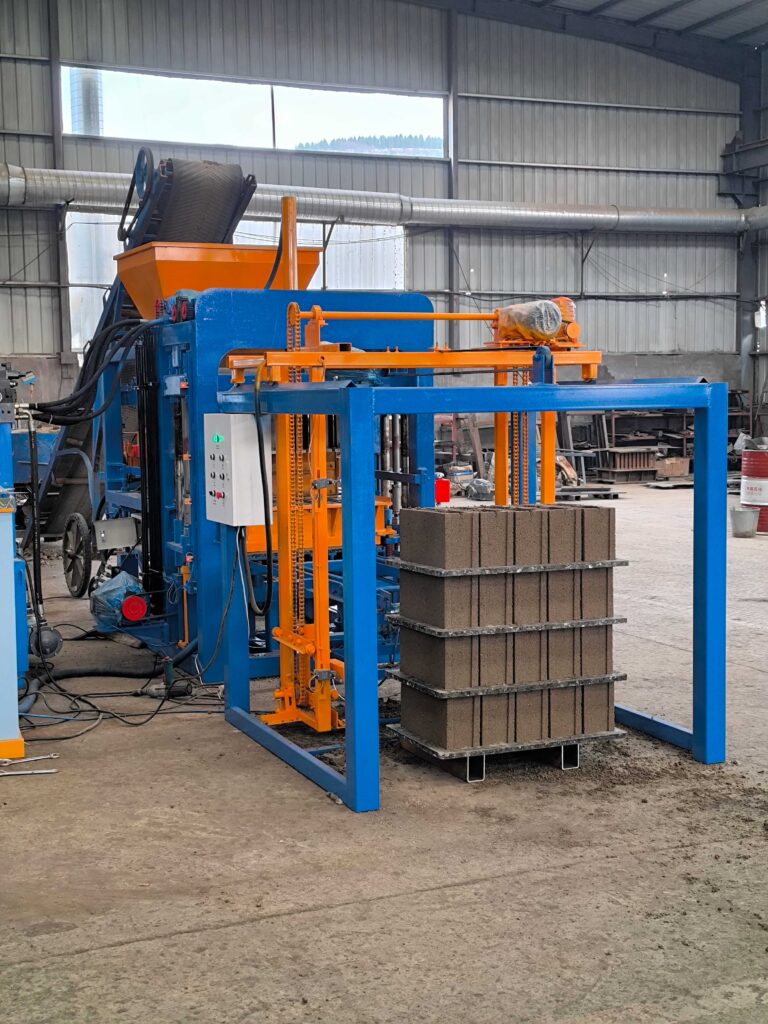
This is the most popular and versatile category for serious businesses focused on commercial brick production. These machines strike a balance between high output, consistent quality, and a manageable capital investment.
- Đặc điểm chính:
- Hoạt động: Integrated systems with conveyors or automatic feeders for raw material. The entire cycle—filling, vibrating, compacting, and ejecting—is automated.
- Control: Often feature a Programmable Logic Controller (PLC) for precise control over vibration time and pressure.
- Đầu ra: Designed for high-volume production, typically from 2,500 to 10,000 bricks per 8-hour shift.
- Pricing Range: This is the broadest and most competitive segment. Prices generally fall between $15,000 and $60,000.
- Các yếu tố chi phí:
- Năng lực sản xuất: A machine rated for 4,000 bricks/day will be less expensive than one rated for 8,000 bricks/day.
- Hệ thống thủy lực: The quality, number, and power of hydraulic pumps and cylinders are a major cost component.
- Hệ Thống Điều Khiển: A simple relay-based system is cheaper than a PLC with a touch-screen interface.
- Level of Integration: Machines that include an integrated pan mixer or automatic pallet feeder will command a higher price.
2.3. High-Capacity Automatic Production Lines: Industrial-Scale Manufacturing
For large-scale entrepreneurs and established block yards supplying major construction projects, fully integrated production lines represent the pinnacle of ash brick manufacturing technology.
- Đặc điểm chính:
- Hoạt động: These are complete systems comprising automatic batching plants, conveyors, high-pressure brick machines, automatic stackers, and curing system handling.
- Đầu ra: Capable of producing 15,000 to 40,000+ bricks per day with minimal human intervention.
- Sophistication: Feature advanced PLC controls, data logging, and remote monitoring capabilities.
- Pricing Range: As a significant capital investment, these lines start from $80,000 and can exceed $250,000.
- Các yếu tố chi phí:
- Mức độ Tự động hóa: The cost of robotic pallet handling and product stacking systems.
- Batching Plant Capacity: The size and automation level of the raw material batching system.
- Overall Throughput: The designed capacity of the entire line is the primary determinant of price.
3. Beyond the Sticker Price: The Total Cost of Ownership and Value Analysis
A shrewd procurement strategy looks beyond the initial machine price to evaluate the Total Cost of Ownership (TCO), which directly impacts the end-user’s profitability and, by extension, their satisfaction with your product.
3.1. Operational Expenditures (OpEx):
- Tiêu thụ điện năng: Machines with efficient hydraulic systems and well-balanced motors will have lower electricity costs per brick produced.
- Chi phí lao động: A fully automatic machine may have a higher price tag but will require only 2-3 operators, whereas multiple manual machines would be needed to achieve the same output, significantly increasing labor costs.
- Raw Material Consumption: A high-quality machine with precise feeding and compaction control produces bricks with consistent density and strength, preventing over-use of cement and optimizing the mix design cost.
3.2. Maintenance and Spare Parts:
- Mold Lifespan: The mold is a consumable item. A higher initial investment in a machine with a high-chromium, hardened steel mold will result in a lower long-term cost, as it will withstand millions of cycles before needing replacement.
- Availability of Spare Parts: A machine with locally available, standardized parts (e.g., common hydraulic seals, standard bearing sizes) will have lower downtime and maintenance costs compared to one requiring proprietary, imported parts with long lead times.
3.3. Return on Investment (ROI) Calculation:
The ultimate value of the machine is determined by its ROI. A distributor must be able to articulate this to their customers. The calculation is straightforward:
- Revenue: (Selling Price per Brick) x (Daily Production) x (Operating Days)
- Chi phí: (Raw Material Cost per Brick + Labor + Power + Maintenance) x (Total Bricks) + Initial Machine Price
A higher-priced, more efficient automatic machine will often pay for itself faster than a cheaper, labor-intensive manual model due to its superior output and lower operating costs.
4. Strategic Sourcing and Procurement Considerations
For distributors, the relationship with the manufacturer is as important as the machine itself.
4.1. Evaluating a Manufacturer:
- Hỗ trợ Kỹ thuật: Does the manufacturer provide comprehensive installation, commissioning, and operator training?
- Warranty and Service: The length and terms of the warranty, and the manufacturer’s ability to provide timely technical support, are critical.
- R&D Capability: A manufacturer that continually improves its designs will provide you with a competitive product portfolio over the long term.
4.2. Customization and Market-Specific Needs:
- Các Loại Gạch: Can the machine be easily adapted to produce different types of bricks (solid, hollow, pavers, interlocking) by simply changing the mold?
- Local Standards: Ensure the machine produces bricks that meet the specific compressive strength and dimensional standards of your target market (e.g., ASTM, IS, BS).
Conclusion: Positioning for Profit in a Green Market
The market for ash brick machines is not merely about equipment sales; it is about enabling a sustainable and profitable business model for your clients. The pricing of these machines is a direct reflection of their capability, durability, and the economic value they unlock. For the astute distributor, success lies in moving beyond price-based competition to a value-based sales approach.
This requires a deep understanding of the cost-benefit analysis, the ability to educate clients on TCO and ROI, and the foresight to partner with manufacturers who offer robust technical and after-sales support. By positioning your company as a provider of comprehensive business solutions—from the right machine at the right price point to the support that ensures its success—you will not only capitalize on the current demand for sustainable construction but also build a resilient and reputable distribution business for the future.
Các Câu Hỏi Thường Gặp (FAQ)
Q1: What is the primary factor that causes the wide price variation between machines with similar output claims?
The disparity often lies in the quality of core components. A machine using a standard hydraulic pump, generic PLC, and lower-grade steel for its frame and mold will be cheaper than one employing premium, energy-efficient hydraulics, a renowned-brand PLC, and hardened, abrasion-resistant steel molds. The latter ensures higher longevity, lower maintenance, and more consistent product quality, justifying the higher initial investment.
Q2: For a new entrepreneur, is it better to start with a low-cost manual machine or invest more in a semi-automatic model?
While a manual machine has a lower entry cost, we generally recommend a semi-automatic model for anyone serious about commercial production. The higher initial output, superior brick quality consistency, and lower physical labor requirements of a semi-automatic machine typically lead to a faster ROI and greater business scalability, allowing the entrepreneur to grow their client base and reinvest profits more rapidly.
Q3: How significant is the cost of auxiliary equipment?
It is a critical part of the budget. A single machine cannot operate in isolation. Auxiliary equipment like a concrete mixer (pan or planetary type), a pallet feeder, and brick carts can add 15-30% to the total project cost. For a fully automatic line, the cost of the auxiliary equipment (batching plant, stackers) can sometimes rival or even exceed the cost of the brick-making machine itself.
Q4: What are the typical payment terms when sourcing from a manufacturer?
Terms can vary but a common structure is a 30-50% advance payment with the purchase order, with the balance paid before shipment or against a copy of the Bill of Lading. For larger orders, some manufacturers may offer a Letter of Credit (LC) as a secure payment method for both parties. It is crucial to clarify these terms upfront.
Q5: Can one machine produce different sizes and types of bricks?
Yes, this is a key feature. This is achieved by changing the mold set. The flexibility to produce hollow blocks, solid bricks, and paving stones from the same machine base is a major selling point. When procuring, inquire about the cost and lead time for additional molds and the ease with which changeovers can be performed.
Q6: What is the single most important after-sales consideration?
The availability of spare parts is paramount. Downtime in a production business is a direct loss of revenue. Ensure your supplier maintains a robust inventory of critical wear parts, especially molds, hydraulic seals, and vibration motors, and has a proven logistics system to get them to you quickly. A long-term, reliable spare parts supply agreement is a hallmark of a quality manufacturer.