
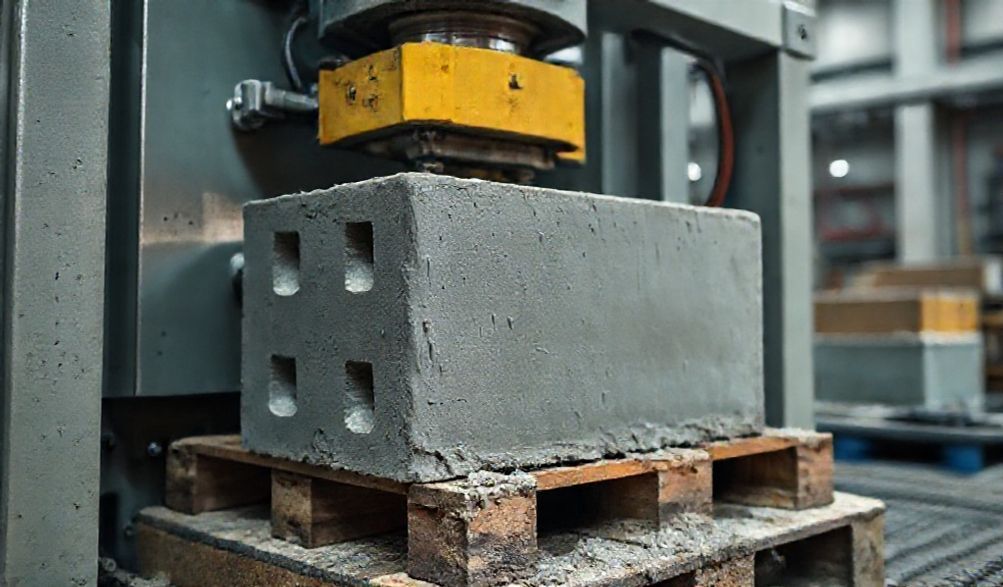
Hướng Dẫn Toàn Diện Về Máy Sản Xuất Gạch: Các Loại, Lợi Ích Và Cách Lựa Chọn
Giới thiệu
Cảnh quan đô thị, nền móng của những ngôi nhà, và lối đi trong công viên đều được xây dựng trên một đơn vị cơ bản: khối bê tông. Đằng sau yếu tố phổ biến này của ngành xây dựng hiện đại là một ngành công nghiệp tinh vi và quan trọng, được vận hành bởi hiệu suất không ngừng của các máy sản xuất khối. Đối với chủ doanh nghiệp, quản lý nhà máy và chuyên gia thu mua, việc lựa chọn máy móc phù hợp không chỉ là mua sắm thiết bị—mà còn là quyết định chiến lược quyết định năng suất, chất lượng sản phẩm và lợi nhuận dài hạn.
Hướng dẫn này là nguồn tài liệu đáng tin cậy, chắt lọc hàng thập kỷ phát triển ngành thành những hiểu biết có thể áp dụng ngay. Từ những máy ép thủ công của quá khứ đến các dây chuyền sản xuất tự động hoàn toàn, điều khiển bằng máy tính ngày nay, công nghệ sản xuất khối đã trải qua một cuộc cách mạng, ưu tiên tính bền vững, độ chính xác và sản lượng. Mục tiêu của chúng tôi là cung cấp một khuôn khổ toàn diện, đáng tin cậy để giúp bạn đưa ra quyết định sáng suốt, dù bạn đang thiết lập một cơ sở mới hay nâng cấp nhà máy hiện có. Hãy cùng xây dựng nền tảng kiến thức.
Máy Sản Xuất Khối là gì? Nguyên Lý Cốt Lõi và Ứng Dụng
Về cốt lõi, một máy sản xuất khối bê tông là một kỳ quan của ngành kỹ thuật công nghiệp, được thiết kế để biến đổi hỗn hợp bê tông thô thành các đơn vị xây dựng chính xác và bền vững thông qua việc kiểm soát rung, nén và áp lực.
Định Nghĩa Công Nghệ
Máy sản xuất khối (thường gọi là máy làm khối, máy sản xuất khối bê tông, hoặc máy làm gạch) là thiết bị chuyên dụng tự động hóa quá trình tạo hình các khối bê tông, đá lát, gạch và các sản phẩm liên quan. Nó thay thế các phương pháp thủ công không đồng nhất và tốn nhiều nhân công bằng một quy trình cơ khí có thể lặp lại. Chìa khóa hoạt động của nó là khả năng cố định hỗn hợp bê tông bán khô thành một hình dạng đặc chắc, bền vững thông qua việc loại bỏ các lỗ rỗng khí và đảm bảo sự phân bố hạt đồng đều.
Quy Trình Sản Xuất Cơ Bản
Mặc dù thiết kế máy móc có thể khác nhau, chu trình sản xuất cơ bản vẫn tuân theo một trình tự nhất quán:
- Cho ăn:Hỗn hợp bê tông đã chuẩn bị (cốt liệu, cát, xi măng và nước tối thiểu) được nạp vào phễu của máy.
- Đo lường & Đúc khuôn:Một lượng hỗn hợp được đo đưa vào khuôn hoặc hốc, nơi xác định hình dạng của khối (ví dụ: rỗng, đặc, lồng ghép).
- Nén chặt:Đây là giai đoạn quan trọng. Máy sử dụng một hoặc cả hai phương pháp này:
- Rung động:高频、高振幅的振动使混合物液化,使其能流入模具的每个角落并释放困住的空气。
- Áp lực:液压或机械压力机施加巨大的向下力,进一步压实材料。
- Khởi đầu chữa lànhTrong nhiều hệ thống, khối "xanh" mới được tạo thành ngay lập tức được chuyển lên pallet và đưa đến buồng bảo dưỡng (thường qua máy xếp chồng).
- Phun ra & Trả Pallet:Khuôn được nâng lên, và khối bê tông được tách khỏi máy, sẵn sàng cho quá trình bảo dưỡng. Pallet rỗng thường được làm sạch và đưa trở lại điểm bắt đầu của chu trình.
Ngành Công Nghiệp Chính và Các Trường Hợp Sử Dụng
Tính linh hoạt của những máy móc này khiến chúng trở nên không thể thiếu trong nhiều lĩnh vực:
- Xây dựng:Thị trường sơ cấp, sản xuất:
- Gạch bê tông rỗng dùng cho tường chịu lực và tường ngăn.
- 用于地基和重型应用的实心砌块。
- Khối nhẹ dùng để cách nhiệt và giảm tải trọng kết cấu.
- Cảnh quan & Công trình cứng: Manufacturing:
- Paving slabs and interlocking pavers for driveways, walkways, and plazas.
- Retaining wall units and garden edging.
- Decorative masonry for aesthetic applications.
- Specialized Manufacturing: Creating niche products like:
- Interlocking concrete blocks for dry-stack walls and flood control.
- Insulated concrete form (ICF) blocks.
- Concrete kerbstones, chimney blocks, and vent blocks.
Types of Block Production Machines: A Detailed Breakdown
Understanding the different machine categories is the first step in aligning technology with your business needs.
Máy Sản Xuất Gạch Block Cố Định
These are the powerhouses of the industry, designed for high-volume, fixed-location production in a dedicated plant.
- Hoạt động: Raw materials are brought to the machine via conveyor systems. The machine itself does not move.
- Đầu ra: Very high, often ranging from thousands to tens of thousands of blocks per 8-hour shift.
- Các Phân Typ Chính:
- Máy Ép Tĩnh Use high hydraulic pressure as the primary compaction method, often for producing very dense, high-strength paving stones and kerbs.
- “Egg-Laying” Mobile Block Machines: A hybrid where the machine moves along a concrete floor, depositing (or “laying”) blocks directly onto the casting surface before moving forward to produce the next batch. Less common in modern high-output plants.
Máy Đúc Khối Di Động
These offer flexibility and a lower barrier to entry, ideal for on-site production or smaller businesses.
- Hoạt động: The machine is moved to the work area (often on wheels or a trailer). It produces blocks directly on a prepared, level ground or concrete slab, eliminating the need for pallets.
- Đầu ra: Lower than stationary plants, suitable for small to medium-scale projects.
- Lợi ích: Drastically reduces material handling costs, as blocks are made where they will be used. Ideal for remote construction sites.
Automatic vs. Semi-Automatic vs. Manual Machines
This classification refers to the level of human intervention required.
- Hoàn Toàn Tự Động: The entire process—from raw material feeding to molding, compaction, curing rack handling, and pallet return—is controlled by a programmable logic controller (PLC). Requires minimal labor for supervision and maintenance. Offers the highest output and consistency.
- Bán Tự Động: Core processes like compaction and molding are mechanical, but operations like feeding raw material, removing finished blocks, or pallet handling require manual intervention. Offers a good balance between cost and productivity.
- Hướng dẫn sử dụng: Operated entirely by hand, often using a lever to apply pressure. Very low output, suitable only for tiny, niche operations or hobbyists. Not viable for commercial production.
Specialized Machines
Some machines are engineered for specific product lines:
* Pavers & Kerb Machines: Optimized for the high pressure and precise surface finish needed for paving products.
* Máy Sản Xuất Gạch Không Nung Liên Kết: Feature specialized mold designs to create the complex tongue-and-groove profiles of interlocking blocks.
* Multilayer Machines: Capable of producing color-coated or textured blocks by placing different concrete mixes in successive layers.
Key Benefits of Investing in Modern Block Production Machinery
Moving from manual or outdated equipment to a modern block production line delivers transformative advantages.
Hiệu Suất Vô Song và Sản Lượng Cao
Modern machines run on precise cycles measured in seconds. What might take a team of workers a day to produce can be accomplished by an automated line in an hour. This scalability is essential for fulfilling large contracts and growing your business.
Superior Product Quality and Consistency
Human variability is eliminated. Every block from a well-tuned machine has identical dimensions, weight, and density. This consistency translates to:
* Predictable structural strength (compressive strength).
* Easier, faster bricklaying with uniform mortar joints.
* Enhanced aesthetic appeal for facing blocks and pavers.
Significant Cost Reduction and ROI
While the initial investment is substantial, the long-term savings are compelling:
* Chi phí lao động: Automation reduces dependency on large crews.
* Chất thải vật liệu: Precise metering and efficient compaction minimize spillage and rejected blocks.
* Hiệu quả hoạt động: Faster production cycles lower the cost per unit.
A well-planned machine typically pays for itself through these savings, delivering a strong return on investment (ROI).
Enhanced Operational Safety and Ergonomics
Modern design prioritizes operator safety:
* Enclosed moving parts and safety guards.
* Ergonomic controls that reduce physical strain.
* Automated handling eliminates the heavy lifting associated with manual block production, drastically reducing the risk of musculoskeletal injuries.
Sustainability and Material Optimization
Today’s machines support greener construction practices:
* Use of Recycled Aggregates: They can effectively compact mixes containing fly ash, slag, or crushed recycled concrete.
* Reduced Cement Content: Optimal compaction achieves target strength with less cement, lowering the carbon footprint of each block.
* Less Waste: Precise production means less material ends up in landfills.
Critical Factors for Choosing the Right Block Production Machine
Selecting a machine is a multi-faceted decision. Focus on these critical areas to make a confident choice.
Đánh Giá Yêu Cầu Sản Xuất Của Bạn
Start by defining your business needs with clear numbers:
* Đầu ra yêu cầu: Calculate the average number of blocks you need per day, week, and month. Add a 20-30% buffer for growth.
* Danh mục Sản phẩm: List all block types, sizes, and styles you plan to produce (e.g., 6-inch hollow block, 60mm paver).
* Project Scale & Market: Are you supplying a local market or large contractors? Is your demand steady or project-based?
Understanding Machine Specifications
Decode the technical sheet:
* Thời gian chu kỳ: The time to produce one mold of blocks (e.g., 15 seconds). Faster cycles mean higher output.
* Lực Áp Suất: For press machines, measured in tons or kN. Higher pressure yields denser products.
* Hệ thống Rung Frequency (Hz) and amplitude (mm). A well-balanced system is key for good compaction without excessive wear.
* Pallet Size & Mold Cavities: Determines how many blocks are made per cycle and their maximum dimensions.
* Yêu cầu về nguồn điện: Ensure your facility can supply the necessary electrical (or hydraulic) power.
Quality of Construction and Key Components
The machine’s durability depends on its build:
* Khung Look for heavy-duty, welded steel construction for stability under load.
* Động cơ rung: Branded, reliable motors with proper mounting are essential.
* Khuôn mẫu: Hardened, precision-machined steel molds ensure product accuracy and long life.
* Hệ thống Thủy lực/Khí nén: High-quality pumps, valves, and cylinders from reputable brands (e.g., Bosch Rexroth, Parker) reduce downtime.
Manufacturer Reputation and Support (A Vital E-E-A-T Factor)
This is perhaps the most critical non-technical factor. A machine is a long-term partnership.
* Proven Experience: How long has the manufacturer been in business? Can they provide references from clients in your region?
* Sẵn có Phụ tùng Thay thế: Is there a local or responsive central warehouse for wear parts?
* Dịch vụ hậu mãi: Do they offer installation supervision, comprehensive operator training, and prompt maintenance support? A strong warranty is a sign of confidence.
Budgeting: Initial Cost vs. Total Cost of Ownership
The cheapest machine can be the most expensive in the long run. Consider:
* Tiêu thụ Năng lượng An efficient machine saves on electricity costs daily.
* Chi phí bảo trì: Factor in the cost and availability of spare parts.
* Expected Lifespan: A robust machine from a quality manufacturer should last for decades with proper care.
* Potential Downtime: The cost of production halts due to machine failure can be catastrophic.
Operational Best Practices and Maintenance
To protect your investment and ensure peak performance, adhere to these guidelines.
Essential Setup and Daily Operation Procedures
- Proper Foundation & Leveling: The machine must be installed on a solid, perfectly level concrete foundation to prevent misalignment and wear.
- Correct Mold Installation: Follow torque specifications when bolting molds to the machine table.
- Mix Preparation: Use a consistent, semi-dry concrete mix with the correct aggregate gradation and moisture content. The mix recipe is as important as the machine itself.
Routine Maintenance Checklist
- Hàng ngày: Clean excess concrete from the machine, molds, and pallets. Check hydraulic fluid levels and for any leaks.
- Hàng tuần: Lubricate all moving parts as per the manual. Inspect and tighten bolts, especially on vibration units.
- Monthly: Conduct a thorough inspection of wear parts like mold liners, tamper shoes, and conveyor belts. Check electrical connections.
Troubleshooting Common Issues
- Poor Surface Finish/Chipped Edges: Often caused by an incorrect concrete mix (too dry or too wet) or worn mold liners.
- Low Block Density: Insufficient vibration time, weak vibration motors, or an overly dry mix.
- Blocks Sticking in Mold: Mold needs cleaning or a release agent. Could also indicate under-compaction.
Ensuring Operator Safety
- PPE is Mandatory: Safety glasses, hearing protection, steel-toe boots, and gloves.
- Lockout/Tagout (LOTO): Strict procedures must be followed during any maintenance or clearing of jams.
- Respect Guards: Never operate the machine with safety guards removed or bypassed.
FAQ Section
What is the average production capacity of a standard block machine?
Capacity varies enormously. A small mobile machine may produce 500-1,000 blocks per day. A mid-range stationary plant can produce 5,000-10,000 blocks per 8-hour shift. Large, fully automatic lines can exceed 20,000 blocks per shift.
Can one machine produce different types and sizes of blocks?
Yes, through the use of interchangeable molds. This is a standard feature. The key is to ensure the machine has the necessary pressure/vibration force and pallet size to accommodate the different product ranges you intend to make.
What is the typical lead time and process for installing a new block production line?
From order to commissioning, lead times can range from 3 to 9 months. The process involves: 1) Finalizing specifications, 2) Manufacturing, 3) Factory testing, 4) Shipping, 5) Site preparation (foundation, curing chamber), 6) Installation & mechanical assembly, 7) Electrical/control wiring, 8) Commissioning and operator training.
How important is the raw material mix design for machine performance?
It is absolutely critical. The machine is designed to work with a specific consistency (semi-dry). An improper mix will lead to poor compaction, block damage, and machine wear. Work with your material supplier and machine manufacturer to optimize your mix.
What are the most common mistakes first-time buyers make?
1. Underestimating required output, leading to an undersized machine.
2. Choosing based on price alone, ignoring quality and support.
3. Neglecting to budget for auxiliary equipment (mixers, conveyors, stackers, curing systems).
4. Not visiting an existing plant to see the machine in operation before buying.
How does automation in block production impact labor needs?
It shifts labor from manual, physically demanding tasks (lifting, carrying) to skilled roles in machine supervision, quality control, maintenance, and logistics. Overall headcount may decrease, but the required skill level increases.
What are the key certifications or standards to look for in a machine?
* Dấu CE: Essential for sale in the European Economic Area, indicating compliance with EU health, safety, and environmental standards.
* ISO 9001: Certification of the manufacturer’s quality management system, indicating consistent production quality.
* Machine-Specific Standards: Compliance with relevant local or international safety standards for machinery.
Conclusion
Investing in a block production machine is a decisive step toward building a more efficient, profitable, and sustainable business. The right machine acts as the engine of your operation, transforming raw materials into the building blocks of infrastructure with precision and scale. As we’ve explored, the optimal choice is not merely a technical specification—it’s a strategic balance between your production goals, operational capabilities, and a partnership with a reputable manufacturer who will support you for the long haul.
Use this guide as your foundational blueprint. Let it inform your discussions, shape your questions, and clarify your priorities. The most prudent path forward is to consult with multiple established manufacturers, request detailed quotations and plant layouts, and, crucially, arrange visits to see their machines operating in real-world plants. There is no substitute for seeing the equipment in action, speaking with current owners, and verifying a manufacturer’s claims firsthand. Make your decision from a position of knowledge and confidence.
<