Các Trụ Cột của Máy Gạch Chất Lượng Cao
Đánh giá chất lượng phải mang tính hệ thống, vượt qua các thông số kỹ thuật bề mặt để xem xét triết lý thiết kế nền tảng và tính toàn vẹn của các thành phần.
1. Kỹ thuật nền tảng và Tính toàn vẹn cấu trúc
机器的物理核心决定了其在持续高压运行下的寿命和稳定性。
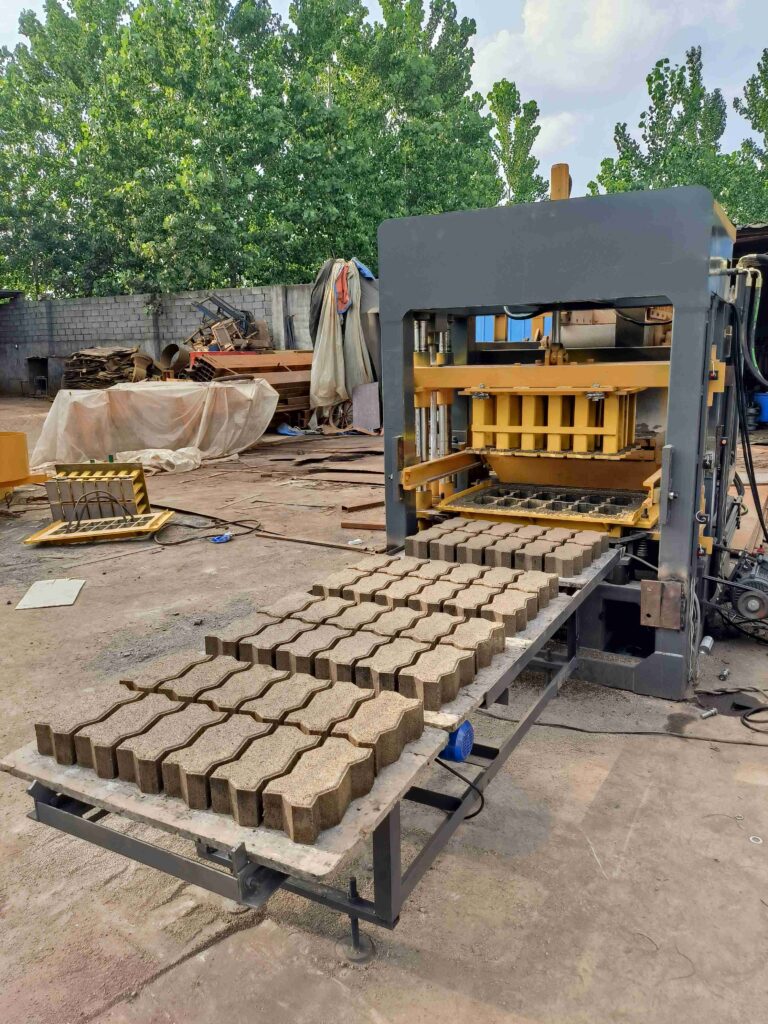
- Khung và Chế tạo Dạng Nặng底盘和主体结构应采用高品质、经过应力消除处理的钢板和型材制造,不得使用轻型槽钢。关键焊缝需连续、洁净,并采用埋弧焊工艺以实现深熔透和高强度。刚性框架可防止负载下的错位,而错位正是导致不均匀磨损和产品不一致性的根本原因。
- Linh kiện thủy lực và năng lượng cao cấp:Trái tim của hệ thống nằm ở các bộ truyền động. Một máy chất lượng cao sử dụng bơm thủy lực, van và xi-lanh cấp công nghiệp từ các chuỗi cung ứng uy tín (mặc dù không ghi nhãn hiệu trong truyền thông khách hàng). Xi-lanh nên có piston mạ crôm cứng và phớt chất lượng. Động cơ điện phải đạt hiệu suất cao (IE3/IE4) và kết hợp với hộp số chính xác. Điều này đảm bảo truyền tải điện năng hiệu quả, sinh nhiệt tối thiểu và vận hành đáng tin cậy, không rò rỉ.
- Bộ phận mài mòn quan trọng được gia công chính xác 成型系统——包括模具箱本身、压实头、托板送料器和捣固脚——必须采用高合金工具钢加工,或嵌入硬化耐磨板。这些部件的公差应控制在百分之几毫米以内。这种精度能确保成品砖的尺寸准确性,减少摩擦,并显著延长使用寿命,从而直接降低每块砖的生产成本。
2. Hệ thống điều khiển tiên tiến và khả năng lặp lại
一致性是高质量制造的标志,而这得益于精密的控制技术。
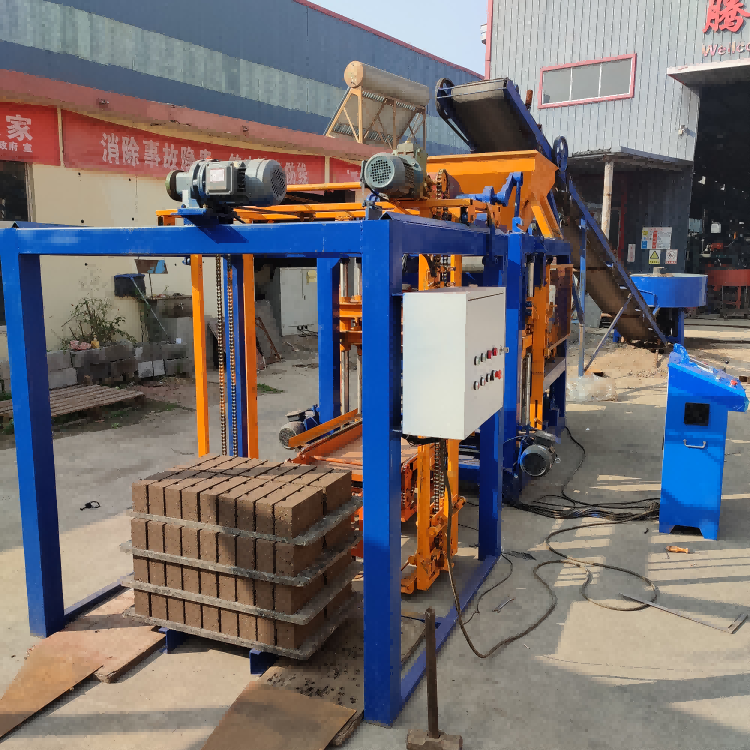
- Bộ điều khiển logic khả trình công nghiệp (PLC) với giao diện người-máy (HMI).控制系统应以强大、模块化的PLC平台为核心,而非简单的继电器或低成本微控制器。配套的触屏人机界面应支持对所有机器参数的直观编程:循环时间、振动时长与频率、压力曲线及层数。能够存储数百种不同产品的"配方"可实现快速、无差错的产品切换。
- Tích hợp cảm biến và phản hồi vòng kín: Quality machines are equipped with a network of sensors monitoring hydraulic pressure, oil temperature and level, mold position, and material height. This data feeds back to the PLC, enabling real-time adjustments and providing critical diagnostics. For example, the system can automatically compensate for minor hydraulic fluid temperature changes to maintain consistent pressing force.
- Data Connectivity and Production Monitoring: A forward-looking feature is built-in Ethernet or wireless connectivity for Industry 4.0 readiness. This allows for remote monitoring of production counts, machine status, and efficiency (OEE) dashboards. It facilitates predictive maintenance alerts and remote technical support, transforming the machine from an isolated unit into a networked production asset.
3. Versatility and Adaptability to Market Demands
A quality machine protects the client’s investment by adapting to future market needs.
- Modular Mold and Tooling Systems: The machine should accommodate a quick-change mold system, allowing swap-over from producing solid blocks to hollow blocks, pavers, or interlocking bricks in under 30 minutes. Molds should be self-aligning and securely clamped without requiring extensive manual tooling.
- Broad Material Compatibility: The design should facilitate the use of diverse raw materials, from standard concrete mixes to those incorporating high percentages of fly ash, slag, or recycled aggregates. This may involve features like adjustable vibration amplitudes for optimal compaction of different mix designs or wear-resistant augers and mixers for abrasive materials.
- Scalable Automation Options: The core machine should be designed to integrate seamlessly with upstream and downstream automation. This includes synchronized pallet feeders, automated stackers, robotic palletizers, and conveyor systems. A high-quality base machine will have pre-designed interfaces for this expansion, allowing the client to start semi-automated and upgrade to a fully automated production line as business grows.
4. Design for Serviceability and Sustained Support
Ease of maintenance and the strength of after-sales support are ultimate tests of quality.
- Ergonomic and Safe Maintenance Access: Panels should be easy to remove with standard tools. Lubrication points should be centralized and easily accessible. Electrical cabinets should be clearly labeled and laid out logically. Hydraulic hose routing should be tidy and protected. These considerations drastically reduce mean time to repair (MTTR) and improve technician safety.
- Comprehensive Technical Documentation and Training: A superior manufacturer provides exhaustive documentation: detailed electrical and hydraulic schematics, parts manuals with exploded-view diagrams, and structured maintenance checklists. Furthermore, they offer robust training programs, both on-site and at their facilities, covering operation, routine maintenance, and basic troubleshooting for the client’s technical staff.
- A Responsive and Knowledgeable Support Network: For the distributor, the quality of the manufacturer’s support is as critical as the machine itself. This includes readily available technical experts, a well-stocked inventory of spare parts with a clear supply chain, and a responsive warranty policy. The ability to access remote diagnostics and support is a key differentiator.
The Tangible Outcomes of Investing in Quality
The premium paid for a high-quality machine is amortized through superior operational and financial outcomes.
- Exceptional Product Consistency and Reduced Waste: Precision engineering and control yield bricks with uniform dimensions, density, and strength, minimizing product rejection and ensuring compliance with the most stringent project specifications.
- Maximized Uptime and Lower Lifetime Operating Costs: Robust components and predictable maintenance schedules prevent catastrophic failures. While the initial investment is higher, the total cost of ownership over a 10-15 year lifespan is often lower due to reduced repair costs, lower energy consumption (from efficient drives), and higher sustained production output.
- Enhanced Brand Equity and Client Confidence: Distributors who champion demonstrably high-quality machinery build their own reputation for reliability and insight. They become partners in their clients’ success, fostering long-term loyalty and generating valuable referrals.
Conclusion
A high-quality brick making machine is the culmination of a philosophy that prioritizes durability, precision, adaptability, and holistic support over short-term cost minimization. It is a capital asset engineered to be the stable, productive heart of a client’s operation for decades. For the industry professional, the ability to evaluate and communicate these attributes is a critical skill. It involves looking beyond the brochure’s stated production capacity to interrogate the grade of materials used, the sophistication of the control architecture, the foresight in the design for flexibility, and the depth of the support ecosystem. By focusing on these core pillars, distributors and procurement experts can guide their clients toward investments that deliver not just immediate output, but enduring competitive advantage, operational serenity, and a foundation for growth in an ever-evolving construction marketplace. In essence, selling quality is selling certainty.
Các Câu Hỏi Thường Gặp (FAQ)
Q1: How can we assess build quality during a factory visit or machine inspection?
Focus on tangible details: Observe the welds—they should be even, clean, and continuous, not spotty or painted over to hide imperfections. Check the thickness of steel plates in the frame and vibration chamber. Inquire about the origins of key components like hydraulic pumps and the PLC brand. Examine the fit and finish of guards, panels, and wiring conduits—neat, professional execution often reflects internal quality. Ask to see the machining of the mold box and compaction head.
Q2: Is a higher price always indicative of higher quality?
Generally, there is a strong correlation, but price must be evaluated against the specific features and components. A higher price should be justifiable by the factors outlined: superior materials, better components, advanced control systems, and a more comprehensive service package. The task is to perform a value analysis, not just a price comparison. A slightly more expensive machine with a proven track record of 20,000 hours of operation with minimal repairs often represents a far better value than a cheaper alternative with unknown reliability.
Q3: What are the most common failure points in lower-quality machines, and how are they addressed in high-quality designs?
Common failures include: Cracked frames or vibration chambers (addressed with heavy-duty, properly engineered steel construction). Rapid wear of molds and tamper feet (addressed with hardened, precision-machined alloy steel). Frequent hydraulic leaks and pump failures (addressed with industrial-grade components and clean, well-plumbed systems). Electrical faults and control system instability (addressed with an industrial PLC, proper shielding, and a professionally assembled cabinet).
Q4: How important is energy efficiency as a marker of quality?
Increasingly critical. Energy efficiency is a direct result of quality engineering. It is achieved through high-efficiency motors, well-designed hydraulic circuits that minimize heat loss (e.g., variable displacement pumps), and optimized mechanical cycles that reduce idle time. An energy-efficient machine not only lowers operating costs but also runs cooler and experiences less thermal stress on components, contributing to longer life. Request specific data on installed power and average energy consumption per standard block.
Q5: Can a quality machine compensate for poor raw materials?
While a superior machine offers better consistency and control, it cannot fundamentally overcome the limitations of unsuitable raw materials. However, a high-quality machine often has a wider operational envelope and better control systems (like precise moisture measurement) to optimize the output from a given mix. The synergy of quality materials and a quality machine produces the best results. A key advisory role is helping clients establish proper raw material specifications to pair with their equipment investment.