
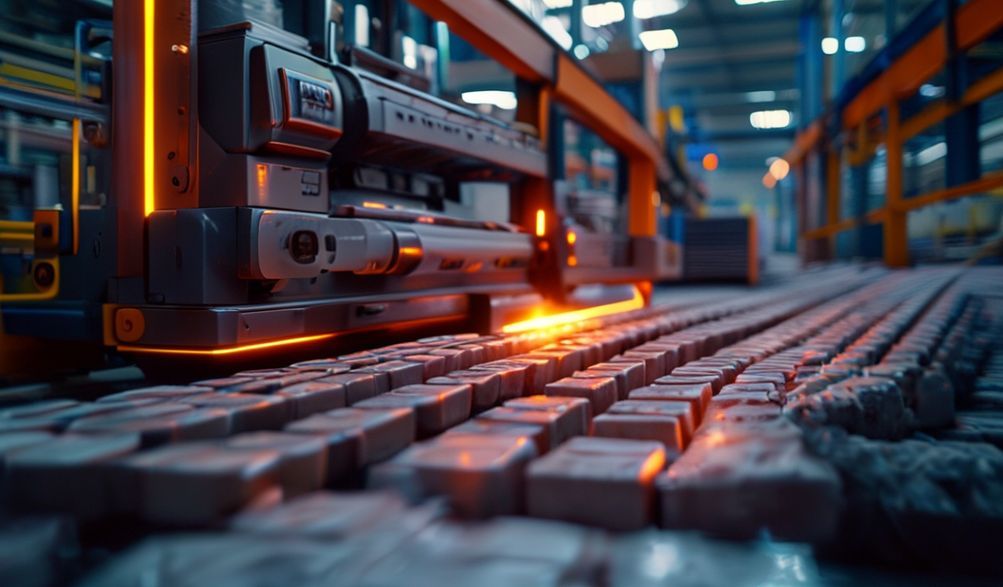
Your Ultimate Guide to Choosing a Brick Forming Machine Supplier: Spotlight on FUDA Block Making Factory
The global construction industry is a relentless engine of growth, demanding ever-more efficient, sustainable, and high-quality building materials. At the very foundation of this demand—quite literally—lies the humble brick and concrete block. The transition from manual, labor-intensive production to mechanized, precision manufacturing is not just an upgrade; it’s a strategic necessity for profitability and scalability. This shift places immense importance on one critical decision: selecting the right brick forming machine supplier.
The challenge is significant. Businesses often grapple with unreliable suppliers offering subpar machinery, inconsistent product quality that leads to waste, opaque pricing with hidden costs, and, most critically, a glaring lack of after-sales support that can leave a six-figure investment idle for weeks. The wrong choice doesn’t just dent your budget; it stalls your projects and jeopardizes your reputation.
This guide is designed to be your definitive resource. We will dissect the essential qualities of a world-class supplier and provide a clear, analytical framework for your investment decision. As a leading example that embodies these principles, we will take a detailed look at the FUDA Block Making Factory. Our purpose is not to sell, but to educate—offering an expert, unbiased analysis based on industry knowledge to empower you to make an informed, trustworthy partnership choice for your block production needs.
What Makes a World-Class Brick Forming Machine Supplier?
Choosing a supplier is about more than just buying a machine; it’s about entering a long-term partnership that will underpin your production for a decade or more. The best suppliers distinguish themselves across several non-negotiable pillars.
Core Manufacturing Expertise and Technological Innovation
True expertise is built in-house. A premier supplier invests heavily in its own Research and Development (R&D) to innovate, not just assemble.
* Advanced Engineering: Look for suppliers who design and fabricate core components themselves, especially high-wear parts like molds and vibration tables. The use of high-grade, hardened steel for molds is a key indicator of a machine built for longevity and consistent output.
* Smart Integration: The frontier of block making lies in automation and control. Leading suppliers integrate Programmable Logic Controllers (PLCs) and Human-Machine Interfaces (HMIs) that allow for precise control over vibration frequency, pressure, and cycle times, ensuring repeatable quality and easier operation.
Comprehensive Product Range and Customization Capabilities
No two projects are identical. A versatile supplier can cater to diverse business models.
* Product Variety: They should offer machinery for the full spectrum of block types: standard hollow blocks, solid blocks, paving slabs, interlocking bricks for landscaping, and even specialized shapes for retaining walls.
* Material Flexibility: The ideal machine can adapt to locally available raw materials, whether it’s standard concrete mix, fly ash (an eco-friendly alternative), soil, or crushed stone. The supplier should provide guidance on mix design.
Uncompromising Commitment to Quality Control
Quality is not an afterthought; it’s a process. This commitment must be verifiable.
* Certification: International standards like ISO 9001 for quality management systems are a strong baseline credential.
* Rigorous Testing: The process should include component stress tests, full electrical and hydraulic system checks, and, most importantly, a Factory Acceptance Test (FAT). A FAT involves running the machine with raw materials to produce sample blocks, allowing you to verify performance before shipment.
Proven Global Project Experience and Portfolio
Experience across different markets is a testament to reliability. A supplier with a portfolio of successful installations in varied climates—from arid deserts to humid tropics—proves their machinery is robust and their support network is adaptable. Case studies and reference projects are invaluable resources here.
Deep Dive: FUDA Block Making Factory – An Industry Leader Analyzed
Let’s apply the above framework to a concrete example. FUDA Block Making Factory has established itself as a prominent force in the global block machinery market. Here’s an analytical look at what they offer.
Company Heritage and Manufacturing Philosophy
FUDA operates from a position of integrated manufacturing. With substantial in-house production facilities, they control the process from steel cutting and welding to assembly and testing. Their stated philosophy often centers on durability, operational simplicity, and delivering high value—aiming to provide industrial-grade performance at a competitive total cost of ownership. This focus on core manufacturing strength, rather than just trading, aligns with the first pillar of a reliable supplier.
Flagship Brick and Block Forming Machines
FUDA typically caters to a range of scales, from small-medium enterprises to large industrial plants. Key model categories include:
-
Fully Automatic Block Making Machine (e.g., Model QFT Series):
- Ideal For: High-volume production with minimal labor.
- Key Features: PLC control, automatic pallet circulation, multi-layer product stacking.
- Output Capacity: Can range from 8,000 to over 30,000 standard blocks per 8-hour shift, depending on model and block type.
-
Semi-Automatic Block Making Machine (e.g., Model QMJ Series):
- Ideal For: Businesses seeking a balance between output and investment cost.
- Key Features: Manual pallet feeding with automatic vibration and compaction. Often a more robust, simpler design.
- Output Capacity: Typically between 3,000 to 10,000 blocks per shift.
-
Mobile Block Machine (e.g., Model QMY Series):
- Ideal For: On-site production for construction projects, eliminating transport costs for blocks.
- Key Features: Mounted on a trailer, can be towed to different locations on a site. Uses a diesel engine or external power.
The FUDA Advantage: Beyond the Machine
This is where a supplier truly separates itself. FUDA’s service structure highlights what comprehensive support looks like.
End-to-End Project Support
A serious supplier acts as a consultant. This can include reviewing your site layout, providing foundation drawings specific to the machine’s dynamic loads, and offering guidance on raw material handling systems (concrete mixers, conveyor belts, batching plants).
Extensive Training and Knowledge Transfer
The best machine is only as good as its operator. Reputable suppliers like FUDA provide detailed operational and maintenance training, either through on-site engineers during commissioning or via comprehensive video tutorials and manuals. This empowers your team and reduces downtime.
Genuine Parts Supply and Responsive Service Network
Long-term reliability depends on access to OEM parts. A established supplier maintains an inventory of critical wear parts (mold liners, hydraulic seals, vibration motors) and has clear channels—email, WhatsApp, video call—for technical support to troubleshoot issues remotely, often resolving problems without the need for a costly site visit.
Critical Factors for Your Investment Decision (A Buyer’s Checklist)
Armed with an understanding of supplier benchmarks, use this checklist to evaluate any potential partner, including FUDA.
Total Cost of Ownership (TCO) vs. Initial Price
The sticker price is just the beginning. A holistic TCO analysis includes:
* Machine Price & Terms
* Shipping, Insurance, and Customs Clearance
* Installation & Commissioning Fees
* Energy Consumption (a major ongoing cost)
* Estimated Maintenance & Parts Replacement Costs over 5 years
* Potential cost of production downtime
Assessing Machine Durability and Output Consistency
- Construction: Inspect the frame (fully welded steel is best), the thickness of mold walls, and the brand/reputation of key components like hydraulic pumps and vibration motors.
- Verification: Insist on a Factory Acceptance Test (FAT). Witness the machine produce blocks to your specification. Measure the blocks for dimensional accuracy and test them for compressive strength.
Energy Efficiency and Operational Costs
- Motor Types: Inquire about high-efficiency electric motors or variable frequency drives (VFDs) that reduce power consumption.
- Design Efficiency: Machines designed for quick mold cycles and minimal material spillage/waste directly improve your bottom line.
Supplier Credentials and Verifiable References
- Due Diligence: Request a copy of their business license. Verify their factory address via satellite imagery or a video tour.
- Talk to Clients: Ask for contact information for 2-3 previous clients in a region similar to yours. Speak to them directly about machine performance, reliability, and the quality of after-sales support.
Navigating the Purchase and Partnership Process
From Inquiry to Installation: A Step-by-Step Overview
- Initial Consultation: You share your project needs (desired block types, daily output, raw materials).
- Proposal & Negotiation: Supplier provides a detailed technical and commercial offer.
- Contract & Payment: Terms are agreed upon (common terms: 30% deposit, 70% before shipment).
- Manufacturing & Factory Test: You are updated on progress and invited (or sent video) of the FAT.
- Shipping & Logistics: Supplier arranges shipment; you handle import customs.
- Installation & Commissioning: Supplier engineers guide the setup and test-run on your site.
- Training & Handover: Your team is trained, and the plant is officially handed over.
Key Questions to Ask Your Potential Supplier
- What is the exact warranty period and what does it cover (parts, labor, shipping)?
- Can you provide detailed foundation drawings and power requirements?
- What is the lead time from order to shipment?
- What is your policy for technical support? What are the response time expectations?
- Do you supply a recommended spare parts list for the first two years?
Ensuring Long-Term Success with Your Machinery
- Preventive Maintenance: Follow the supplier’s maintenance schedule religiously for lubrication, bolt tightening, and system checks.
- Parts Inventory: Keep a small stock of critical, fast-wearing parts (like seal kits and filter elements) to minimize downtime.
- Relationship Management: Maintain good communication with your supplier. They are your best resource for operational advice and technical upgrades.
Frequently Asked Questions (FAQ)
Q1: What is the typical lead time for a brick forming machine from a Chinese supplier like FUDA?
Lead times vary by model complexity and order queue. For standard models, expect 25-40 days for production after deposit, plus 30-45 days for sea shipping. Always confirm the detailed schedule in your contract.
Q2: Can FUDA block making machines be customized for special block designs or local raw materials?
Yes, reputable suppliers like FUDA typically offer customization. This includes manufacturing new mold designs for unique block shapes and adjusting machine parameters (vibration, pressure) to suit different raw material mixes. Customization will affect lead time and cost.
Q3: What does the warranty usually cover, and how does after-sales service work for international clients?
A standard warranty is often 12-18 months for major components, excluding wear parts like mold liners. For international clients, service is typically remote-first: you are provided with detailed manuals, video training, and direct access to technical support via digital channels for troubleshooting. For major issues, engineers can be dispatched, though travel costs are usually the client’s responsibility after the warranty period.
Q4: How do I calculate the production capacity I need for my block making project?
Start with your market demand. Calculate the number of blocks needed per day. Remember, machine output is rated in cycles per hour. A machine making 4 blocks per cycle, with a 20-second cycle time, produces 720 blocks per hour. Factor in an efficiency rate of 85-90% for breaks and maintenance to get a realistic daily output.
Q5: What are the main differences between fully automatic, semi-automatic, and manual block forming machines?
* Fully Automatic: Highest output, lowest labor. Handles pallet feeding, compaction, curing, and stacking automatically via PLC. Highest initial investment.
* Semi-Automatic: Balanced choice. Operator feeds empty pallets and may remove finished blocks, but vibration and compaction are automatic. More affordable, robust.
* Manual: Lowest output, highest labor intensity. All processes—filling, compacting, stripping—are manual. Very low cost, suitable for very small-scale or start-up projects.
Q6: What kind of foundation and power supply is required for installing a medium-to-large block making plant?
This is critical. A medium-to-large plant requires a heavy-duty, reinforced concrete foundation (often 300-400mm thick) to absorb vibration. Your supplier must provide the foundation drawing. Power supply typically requires a stable 3-phase industrial connection (e.g., 380V/50Hz or 440V/60Hz), with sufficient amperage for all motors simultaneously. Total power can range from 30kW to over 100kW for a full plant.
Conclusion
Selecting a brick forming machine supplier is a strategic decision that hinges on verified expertise, demonstrable quality, and unwavering after-sales support. These factors directly translate to your plant’s uptime, product quality, and long-term profitability. The due diligence process—asking the hard questions, verifying credentials, and calculating the true total cost of ownership—is your most powerful tool.
As our analysis shows, suppliers like FUDA Block Making Factory exemplify the integrated manufacturing, comprehensive product range, and structured support system that define a reliable industry partner. They represent a category of supplier worthy of serious consideration. We encourage you to use the checklist and questions provided in this guide to conduct a thorough evaluation of all potential partners. Your final step should be to reach out to shortlisted suppliers, including FUDA, for a detailed, project-specific consultation to turn your block production vision into a sustainable, profitable reality.