
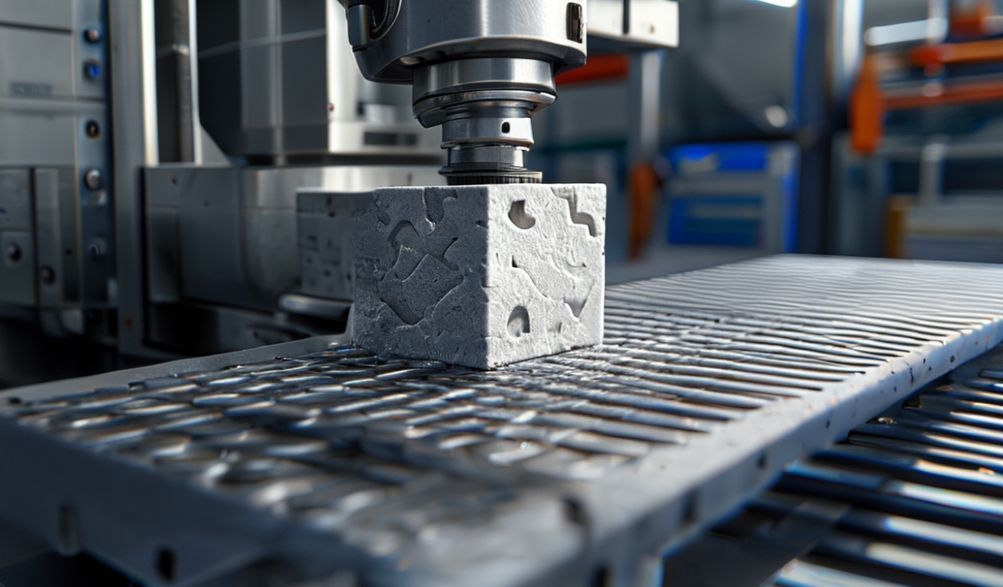
Jou Volledige Gids vir Aangepaste Liggewig Betonblokmasjiene
Sukkel jy met hoë versendingskoste, arbeidsintensiewe produksie, of om spesifieke projekvereistes vir liggewigblokke te bereik? Jy is nie alleen nie. Baie vervaardigers vind dat 'n standaard, af-die-rak blokmasjien 'n knelpunt word, wat nie kan aanpas by unieke materiaalmengsels, gespesialiseerde ontwerpe of ambisieuse uitsetteikens nie. Die oplossing lê nie in 'n generiese masjien nie, maar in 'n instrument wat vir jou presiese bedryf ontwerp is: 'naangepaste liggewig betonblokmasjien.
'n Aangepaste masjien is presies dit—'n stuk industriële toerusting wat van die grond af geslyp is vir jou spesifieke produksiebehoeftes, grondstofprofiele, blokontwerpe en outomatiseringsvereistes. Dit is die verskil tussen om 'n pak van die rak te dra en een wat deur 'n meesterkleermaker vervaardig is; eersgenoemde mag dalk redelik pas, maar laasgenoemde verbeter prestasie en projekteer ongeëwenaarde kwaliteit.
Hierdie gids, gebaseer op diep industriële ervaring, is ontwerp om jou beslissende hulpbron te wees. Ons gaan verder as verkoopsbro sjures om kundige, uitvoerbare leiding te verskaf. Ons doel is om besigheidseienaars, projekbestuurders en ingenieurs toe te rus met die kennis wat nodig is om 'n selfversekerde, ingeligte belegging te maak. Ons sal die transformerende voordele van aanpassing verken, die kernopsies beskikbaar uiteensit, die stap-vir-stap-opdragproses uiteensit en die kritieke oorwegings uitlig om te verseker dat jou belegging vir jare kom vrugte afwerp.
Hoekom Aanpassing 'n Spelwisselaar is vir Liggewig Blokproduksie
In die mededingende konstruksiemateriaalmark is doeltreffendheid en produkdifferensiasie uiters belangrik. 'n Standaardmasjien bied 'n een-grootte-pas-almal-benadering, maar jou besigheid en jou liggewig betonmengsel is uniek. Aanpassing oorbrú hierdie gaping en verander jou produksielyn van 'n koste-sentrum in 'n strategiese bate.
Oorkom die Beperkings van Standaardmasjiene
Standaard masjiene is gebou vir die "gemiddelde" gebruiksgeval, wat dikwels tot aansienlike operasionele wrywing lei:
- Onversoenbare Rou Materiaal Mengsels:Jou spesifieke mengsel van sement, vliegas en liggewig-aggregate (soos perliet, puimsteen of skuim) het unieke vloei- en verdigtingseienskappe. 'n Standaardmasjien se vibrasiefrekwensie en druk is dalk geoptimaliseer vir standaard beton, wat kan lei tot swak verdigting, inkonsekwente digtheid of oormatige slytasie wanneer jou ligter mengsel verwerk word.
- Onbuigsame Produkontwerp:Moet u 'n innoverende ineenvlegvorm vir seismiese sones vervaardig, 'n spesiale grootte vir 'n modulêre boustelsel, of 'n tekstuurfasadeblok? Standaardvorms is beperk. 'n Pasgemaakte masjien word rondom u vorm gebou, wat perfekte belyning en verdigting vir u eie ontwerp verseker.
- Deursetewanverhoudings:'n Masjien wat te klein is, skep produksieknelpunte, terwyl een wat te groot is, 'n verkwistende kapitaalbesteding en hoër operasionele koste verteenwoordig. Sonder aanpassing word jy gedwing om jou besigheid aan die masjien se kapasiteit aan te pas, nie andersom nie.
Kernvoordele van 'n Toegepaste Masjien
Om in 'n pasgemaakte oplossing te belê, spreek hierdie beperkings direk aan en lewer tasbare voordele:
- Verbeterde Doeltreffendheid & Uitset:Elke komponent, van die mengersiklus tot die paletterugvoerstelsel, is gesinchroniseer met jou produksiedoelwitte. Dit skakel ledige tyd uit, optimaliseer arbeid, en verseker dat jy jou daaglikse uitsetteikens sonder giswerk bereik.
- Optimale Produkkwaliteit:Die masjien se hart—sy verdigtingstelsel—is ontwerp vir jou spesifieke mengselontwerp. Presiese beheer oor vibrasie-amplitude, frekwensie en druk verseker dat elke blok konsekwente digtheid, voortreflike oppervlakafwerking het en aan die vereiste druksterkte voldoen, bondel na bondel.
- Langtermyn Kostebesparings:Doelgeboude ontwerp verminder afval van foutiewe blokke, verlaag energieverbruik deur oorgeïngenieerde komponente uit te skakel, en minimaliseer kostelike stilstand as gevolg van masjien-materiaal onversoenbaarheid. Dit is 'n belegging wat dividende lewer deur operasionele uitnemendheid.
- Mededingende Voordeel:'n Pasgemaakte masjien stel jou in staat om blokke te vervaardig wat ander nie kan nie. Dit laat jou toe om gespesialiseerde kontrakte te verseker, 'n prys-premie te vra vir hoëwerkverrigting- of argitektonies spesifieke blokke, en om jou handelsmerk werklik te onderskei in 'n oorvol mark.
Kern Aanpassingsopsies Vir Jou Masjien
Aanpassing is nie 'n vae konsep nie; dit is 'n reeks konkrete ingenieurskeuses. Om hierdie opsies te verstaan, is die eerste stap om jou ideale masjien te spesifiseer.
Produksiekapasiteit & Outomatiseringsvlak
Dit is die grondleggende besluit wat die masjien se skaal en operasionele filosofie bepaal.
- Handmatig & Semi-outomaties:Ideaal vir kleiner bedrywe, beginondernemings, of vir die vervaardiging van hoogs gespesialiseerde, lae-volume blokke. Arbeidsintensief, maar met 'n laer aanvanklike belegging.
- Fully Automatic & PLC-Controlled: The choice for medium to large-scale production. These systems feature automated material batching, mixing, molding, curing, and stacking. A Programmable Logic Controller (PLC) ensures precise, repeatable operations with minimal manual intervention, drastically reducing labor costs and human error.
Mold & Block Design Specifics
This is where your product vision becomes reality. The mold is the soul of your custom machine.
- Size & Shape: Beyond standard CMU sizes, you can specify blocks for insulated concrete forms (ICFs), unique interlocking patterns, landscaping units, or large-format panels.
- Surface Texture: Smooth, split-face, ribbed, or engraved—the mold cavity can be machined to impart the desired aesthetic directly during compaction.
- Mold Material & Precision: High-grade, abrasion-resistant steel with precise CNC machining is critical for block dimensional accuracy, easy demolding, and long mold life, especially with abrasive lightweight aggregates.
Raw Material Processing & Mixing System
Lightweight concrete is sensitive; its preparation cannot be an afterthought.
- Aggregate-Specific Engineering: The feeding system can be customized for different bulk densities. Whether you use expanded clay (LECA), polystyrene beads, or industrial foaming, the machine must handle them without segregation or damage.
- Specialized Mixers: A standard paddle mixer may not suffice. Custom solutions often include high-efficiency pan mixers or forced-action mixers designed to coat lightweight aggregates evenly and create a homogeneous, workable mix without crushing the delicate aggregates.
Machine Specifications & Features
These technical details define the machine’s performance and durability.
- Vibrasie Stelsel: The key to compacting lightweight concrete. Options include:
- High-Frequency Vibro-Compaction: Excellent for achieving high-strength, low-void blocks.
- Hydraulic Pressure with Vibration: Provides the necessary “squeeze” for very low-density mixes containing high volumes of foam or lightweight aggregate.
- Mobility & Power Source: Choose between a stationary plant for fixed-location production or a mobile block making machine for on-site manufacturing. Power can be tailored for reliable grid electricity or remote diesel operation.
- Durability Enhancements: Special anti-corrosion coatings, hardened wear plates, and upgraded hydraulic components can be specified for harsh environments or particularly abrasive mixes.
The Step-by-Step Process for Commissioning a Custom Machine
Ordering a custom machine is a collaborative partnership, not a simple purchase. Here’s how a professional engagement unfolds.
Phase 1: In-Depth Needs Analysis
A reputable manufacturer will start by asking detailed questions to understand your business. Be prepared to discuss:
- What is your target daily output in blocks or cubic meters?
- What are the exact specifications of your block (dimensions, weight, density class, minimum compressive strength)?
- What is your precise raw material recipe and source?
- What is your available factory space, power supply, and labor scenario?
- What are your local quality standards or building codes?
Phase 2: Partnering with the Right Manufacturer
This is the most critical step. Your manufacturer’s expertise directly determines your success. Vet them rigorously using the E-E-A-T framework (Experience, Expertise, Authoritativeness, Trustworthiness):
- Ondervinding: Request and scrutinize case studies or video evidence of previous custom builds, especially for lightweight concrete. A proven track record is non-negotiable.
- Kundigheid: Evaluate their engineering team. Do they ask insightful technical questions about your mix design? Their knowledge of lightweight concrete technology should be evident.
- Gesaghebbendheid:Soek virindustry certifications, patents on block-making technology, and genuine client testimonials (ask for references you can contact).
- Betroubaarheid: Demand transparency. Is the pricing breakdown clear? Are the contract terms, warranty, and payment schedule fair? Most importantly, what is their after-sales service plan? Availability of spare parts and technical support is crucial.
Phase 3: Design, Fabrication, and Testing
Once partnered, the project moves into execution:
- Design & Approval: The manufacturer’s engineers will create CAD drawings and a full specification sheet for your review and approval.
- Fabrication: Specialized components are sourced and the machine is assembled in a controlled factory environment.
- Factory Acceptance Testing (FAT): This is your quality checkpoint. You or your representative should witness the machine undergo rigorous testing, ideally using a sample of your actual raw materials to produce sample blocks. This verifies performance before shipping.
Critical Considerations Before You Invest
Cost-Benefit Analysis: Custom vs. Standard
A custom machine requires a higher upfront investment. The justification is in the Totale Eienaarskoste (TEO)enReturn on Investment (ROI). Factor in:
* Increased Revenue from selling higher-value, differentiated blocks.
* Reduced Operational Costs from lower waste, energy use, and labor.
* Avoided Costs of downtime, rework, and missed opportunities.
While a standard machine has a lower sticker price, a custom machine is often more profitable over a 3–5 year period.
Tegniese Ondersteuning en Na-verkoopdiens
Treat this as a non-negotiable clause in any agreement. Ensure the manufacturer provides:
* A comprehensive operator training program at installation.
* Clear documentation (manuals, parts lists, wiring diagrams).
* A reliable supply of wear parts and critical spares.
* Access to remote troubleshooting and a commitment to on-site service if needed.
Future-Proofing Your Investment
Think long-term. Discuss with your manufacturer:
* Skaalbaarheid: Can the machine’s control system or automation be upgraded later to increase output?
* Buigsaamheid: Is the frame and press strong enough to accommodate future, slightly different mold sizes or a new mix design with minimal modification?
Frequently Asked Questions (FAQ)
Q1: How much more expensive is a customized machine compared to a standard model?
A: There’s no fixed premium, as cost depends entirely on the scope of customization. While the initial price is higher, it’s more accurate to view it as a targeted investment. By solving specific operational inefficiencies, a custom machine often achieves a faster ROI through superior productivity, less waste, and the ability to command higher prices for specialized products.
Q2: What is the typical lead time for building a custom block making machine?
A: For a moderately complex machine, expect a lead time of 8 to 16 weeks from final design approval to factory testing. Highly complex systems can take longer. A professional manufacturer will provide a detailed project timeline with milestones after the needs analysis.
Q3: Can I use recycled materials in a customized lightweight block machine?
A: Absolutely. This is one of the strongest arguments for customization. Machines can be specifically engineered to handle recycled aggregates like processed construction waste, crushed glass, or rubber. The feeding, crushing (if needed), mixing, and compaction systems are all designed to manage the variable particle size and density of recycled content effectively.
Q4: How do I ensure the machine meets the quality standards of my region?
A: This is a key part of the specification process. You must inform the manufacturer of the relevant standards that govern your blocks (e.g., ASTM C90 in North America, EN 771-3 in Europe, or other local codes). A credible manufacturer will design the machine’s process parameters (pressure, vibration) to produce blocks that can be tested and certified to meet these standards. Request this in writing.
Conclusion
Kies 'naangepaste liggewig betonblokmasjien is a strategic decision that positions your business for growth, quality leadership, and market differentiation. It moves you from adapting your process to a machine’s limitations to having a machine that is a perfect extension of your operational vision.
The journey requires due diligence. Prioritize a manufacturer’s demonstrated experience and engineering expertise in lightweight concrete above all else. The right partnership will yield not just a machine, but a cornerstone of your competitive advantage for the next decade.
Ready to explore specifications for your customized solution? Contact our engineering team for a confidential consultation to discuss your unique production goals.
Want to start your evaluation? Download our free checklist: “10 Essential Questions to Ask Before Ordering a Custom Block Making Machine.”
<