
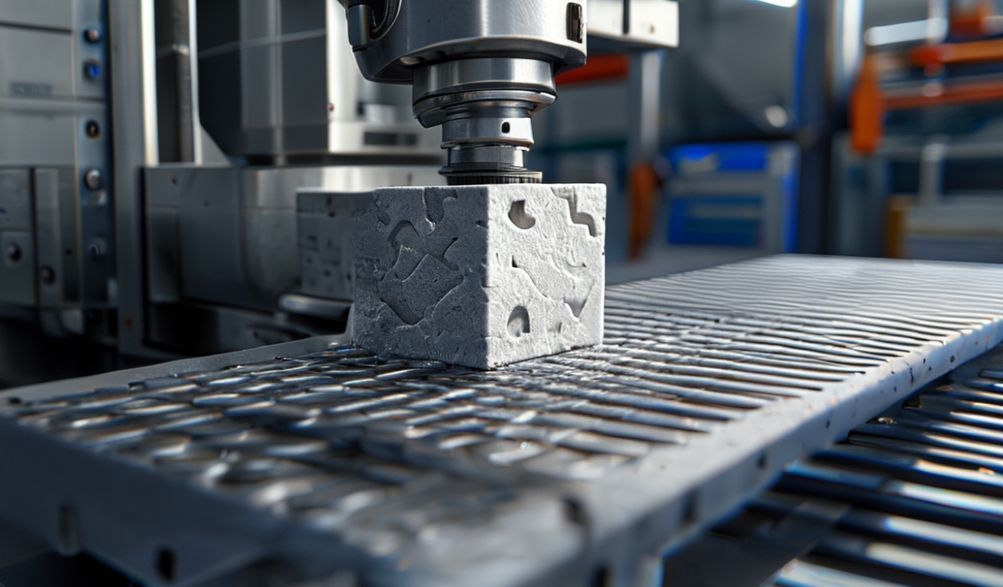
Hướng Dẫn Toàn Diện Về Máy Sản Xuất Gạch Bê Tông Nhẹ Tùy Chỉnh
Vật lộn với chi phí vận chuyển cao, quy trình sản xuất tốn nhiều nhân công, hay khó đáp ứng các yêu cầu cụ thể cho những khối nhẹ? Bạn không đơn độc. Nhiều nhà sản xuất nhận thấy máy làm khối tiêu chuẩn, bán sẵn trở thành nút thắt cổ chai, không thể thích ứng với hỗn hợp vật liệu đặc thù, thiết kế chuyên biệt hay mục tiêu sản lượng đầy tham vọng. Giải pháp không nằm ở một chiếc máy thông thường, mà ở một công cụ được thiết kế riêng cho hoạt động chính xác của bạn: mộtmáy làm khối bê tông nhẹ tùy chỉnh.
Một chiếc máy tùy chỉnh chính xác là như vậy—một thiết bị công nghiệp được thiết kế từ đầu để phù hợp với nhu cầu sản xuất cụ thể, đặc tính nguyên liệu thô, thiết kế khối và yêu cầu tự động hóa của bạn. Đó là sự khác biệt giữa việc mặc một bộ đồ may sẵn và một bộ được tạo ra bởi một thợ may bậc thầy; cái đầu tiên có thể vừa vặn tạm được, nhưng cái thứ hai nâng cao hiệu suất và thể hiện chất lượng vô song.
Hướng dẫn này, được đúc kết từ kinh nghiệm sâu rộng trong ngành, được thiết kế để trở thành nguồn tài nguyên toàn diện dành cho bạn. Chúng tôi sẽ vượt ra ngoài những cuốn brochure bán hàng để cung cấp chỉ dẫn chuyên sâu và có thể áp dụng ngay. Mục đích của chúng tôi là trang bị cho chủ doanh nghiệp, quản lý dự án và kỹ sư những kiến thức cần thiết để đưa ra quyết định đầu tư tự tin và sáng suốt. Chúng tôi sẽ khám phá những lợi ích chuyển đổi của việc tùy chỉnh, phân tích các lựa chọn cốt lõi hiện có, phác thảo quy trình vận hành từng bước và nêu bật những cân nhắc quan trọng để đảm bảo khoản đầu tư của bạn phát huy hiệu quả lâu dài.
Tại sao Khả năng Tùy chỉnh Là Yếu Tố Thay Đổi Cuộc Chơi Trong Sản Xuất Khối Nhẹ
Trong thị trường vật liệu xây dựng cạnh tranh khốc liệt, hiệu quả và sự khác biệt hóa sản phẩm là yếu tố then chốt. Máy móc tiêu chuẩn chỉ mang lại giải pháp chung chung, nhưng doanh nghiệp và hỗn hợp bê tông nhẹ của bạn là độc nhất. Việc tùy chỉnh sẽ thu hẹp khoảng cách này, biến dây chuyền sản xuất từ một trung tâm chi phí thành tài sản chiến lược.
Vượt Qua Những Giới Hạn Của Máy Móc Tiêu Chuẩn
Máy móc tiêu chuẩn được thiết kế cho trường hợp sử dụng "trung bình", điều này thường dẫn đến sự cản trở đáng kể trong vận hành.
- Hỗn hợp Nguyên liệu Thô Không Tương thíchHỗn hợp xi măng, tro bay và cốt liệu nhẹ (như đá trân châu, đá bọt hoặc bọt xốp) của bạn có đặc tính chảy và đầm nén độc đáo. Tần số rung và áp suất của máy tiêu chuẩn có thể được tối ưu hóa cho bê tông thông thường, dẫn đến việc đầm nén kém, mật độ không đồng đều hoặc hao mòn quá mức khi xử lý hỗn hợp nhẹ của bạn.
- Thiết kế sản phẩm cứng nhắc:Cần tạo ra hình dạng khóa liên động sáng tạo cho khu vực động đất, kích thước đặc biệt cho hệ thống tòa nhà mô-đun, hay khối mặt tiền có kết cấu? Khuôn tiêu chuẩn thường bị giới hạn. Một máy tùy chỉnh sẽ được chế tạo xung quanh khuôn của bạn, đảm bảo sự liên kết hoàn hảo và độ nén chặt cho thiết kế độc quyền của bạn.
- Sự không khớp về thông lượng:Một chiếc máy quá nhỏ sẽ tạo ra các nút thắt sản xuất, trong khi một chiếc máy quá lớn lại thể hiện một khoản chi phí vốn lãng phí và chi phí vận hành cao hơn. Nếu không tùy chỉnh, bạn buộc phải điều chỉnh doanh nghiệp của mình theo công suất của máy, chứ không phải ngược lại.
Lợi Ích Chính của Máy May Đo
Đầu tư vào một giải pháp tùy chỉnh giải quyết trực tiếp những hạn chế này, mang lại những lợi ích cụ thể:
- Hiệu Quả và Sản Lượng Được Nâng CaoMọi thành phần, từ chu trình trộn đến hệ thống trả pallet, đều được đồng bộ hóa với mục tiêu sản xuất của bạn. Điều này loại bỏ thời gian chết, tối ưu hóa lao động và đảm bảo bạn đạt được mục tiêu sản lượng hàng ngày mà không cần phỏng đoán.
- Chất Lượng Sản Phẩm Tối Ưu:Trái tim của máy – hệ thống nén – được thiết kế riêng cho công thức hỗn hợp của bạn. Việc kiểm soát chính xác biên độ rung, tần số và áp lực đảm bảo mỗi khối đều có độ đặc đồng nhất, bề mặt hoàn thiện vượt trội và đạt cường độ nén yêu cầu, lô này qua lô khác.
- Tiết kiệm Chi phí Lâu dài:Thiết kế chuyên dụng giảm thiểu lãng phí từ các khối lỗi, giảm tiêu thụ năng lượng bằng cách loại bỏ các thành phần được thiết kế thừa, và tối thiểu hóa thời gian ngừng hoạt động tốn kém do sự không tương thích giữa máy móc và vật liệu. Đây là một khoản đầu tư mang lại lợi nhuận thông qua sự vận hành ưu việt.
- Lợi Thế Cạnh Tranh: A custom machine enables you to produce blocks others cannot. This allows you to secure specialized contracts, command a price premium for high-performance or architecturally specific blocks, and truly differentiate your brand in a crowded marketplace.
Core Customization Options for Your Machine
Customization is not a vague concept; it’s a series of concrete engineering choices. Understanding these options is the first step in specifying your ideal machine.
Năng lực sản xuất & Mức độ tự động hóa
This is the foundational decision that dictates the machine’s scale and operational philosophy.
- Manual & Semi-Automatic: Ideal for smaller operations, start-ups, or producing highly specialized, low-volume blocks. Labor-intensive but with a lower initial investment.
- Fully Automatic & PLC-Controlled: The choice for medium to large-scale production. These systems feature automated material batching, mixing, molding, curing, and stacking. A Programmable Logic Controller (PLC) ensures precise, repeatable operations with minimal manual intervention, drastically reducing labor costs and human error.
Mold & Block Design Specifics
This is where your product vision becomes reality. The mold is the soul of your custom machine.
- Size & Shape: Beyond standard CMU sizes, you can specify blocks for insulated concrete forms (ICFs), unique interlocking patterns, landscaping units, or large-format panels.
- Surface Texture: Smooth, split-face, ribbed, or engraved—the mold cavity can be machined to impart the desired aesthetic directly during compaction.
- Mold Material & Precision: High-grade, abrasion-resistant steel with precise CNC machining is critical for block dimensional accuracy, easy demolding, and long mold life, especially with abrasive lightweight aggregates.
Raw Material Processing & Mixing System
Lightweight concrete is sensitive; its preparation cannot be an afterthought.
- Aggregate-Specific Engineering: The feeding system can be customized for different bulk densities. Whether you use expanded clay (LECA), polystyrene beads, or industrial foaming, the machine must handle them without segregation or damage.
- Specialized Mixers: A standard paddle mixer may not suffice. Custom solutions often include high-efficiency pan mixers or forced-action mixers designed to coat lightweight aggregates evenly and create a homogeneous, workable mix without crushing the delicate aggregates.
Machine Specifications & Features
These technical details define the machine’s performance and durability.
- Hệ thống Rung The key to compacting lightweight concrete. Options include:
- High-Frequency Vibro-Compaction: Excellent for achieving high-strength, low-void blocks.
- Hydraulic Pressure with Vibration: Provides the necessary “squeeze” for very low-density mixes containing high volumes of foam or lightweight aggregate.
- Mobility & Power Source: Choose between a stationary plant for fixed-location production or a mobile block making machine for on-site manufacturing. Power can be tailored for reliable grid electricity or remote diesel operation.
- Durability Enhancements: Special anti-corrosion coatings, hardened wear plates, and upgraded hydraulic components can be specified for harsh environments or particularly abrasive mixes.
The Step-by-Step Process for Commissioning a Custom Machine
Ordering a custom machine is a collaborative partnership, not a simple purchase. Here’s how a professional engagement unfolds.
Phase 1: In-Depth Needs Analysis
A reputable manufacturer will start by asking detailed questions to understand your business. Be prepared to discuss:
- What is your target daily output in blocks or cubic meters?
- What are the exact specifications of your block (dimensions, weight, density class, minimum compressive strength)?
- What is your precise raw material recipe and source?
- What is your available factory space, power supply, and labor scenario?
- What are your local quality standards or building codes?
Phase 2: Partnering with the Right Manufacturer
This is the most critical step. Your manufacturer’s expertise directly determines your success. Vet them rigorously using the E-E-A-T framework (Experience, Expertise, Authoritativeness, Trustworthiness):
- Kinh nghiệm: Request and scrutinize case studies or video evidence of previous custom builds, especially for lightweight concrete. A proven track record is non-negotiable.
- Chuyên môn Evaluate their engineering team. Do they ask insightful technical questions about your mix design? Their knowledge of lightweight concrete technology should be evident.
- Tính thẩm quyền Look for industry certifications, patents on block-making technology, and genuine client testimonials (ask for references you can contact).
- Đáng tin cậy: Demand transparency. Is the pricing breakdown clear? Are the contract terms, warranty, and payment schedule fair? Most importantly, what is their after-sales service plan? Availability of spare parts and technical support is crucial.
Phase 3: Design, Fabrication, and Testing
Once partnered, the project moves into execution:
- Design & Approval: The manufacturer’s engineers will create CAD drawings and a full specification sheet for your review and approval.
- Fabrication: Specialized components are sourced and the machine is assembled in a controlled factory environment.
- Factory Acceptance Testing (FAT): This is your quality checkpoint. You or your representative should witness the machine undergo rigorous testing, ideally using a sample of your actual raw materials to produce sample blocks. This verifies performance before shipping.
Critical Considerations Before You Invest
Cost-Benefit Analysis: Custom vs. Standard
A custom machine requires a higher upfront investment. The justification is in the Tổng Chi Phí Sở Hữu (TCO)vàTỷ suất lợi nhuận (ROI). Factor in:
* Increased Revenue from selling higher-value, differentiated blocks.
* Reduced Operational Costs from lower waste, energy use, and labor.
* Avoided Costs of downtime, rework, and missed opportunities.
While a standard machine has a lower sticker price, a custom machine is often more profitable over a 3–5 year period.
Hỗ trợ kỹ thuật và Dịch vụ sau bán hàng
Treat this as a non-negotiable clause in any agreement. Ensure the manufacturer provides:
* A comprehensive operator training program at installation.
* Clear documentation (manuals, parts lists, wiring diagrams).
* A reliable supply of wear parts and critical spares.
* Access to remote troubleshooting and a commitment to on-site service if needed.
Future-Proofing Your Investment
Think long-term. Discuss with your manufacturer:
* Khả năng mở rộng: Can the machine’s control system or automation be upgraded later to increase output?
* Tính linh hoạt: Is the frame and press strong enough to accommodate future, slightly different mold sizes or a new mix design with minimal modification?
Frequently Asked Questions (FAQ)
Q1: How much more expensive is a customized machine compared to a standard model?
A: There’s no fixed premium, as cost depends entirely on the scope of customization. While the initial price is higher, it’s more accurate to view it as a targeted investment. By solving specific operational inefficiencies, a custom machine often achieves a faster ROI through superior productivity, less waste, and the ability to command higher prices for specialized products.
Q2: What is the typical lead time for building a custom block making machine?
A: For a moderately complex machine, expect a lead time of 8 to 16 weeks from final design approval to factory testing. Highly complex systems can take longer. A professional manufacturer will provide a detailed project timeline with milestones after the needs analysis.
Q3: Can I use recycled materials in a customized lightweight block machine?
A: Absolutely. This is one of the strongest arguments for customization. Machines can be specifically engineered to handle recycled aggregates like processed construction waste, crushed glass, or rubber. The feeding, crushing (if needed), mixing, and compaction systems are all designed to manage the variable particle size and density of recycled content effectively.
Q4: How do I ensure the machine meets the quality standards of my region?
A: This is a key part of the specification process. You must inform the manufacturer of the relevant standards that govern your blocks (e.g., ASTM C90 in North America, EN 771-3 in Europe, or other local codes). A credible manufacturer will design the machine’s process parameters (pressure, vibration) to produce blocks that can be tested and certified to meet these standards. Request this in writing.
Conclusion
Chọn mộtmáy làm khối bê tông nhẹ tùy chỉnh is a strategic decision that positions your business for growth, quality leadership, and market differentiation. It moves you from adapting your process to a machine’s limitations to having a machine that is a perfect extension of your operational vision.
The journey requires due diligence. Prioritize a manufacturer’s demonstrated experience and engineering expertise in lightweight concrete above all else. The right partnership will yield not just a machine, but a cornerstone of your competitive advantage for the next decade.
Ready to explore specifications for your customized solution? Contact our engineering team for a confidential consultation to discuss your unique production goals.
Want to start your evaluation? Download our free checklist: “10 Essential Questions to Ask Before Ordering a Custom Block Making Machine.”
<