Die globale konstruksiesektor word voortdurend gedryf deur die vraag na betroubare, doeltreffende en koste-effektiewe boumateriale. Sentraal in hierdie bedryf is die nederige baksteen, 'n fundamentele komponent waarvan die produksiemetode deur gevorderde masjinerie gerevolusioneer is. Vir verspreiders, handelaars en verkrygingsspesialiste is die begrip van die kompleksiteit van hierdie toerusting nie net 'n tegniese oefening nie, maar 'n kritiese besigheidsoogmerk.
'n Gedetailleerde Ondersoek van Baksteenvervaardigingstelsels
1.1 Die Fundamentele Vervaardigingsproses: Van Grondstof tot Voltooide Produk
Die werking van 'n baksteenvervaardigingstelsel is 'n simfonie van presisie-ingenieurswese en materiaalwetenskap. Dit omskep basiese grondstowwe in gestandaardiseerde, hoësterkte konstruksie-eenhede deur 'n deeglik georkestreerde proses.
- Presisie Materiaal Voorbereiding en Homogenisering:Die reis begin met die noukeurige keuring en proporsionering van rou materiale. Die primêre mengsel bestaan tipies uit sement, verskeie aggregates (soos sand, steenstof of vliegas), en water. Die verhouding van hierdie komponente is uiters belangrik, aangesien dit die finale produk se sterkte, tekstuur en duursaamheid bepaal. In gevorderde stelsels verseker outomatiese weegtoestelle konsekwentheid van lot tot lot. Die mengproses gaan nie net oor die kombinasie van bestanddele nie, maar oor die bereiking van 'n homogene, semi-droë konsistensie waar elke sementpartikel eenvormig met die aggregaat bedek is en vog eweredig versprei is. Hierdie homogeniteit is die eerste en mees deurslaggewende stap om 'n baksteen met konsekwente strukturele eienskappe te vervaardig.
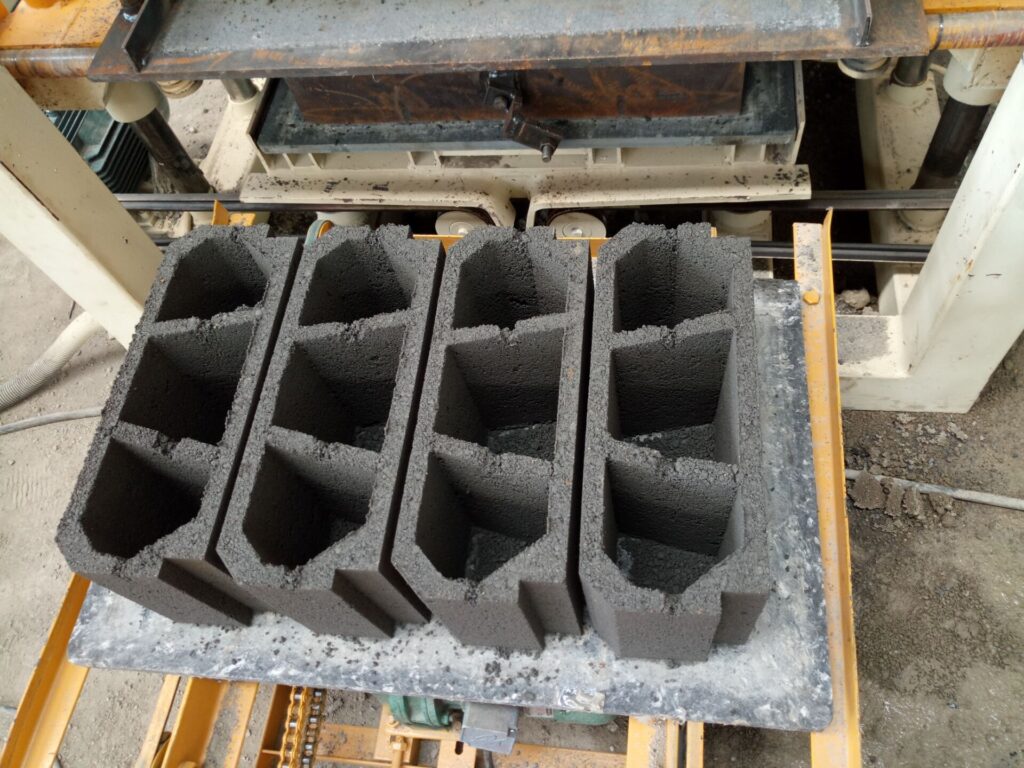
- Die Kritieke Fase van Vormvulling en Verdigting:Die voorbereide mengsel word dan in die vormholte oorgedra. Die ontwerp en presisie van hierdie vorm is wat die baksteen se finale vorm bepaal, of dit nou 'n standaard reghoekige blok, 'n holkernontwerp vir isolasie, of 'n ingewikkelde patroonplaveisel is. In gesofistikeerde toestelle verseker die vulmeganisme 'n eweredige verspreiding van materiaal regdeur die vorm, wat ongelykhede in digtheed voorkom. Na vulling pas die stelsel geweldige meganiese of hidrouliese druk toe. Hierdie aksie is nie bloot kompressie nie; dit is 'n proses van verdigting wat vasgevange lug met geweld verdryf, die deeltjiesmaterie in lyn bring en die aanvanklike bindingsproses inisieer, wat lei tot 'n "groen" baksteen met voldoende integriteit om hanteer te word.
- Uitharding vir Uiteindelike Sterkte-ontwikkeling en Finale Verwerking:Sodra dit uit die vorm geskiet is, het die groen baksteen sy vorm, maar nie sy volle sterkte nie. Die uithardingsproses is waar dit sy strukturele vermoë verkry. Dit kan deur twee primêre metodes bereik word. Die eerste is statiese uitharding, waar bakstene gestapel en met uithardingsvelle bedek word of in 'n kamer geplaas word waar beheerde temperatuur en humiditeit vir 'n spesifieke tydsduur gehandhaaf word, wat volledige sementhidrasie moontlik maak. Die tweede, wat in sommige hoë-produksiestelsels gebruik word, is stoomuitharding in outoklave, wat die sterkte-aanwins aansienlik versnel. Na uitharding word die verharde eenhede outomaties deur robotarms of vervoerbandgebaseerde stelsels gesorteer, getel en op pallette gestapel, gereed om toegedraai, gestoor en verskeep te word.
1.2 'n Taksonomie van Produksiestelsels: Die Pasmaak van Tegnologie by Markbehoefte
Baksteenproduksiestelsels word gekategoriseer op grond van hul operasionele metodologie en vlak van outomatisering, wat elk 'n afsonderlike segment van die mark bedien.
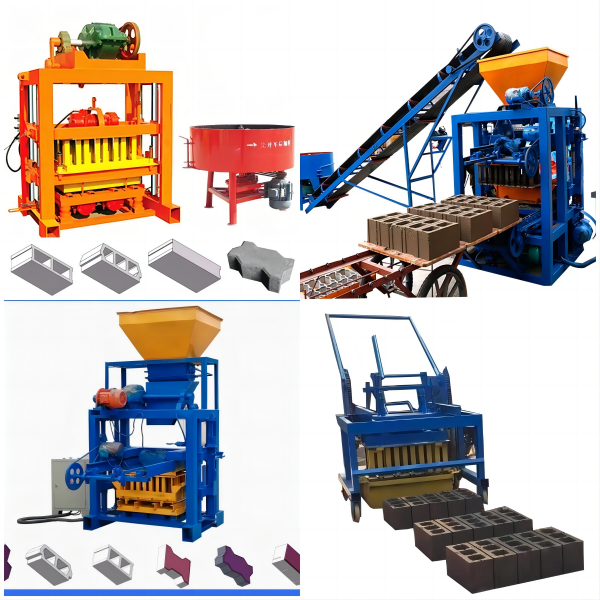
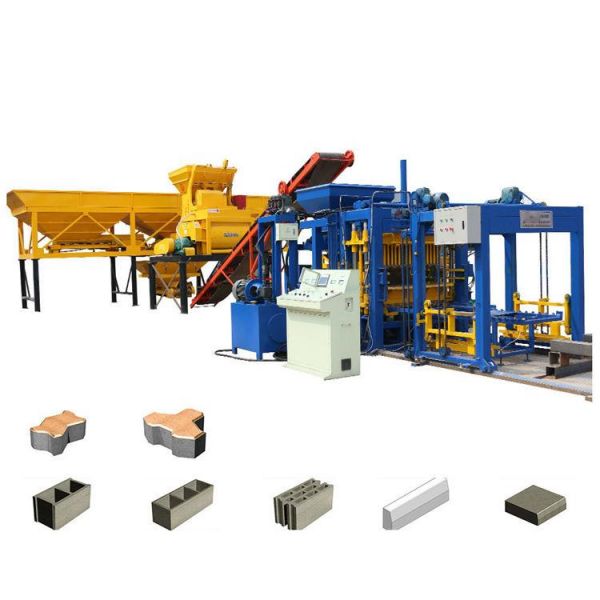
- Volledig Geïntegreerde Produksielyne:Dit is die toonbankpredators van baksteenvervaardiging, ontwerp vir massiewe, ononderbroke produksie. Hulle word gekenmerk deur 'n naatlose, geslote-lus proses waar roumateriaal-invoer, vermenging, vorming, uitharding en palletisering alles onderling verbind en deur 'n sentrale gerekenariseerde beheerstelsel bestuur word. Menslike ingryping is hoofsaaklik beperk tot monitering, instandhouding en programmering. Hierdie lyne is die optimale keuse vir die voorsiening van grootskaalse infrastruktuurprojekte, nasionale verspreiders en markte waar volume en konsekwente kwaliteit nie-onderhandelbaar is.
- Siklusgeoriënteerde Produksie-eenhede:Hierdie kategorie verteenwoordig 'n robuuste middelgrond, wat hoë outomatisering in die kernverdigtingsproses bied, maar tog handmatige hulp vir randtake vereis. Die masjien voer die pers- en vormselssiklusse outomaties uit, maar operateurs mag nodig wees om roumateriaal in die tregter te voer of die varsgevormde stene na die uithardingsarea oor te plaas. Hierdie konfigurasie bied 'n uitstekende balans, met hoë produksiekapasiteit en merkwaardige kwaliteitskonsekwentheid teen 'n kapitaalinvestering aansienlik laer as 'n ten volle geïntegreerde lyn, wat dit ideaal maak vir groeiende ondernemings en streekverskaffers.
- Handmatige Kompressiestelsels:Dit is die mees toeganklike en veelsydige eenhede, dikwels gekenmerk deur hul draagbaarheid en eenvoud. Die werking is fundamenteel handmatig: 'n operateur vul die vormkas, bedien 'n hefboom of 'n klein hidrouliese pomp om druk toe te pas, en plaas dan die gevormde baksteen direk op die grond of 'n pallet. Alhoewel hul uitset per uur die laagste is en hulle arbeidsafhanklik is, maak hul lae koste, minimale instandhouding en vermoë om met minimale infrastruktuur op die perseel ontplooi te word, hulle 'n kragtige hulpmiddel vir klein entrepreneurs, gemeenskapsgebaseerde projekte en gespecialiseerde, laevolume-produksielopies.
1.3 Ander as Uitset: Die Evaluering van Sleutelprestasie- en Produkparameters
Vir 'n kommersiële koper gaan die beoordeling van 'n masjien verder as sy brosjurespesifikasies. Dit behels 'n holistiese siening van sy werkverrigting en die gehalte van die produk wat dit lewer.
- Uitsetkapasiteit en Operasionele RitmeDie bakstene-per-uur-syfer moet verstaan word in die konteks van die hele produksiesiklus, insluitend uithardingstyd. 'n Masjien se ware kapasiteit is sy volgehoue uitset oor 'n 8-uur of 24-uur skof, nie net 'n piek-teoretiese getal nie.
- Dimensionele Akkuraatheid en Oppervlakafwerking: The precision of the mold and the consistency of the pressure application directly impact the brick’s dimensional tolerances and surface quality. High-quality apparatuses produce bricks with sharp edges, smooth surfaces, and uniform dimensions, which simplifies bricklaying and reduces mortar usage.
- Versatility in Raw Material Formulation: A significant advantage of modern systems is their ability to function effectively with a wide range of raw material mixes. This includes the ability to incorporate industrial by-products like slag or fly ash, which can reduce material costs and enhance the product’s environmental profile.
- Durability and Serviceability of the Apparatus: The machine’s construction quality, the grade of steel used in the frame and mold, and the reliability of its hydraulic and control systems determine its operational lifespan and total cost of ownership. Easy access for maintenance and the widespread availability of common spare parts are critical logistical considerations.
1.4 The Strategic Business Case for Advanced Manufacturing Technology
Investing in a modern brick production system is a strategic decision that confers multiple layers of competitive advantage.
- Unmatched Economic Efficiency and Scalability: Automation slashes the per-unit cost of production by maximizing output and minimizing direct labor. This creates a scalable business model where increasing volume does not necessitate a linear increase in operational costs, leading to higher profit margins.
- Guaranteed Product Consistency and Adherence to Standards: Machine-made bricks are uniform. This consistency is vital for builders, as it ensures predictable performance, simplifies construction processes, and guarantees compliance with national and international building codes, a key selling point for discerning clients.
- Empowerment through Product Diversification: With a library of interchangeable molds, a single investment can yield a diverse product catalog. A supplier can quickly switch from producing standard construction bricks to decorative pavers, retaining wall blocks, or specialized landscaping products, allowing them to capture multiple market segments and respond agilely to trends.
- Enhancement of Sustainability Credentials: The controlled production process significantly reduces material waste compared to traditional methods. Furthermore, the ability to use recycled aggregates and supplementary cementitious materials allows businesses to market a “greener” product, appealing to a growing segment of environmentally conscious contractors and developers.
1.5 A Procurement Framework for Commercial Stakeholders
Navigating the procurement process requires a disciplined, strategic approach focused on long-term value.
- Conducting a Comprehensive Market and Feasibility Analysis: Before selecting a machine, one must have a deep understanding of the local demand—preferred brick types, quality expectations, and price sensitivity. The chosen technology must be a precise fit for this market reality.
- Performing a Rigorous Total Cost of Ownership (TCO) Analysis: The purchase price is just the initial outlay. A prudent buyer will model all ongoing costs: energy consumption, labor, preventive maintenance, spare parts, and the cost of capital. This TCO model provides a true picture of the investment’s profitability.
- Vetting the Equipment Provider’s Support Ecosystem: The machine’s value is heavily dependent on the supplier’s support. Key questions must be asked: What is their lead time for critical spare parts? Do they offer comprehensive operator training? Is technical support readily accessible? A machine without reliable support is a liability.
- Validating Machine Performance and Compliance: Insist on seeing the machine in operation, preferably under conditions similar to your own. Request certification of compliance with relevant international safety and performance standards. This due diligence mitigates risk and ensures the equipment is fit for its intended purpose.
Conclusion
The technology behind brick manufacturing represents a mature yet continuously evolving field. For distributors and procurement experts, the selection of appropriate machinery is a cornerstone decision that directly impacts market relevance, operational efficiency, and long-term profitability. The spectrum of available systems—from highly automated production lines to versatile manual presses—ensures that there is a technological solution for every business model and market tier. Success in this arena is not merely about purchasing a machine; it is about strategically investing in a production capability that delivers consistent quality, enables product diversification, and builds a formidable reputation for reliability. In the competitive global construction supply chain, mastery over this technology is synonymous with a sustainable competitive edge.
Frequently Asked Questions (FAQ)
Q1: How does the final product from an automated system differ from one produced by a manual machine?
A: While both can produce structurally sound bricks, the key differences lie in consistency and finish. Automated systems produce bricks with exceptional dimensional uniformity, consistent density, and superior surface finish across thousands of units. Manual machines, while capable, may exhibit slight variations in size, density, and texture from one brick to the next due to the inherent variability in human-operated processes.
Q2: What is the typical lead time from procurement to full operational deployment for a semi-automatic system?
A: Lead times can vary significantly based on the complexity of the system and the manufacturer’s schedule. Generally, for a semi-automatic unit, expect a period of 4 to 8 weeks for manufacturing and shipping. On-site installation, foundation preparation, and operator training can add an additional 1 to 3 weeks before the system is fully operational and producing saleable bricks.
Q3: Can these systems be customized to produce unique or proprietary brick designs?
A: Absolutely. The primary method for defining a brick’s shape is the mold. Reputable equipment providers often offer custom mold design and fabrication services. This allows clients to produce unique, patented brick designs, specialty shapes for architectural projects, or products tailored to specific regional preferences.
Q4: What are the most common maintenance requirements, and what is their typical frequency?
A: Regular maintenance is crucial for longevity. Common tasks include:
- Daily: Cleaning of the mold and hopper, visual inspection for leaks or wear.
- Weekly: Checking and tightening of bolts and nuts, inspecting hydraulic hoses.
- Monthly: Changing hydraulic oil filters, checking and calibrating pressure sensors.
- Annually: A comprehensive inspection of the hydraulic system, electrical components, and structural frame.
Q5: How critical is the quality of raw materials to the machine’s performance and output quality?
A: It is fundamentally critical. The machine is designed to process specific types and sizes of aggregates. Using poorly graded sand, contaminated materials, or an incorrect water-cement ratio can lead to production issues like mold sticking, poor compaction, and low-strength bricks. Consistent, high-quality raw materials are a prerequisite for achieving the machine’s advertised performance and product quality.
Q6: What are the primary power requirements for operating a medium-capacity automated unit?
A: Most medium-to-large industrial units require a three-phase electrical power supply, typically at 380V-440V, with a significant power draw (e.g., 20-50 kW depending on the model). It is essential to have a stable power source and the necessary electrical infrastructure in place. Some systems can also be configured with optional diesel power units for locations with unreliable grid electricity.