Sektè konstriksyon mondyal la toujou kondwi pa demann pou materyèl konstriksyon ki fyab, efikas, ak ekonomik. Nan kè endistri sa a, gen modès brik la, yon eleman fondamantal ki gen metòd pwodiksyon li te revolisyone pa machin avanse. Pou distribitè, dilè, ak espesyalis apwovizyònman, konprann konpleksite ekipman sa a se pa sèlman yon egzèsis teknik, men yon enperatif biznis esansyèl.
Yon Egzamin Detaye sou Sistèm Fabrikasyon Brik
1.1 Pwosesis Fondamantal Fabrikasyon: Soti nan Matyè Premye rive nan Pwodwi Fini
Operasyon yon sistèm fabrikasyon brik se yon senfoni nan jeni presizyon ak syans materyèl. Li transfòme materyèl prensipal debaz yo an inite konstriksyon estanda ak gwo rezistans atravè yon pwosesis metikuleuzman òkestre.
- Prepare ak Omojene Materyèl Presizyon:Vwayaj la kòmanse ak seleksyon ak pwopòsyon materyo anvan tout koreksyon yo. Melanje prensipal la anjeneral konpoze de siman, divès agrega (tankou sab, pousyè wòch, oswa sann) ak dlo. Rapò eleman sa yo enpòtan anpil, li detèmine fòs, teksti, ak direbilite pwodwi final la. Nan sistèm avanse, kontwa pèse otomatik asire yon konsistans regilye ant chak seri. Pwosesis melanj la pa senpleman pou konbine engredyan yo, men pou reyalize yon konsistans omojèn, semi-sèk kote chak patikil siman kouvri menm jan ak agrega a, ak imidite distribye egalman. Omojènite sa a se premye etap la ak pi enpòtan pou pwodwi yon brik ak pwopriete estriktirèl ki konsistan.
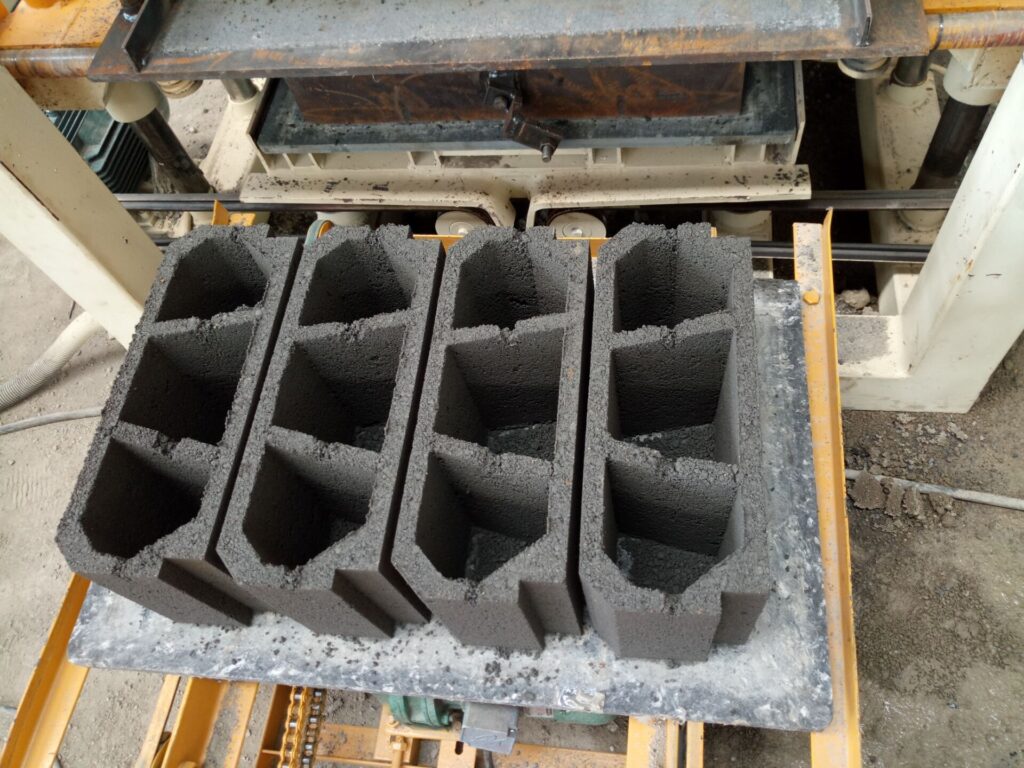
- Faz Kritik nan Plen ak Densifikasyon Mwazi:Melanj ki prepare a transfere nan espas mwazi an. Desen ak presizyon mwazi sa a se sa ki defini fòm final brik la, kit se yon blòk rektangilè estanda, yon konsepsyon nwayo kre pou izolasyon, oswa yon wòch pave ak motif konplike. Nan aparèy sofistike, mekanis ranpli a asire yon distribisyon egal materyèl la nan tout mwazi an, anpeche enkonsistans nan dansite. Apre ranpli, sistèm nan aplike gwo presyon mekanik oswa idwolik. Aksyon sa a se pa senpleman konpresyon; se yon pwosesis dansifikasyon ki fòse ekspilsyon lè ki anpeche, aliye matyè patikil yo, epi kòmanse premye pwosesis koneksyon an, sa ki lakòz yon brik "vèt" ki gen ase entegrite pou yo ka manyen.
- Tretman pou Devlopman Fòs Ultim ak Pwosesis FinalYon fwa yo retire yo nan mwazi an, brik vèt la gen fòm li men li pa gen fòs konplè li ankò. Pwosesis gerizon an se kote li vin gen fòs estriktirèl li. Sa ka reyalize atravè de metòd prensipal yo. Premye a se gerizon estatik, kote brik yo anpile epi kouvri ak dra gerizon oswa mete yo nan yon chanm kote yo kontwole tanperati ak imidite pou yon dire espesifik, sa ki pèmèt idratasyon siman konplè. Dezyèm metòd la, yo itilize nan kèk sistèm gwo pwodiksyon, se gerizon vapè nan otoklav, ki akselere ogmante fòs la anpil. Apre gerizon an, inite yo ki vin di yo trie otomatikman, konte, epi anpile sou palèt ak bra robotik oswa sistèm ki baze sou konvèye, pare pou vlope, depo, ak anbakman.
1.2 Yon Taksonomi Sistèm Pwodiksyon: Fè Teknoloji Matche ak Bezwen Mache
Sistèm pwodiksyon brik yo klase dapre metodoloji operasyonèl yo ak degre otomatizasyon yo, chak sèvi yon segman diferan nan mache a.
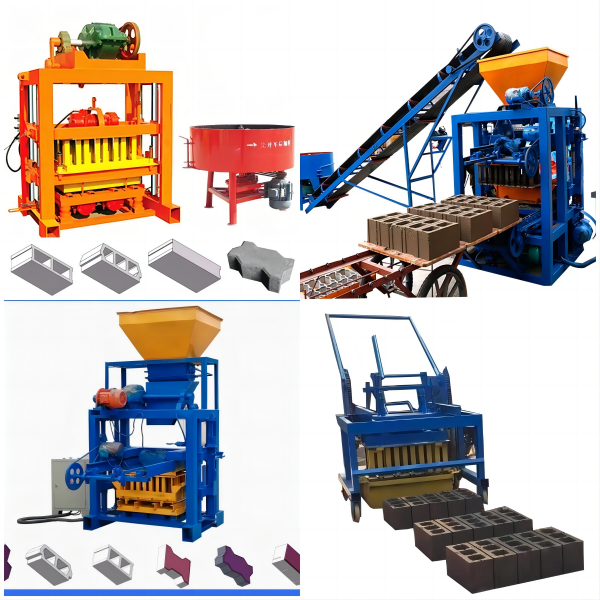
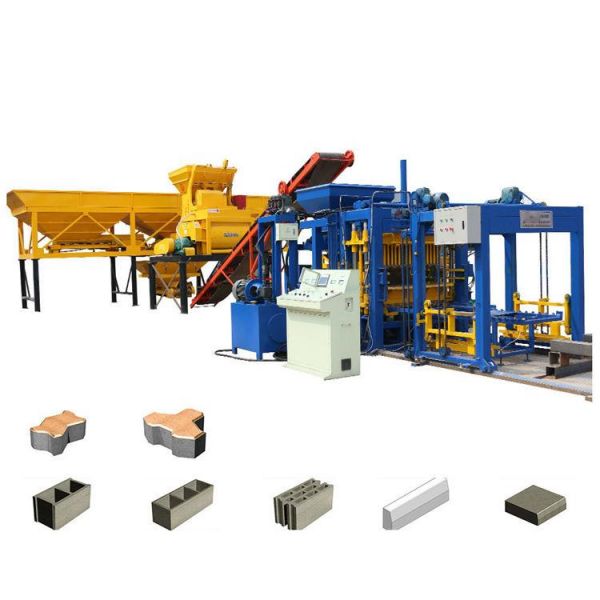
- Liy Pwodiksyon Konplètman Entegre:Sa yo se pi gwo predatè nan fabrikasyon brik, ki fèt pou pwodiksyon masiv ak san enteripsyon. Yo karakterize pa yon pwosesis san kouti, yon bouk fèmen kote antre matyè premyè, melanj, mwazi, trete, ak anbalaj yo tout konekte epi jere pa yon sistèm kontwòl òdinatè santral. Entèvansyon imen sitou limite nan siveyans, antretyen, ak pwogramasyon. Liy sa yo se chwa optimal pou apwovizyone pwojè enfrastrikti gwo echèl, distribitè nasyonal, ak mache kote volim ak kalite konsistan yo se kondisyon esansyèl.
- Inite Pwodiksyon Oryante sou Sik: This category represents a robust middle ground, offering high automation in the core compaction process while requiring manual assistance for peripheral tasks. The machine itself performs the pressing and molding cycles automatically, but operators may be needed to feed raw material into the hopper or transfer the freshly molded bricks to the curing area. This configuration delivers an excellent balance, providing high production capacity and remarkable quality consistency at a capital investment significantly lower than a fully integrated line, making it ideal for growing businesses and regional suppliers.
- Manual Compression Systems: These are the most accessible and versatile units, often characterized by their portability and simplicity. Operation is fundamentally manual: an operator fills the mold box, engages a lever or a small hydraulic pump to apply pressure, and then releases the formed brick directly onto the ground or a pallet. While their output per hour is the lowest and they are labor-dependent, their low cost, minimal maintenance, and ability to be deployed on-site with minimal infrastructure make them a powerful tool for small entrepreneurs, community-based projects, and specialized, low-volume production runs.
1.3 Beyond Output: Evaluating Key Performance and Product Parameters
For a commercial buyer, the assessment of a machine goes beyond its brochure specifications. It involves a holistic view of its performance and the quality of the product it yields.
- Output Capacity and Operational Rhythm: The bricks-per-hour figure must be understood in the context of the entire production cycle, including curing time. A machine’s true capacity is its sustained output over an 8-hour or 24-hour shift, not just a peak theoretical number.
- Dimensional Accuracy and Surface Finish: The precision of the mold and the consistency of the pressure application directly impact the brick’s dimensional tolerances and surface quality. High-quality apparatuses produce bricks with sharp edges, smooth surfaces, and uniform dimensions, which simplifies bricklaying and reduces mortar usage.
- Versatility in Raw Material Formulation: A significant advantage of modern systems is their ability to function effectively with a wide range of raw material mixes. This includes the ability to incorporate industrial by-products like slag or fly ash, which can reduce material costs and enhance the product’s environmental profile.
- Durability and Serviceability of the Apparatus: The machine’s construction quality, the grade of steel used in the frame and mold, and the reliability of its hydraulic and control systems determine its operational lifespan and total cost of ownership. Easy access for maintenance and the widespread availability of common spare parts are critical logistical considerations.
1.4 The Strategic Business Case for Advanced Manufacturing Technology
Investing in a modern brick production system is a strategic decision that confers multiple layers of competitive advantage.
- Unmatched Economic Efficiency and Scalability: Automation slashes the per-unit cost of production by maximizing output and minimizing direct labor. This creates a scalable business model where increasing volume does not necessitate a linear increase in operational costs, leading to higher profit margins.
- Guaranteed Product Consistency and Adherence to Standards: Machine-made bricks are uniform. This consistency is vital for builders, as it ensures predictable performance, simplifies construction processes, and guarantees compliance with national and international building codes, a key selling point for discerning clients.
- Empowerment through Product Diversification: With a library of interchangeable molds, a single investment can yield a diverse product catalog. A supplier can quickly switch from producing standard construction bricks to decorative pavers, retaining wall blocks, or specialized landscaping products, allowing them to capture multiple market segments and respond agilely to trends.
- Enhancement of Sustainability Credentials: The controlled production process significantly reduces material waste compared to traditional methods. Furthermore, the ability to use recycled aggregates and supplementary cementitious materials allows businesses to market a “greener” product, appealing to a growing segment of environmentally conscious contractors and developers.
1.5 A Procurement Framework for Commercial Stakeholders
Navigating the procurement process requires a disciplined, strategic approach focused on long-term value.
- Conducting a Comprehensive Market and Feasibility Analysis: Before selecting a machine, one must have a deep understanding of the local demand—preferred brick types, quality expectations, and price sensitivity. The chosen technology must be a precise fit for this market reality.
- Performing a Rigorous Total Cost of Ownership (TCO) Analysis: The purchase price is just the initial outlay. A prudent buyer will model all ongoing costs: energy consumption, labor, preventive maintenance, spare parts, and the cost of capital. This TCO model provides a true picture of the investment’s profitability.
- Vetting the Equipment Provider’s Support Ecosystem: The machine’s value is heavily dependent on the supplier’s support. Key questions must be asked: What is their lead time for critical spare parts? Do they offer comprehensive operator training? Is technical support readily accessible? A machine without reliable support is a liability.
- Validating Machine Performance and Compliance: Insist on seeing the machine in operation, preferably under conditions similar to your own. Request certification of compliance with relevant international safety and performance standards. This due diligence mitigates risk and ensures the equipment is fit for its intended purpose.
Konklizyon
The technology behind brick manufacturing represents a mature yet continuously evolving field. For distributors and procurement experts, the selection of appropriate machinery is a cornerstone decision that directly impacts market relevance, operational efficiency, and long-term profitability. The spectrum of available systems—from highly automated production lines to versatile manual presses—ensures that there is a technological solution for every business model and market tier. Success in this arena is not merely about purchasing a machine; it is about strategically investing in a production capability that delivers consistent quality, enables product diversification, and builds a formidable reputation for reliability. In the competitive global construction supply chain, mastery over this technology is synonymous with a sustainable competitive edge.
Kesyon yo poze souvan (FAQ)
Q1: How does the final product from an automated system differ from one produced by a manual machine?
A: While both can produce structurally sound bricks, the key differences lie in consistency and finish. Automated systems produce bricks with exceptional dimensional uniformity, consistent density, and superior surface finish across thousands of units. Manual machines, while capable, may exhibit slight variations in size, density, and texture from one brick to the next due to the inherent variability in human-operated processes.
Q2: What is the typical lead time from procurement to full operational deployment for a semi-automatic system?
A: Lead times can vary significantly based on the complexity of the system and the manufacturer’s schedule. Generally, for a semi-automatic unit, expect a period of 4 to 8 weeks for manufacturing and shipping. On-site installation, foundation preparation, and operator training can add an additional 1 to 3 weeks before the system is fully operational and producing saleable bricks.
Q3: Can these systems be customized to produce unique or proprietary brick designs?
A: Absolutely. The primary method for defining a brick’s shape is the mold. Reputable equipment providers often offer custom mold design and fabrication services. This allows clients to produce unique, patented brick designs, specialty shapes for architectural projects, or products tailored to specific regional preferences.
Q4: What are the most common maintenance requirements, and what is their typical frequency?
A: Regular maintenance is crucial for longevity. Common tasks include:
- Daily: Cleaning of the mold and hopper, visual inspection for leaks or wear.
- Weekly: Checking and tightening of bolts and nuts, inspecting hydraulic hoses.
- Monthly: Changing hydraulic oil filters, checking and calibrating pressure sensors.
- Annually: A comprehensive inspection of the hydraulic system, electrical components, and structural frame.
Q5: How critical is the quality of raw materials to the machine’s performance and output quality?
A: It is fundamentally critical. The machine is designed to process specific types and sizes of aggregates. Using poorly graded sand, contaminated materials, or an incorrect water-cement ratio can lead to production issues like mold sticking, poor compaction, and low-strength bricks. Consistent, high-quality raw materials are a prerequisite for achieving the machine’s advertised performance and product quality.
Q6: What are the primary power requirements for operating a medium-capacity automated unit?
A: Most medium-to-large industrial units require a three-phase electrical power supply, typically at 380V-440V, with a significant power draw (e.g., 20-50 kW depending on the model). It is essential to have a stable power source and the necessary electrical infrastructure in place. Some systems can also be configured with optional diesel power units for locations with unreliable grid electricity.