
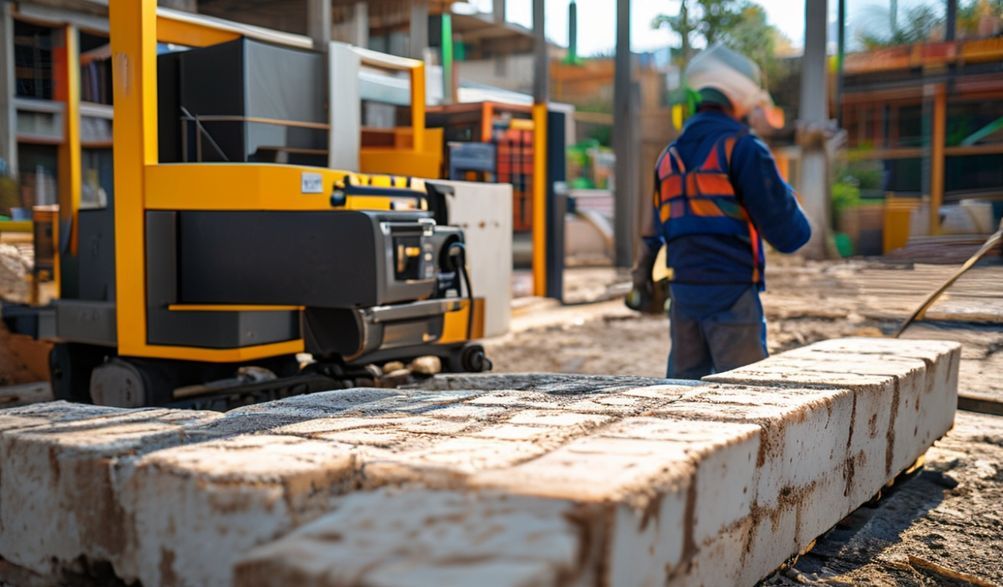
Holblokmasjienprys in die Filippyne: 'n Volledige 2026-Koperhandleiding
Die Filippynse konstruksiebedryf is op 'n onophoudelike opwaartse trajek. Van die massiewe infrastruktuurprojekte onder die "Build Better More"-program tot die steeds groeiende vraag na residensiële behuising, was die behoefte aan betroubare, bekostigbare boumateriaal nog nooit groter nie. Die nederige dog kritiese holblok is die kern van hierdie voorsieningsketting. As jy dit lees, oorweeg jy waarskynlik 'n deurslaggewende belegging: 'n holblokvervaardigingsmasjien. Maar met 'n mark oorstroom met opsies, van eenvoudige handpersmasjiene tot ten volle outomatiese reuse, hoe navigeer jy die ware koste?
Hierdie gids sny deur die geraas. Ons sal nie net pryse lys nie; ons sal u voorsien van die deursigtige, kundige kennis wat nodig is om te verstaan waarvoor u werklik betaal. Die prys-etiket wat u sien, word beïnvloed deur 'n komplekse mengsel van masjientipe, produksievermoë, vlak van outomatisering, handelsnaam-reputasie, en die deurslaggewende element van na-verkope ondersteuning. Teen die einde van hierdie gids sal u toegerus wees om 'n selfversekerde, ingeligte belegging te maak wat in lyn is met u besigheidsdoelwitte en begroting.
Verstaan Holblokmasjiene: Tipes en Toepassings
Voordat ons oor pesos praat, is dit noodsaaklik om die werktuie van die handel te verstaan. 'n Holblokmasjien, of betonblokmaakmasjien, druk 'n mengsel van sement, sand en gruis in vorms deur vibrasie en druk te gebruik om stewige, eenvormige blokke te vorm.
Handmatig vs. Semi-outomaties vs. Volledig Outomatiese Masjiene
Die vlak van menslike ingryping definieer hierdie primêre kategorieë en hul prys punte.
- Handmatige Masjiene:Dit is die mees basiese en bekostigbare. Operateurs voer die rou mengsel handmatig in, aktiveer die vibrasiemeganisme (dikwels via 'n hefboom), en verwyder die voltooide blok.
- Arbeid:Hoog. Vereis 3-4 persone vir doeltreffende bedryf.
- Uitset:Laag, tipies 300-500 blokke per 8-uur-skof.
- Ideaal Vir:Baie kleinskaalse projekte, beginondernemings met minimale kapitaal, of afgeleë gebiede sonder krag.
- Halfoutomatiese Masjiene:Dit is die soet kol vir baie groeiende besighede in die Filippyne. Sleutelprosesse soos meng, voer en vibrasie is gemeganiseer, maar blokke word steeds handmatig of met 'n eenvoudige vervoerband beweeg.
- Arbeid:Matig. Vereis 2-3 persone.
- Uitset:Goed, wisselend van 800 tot 2 500+ blokke per 8-uur-skof.
- Ideaal Vir:Klein tot mediumgrootte blokwerwe wat plaaslike kontrakteurs en behuisingsprojekte voorsien.
- Volledig Outomatiese Masjiene:Dit is volledige produksielyne. Hulle outomatiseer afmeting, vermenging, vorming, uitharding en selfs palletisering met minimale menslike toesig, dikwels beheer deur 'n PLC (Programmeerbare Logiese Beheerder).
- Arbeid:Laag. Mag slegs 1-2 persone vereis vir monitering en instandhouding.
- Uitset:Hoog tot baie hoog, van 4 000 tot meer as 20 000 blokke per 8-uur-skof.
- Ideaal Vir:Grootskaalse kommersiële produksie, wat groot konstruksiemaatskappye en verspreiders voorsien.
Sleutelmasjientipes Verduidelik
Buite outomatisering, bepaal die masjien se ontwerp sy toepassing:
- Statiese Masjiene:Hierdie is stilstaande eenhede wat op 'n soliede fabrieksvloer geïnstalleer is. Hulle is bekend vir hoë stabiliteit en konsekwente uitset, wat hulle perfek maak vir gevestigde blokwerwe met 'n vaste produksieterrein.
- Mobiele Blokmasjiene:Gemonteer op wiele of 'n sleepwa, kan hierdie masjiene direk na 'n bouterrein gesleep word. Dit skakel die hoë koste uit om swaar blokke te vervoer, wat hulle gewild maak vir groot, selfbouprojekte of ontwikkelaars wat op die perseel produseer.
- Eierleggende Masjiene:'n Baie gewilde tipe mobiele masjien. In plaas daarvan om pallette te gebruik, kompakteer dit die blok en "lê" dit direk op 'n voorbereide betongrondplaat, en beweeg dan vorentoe om die volgende ry te produseer. Dit bied 'n uitstekende balans van mobiliteit en uitset vir mediumskaal bedrywighede.
Faktore wat Holblokmasjienpryse in die Filippyne Beïnvloed
Die pryssticker is net die begin. Hier is wat werklik die koste van 'n holblokmasjien in die plaaslike mark bepaal.
Kern Masjien Spesifikasies
- Produksiekapasiteit:Gemeet in blokke per uur of per skof, dit is die primêre drywer. 'n Masjien wat vir 1 000 blokke per dag gegradeer is, sal aansienlik minder kos as een wat vir 10 000 gegradeer is.
- Blokgroottes en VormsStandaard groottes (4", 5", 6") is algemeen. Die vermoë om veelvuldige groottes gelyktydig te vervaardig (via 'n multi-vormstelsel) of vinnig tussen hulle te wissel, dra by tot die koste. Meer vorms beteken hoër uitset en prys.
- Motor Krag & Vibrasie Stelsel:Die sterkte en doeltreffendheid van die vibrasiemotors (gemeet in kW) en hidrouliese stelsels bepaal die verdigingskwaliteit en spoed. Kragtiger, gebalanseerde stelsels kos meer, maar lewer digter, sterker blokke.
Vlak van Outomatisering
Elke outomatiese stap voeg koste by, maar verminder langtermyn arbeidsuitgawes en verhoog konsekwentheid. Die prysprong van 'n semi-outomatiese masjien na 'n ten volle outomatiese masjien met outomatiese toevoerders, stapelaars en palletiseerders is aansienlik.
Handelsmerk en Land van Oorsprong
- Local Philippine Manufacturers: Offer the advantage of easier communication, potentially quicker service, and understanding of local conditions. Prices can be competitive.
- Imported Brands (e.g., China): Dominate the market in terms of volume. Offer a very wide range at aggressive price points, but quality and after-sales support can vary wildly. Thorough supplier vetting is critical.
- Imported Brands (e.g., Europe, Japan): Represent the premium segment. They command much higher prices due to advanced engineering, durability, and often superior automation. Spare parts and service may be more specialized.
Power Source
- Elektries Most common for stationary plants. Cleaner, quieter, and has lower operational costs if grid power is stable.
- Diesel: Essential for mobile and egg-laying machines or areas with unreliable electricity. Higher fuel costs but complete independence.
- Hybrid (Electric/Diesel): Offers flexibility but at a higher initial purchase price.
After-Sales Service & Support
This is a non-negotiable cost factor. A cheap machine with no local support can become a worthless pile of metal if it breaks down. Consider:
* Waarborg: Scope and duration (e.g., 1 year on parts, 6 months on labor).
* Onderdele Beskikbaarheid: Are common wear parts (molds, mixer blades, hydraulic seals) stocked locally in Manila, Cebu, or Davao? What are the lead times?
* Technical Training: Does the supplier provide comprehensive training for your operators on setup, operation, and basic maintenance?
Hollow Block Machine Price Ranges in the Philippines (2026)
Based on current market surveys and supplier data, here are realistic price brackets for new equipment in 2026. Note: Prices in provinces like Cebu or Davao may vary slightly from Luzon, and all figures are subject to change due to inflation and foreign exchange rates.
Entry-Level / Manual & Small Semi-Automatic Machines
- Prysreeks: ₱50,000 – ₱200,000
- What to Expect: This range covers basic manual egg-laying or static machines and very small semi-automatic models. Output is suitable for a micro-business or a single large project. Brands are typically from smaller Chinese manufacturers or local fabricators. Durability may be a concern under heavy, continuous use.
Mid-Range / Semi-Automatic & Standard Automatic Machines
- Prysreeks: ₱200,000 – ₱800,000
- What to Expect: This is the most competitive and popular segment for serious entrepreneurs. It includes robust semi-automatic machines with decent output (2,000-5,000 blocks/day) and standard fully automatic single-line machines from reputable Chinese brands or high-spec local makers. This range offers the best balance of investment and return for a growing block yard.
High-Capacity / Fully Automatic Production Lines
- Prysreeks: ₱800,000 – ₱3,000,000+
- What to Expect: This tier is for industrial-scale production. It encompasses high-speed automatic lines with advanced features like robotic palletizers, computerized batching plants, and multi-layer curing systems. Brands may include top-tier Chinese imports or used/refurbished European lines. These are major capital investments for established businesses targeting large contracts.
Beyond the Sticker Price: Calculating Your Total Investment
A savvy buyer plans for the total cost of ownership.
Hidden and Operational Costs
- Delivery & Installation: Freight cost from the supplier’s warehouse to your site, especially for heavy machinery.
- Foundation & Site Preparation: A static machine requires a level, reinforced concrete foundation.
- Initial Raw Materials: You’ll need to purchase the first batches of cement, sand, and gravel to start production.
- Power Connection/Generator: Ensuring you have adequate and reliable power supply.
Cost of Consumables and Maintenance
- Mold Wear: Molds are consumable items and need replacement after producing a certain number of blocks.
- Mixer Blades & Liners: Subject to abrasion from sand and gravel.
- Hydraulic Oil & Filters: Require regular changes.
- Preventive Servicing: Budget for quarterly or bi-annual check-ups by a technician.
Analyzing Return on Investment (ROI)
Here’s a simplified framework:
1. Calculate Total Investment: Machine price + all hidden/setup costs.
2. Estimate Daily Output: Be conservative (e.g., 80% of rated capacity).
3. Know Your Costs Per Block: (Cement + Sand + Gravel + Labor + Overhead).
4. Determine Your Selling Price: Research the local market price per piece in your area (e.g., ₱18 – ₱25 for a 5″ block).
5. Calculate Gross Profit Per Block: Selling Price – Cost Per Block.
6. Estimate Payback Period: Total Investment / (Gross Profit Per Block * Blocks Produced Per Day).
Example: A ₱500,000 investment earning a net profit of ₱5 per block and producing 2,000 blocks/day has a potential payback period of roughly 50 days of production, excluding non-operational days.
How to Choose the Right Supplier in the Philippines
Your supplier is as important as the machine itself.
Checklist for a Reliable Supplier
- Physical Presence: Do they have a showroom, workshop, or warehouse you can visit?
- Kliëntverwysings: Can they provide contact details of past clients (preferably in your region) you can speak to?
- Service Team: Do they have in-house technicians or a dedicated service partner network?
- Parts Inventory: Ask to see their local spare parts stocklist.
Essential Questions to Ask Before Buying
- “What is exactly included in the quoted price? (Delivery, installation, training, initial set of spare parts?)”
- “What is the warranty coverage and what is your typical response time for service calls in my area?”
- “Can you provide a demonstration with my actual raw materials?”
- “Do you offer financing partnerships or payment terms?”
- “Can you provide a list of recommended consumables and their local suppliers?”
Red Flags to Avoid
- Vague or “Too Good to Be True” Pricing: Refusal to provide a detailed breakdown.
- No Service Contract or Warranty: Or a warranty that requires shipping the machine back to China.
- No Local Track Record: Unable to show you a working machine locally or provide verifiable references.
- Pressure Tactics: “Today-only” discounts to prevent you from doing due diligence.
Frequently Asked Questions (FAQ)
What is the cheapest hollow block machine available in the Philippines?
The absolute cheapest are small manual presses, which can be found for as low as ₱30,000-₱50,000. However, they have very limited output and high labor intensity. They are only suitable for occasional, non-commercial use.
Can I get a quality machine for under ₱100,000?
Yes, but with managed expectations. In this range, you can find small manual or very basic semi-automatic machines from lesser-known brands. Focus on build quality (thickness of steel frame, brand of motor) and ensure the supplier has at least some local presence for basic support. It will be a small-scale operation.
Which is better: a brand-new machine from China or a quality used machine locally?
- New Chinese Machine: Pros: Full warranty, latest technology, no hidden wear. Cons: Variable quality, potential support issues.
- Quality Used Machine (Local): Pros: Often can be inspected thoroughly, may be from a reputable brand, lower upfront cost. Cons: No or limited warranty, unknown maintenance history, possible obsolete parts.
The decision hinges on your ability to inspect the used machine’s condition and the reputation of the seller. For most first-time buyers, a new machine with a solid local warranty is the safer choice.
How much profit can I make from a hollow block business?
Profitability varies widely by region, scale, and efficiency. As a simplified example, if your total cost to produce a standard 5″ hollow block is ₱15 (materials, labor, overhead) and you sell it for ₱22, your gross profit is ₱7. A semi-automatic machine producing 2,000 blocks/day could generate ₱14,000 in daily gross profit. Net profit depends on your volume, operational efficiency, and market demand.
Are there financing options or government incentives for this equipment?
Yes, several avenues exist:
* Bank Loans: Many universal and rural banks offer equipment financing for SMEs.
* Cooperative Loans: If you are a member of a cooperative, this can be a favorable option.
* Government Programs: The DTI, through MSME development programs, or agencies like SB Corporation sometimes offer loan guarantees or credit access programs for productive equipment. It is worth inquiring at your local DTI office.
Conclusion
Navigating the hollow block maker machine market in the Philippines requires looking beyond the initial price tag. Your ideal machine is defined by a balance of your target production scale, available budget, and long-term business vision. Remember, the total investment—including setup, maintenance, and operational costs—is the true metric for planning. Most importantly, partnering with a reliable, transparent supplier with proven after-sales support is paramount to protecting your investment.
Use this guide as your roadmap. Define your needs, create a shortlist of machines and suppliers, and insist on seeing equipment in operation. Ask the hard questions and do your due diligence. By taking these steps, you move from being just a buyer to becoming a savvy business owner, making a wise and profitable investment into the future of Philippine construction.
<