Huidige Vervaardigingslandskap en Streeksvariasies
Indië se baksteenproduksiesektor vertoon 'n dualistiese struktuur, wat beide die tradisionele ongeorganiseerde sektor en 'n opkomende georganiseerde segment insluit. Die ongeorganiseerde sektor, wat oorheers word deur kleinskaalse seisoenale vervaardigers wat hand- of semi-outomatiese masjiene en klem-oonde gebruik, maak steeds 'n beduidende deel van die produksie uit, veral in landelike en semi-stedelike gebiede. Groeiende omgewingsregulasies, arbeidstekorte en kwaliteitsbewustheid dryf egter konsolidasie en meganisasie aan. Die georganiseerde sektor, wat ten volle outomatiese masjiene en moderne tonnel-oonde gebruik, brei vinnig uit om aan die kwaliteits- en volume-eise van korporatiewe bouers, infrastruktuurprojekte en uitvoergerigte konstruksie te voldoen. Streeksvariasies is opvallend: Noordelike state soos Punjab en Haryana toon hoë aanneming van vliegas-baksteenmasjinerie as gevolg van nabyheid aan termiese kragstasies; Suidelike state toon 'n sterker kwaliteitsfokus met hoër outomatiseringsopname; Oostelike streke handhaaf sterker tradisionele praktyke, maar ervaar geleidelike modernisering. Om hierdie geografiese nuanses te verstaan, is deurslaggewend vir effektiewe marksegmentering en hulpbron-toewysing.
Sleutelmarkdrywers en Groei-aanwysers
Verskeie kragtige kragte is besig om die vraagpatrone vir baksteenvervaardigingsmasjinerie regoor Indië te hervorm:
- Infrastruktuurontwikkelingsmomentum:Regering-inisiatiewe soos die Slim Stede-missie, Behuising vir Almal, en massiewe snelwegkonstruksieprojekte skep volgehoue aanvraag vir gestandaardiseerde, hoë-gehalte bakstene. Hierdie projekte vereis konsekwente materiaalgehalte en betroubare voorraadvolumes wat slegs deur gemeganiseerde produksie-eenhede gewaarborg kan word, wat natuurlike markte vir gevorderde baksteenmasjinerie skep.
- Omgewingsregulasies en NalevingsdrukDie implementering van strenger omgewingsnorme, veral rakende lugbesoedeling van tradisionele oonde en regulasies wat grondontginning vir kleistene beheer, verander die bedryf fundamenteel. Hierdie regulatoriese druk versnel die oorgang na vliegassteen-tegnologie en moedig belegging in skoner, meer doeltreffende produksietegnologieë aan wat aan emissiestandaarde voldoen.
- Verstedeliking en Eiendomsgroei:Vinnige stedelike uitbreiding en die groei van georganiseerde eiendomsontwikkeling dryf die vraag na hoër kwaliteit boumateriaal aan. Bouers wat vinniger konstruksieskedules en beter afwerkingskwaliteit nastreef, spesifiseer toenemend masjienvervaardigde, dimensioneel akkurate stene, wat deurtrekkerskapvraag skep vir die toerusting wat dit vervaardig.
- Arbeidsbeskikbaarheid en Koste-ekonomie:Die afnemende beskikbaarheid van handearbeid vir tradisionele baksteenproduksie, gekombineer met stygende loonkoerse, maak gemeganiseerde oplossings toenemend ekonomies lewensvatbaar. Die besigheidsgeval vir outomatisering word elke jaar sterker namate arbeidskoste styg en masjienpryse meer toeganklik word deur binnelandse vervaardiging.
Tegnologie Spektrum en Produk Portfoliostrategie
Masjienkategorieë en Toepassingsbelyning
Die Indiese mark ondersteun 'n uiteenlopende reeks baksteenvervaardigingstegnologieë, wat elk onderskeie klantesegmente en produksievereistes dien.
- Hand- en Semi-outomatiese Perse.Hierdie instapvlak masjiene, insluitend eierlê- en tafelvibreerders, bly relevant vir mikro-ondernemings en landelike entrepreneurs met beperkte kapitaal. Hoewel dit 'n laer produksie (500-2 000 stene per dag) bied en aansienlike handearbeid vereis, bied dit 'n toeganklike instappunt tot gemeganiseerde produksie. Suksesvolle verspreiding van hierdie eenhede vereis uitgebreide handelaarsnetwerke en finansieringsondersteuning om kliënte aan die onderkant van die piramide te bereik.
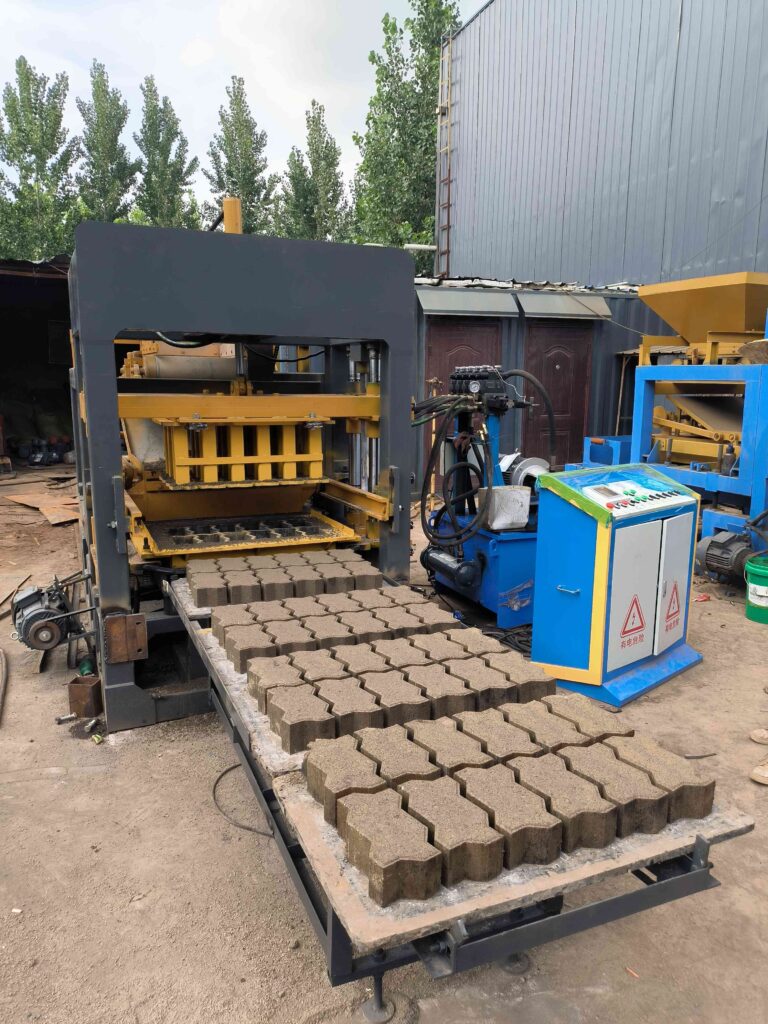
- Volledig Outomatiese Stasiesmasjiene:Hierdie kategorie verteenwoordig die groeienjin vir masjienverskaffers wat op die uitbreidende middelmark mik. Hierdie stelsels integreer materiaalhantering, vermenging en outomatiese persing met uitsetvermoëns wat wissel van 6 000 tot 20 000 stene per 8-uur-skof. Hulle bedien tipies gevestigde steenvervaardigers wat hul bedrywighede uitbrei, sowel as nuwe entrepreneurs met sterker kapitaalsteun. Die waardeproposisie fokus op arbeidsvermindering, kwaliteitkonsekwentheid en betroubare volume-produksie.
- Mobiele Produksieaanlegte en Hoëkapasiteitstelsels:Vir grootskaalse industriële klante en infrastruktuurkontrakteurs bied mobiele baksteenvervaardigingsaanlegte wat op groot projekterreine ontplooi kan word aansienlike logistieke voordele. Op soortgelyke wyse dien volledig geïntegreerde stilstaande aanlegte met outomatiese hantering, uitharding en palletiseringsisteme vervaardigers wat nasionale konstruksiemaatskappye en uitvoermark bevoorraad. Hierdie hoë-end oplossings vereis gesofistikeerde tegniese ondersteuning en groter investeringsdrempels.
Opkomende Tegnologietendense en Markleemtes
Die tegnologiese evolusie van baksteenmasjinerie in Indië weerspieël beide globale neigings en plaaslike aanpassings:
- Rou Materiaal Buigsaamheid en Aanpassing: Successful equipment designs increasingly accommodate diverse raw material inputs beyond traditional clay, including fly ash, construction debris, and industrial by-products. Machines that can process variable material compositions with minimal adjustment downtime hold competitive advantage in resource-constrained environments.
- Energy Efficiency and Hybrid Power Options: With electricity costs and reliability varying significantly across regions, machinery incorporating energy-saving features like variable frequency drives and optional hybrid power systems (grid power with generator backup) address critical customer pain points.
- Digital Integration and Remote Monitoring: While still emergent, features enabling production data tracking, remote diagnostics, and predictive maintenance are beginning to differentiate premium equipment offerings, particularly for corporate customers with multiple production facilities.
- After-Sales Service Innovation: Given India’s geographic spread and infrastructure challenges, suppliers who develop innovative service delivery models—including mobile service vans, regional spare parts hubs, and augmented reality-assisted remote support—can establish significant competitive barriers.
Strategic Market Entry and Expansion Framework
Distribution Channel Development and Management
Building effective routes to market is arguably the most critical success factor for machinery suppliers in India:
- Dealer Network Development: A phased approach to distributor recruitment—starting with regional leaders in high-potential states before expanding to secondary markets—allows for focused support and relationship building. Selection criteria should emphasize technical capability, financial strength, and market reputation over mere geographical coverage.
- Hybrid Sales Approaches: Combining direct sales for large corporate accounts and infrastructure projects with dealer networks for serving small and medium enterprises provides market breadth while maintaining focus on high-value opportunities. This requires clear account demarcation and lead management protocols to prevent channel conflict.
- Financing Partnerships and Purchase Facilitation: Given the capital-intensive nature of brick machinery, developing relationships with financial institutions for equipment financing significantly enhances market penetration. Suppliers who can facilitate credit access through tie-ups with banks and non-banking financial companies gain distinct advantage, particularly when serving first-time entrepreneurs.
Competitive Positioning and Value Proposition Development
Success in India’s crowded machinery market requires clear differentiation beyond price:
- Product Localization and Application Engineering: Equipment designed specifically for Indian operating conditions—accounting for material variations, power supply fluctuations, and operator skill levels—outperforms globally standardized products. Features like dust protection, voltage stabilization, and simplified maintenance access provide tangible value.
- Total Cost of Ownership Emphasis: Shifting customer conversations from initial purchase price to lifetime operating costs—factoring in energy consumption, wear part longevity, maintenance requirements, and production yield—helps justify premium positions for higher-quality equipment.
- Training and Knowledge Services: Offering comprehensive operator training, production optimization consulting, and business management guidance creates stickier customer relationships and reduces failure rates that damage brand reputation.
- Sustainability Alignment: Positioning equipment as enabling compliance with environmental regulations, resource conservation through use of industrial by-products, and improved working conditions resonates with both regulatory trends and evolving corporate responsibility expectations.
Conclusion
The Indian brick making machinery market presents a complex but exceptionally rewarding opportunity for suppliers who approach it with strategic patience, cultural understanding, and long-term commitment. The ongoing transition from informal to organized production, coupled with massive infrastructure investment and regulatory transformation, creates ideal conditions for growth. Success requires a balanced portfolio addressing multiple customer segments, from first-time entrepreneurs to industrial-scale producers. More importantly, it demands business models that combine equipment supply with comprehensive support ecosystems encompassing financing, training, and operational guidance. Suppliers who can master these dimensions while maintaining flexibility to adapt to India’s diverse regional markets will be positioned to capture significant value as the industry continues its modernization journey. The time for strategic investment and focused market development is now, as the foundations for the next decade of industry leadership are being laid.
Frequently Asked Questions (FAQ)
Q1: What are the key regulatory compliance requirements for brick machinery in India?
A: Compliance requirements vary by state but generally include pollution control board certifications for emissions, Bureau of Indian Standards (BIS) certification for machine safety and performance, and adherence to specific regulations governing fly ash utilization. For bricks themselves, BIS quality standards apply, particularly for supplies to government projects. Environmental compliance related to air and water pollution is increasingly enforced across states.
Q2: How does the financing landscape for brick machinery purchases operate in India?
A: Multiple financing options exist, including traditional bank loans (often requiring substantial collateral), specialized equipment financing from NBFCs (typically with faster processing but higher interest rates), and manufacturer-backed financing programs. Government schemes like Credit Linked Capital Subsidy Scheme for technology upgradation may also be accessible. Financing tenure typically ranges from 3-5 years with 20-30% margin money requirements.
Q3: What is the typical production capacity range for brick machinery across different price segments?
A: Entry-level manual machines (₹1-3 lakhs) produce 500-2,000 bricks per day; semi-automatic models (₹3-8 lakhs) yield 2,000-6,000 bricks daily; fully automatic stationary machines (₹8-25 lakhs) generate 6,000-20,000 bricks per shift; and high-capacity plants (₹25 lakhs+) can exceed 30,000 bricks daily. Actual output varies based on product type, raw materials, and operational efficiency.
Q4: What after-sales service expectations do Indian customers typically have?
A: Indian brick manufacturers expect responsive service with typical response time expectations of 24-48 hours, availability of critical spare parts within their region, comprehensive operator training in local languages, and troubleshooting support via phone/WhatsApp. Service contracts with guaranteed response times are increasingly common for premium equipment segments. The ability to provide quick, effective technical support significantly influences purchase decisions and brand reputation.
Q5: How significant is the fly ash brick segment compared to traditional clay brick production?
A: The fly ash brick segment is growing at approximately 15-20% annually compared to 3-5% for traditional clay bricks, driven by environmental regulations favoring utilization of industrial waste, lower production costs, and superior technical properties like consistent dimensions and higher compressive strength. While clay bricks still dominate volume terms, fly ash technology represents the growth frontier and increasingly attracts entrepreneurial investment and regulatory support.